BOOK: “How to be an Alien” by George Mikes

How to Be an Alien: A Handbook for Beginners and Advanced PupilsHow to Be an Alien: A Handbook for Beginners and Advanced Pupils by George Mikes
My rating: 5 of 5 stars

Publisher Site – Penguin

This book is hilarious… unless you’re British — in which case it probably reads like a swift kick in the crotch. Well, if you’re from continental Europe, many of the comparisons with Britian are no more favorable to Europe and are just as comically searing. But if you’re American, it’s a laugh riot. Well, except for when it delivers reminders of the absurdity of xenophobia, triggering realizations that one’s own country is in the midst of a crisis of that malady. However, the book is not primarily a rebuke of xenophobia, but rather an accounting of what immigrants to Britain find strange and unwieldy about their new country.

George Mikes, born Mikes György, was a journalist and humorist of Hungarian birth who lived most of his life in England, and it’s this experience that the author draws upon to describe of what immigrants to Britain must accustom themselves.

Among Mikes’ prolific body of writings, there are a number that take this form — humor disguised as a how-to guide. The first one that I read was How to Be God, which was his last such book. The book under review was his first and continues to be the most popular.

I’d highly recommend this book for humor readers… unless you’re British… or European… or are experiencing dread over the Pheonix-like rebirth of xenophobia in the world. If there’s any one left after that who reads in English, this is the book for you.

View all my reviews

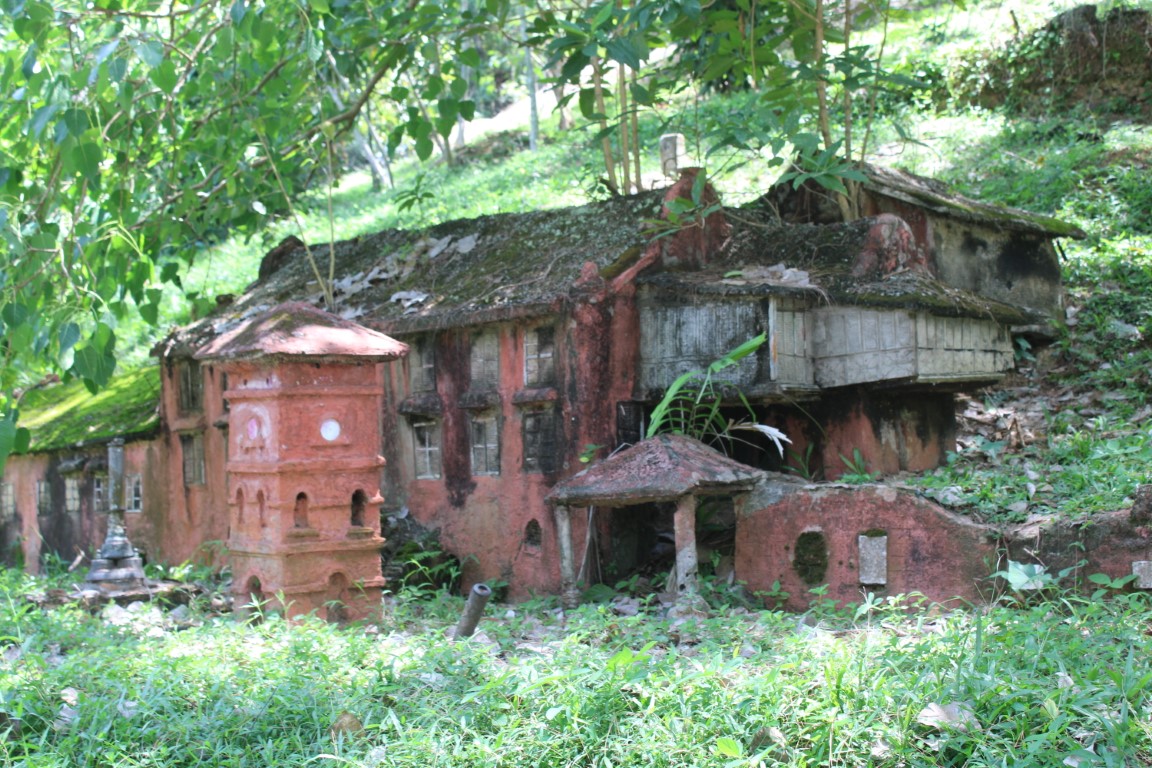
DAILY PHOTO: Church in the Backwaters

BOOK: “Long for this World” by Jonathan Weiner

Long For This World: The Strange Science of ImmortalityLong For This World: The Strange Science of Immortality by Jonathan Weiner
My rating: 4 of 5 stars

Author’s book site

This book considers the science around the question: will there come a day when human beings live forever (or at least considerably longer than we’ve achieved to date? — i.e. hundreds or thousands of years.) A secondary question, explored in the last of the book’s three parts, is should we want to?

It was a courageous decision to write this book because it focuses heavily on the ideas of one particularly controversial figure, Aubrey de Grey. And by “controversial” I don’t mean to the general public, a public which has limited understanding of the science involved, but rather a man who is controversial to many (perhaps, most) of his peers. Of course, with a Pulitzer under one’s belt, one can afford to take a few chances. (Weiner won in 1997 for The Beak of the Finch, a popular science work on evolutionary biology.) To be fair, Weiner does not present Grey’s ideas from the perspective of an acolyte. On the contrary, he is clearly skeptical and not shy about presenting the countervailing arguments put out by others in the gerontological field.

I can see several reasons why Weiner chose to focus on Aubrey de Grey. First, De Grey is an eccentric figure, and that makes for more interesting reading. Second, De Grey also takes the boldest possible stance on the topic (i.e. that there is no reason humanity won’t be able to overcome aging and death, given sufficient time and effort.) Finally, De Grey has a readily digestible roadmap for eliminating aging. De Grey identifies seven problems that must be solved, arguing that the last — i.e. defeating cancer — is the only one that will present a true challenge in the long run.

While I wasn’t converted to a belief that immortality is inevitable (and that wasn’t the book’s objective, though it may be de Gray’s,) the book does offer interesting food-for-thought, both on the scientific question of what it would take and on the philosophical question of whether we should want to.

If you’re interested in aging and mortality, I’d recommend reading this book.

View all my reviews

“Upon the Road of My Life” by Stephen Crane [w/ Audio]

Upon the road of my life,
Passed me many fair creatures,
Clothed all in white, and radiant.
To one, finally, I made speech:
“Who art thou?”
But she, like the others,
Kept cowled her face,
And answered in haste, anxiously,
“I am good deed, forsooth;
You have often seen me.”
“Not uncowled,” I made reply.
And with rash and strong hand,
Though she resisted,
I drew away the veil
And gazed at the features of vanity.
She, shamefaced, went on;
And after I had mused a time,
I said of myself,
“Fool!”

PROMPT: Favorite Time

Daily writing prompt
What’s your favorite time of day?

When all is quiet and harmonious, and one anticipates good things are to come.

DAILY PHOTO: History Museum of Armenia

“Song” by James Joyce [w/ Audio]

My love is in a light attire
Among the apple trees,
Where the gay winds do most desire
To run in companies.

There, where the gay winds stay to woo
The young leaves as they pass,
My love goes slowly, bending to
Her shadow on the grass.

And where the sky’s a pale blue cup
Over the laughing land,
My love goes lightly, holding up
Her dress with dainty hand.

PROMPT: Recipe

Daily writing prompt
What’s your favorite recipe?

Flour, water, salt, and yeast. The epitome of simplicity.

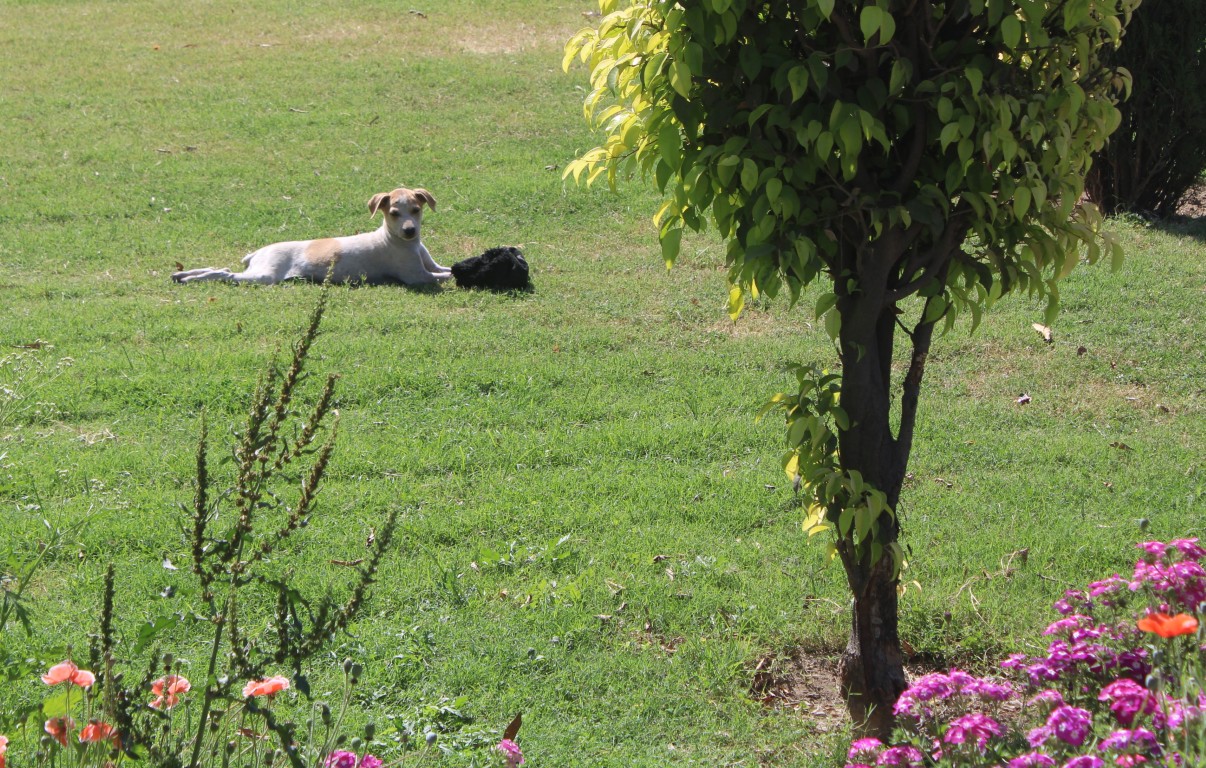
DAILY PHOTO: Green & Yellow

“Changed” by Henry Wadsworth Longfellow [w/ Audio]

From the outskirts of the town
Where of old the mile-stone stood,
Now a stranger, looking down
I behold the shadowy crown
Of the dark and haunted wood.

Is it changed, or am I changed?
Ah! the oaks are fresh and green,
But the friends with whom I ranged
Through their thickets are estranged
By the years that intervene.

Bright as ever flows the sea,
Bright as ever shines the sun,
But alas! they seem to me
Not the sun that used to be,
Not the tides that used to run.