
Summer beach day;
 swollen clouds slog nearer:
  mass exodus.

Summer beach day; swollen clouds slog nearer: mass exodus.
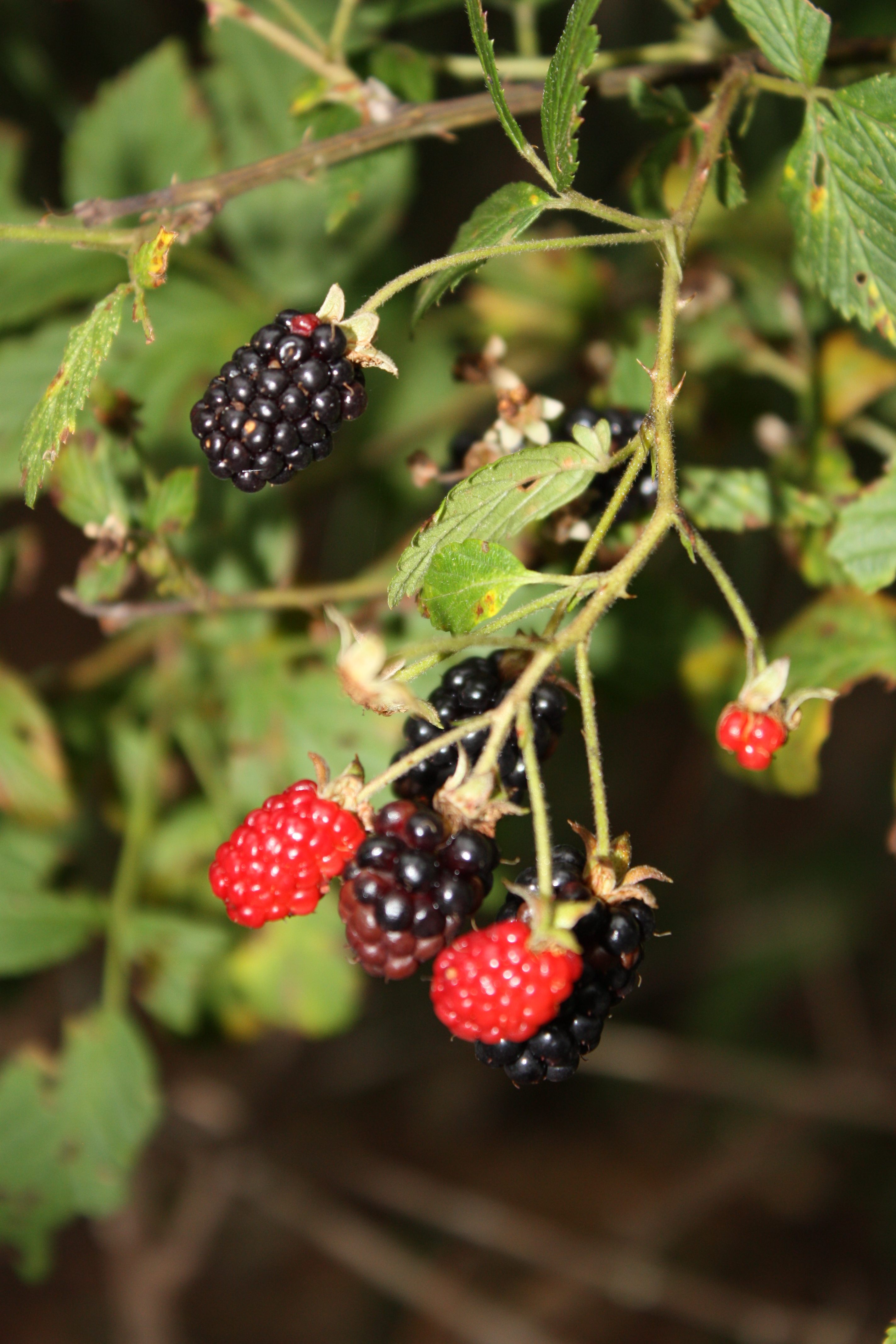
summer berries:
 to pick or let ripen?
  what will birds do?
Nietzsche said:

“And if thou gaze long
   into an abyss,
  the abyss will also
    gaze into thee.”


I must admit
   the first several times
    that I read this quote,
  I couldn’t tell if it was wise,
    or just had the patina of
     wisdom that comes from
     parallel sentence structure.

Crisscrossing subject and object
    lends a ring of sagacity.

“If you can’t take
    Mohammad to the mountain,
  the mountain must come to
    Mohammad.”


“Ask not what your country
    can do for you,
  but what you can do
     for your country.”


“If you can’t get the carrots
    out of the refrigerator,
  get the refrigerator
     out of the carrots.”


Yes, that last one is nonsense,
    but it’s not nonsense like:

“The banana pirouetted fuchsia
     all over the underside of
      an A-sharp chord.”

The carrot quote probably took
     your mind some time —
      if only milliseconds —
       to relegate to the
        trash heap.

That’s why this sentence structure
     is beloved by godmen &
      politicians: because you can
       sound wise even if you’re
       kind of an idiot.

So, I was ready to classify Nietzsche’s
     quote pseudo-wisdom when I realized
      that my smartphone was the Abyss,
       and it was certainly staring back at me.

  It stared through all the data collection &
     neuroscientific and psychological
      research designed to keep
       a person scrolling.

Maybe Nietzsche was on to something
    that even he didn't fully understand.
Depends on the context. If I’m thinking about poetry or philosophy (which I often am,) then it pertains to the early nineteenth century movement that counterpoised the Enlightenment. Those “Romantics” disliked what they saw as the cold rationality of Enlightenment thinking; they valued spiritual and mystical experiences, and they believed it was important to not throw out the spiritual “baby” with the bathwater. That is, like many Enlightenment thinkers, they realized that it was necessary to jettison many of religion’s noxious ideas (e.g. the concept of “chosen people”) and also realized that mindlessly following moral dictates that may or may not have made sense in the pre-Christian Levant could be detrimental to their present-day life experience. However, unlike most Enlightenment thinkers, they did find value in spiritual views of the world as well as in the pursuit of mystical experiences. William Blake (even though he is often labeled pre-Romantic) provides an excellent example. His poems are spiritual to the core, and yet explicitly reject a lot of the moralizing and toxic aspects of conventional religion.
Of course, that variety of “Romantic” is usually given a big-R, and so I suspect the question is after a more colloquial definition. With that in mind, I believe “romantic” means “that which facilitates the unity of two (or more, I don’t judge) people in an immersive intimate experience of each other during a common period of time.” I’m not big on trappings. I think people obsess over trappings because it allows them to slack on the physical / cognitive demands of being fully engaged. This is why sex (done well) is such a great tool both for relationship building and for personal development. It makes it relatively easy (i.e. rewarding) to stay fully engaged in a common experience and in the moment, and to not fall into the attentional abyss.

From a hilltop,
   farmland stretches
    to the horizon:

parceled into rectangles
   of brown, beige, and oh
    so many shades of green.

It must be the tropics,
    for ripe grain to
     coexist with verdant
      & fallow patches.

So different from the farmland
    of my youth
     where all the rectangles
      were one of two colors -
      because everyone had to
      pack into the same tight
      growing season.

a plump heron
 walks on lily pads: my own
  Personal Jesus.
I have a daily practice of FEELING gratitude for this awesome life and all that contributes to said awesomeness. I don’t place much emphasis on EXPRESSING emotion beyond the usual social protocols and niceties. Quite frankly, I think expression of gratitude is overrated. It binds the process up with ego and desire for reciprocity, and the next thing you know you’ve lost all touch with the experience of gratitude and the powerful influence it has on fostering a positive outlook.
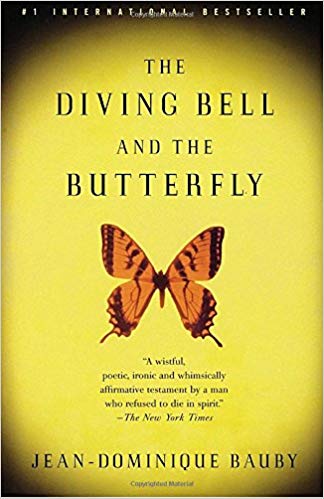
Furthermore, when one emphasizes expression, one tends to develop a blind-spot, thinking that the only entities worthy of consideration of gratefulness are other intelligent beings (or constructs attributed intelligence — e.g. gods.) I begin (though do not end) my practice of gratitude with my body (/ mind) and its systems. I’ve been told many people have trouble fostering gratitude when they focus on their body, but I don’t think one really understands gratitude if one can’t feel deep gratitude for one’s body and mind (literal warts and all.) For the body is the means by which one experiences everything, and one can only be unconditionally grateful for it. [For those who have trouble being grateful for body and mind, I’d recommend the book, “The Diving Bell and the Butterfly” by Jean-Dominique Bauby. It’s a short read because it was dictated using eye-blinks by a man who developed “Locked-in Syndrome,” a condition that left its author only with conscious control of an eyelid.]

Passiflora looks like
 space-age technology.

it seems like it should
  pick up signals from
  the far reaches of space...

but I doubt it does.







 Tiger Riding for Beginners