Taken on April 25, 2015 at Pattadur Village



My rating: 2 of 5 stars
I had high hopes for Sam Harris’s book Free Will, but they didn’t pan out. It’s a very short book (less than 100 pages) on the subject of free will–or the lack thereof. While I’m normally a huge fan of brevity and conciseness, Harris could have put some more pages to good use. My two principal complaints regard the lack of information: a. substantiating the notion that free will is always and everywhere an illusion as Harris asserts; b. suggesting what logic is at the root of decision if our conscious thoughts are irrelevant. (If they were random synaptic firings our behavior wouldn’t be nearly so consistent. Self-preservation of genes? The hand of god? You won’t know from this book.)
Harris might claim that that’s not the purpose of this book, that one should familiarize oneself with the vast literature on the topic before getting to this book. In that case, my complaints remain two-fold. First, he shouldn’t take on such a bold and presumptuous title as Free Will (no subtitle) if he’s not going to educate us from the ground up on the titular topic. Second, if the reader has done all the scholarly reading on the subject, why should we care about Harris’s opinions?
I will say that if you liked Matrix Revolutions, the third Matrix movie, you will love this book. SPOILER: In that movie, we find out that Neo is the central element of an elaborate plan to fool people into thinking they have some control over their own lives. In Harris’s book, Neo is replaced by the conscious mind.
There’s a scientific literature supporting the notion that free will is an illusion–though Harris only touches on it. This conclusion has been reached by observing that subconscious parts of the brain involved with decision-making light up well in advance of the conscious parts of the brain. [On a note unrelated to the book: we also know that individuals with damage to the emotional centers in the brain become unable to make decisions because all options hold the same weight.] The most illuminating example offered is an experiment in which participants were asked to press a button to select a letter or number of their choosing from among a string of changing letters / numbers. Some subjects felt the scientists had mastered precognition (a class III impossibility according to physicists–i.e. impossible according to the laws of physics as we know them.) What was really happening was an exploitation of the lag between when the individual’s subconscious decided and when their consciousness became aware of their decision.
Harris briefly mentions a couple of these neuroscience experiments, but then expects that the reader will treat the free will illusion as law. That is, we are to accept that always and everywhere people’s subconscious minds decide some measure before their conscious minds. Maybe there has been a broad enough scientific investigation of the topic to safely conclude that free will is always and everywhere an illusion–but Harris does make this point.
Harris tells us about couple of studies in which, a.) there’s no cost differential between the different options; (i.e. is it possible that the mind treats decisions about picking a spouse or a house differently than picking a letter or number for which there is no objectively better or worse option?) b.) those studied are a random sample of individuals who have no particular expertise with their minds—probably mostly college undergrads. (If I drew a random sample of people and asked each to lift 300 lbs over his or her head. If no one could do it, would I be safe in concluding that lifting 300 lbs was something forever beyond the capacity of every member of the human race? In other words, what if exercising conscious control over decision-making requires training and expertise with the mind.)
There are a couple of red-flags for me about Harris’s approach to the subject. First, Harris scoffs at the suggestion that it might be that the conscious can overrule the subconscious, and seems to deem this as unworthy of study because it would just be the subconscious making a second decision instead of the conscious truly vetoing. Anytime a scholar is dismissive of another scholar’s attempts to further probe into a question signals that a pet theory has become a sacred cow.
Second, Harris suggests that anyone who truly studied his own mind in action couldn’t help but realize the fallacy of free will. People who can’t imagine that others see the world differently than them are also a point of concern when it comes to getting sound information. Could it possibly surprise Mr. Harris to learn that there are people who’ve spent far more time alone with their minds than he, who’ve concluded quite the opposite?
Alright, I may have overstated Harris’s position when I suggested the conscious mind is relegated to a Matrix Revolutions-style (and Rube Goldberg-esque) machine for tricking us into thinking we have choice and control over the direction of our lives. I suspect Harris would agree that evolution doesn’t over-engineer, and a conscious mind that is just part of a trick would be the vastest act of over-engineering in the history of the universe. (Unless the universe is a hologram, as some physicists are now suggesting–presumably based on the notion that their math works out in 2-D.)
I just don’t have a good idea of what purpose Harris thinks the conscious mind serves. His central point seems to be that we still need to keep putting rapists and murders in jail so they can be kept off the streets. We just shouldn’t bear any ill-will toward them because they had no control over their decisions. However, if we set a tone with our conscious thought stream, then whether the individual’s decision to act was conscious or not they would have culpability by virtue of stage-setting. If we don’t have any control over our conscious thought stream then there would be no benefit to courses of study that help one improve one’s state of mind, but there’s also a scientific literature showing that people who begin meditative practices, yoga, and the like do see tangible positive changes. (Not to mention that Harris should give all the money back for the books he has sold about meditation, i.e. Waking Up.) If we have conscious control of our thought stream, but that thought stream is irrelevant, then we should be walking around in a constantly perplexed state.
To add to the confusion, Harris uses the term “choices” to refer to his “decisions,” but according to his paper he doesn’t make any choices. He—like all of us—are slaves to some unknown–or at least unexplained–process. Black boxes aren’t persuasive.
I can’t say I’d recommend this book, unless you’ve read extensively on the topic and are rounding out your reading experience. This book isn’t the ideal starting point for engaging this subject—as it seems when you are reading the blurb–because you’re as likely to come away more confused than when you began reading.

Taken on April 25, 2015 at Halebidu
 Writing Fiction: The Practical Guide from New York’s Acclaimed Creative Writing School by Alexander Steele
My rating: 4 of 5 stars
This workbook-style guide to writing fiction is put out by the well-known New York City creative writing school. With 11 chapters, it delivers lessons on all the elements of fiction including: character development, plotting, establishing point of view, honing description, building realistic dialogue, varying pacing, establishing voice, determining a work’s theme, and carrying out revisions. It also has a chapter that goes into the business of writing (as opposed to the craft of writing which is the bailiwick of the first ten chapters.)
There are a couple of features of this book that set it apart from the vast canon of writers’ guides. First, this isn’t a single author work, which means the reader has access to a much broader pool of experience than one would in a single author text. It also means that an author can be assigned a topic according to his or her strengths as a writer.
Second, across the chapters, they use Raymond Carver’s Cathedral as an example work, and they provide that story in an appendix for those who haven’t read it. It’s not that the authors exclusively use this short story for examples. But it’s useful to have a common story and to include it because there are so many great stories and novels available that no matter how well-read one’s readership, there will be works that some haven’t read. (e.g. Much as I should’ve, I haven’t yet read nor seen the movie Gone with the Wind–a common exemplary work because it’s a beloved book, a movie, and because pop culture references [e.g. The Simpsons] have made the gist of it available to even those slackers who’ve neither read the book nor seen the movie.) There’s a reason why writers’ book authors often use movies to describe story elements, because there are many fewer movies than books and vastly fewer good movies—thus a higher likelihood of a common experience. Yes, there are a few works common across most school curricula, but there’s no better way to ensure that a book doesn’t get read thoroughly than to assign it as required reading.
A third useful feature of this book–but not one that is in any way unique to it–is that it offers writing exercises throughout to help build one’s skills through practice. This is where the value of such a book truly lies. The advice such books offer are almost always the same—sometimes hackneyed but almost always valuable. (A lot of tired advice is tired because it bears repeating owing to the constant infusion of new writers who repeat the same errors.) A final useful element of the book—but also one that features in many similar guides—is a checklist in the appendices that allows one to rapidly consider the book’s key questions as they apply to one’s own writing project.
I’d recommend this book as one of the most useful writers’ guides that I’ve read.

Taken on April 26, 2015 at Pattadur

 A small moth or butterfly with false eyes. Taken in southwest Karnataka.

Taken on April 26, 2015 at Belur
This is the main gate of the Chennakesava Temple at Belur. It’s a Hoysala era temple that dates to the early 12th century and is in the running for UNESCO World Heritage Site status.
Here’s a little closer view.

Here’s a yet closer view

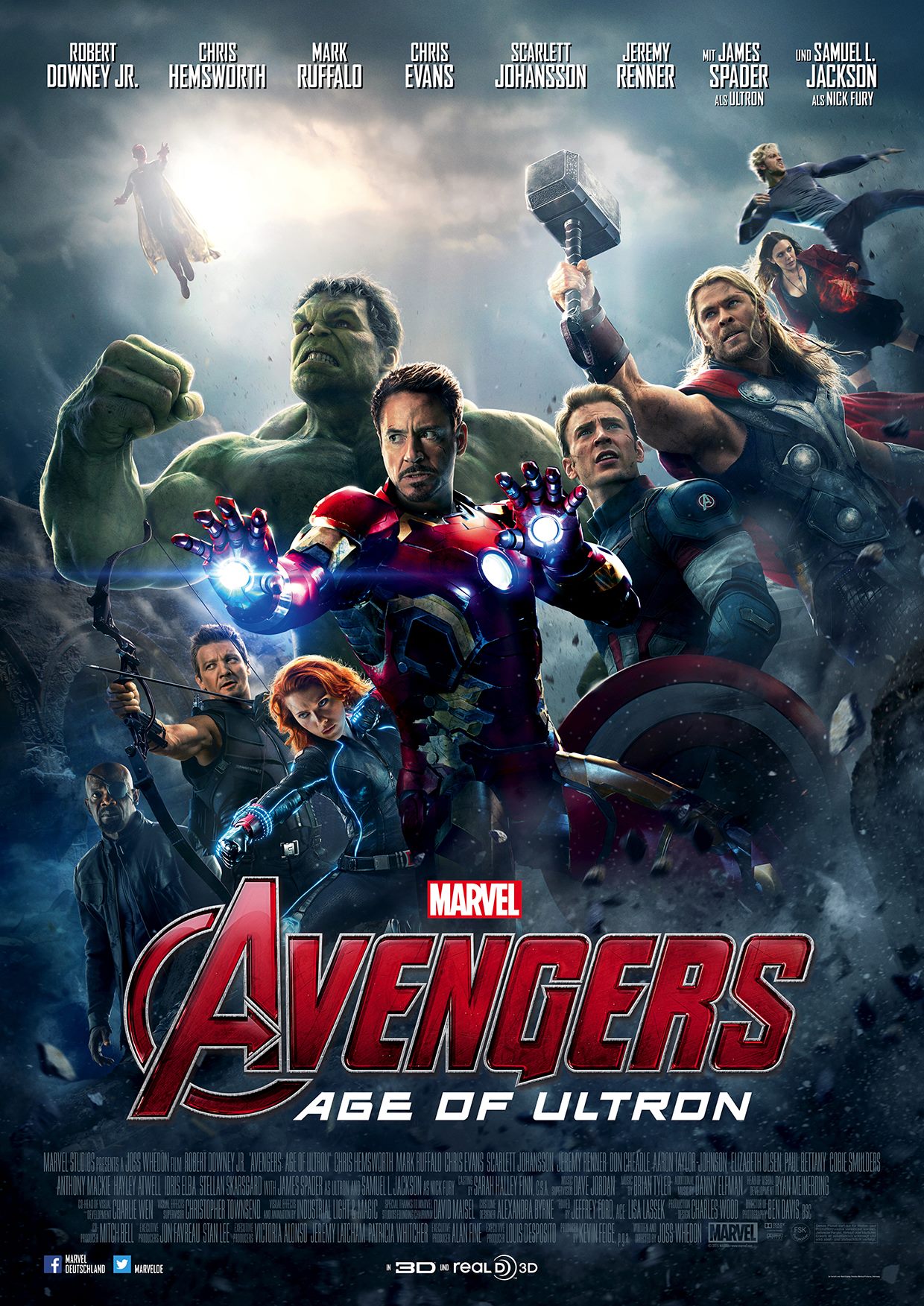 Avengers: Age of Ultron opened across India today, April 24, 2015. This film is set sometime after the events of the second films in the Captain America and Thor solo “trilogies.” We know this because Thor is on Earth and the Falcon (in a cameo) makes an offhand comment indicating that he’s spending time looking for Bucky Barnes / Winter Soldier. Furthermore, we know it because the opening scene is the Avengers working as a team to take down Baron Von Strucker’s fortress (re: Captain America 2 end-credit scene) in a fight to obtain Loki’s scepter. This scene suggests that the team has been working together for a while in taking down Hydra bases of operation globally. (Many have jokingly inquired why Steve Rogers (Cap) wouldn’t have called in his avenging friends during the events of the Winter Soldier film. This film reinforces, rather than solves, that riddle.) At any rate, that opening scene contains an awesome action sequence.
The core premise of the film will not come as a surprise to anyone who has seen the trailers for this film–not to mention the previous Marvel Cinematic Universe (MCU) films and post-credit scenes. Tony Stark (Iron Man) tries to “create a suit of armor around the world” and the program–dubbed Project “Ultron”–goes terribly awry. After Ultron comes into existence, he quickly moves to co-opt the Maximoff twins (better known as The Scarlet Witch and Quicksilver.) Because the twins have an axe to grind with Tony Stark, they willingly side with Ultron. The Scarlet Witch is instrumental in Ultron’s plan. If you haven’t seen the trailers don’t finish this sentence, but for others it will be apparent that the Scarlet Witch’s mind control is used to pit some Avengers against either themselves or others.
The tone of this film is different from the first Avengers movie. In the first film much of the tension springs from unfavorable first impressions and standoffishness. Now the characters know each other and love-hate relationships are rife–some more loving and some more loathing than others. This may make it easier to relate to what’s going on between the major characters. The strained relationships inside the team remain an important factor, and are crucial to the films going forward–most notably Captain America 3: Civil War.)
While the trailers may have led one to believe this would be a big film for Natasha Romanov (aka Black Widow) given the flashback scenes, it’s actually Clint Barton (aka Hawkeye) who has a more pivotal and revealing role in this film. (Perhaps to the chagrin of the many who wonder why he’s even on the team.) However, the evolving relationship between Romanov and Bruce Banner gets a fair amount of screen time–though the need to pack a lot into the film given the huge cast makes this drama feel a bit thin. The twins and their tormented past are also critical to the tone of the film. They hold an event from the past against Stark, but they are ethical people at their core.
The Vision is the character that has been held closest to the vest by Marvel. I won’t say much about Vision to avoid spoiling anything other than that it’s an intriguing character. I was worried that either the way this character was created or the effect he had on the story would be a disappointment, but it wasn’t.
I think James Spader did an excellent job of playing Ultron–a character that vacillates between being childlike and being a grim psychopath. (One may not get the childlike part from the trailers, but this is a brand new intelligent entity, and so it’s clever to show that.)
Like the first Avengers movie, this one has its bit of deus ex machina (bolt from the blue solutions to once insolvable problems), but it’s not the perfection of story that makes these movies engrossing. (I didn’t find it as deus ex machina as the first film–though there is at least one moment that springs to mind.)
What sells these films is: a.) the witty dialogue; b.) the stunning visuals of the action sequences; and c.) the tension between characters both friend and foe. (Probably not in the aforementioned order.) On those three items this film doesn’t disappoint.
I won’t even bother to recommend you see it, as I’m sure–like everybody else on the planet–you will.
I completed three books this week. The first was Richard Wiseman’s Night School. I wrote a lot about this book in my last Reading Report. Night School examines what happens when we sleep, what happens when we don’t, and a host of events that happen in and around our sleeping life (i.e. nightmares, night terrors, sleep walking, etc.) The notion that dreams and nightmares are our subconscious working out waking life problems is well established, but there was some interesting discussion of how to change one’s dreamscape (i.e. lucid dreaming) that was fascinating.

The second book I finished was Sam Harris’s Free Will. I had high hopes for this book, but they didn’t pan out. It’s a very short book (less than 100 pages) on the subject of free will–or the lack thereof. There’s a well-established scientific literature supporting the notion that free will is an illusion. This conclusion was reached by observing that subconscious parts of the brain involved with decision-making light up well in advance of the conscious parts of the brain. The most illuminating example offered is an experiment in which participants were asked to press a button to select a letter or number of their choosing from among a string of rotating letters / numbers. Some subjects became convinced that the scientists had mastered precognition (a class III impossibility according to physicists–i.e. impossible according to the laws of physics as we know them.) What was really happening was an exploitation of the lag between when the individual’s subconscious decided and when they became aware of their decision.
While I’m normally a big fan of brevity, Harris could have put some more pages to good use. First, he barely mentions a couple of the neuroscience experiments, and expects that the reader will treat this all as law. That is, we are to accept that always and everywhere people’s subconscious minds decide some measure before their conscious minds. Harris also scoffs at the suggestion that perhaps the conscious can overrule the subconscious. He seems to deem this as not worthy of study because it would just be the subconscious making a second decision. So we learn about a couple of studies in which a.) the decision-maker has no stake in the decision (is it possible the mind treats decisions about picking a spouse or a house differently than picking a letter or number in which there is no more costly outcome?) b.) those studied are a random sample of individuals who have no particular expertise with their minds. (If I drew a random sample of people and asked each to lift 300 lbs over his or her head. If no one could do it, would I be safe in concluding that lifting 300 lbs was something forever beyond the capacity of every member of the human race? In other words, what if exercising conscious control over decision-making requires training and expertise with the mind.) Maybe all of this has been studied (e.g. high stakes cases and cases with monks and meditators), and we can safely conclude that free will is always and everywhere an illusion–but Harris didn’t make this point. He concludes we will take it as a given just as he has. (Much like he suggests that anyone who truly studied their mind would understand this point already. Would it surprise Mr. Harris to learn that there are people who have spent far longer alone with their minds than he, who have concluded quite the opposite?)
Second, if the conscious mind is just a Matrix Revolutions-style (and Rube Goldberg-style) machine for tricking us into thinking we have choice and control over the direction of our lives (what happened to evolution not over-engineering?), what guides all of these “decisions?” Given that they produce, I might point out, a fairly orderly world. Harris doesn’t answer this. One might guess that he would point to Dawkinesque suggestion that it’s all about genes advancing their own agenda. (A proposition that seems to me has trouble explaining a corporeal who throws himself on a grenade to save his comrades.) I shouldn’t put words in the author’s mouth. Quite frankly, I have no idea whether he believes there are rules or some guide to these subconscious decisions, because he doesn’t tell us. (Maybe he thinks they are random neuronal firings, but I doubt it.) From what I’ve heard of his other books, he doesn’t think it’s a god making these decisions–a sentiment I share. However, there must be something underlying these decisions, and an author writing about this topic should at least make some effort to address it. Black boxes aren’t persuasive.

The final book I finished this week is entitled The Sensual Body. This is a book that discusses a number of systems of movement and bodily activity as means to increase bodily awareness. Among the systems included are Tai chi, Eutony, Kum Nye, running, Aikido, and massage. It’s an interesting overview, but without sufficient detail of anything in particular to be of practical value. It’s the kind of book one might read to see what kind of classes one should take or what more focused books would be of benefit.
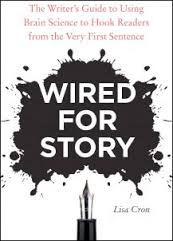
Besides the aforementioned books, I spent most of my reading time on two books that look at two very different subjects from the viewpoint of neuroscience. The first is Wired for Story, and it’s a how-to book for writers that sets itself apart by explaining how humans are hardwired by evolution to love stories. Just as a few notes produce an infinite variety of music. There is an inherent limiting / shaping structure to stories that is ignored at the writer’s peril. Much of the advice offered isn’t that different from other books on writing or storytelling, but one gets insight into which advice one should really treat as inviolable because it touches upon something fundamental to our human nature.
The other book is the only book I purchased this week. It’s entitled Brainwashing: The Science of Thought Control and is by Kathleen Taylor. So far the book is intriguing. The chapters I’ve read so far provide an overview of brainwashing and cults. The middle section of the book delves into the neuroscience behind brainwashing, and the final section gets into practical matters such as how one can make oneself resistant to thought control techniques.


Taken in September of 2014 in Bangkok

Taken in August of 2014 at Wat Mahathat in Ayutthaya