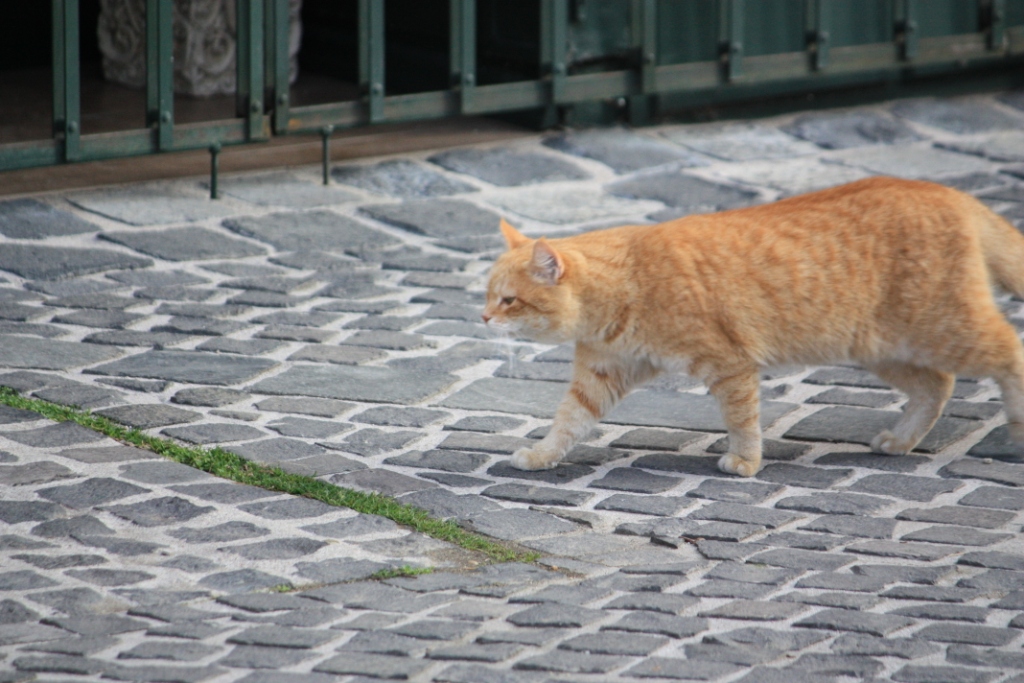
Taken in December of 2014 in Szentendre, Hungary

Taken in December of 2014 in Szentendre, Hungary
 The Memorable Thoughts of Socrates by Xenophon
My rating: 4 of 5 stars
Xenophon gives us an alternative to Plato’s accounts of the lessons of Socrates. As you probably know if you are reading this, Socrates left nothing behind by way of written teachings. All we know of the great philosopher’s teachings come from the accounts of his students. Xenophon’s version (Memorabilia of Socrates) is stylistically different from Plato’s dialogues(e.g. Euthyphro, Apology, Crito, and Phaedo), though Socrates’ wisdom and method (questioning) remain consistent.
I enjoyed Plato’s dialogues on the last days of Socrates more than Xenophon’s Memorabilia. This owes to Plato’s narrative approach, which tells us the story of Socrates’ trial, conviction, and execution. Philosophy is more palatable embedded in a story. However, all of these works (Xenophon’s and Plato’s) are short, readable translations, and so it is worth reading all of them to get a broader access to the thoughts of Socrates.
As with Apology, Xenophon conveys Socrates thoughts on piety and corruption of the youth (these were the charges raised against Socrates that resulted in his hemlock sentence.) Socrates maintained that he was pious, but he did think it a weakness to trouble the gods with questions that men should be able to solve for themselves. His emphasis on self-reliance and fortitude is part of why we so respect Socrates. One sees the imprint of Socrates on the school of Stoicism that would come later. In Memorabilia, Socrates openly mocks those men who cannot bear adversity as well as their slaves. (Yes, Socrates wasn’t so infallibly wise as to see the folly of slavery. I no more advocate paleomania [irrational exuberance for old thinkers / ideas] than I do neomania [irrational exuberance for new ideas.] Still, people live in the context of their times, and if one expects a person to be ahead of their time in all aspects, one will be disappointed.)
Socrates discusses governance and politics frequently in this volume. To a large extent, this is by way of trying to convince men that he believed would be good for governance to participate, and convincing those who he believed wouldn’t be effective leaders (e.g. Euthydemus) not to participate. Toward the end of book (part IV) he talks about the various forms of government (e.g. Monarchy, Aristocracy, Plutocracy, Tyranny, and Democracy.) These ideas no doubt informed Plato’s illumination of eight forms of government in The Republic.
What I appreciate most about Socrates was his groundedness and appreciation of the importance of the body. One can read a lot of philosophy without hearing mention of the body (beyond the thought that it might be an illusion created by the program that runs our brain-in-a-vat system.) One gets the idea that proponents of this discipline largely think of the body as a cart that drags around their great, big, lovely brains. Not so with Socrates. In fact, he rebukes philosophers for not taking care of themselves. He mentions the importance of nutrition, exercise, and sleep [this is where he’s ahead of his time.] Also, Socrates recognizes the damage done by having too great an attachment to comfort. (Here one sees an interest point of overlap with Eastern philosophies that derive from yoga–with its niyama of tapas [austerity and self-discipline.] By the way, that isn’t the only correlation between the Eastern and Western mindset we see in Socrates. e.g. At one point, a wealthy man complains about the poor behavior of his servant, to which Socrates asks upon whom this condition should reflect poorly—the master not the servant. Confucius made a similar statement to this one.)
I think this classic is well worth reading. It’s short, readable, and offers a great deal of food for thought. If you don’t have time for multiple accounts of Socrates’ teachings, you might be kept more enthralled by the Platonic dialogues, but surely you can make time for Socrates.

Taken in July of 2010 in Arequipa.

Taken in July of 2011 in Puno, Peru

Taken in December of 2014 in Budapest
This wasn’t a big week for reading, but I’ve completed about 60% of a book by Richard Wiseman entitled Night School: Wake up to the power of sleep. (I may or may not finish it over the weekend.) This book examines topics such as sleep deprivation, sleepwalking, dreams, nightmares, night terrors, and the power and purpose of sleep. I like that this book crosses boundaries. There are a number of dry self-help books to teach one about how to sleep. There are also a number of creative nonfiction books with fascinating historical and scientific tidbits about sleep, but which have no practical implications beyond providing some intriguing cocktail party banter. This book crosses streams to good effect. It also helps keep one’s attention by using the “night school” premise to interactive ends. There are little quizzes along the way that serve as summaries and encourage one to retain key information.

I only bought one book this week, and that was a short, technical book by Loren Fishman M.D. entitled Pain in the Butt: Piriformis Syndrome: Diagnosis, Treatment, and Yoga. Fishman is a medical doctor who uses yoga therapeutically–primarily for musculoskeletal afflictions like back pain, scoliosis, plantar fasciitis, arthritis, and–obviously–piriformis syndrome.

That’s all for this week. I hope to have more to mention next week.
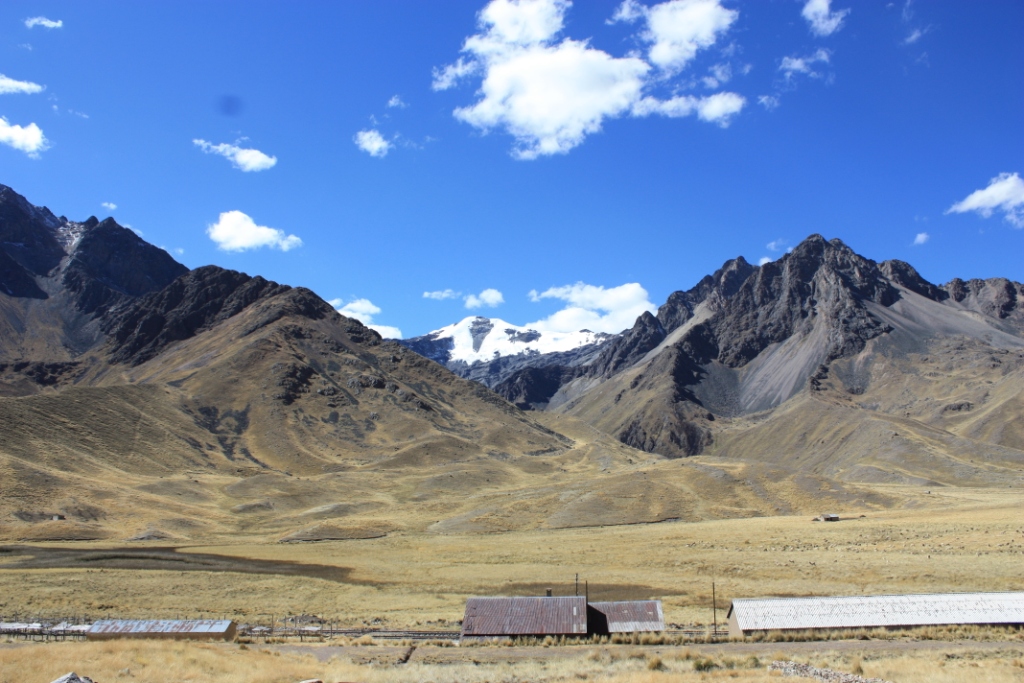
Taken in July of 2011 in the Peruvian Andes
As I recall, these mountains sat near the Willkanuta Mountains. Anyway, they lie somewhere along the road between Cuzco and Puno in the Peruvian Andes.