BOOK REVIEW: The Painted Word by Phil Cousineau

The Painted Word: A Treasure Chest of Remarkable Words and Their OriginsThe Painted Word: A Treasure Chest of Remarkable Words and Their Origins by Phil Cousineau

My rating: 4 of 5 stars

Amazon page

The Painted Word is a collection of interesting words with definitions, insight into each word’s origins and evolution, and interesting or humorous usages. These aren’t all GRE words (massive and mostly useless words that have little value beyond impressing admissions committees.) Many of the words will be familiar to readers without huge vocabularies. On the other hand, there will be words that are new to even New York Times crossword puzzle solvers.

As the title suggests, there’s a little bit of an art-related theme. However, I’m not sure I would have noticed this if it hadn’t been for the title. There are a number of colors included among the words—colors known mostly to interior decorators and not to most heterosexual men. There are also a few artistic styles (e.g. intimism.) However, the bulk of the words aren’t clearly related to the fine arts. Many of the entries are loan words, i.e. words that have been used in English literature or other English-language media but which are of foreign origin.

I’ll include a few of the words that captured my own interest:

Autologophagist: one who eats his / her own words
Bafflegab: language that misleads—intentionally or not
Cataphile: a lover of catacomb crawling
Inkhorn: an over-intellectualized word
Lambent: shining with soft light on the surface of something
Millihelen: the amount of beauty that would result in the launch of a single ship.
Monogashi [Japanese]: the sigh or sadness of things
Sonicky: A great sounding word—coined by Roy Blount Jr.
Oculogyric: eye-rolling
Phlug: belly-button lint
Snollygoster: a shrewd but corrupt politician
Ubantu [Bantu / Xhosa]: the interconnectedness of all things

This book is full of fun insights and statements. I learned that “hush puppies” were literally carried to throw to noisy dogs to get them to stop barking. There are many interesting and humorous quotes. For example, Brendan Behan said, “Critics are like eunuchs in a harem; they know how it’s done, they’ve seen it done every day, but they’re unable to do it themselves.” Brief vignettes are used to help give depth of understanding to words. One such story is about a Luddite looking upon the operation of a steam shovel who said to his friend, “Were it not for that steam shovel, there would be work for hundreds of men with shovels…” to which his friend replied, “or thousands of men with teaspoons.”

I enjoyed this book. You don’t have to be fascinated by the minutiae of semantics to find it readable and interesting. It’s not as much like reading a dictionary as one might suspect.

View all my reviews

DAILY PHOTO: Yaowarat Road by Night

Taken in September of 2014 in Bangkok

Taken in September of 2014 in Bangkok

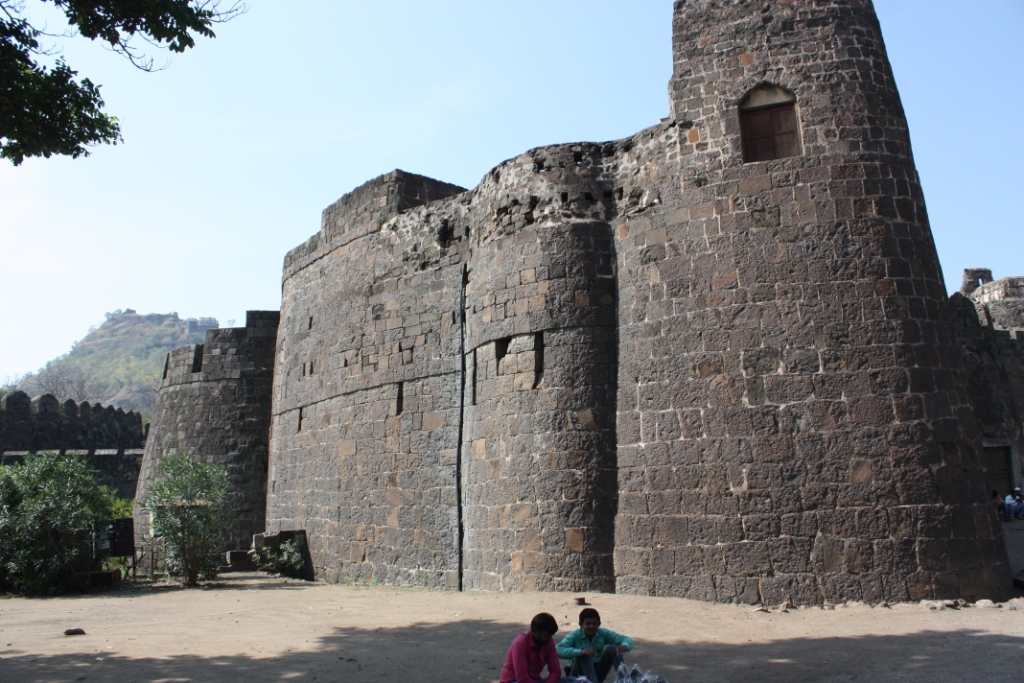
DAILY PHOTO: High Walls of Daulatabad

Taken in November of 2014 at Dalautabad

Taken in November of 2014 at Dalautabad

DAILY PHOTO: Mansion in Black & White

Taken in December of 2014 in Budapest

Taken in December of 2014 in Budapest

This was taken on Budapest’s Embassy Row (i.e. Andrássy út.)

DAILY PHOTO: Clouds over Pest

Taken in December of 2014 in Budapest

Taken in December of 2014 in Budapest

BOOK REVIEW: The Wit and Wisdom of Master Yoda by Yoda

The Wit and Wisdom of Master Yoda: Master Yoda QuotesThe Wit and Wisdom of Master Yoda: Master Yoda Quotes by Yoda

My rating: 1 of 5 stars

[I normally put a link here to the books I review, but wouldn’t want anyone to accidentally buy this one by mistake.]

This review is the same rant I put in my weekly reading review today. If you saw it there, don’t bother reading onward.

This book was a stinker, and I can’t recommend it for anyone–though its saving grace is that it’s slim and thus only wastes a tiny bit of one’s time. What the author apparently did was to watch a Star Wars movie marathon and pull every Yoda line out and collect them together. This is a sad effort in two ways. First, while Yoda isn’t a lead in the movies (and, therefore, has a limited number of lines), there’s a vast canon of Star Wars books, and it doesn’t look like the author trolled any of them for quotes. Second, some of the lines are neither witty nor wise. Occasionally, Yoda has a line equivalent to, “take a left at the second light,” and the author includes such banal quotes. Furthermore, some of the quotes appear a second time in either reduced or extended form. Beyond all these complaints, the author doesn’t even take the time to put together meaningful front matter to tell the reader something interesting that they don’t already know, and thus doesn’t establish his worth in producing such a book. (Also, he doesn’t seem to know accepted protocol for writing quotes inside quotes–i.e. use of single quotes. Which I guess means he probably didn’t just cut and paste all the quotes because then they would have been grammatically correct.) He also could have at least provided told us which movie each quote was from. It’s a lazy effort. It succeeds spectacularly in being lazy. If you’ve seen the movies (or have basic cable so that you can readily do so by way of one of the frequent Star Wars marathons) you’ll gain nothing from this book.

View all my reviews

READING REPORT: April 10, 2015

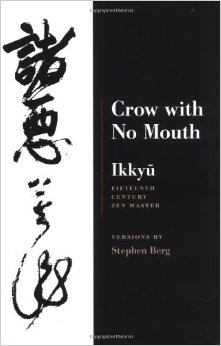
Ikkyu_Berg

I finished four books this week. That makes it sound like a big reading week, but two of the books were tiny and I was well into the other two at the start of the week. I will present them in the order in which I enjoyed them because they hit the great, the middling, and the awful. The best was Ikkyu: Crow With No Mouth, which is a poetry collection by an irreverent 15th century Zen monk. Given that this is a collection of Japanese short form poetry, you may have guessed that it’s one of the short books (as opposed to one that was half read.) [Full disclosure: some will find a few of the poems vulgar, and it’s probably not a collection you want your kids reading until they are of suitable age for graphic sexual description.] Among my favorite verses are:

you can’t make cherry blossoms by tearing off petals

to plant only spring does that


and

it’s logical: if you’re not going anywhere

any road is the right one

and

I live in a shack on the edge of whorehouse row

me autumn a single candle

or

the edges of the sword are life and death

no one knows which is which


HaikuHandbook

(Yes, I’m on a bit of a haiku kick lately. With my RCYT training in progress, I haven’t had a lot of time for more extensive reading or writing lately.) Unlike the previous book, this book on Haiku isn’t a poetry collection–though it does assemble a lot of great haiku, tanka, renga, and haibun as examples. However, this book is–as its subtitle suggests–about writing, sharing, and teaching haiku and related poetic forms. The book teaches one that five-seven-five syllable organization isn’t an essential element haiku,  but rather it should be considered the most readily abandoned and superficial aspect of this form. However, beyond teaching one what one really needs to know to construct haiku, the book offers a lesson plan for teaching haiku to school children and tells us how this Japanese poetry form went global.


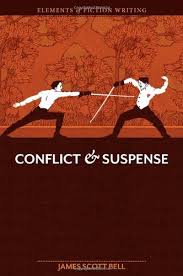
Elements of fiction writing conflict & suspenseElements of Fiction Writing: Conflict & Suspense is my second read by Bell on writing. The first one was on plotting and structure. That first book must have been useful enough to get me to read a second. This book is divided in two parts, the first one on conflict and the second on suspense. (The first is much longer.)  In both cases, the chapters examine how the various elements of fiction (i.e. setting, plot, character, dialogue, etc.) can contribute to creating the much-needed characteristics of conflict and suspense. Bell uses a lot of example text to illustrate his points (mostly–but not exclusively–from commercial fiction), and this is a valuable feature of his guides.


wit&wisdom_yoda

This book was a stinker, and I can’t recommend it for anyone–though its saving grace is that it’s slim and thus only wastes a tiny bit of one’s time. What the author apparently did was to watch a Star Wars movie marathon and pull every Yoda line out and collect them together. This is a sad effort in two ways. First, while Yoda isn’t a lead in the movies (and, therefore, has a limited number of lines), there’s a vast canon of Star Wars books, and it doesn’t look like the author trolled any of them for quotes. Second, some of the lines are neither witty nor wise. Occasionally, Yoda has a line equivalent to, “take a left at the second light,” and the author includes such banal quotes. Furthermore, some of the quotes appear a second time in either reduced or extended form. Beyond all these complaints, the author doesn’t even take the time to put together meaningful front matter to tell the reader something interesting that they don’t already know, and thus doesn’t establish his worth in producing such a book. (Also, he doesn’t seem to know accepted protocol for writing quotes inside quotes–i.e. use of single quotes. Which I guess means he probably didn’t just cut and paste all the quotes because then they would have been grammatically correct.) He also could have at least provided told us which movie each quote was from. It’s a lazy effort. It succeeds spectacularly in being lazy.  If you’ve seen the movies (or have basic cable so that you can readily do so by way of one of the frequent Star Wars marathons) you’ll gain nothing from this book.


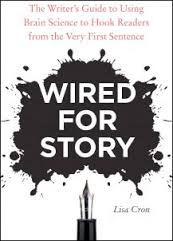
I bought three books during this week, but one of them was the aforementioned Yoda crapfest. On the other hand, one of these books I have high hopes for being both fascinated and educated by, and that’s Wired for Story. This book is about how our brains are evolutionarily optimized to the narrative form, and how one can use this fact to one’s advantage as a constructor of stories.

Wired for Story

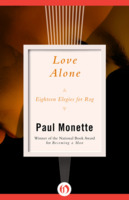
The second book was a poetry collection that is on sale on Amazon entitled Love Alone. I must admit that I picked this book to meet one of my remaining requirements in the 2015 Book Riot Read Harder Challenge–nevertheless I have high hopes for this work.

LoveAlone


DAILY PHOTO: Third World Ambulance

Taken in November of 2014 in Aurangabad

Taken in November of 2014 in Aurangabad

“Uh, there’s a five car pile up with multiple casualites…”

Step 1: Fix the flat on the ambulance. Does anyone have a jack?

Step 2: Find some folks to push the van up to a speed where one can pop the clutch and get the motor running.

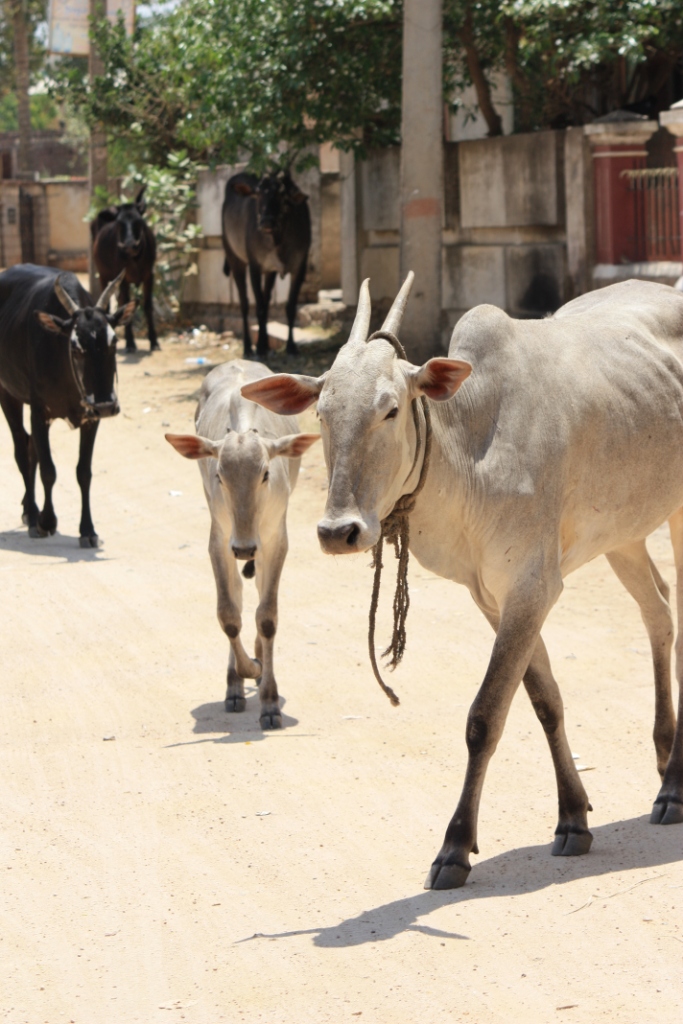
DAILY PHOTO: Street Cattle of Savanadurga

Taken March 28, 2015 at Savanadurga

Taken March 28, 2015 at Savanadurga

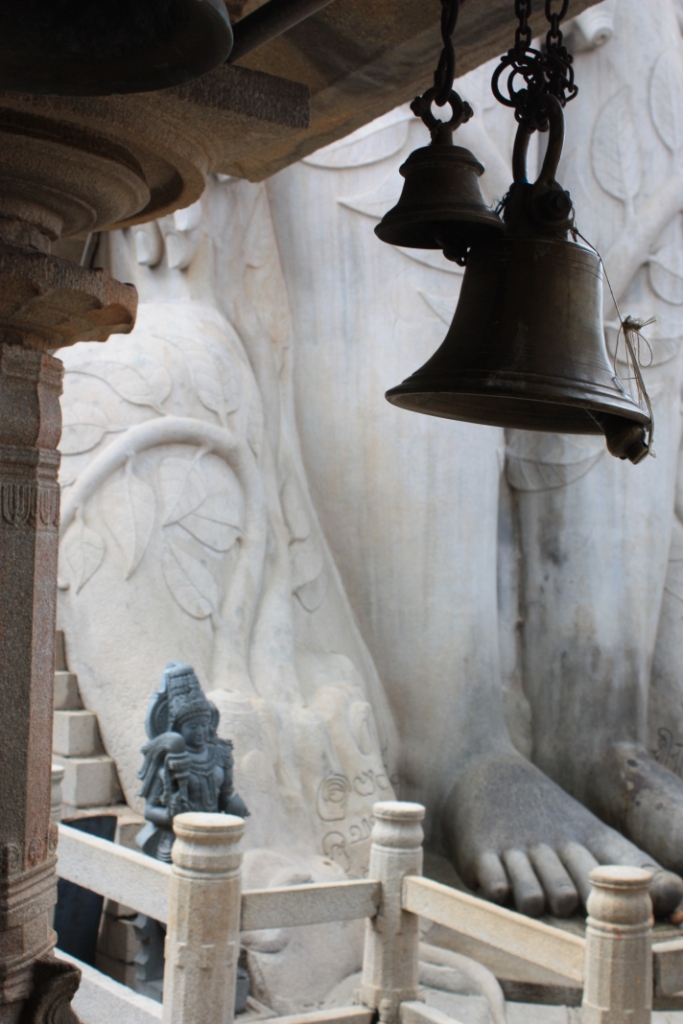
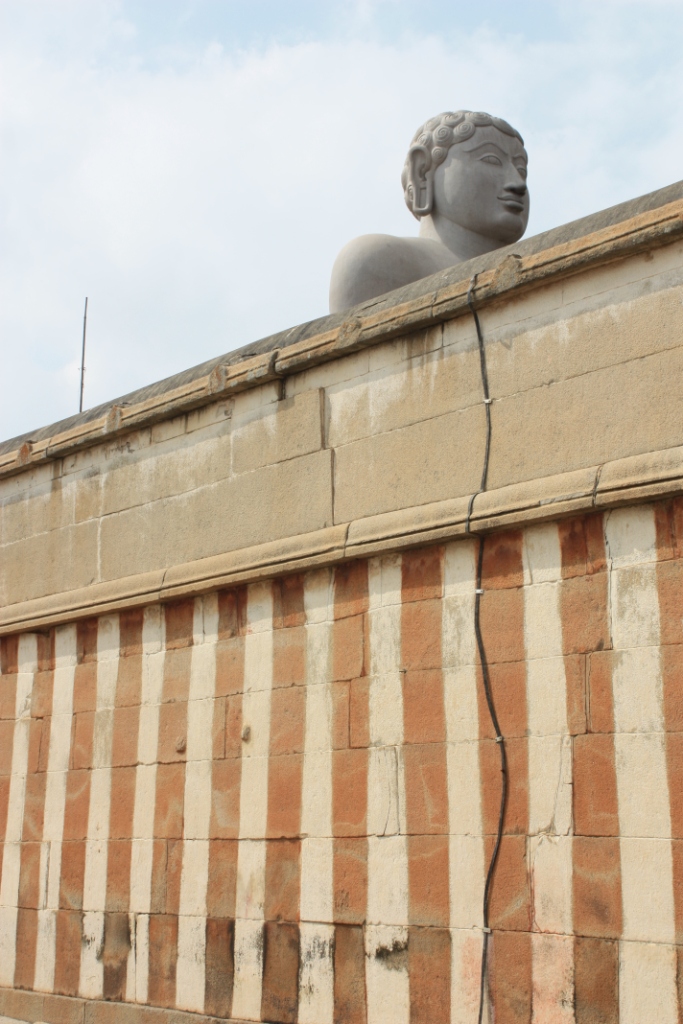
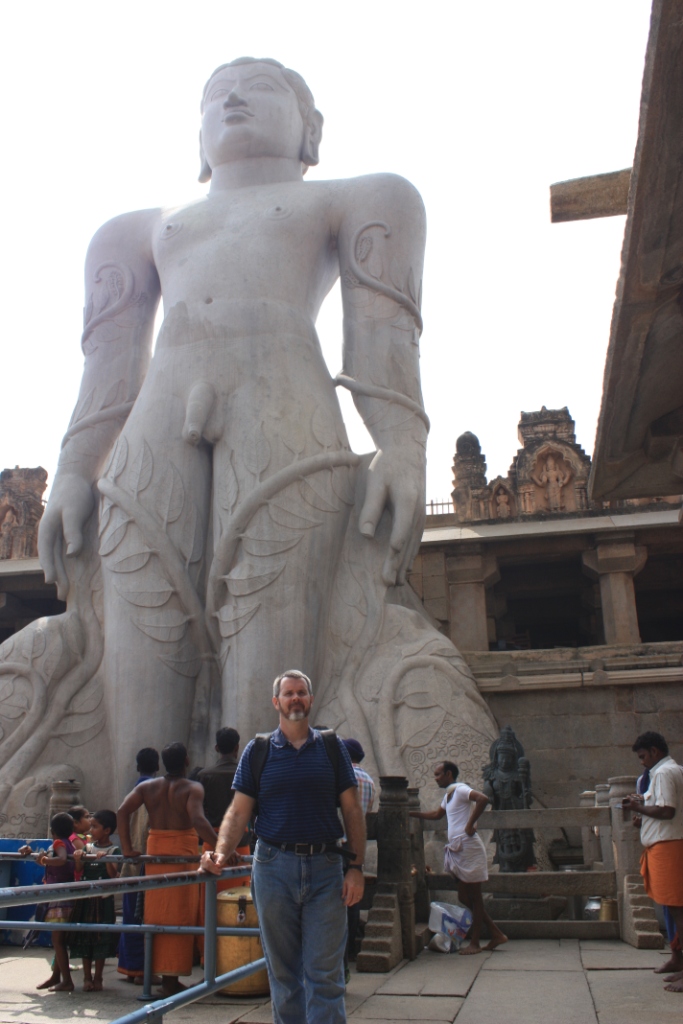
DAILY PHOTO: Bells and Big Feet at Shravanabelagola

Taken in November of 2013 at Shravanabelagola

Taken in November of 2013 at Shravanabelagola

This was taken at a Jain temple that’s about 160km (100mi.) from Bangalore. It has one of the world’s largest monolithic sculptures. The pics below give more indication of size.

IMG_1318 IMG_1306