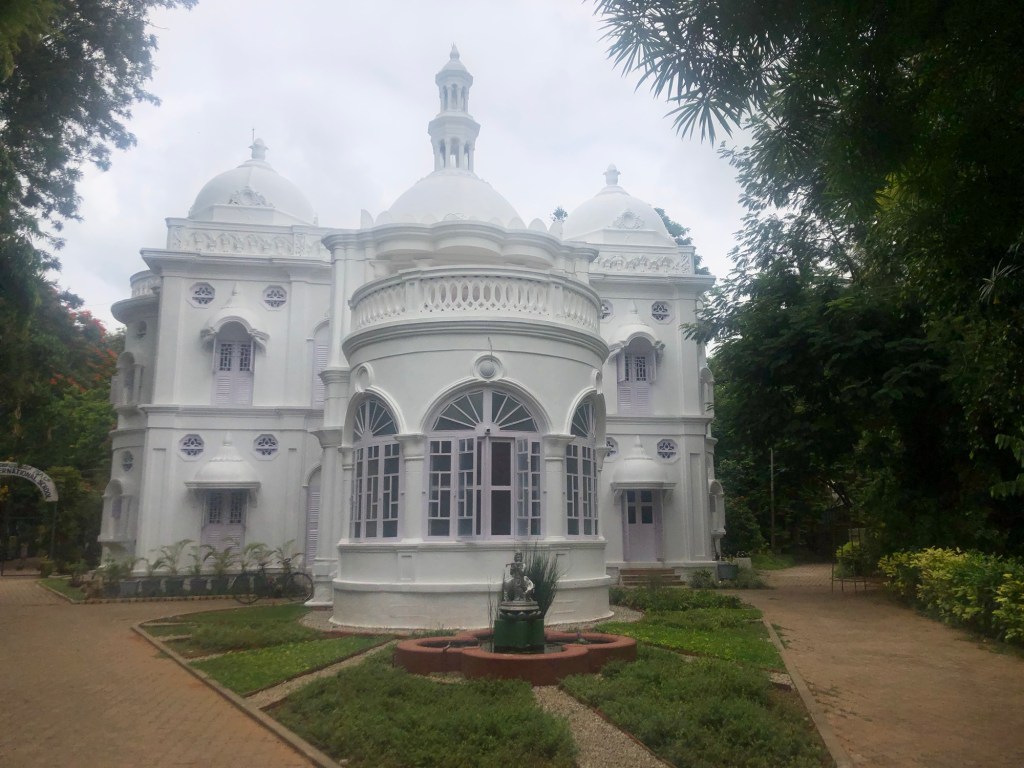
DAILY PHOTO: Sri Aurobindo Ashram of Bangalore
1


By the measure of having taught still useful lessons about HOW to think (those who taught me WHAT to think are largely forgotten along with their lessons,) that would be a tie between my 11th grade Psychology teacher and an undergrad Religious Studies professor. The former, among other ideas, first exposed me to what I would come to believe is the most important lesson of human existence under his label of the “gestalt of expectations.” [I’ve never heard anyone else refer to it as such, but the lesson was sound and I would latter find it in philosophies from Buddhism to Stoicism.] The latter teacher, among other ideas, exposed me to two common opposing modes of fallacious thinking, what he called “the outhouse fallacy” and “the first-est is best-est fallacy” (he was a folksy, if erudite, professor.)
In terms of personal growth and development, generally speaking, there are numerous teachers of martial arts, yoga, and other mind-body practices that are incomparable and thus unrankable. Not to mention, a sound argument can made for the repugnantly unhumble statement that I am my most influential (and most important) teacher. (I state this claim not as though I am unique, but as one that could apply to anyone.)
A practice of feeling gratitude is extremely beneficial in that regard. Simple meditative practices help one become aware of thoughts and feelings more quickly, before they are fed through rumination, making the down-spiral cycle easier to disrupt.
And, sometimes, I rant. This usually veers quickly into comedic territory and I’m reminded of the ridiculousness of taking human life too seriously, given the absurdity of being primates in pants who love shiny things. (It would be unimaginable if human life weren’t absurd.)
Where can you reduce clutter in your life?
My mind. It’s a constant battle.
I don’t have a favorite, but there are several that I could not maintain health and sanity without, including: hiking, yoga, calisthenics, taiji / qigong, free movement, and at least one cardio (I currently swim and run.) I’m currently struggling with juggling.
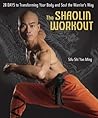
The Shaolin Workout: 28 Days to Transforming Your Body and Soul the Warrior’s Way by Yan MingWhat is your favorite form of physical exercise?
I play no favorites. I love calisthenics, yogasana, running, swimming, functional movement, movement drills (e.g. martial arts,) etc.
I do have least favorites though, and – collectively – those are exercises where I have to go somewhere in particular to have access to some specialized equipment. So, for example, I don’t care for weight lifting or using ellipticals or climbers, etc. (I still enjoy the exercise well enough, but it’s more hassle than it needs to be.)
My whole equipment inventory consists of a yoga mat, a pull-up / dip apparatus, and a few resistance bands, and I can make do without those quite nicely — e.g. when traveling.
Diet: high fiber / low junk
Movement: frequent and varied (includes: yoga, calisthenics, running, swimming, and functional movement)
Mental: breathwork, yogic dispassionate witnessing, and gratitude awareness
Rest: Build in regular and redundant rest throughout the living process
What strategies do you use to increase comfort in your daily life?
I don’t, but I have a lot of strategies for being more content in the face of various situations and environments — including uncomfortable ones. These include the yogic practice of dispassionate witnessing, minimalism, travel (and specifically minimalist travel to places – the less familiar the better,) and intense physical activity.
I think comfort as a major objective in life is overrated, and virtually insures a discontented life. A life in which one can be content, whatever may come along, is a happy life.