BOOKS: “Judo Unleashed!” by Neil Ohlenkamp

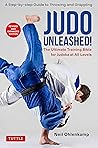
Judo Unleashed!: The Ultimate Training Bible for Judoka at All Levels (Revised and Expanded Edition)Judo Unleashed!: The Ultimate Training Bible for Judoka at All Levels by Neil Ohlenkamp
My rating: 5 of 5 stars

Amazon.in Page

Release Date: July 9, 2024

This is a new and revised edition of a book that has been on the market for many years. It provides an overview of the sport and martial art of judo, with particular emphasis on the competitive version of the art. It does discuss the self-defense philosophy and approach of judo in broad brushstrokes, but the techniques that are discussed (and shown) individually are the competition-legal ones. The book does take a no-nonsense approach and focuses on a straight-forward delivery of the most crucial information for a general reader.

The book’s organization is as one would expect of a martial arts guide: an introductory overview, a detailed breakdown of the techniques by type (i.e. throwing, grappling, groundwork,) and a brief closing (i.e. “where do we go from here”) section. Among the book’s useful features is that Ohlenkamp often tells the reader which judoka were particularly noted for their adeptness with a given technique as he presents said technique. This gives the reader wanting a little more insight the opportunity to do some internet research for video clips of that particular judoka doing the technique in question.

The book has a large number of color photos that are clear and present the gist of each technique in mid-action. It also has extensive appendices discussing rules and the formally accepted techniques of Kodokan Judo.

I found this book useful and would recommend it for those interested in judo, whether as a potential student or to compare and contrast it with other grappling sports / martial arts.

View all my reviews

BOOKS: “Batwing, Vol. 1: The Lost Kingdom” by Judd Winick

Batwing, Vol. 1: The Lost KingdomBatwing, Vol. 1: The Lost Kingdom by Judd Winick
My rating: 4 of 5 stars

Amazon.in page

This New 52 spinoff takes the Batman mythos out of Gotham and into the Democratic Republic of Congo. Batman, himself, plays largely a supporting role as mentor and equipment provider to David Zavimbe, a.k.a. Batwing. The book is careful to avoid having Batman play the role of rescuer, but instead, when Batwing and Batman fight together they do so largely as peers.

I’ve got to say that the name had me worried. It’s like a mashup of “Batman” and “Nightwing” and seems lazy and uninspired in a way that I feared might infect the comic. However, character building is a strength in this volume. David Zavimbe is a former child soldier in the Congo, particularly gifted in killing — though tormented by it, torment that reflects itself in PTSD.

While Batwing’s abilities paired with Bruce Wayne’s technology makes the Congolese superhero a force to be reckoned with, Batwing meets his match in a mysterious villain who calls himself “Massacre.” This six-issue volume focuses on the on-going battle between Batwing and Massacre, as the former tries to disrupt the latter’s killing spree.

This arc is stimulating in that it deals heavily in the complex realities of war-torn Africa. There is the issue of redemption, and whether it is even possible for someone who has been a cold-blooded killer. But the story also generates ambiguity about who is right, and even whether “right” is meaningful in a context where everyone has blood on his hands.

I enjoyed reading this book and would recommend it for all comic book readers, especially those who like either Batman, Black Panther, or both.

View all my reviews

BOOKS: “Nuclear War” by Annie Jacobsen

Nuclear War: A ScenarioNuclear War: A Scenario by Annie Jacobsen
My rating: 5 of 5 stars

Amazon.in Page

Release Date: March 28, 2024

Annie Jacobsen’s new book is fascinating and — quite frankly — horrifying from cover to cover. The book presents a hypothetical minute by minute unfolding of events that culminate in full-scale nuclear war and the end of the world as we know it. A four-hundred-page book that breaks down the events of an hour may sound like a recipe for tedium, like Joyce’s seven-hundred-plus page elaboration of the events of a single day in “Ulysses.” But, it is anything but. There is so much to explore amid the concepts like “the nuclear football” and MAD (Mutually Assured Destruction,) and EMP’s (Electromagnetic Pulse weapons.) There is also so much to go wrong, and much that is virtually certainly go wrong.

That last sentence might suggest that the book takes an excessively pessimistic view to create drama. Sadly, it does not need to. The ultra-fast timeline of nuclear calculus does the work of ensuring that many things will go terrifyingly and irreparably wrong. Decision makers have a short window to make decisions, and “use-’em-or-lose-’em” thinking plays a major role in decision making. (i.e. One can’t count on delaying a decision about a counter response because one’s delivery infrastructure — notably, the human bit of it — will likely be destroyed if one absorbs the first strike.) There is also the fact that — counter to all the abort buttons seen in the movies — once missiles are launched, there is no way to stop them. [A bit of “Dr. Strangelove” writ into the system.] At many of the points at which it may seem that Jacobsen is being pessimistic for effect, she explains the basis for her pessimism: from historical events like the failure of the nuclear hotline to commentary by experts.

Lest one think that nuclear warfare is a threat of the past, and that it’s a solved problem, Jacobsen’s scenario reminds us that it’s not just a matter of NATO v the Warsaw Pact (i.e. America v the USSR in the common conception) anymore. She does this by using North Korea as the instigator. We don’t ever learn the Kims’ theoretical motivation, but all one really needs to know to make one nervous is that the DPRK has been quite happy playing the role of pariah, engaging in a number of activities in violation of international law and norms, as well as that Kim Jong Un might just believe some of the ridiculous things his yes-men tell him. (Not to mention the famines and other destabilizing conditions that could lead some other inside actor or group of actors to take unanticipated actions.) The truly disturbing part is to see how easily a strike by the DPRK could draw Russia or possibly China into the nuclear exchange. [Russia because it’s in the path between the US and the DPRK, and China because it could suffer massive casualties from strikes on North Korean facilities near the border that send radiation to sizable Chinese population centers.]

This book is a must-read for anyone who thinks nuclear weapons are the problem of a bygone era.

View all my reviews

BOOKS: “Batman: Killing Time” by Tom King

Batman: Killing TimeBatman: Killing Time by Tom King
My rating: 5 of 5 stars

Amazon.in Page

Killing Time is a MacGuffin driven Batman story, though less Batman-centric than most of his eponymous titles. For any readers who might be unfamiliar with the term “MacGuffin,” it’s an object that motivates the characters to heroic and villainous extremes of behavior for reasons about which the reader is largely (or completely) left in the dark. Over the course of the story, the reader is teased information about the MacGuffin, but never with enough certainty or detail that it ever feels like it’s not a MacGuffin. On the other hand, it does feel as though there is self-awareness of the MacGuffin-esque nature of the story, and there are some strengths that I think more than offset what might otherwise be considered the laziest of storytelling.

What are these strengths of which I write? First of all, there is a disjointed, non-linear story presentation that facilitates revelations and maintenance of tension, but it is done artfully enough that one isn’t likely to lose the thread. Second, there are some intriguing characters (and some fascinating character development) in the story. Much of the story revolves around an uneasy alliance between Catwoman and the Riddler, and that is explored in detail. There is also a character known only as “the Help” who is both brought to life in a compelling way, but who also generates tension because he’s every bit a match for Batman in a slug-fest. Thirdly, while the book of epic proportions in some sense, with street criminal melees and the like, it’s quite street-level throughout, not veering into magic or god-tier superpowers. Finally, it is a complete and satisfying story arc. [My biggest pet peeve with comic volumes is that they often don’t feel concluded.]

I enjoyed reading this comic book. It’s fast-paced and isn’t afraid to give supporting characters some space to steal the show. If you’re a Batman fan, it’s definitely worth reading.

View all my reviews

BOOKS: “Hōjōki” by Kamo no Chōmei; Trans. by Matthew Stavros

Hojoki: A Buddhist Reflection on Solitude: Imperfection and Transcendence - Bilingual English and Japanese Texts with Free Online Audio RecordingsHojoki: A Buddhist Reflection on Solitude: Imperfection and Transcendence – Bilingual English and Japanese Texts with Free Online Audio Recordings by Kamo no Chōmei
My rating: 5 of 5 stars

Amazon.in Page

Release Date: May 7, 2024 [for Tuttle’s bilingual edition]

This is the Japanese Walden, except that it was written several hundred years before Thoreau’s essay and was predominantly philosophically informed by Buddhism rather than Transcendentalism. (Though those philosophical systems do agree on a number of points, most relevantly that materialism is not a sound route to happiness.) Like Walden, Hōjōki is an autobiographical promotion of the hermitic lifestyle. Both works sing the virtues of life in a simple, rustic cabin in a natural setting, a life of minimalism and subsistence living.

There are many translations of this work available, and so I’ll spend the remainder of this review on what differentiates this edition from the two others that I’ve read. First and foremost, the other versions I’m familiar with were presented as prose essays. This edition is presented in verse, which I understand to be the form that the original Japanese work employed. I should say that in some places the work comes across as poetic in the conventional sense, though in others it seems like a versified essay.

Secondly, this edition has a few handy ancillary features. One is that it is bilingual. Romanized Japanese allows the reader to experience the sound quality of the original. This edition also has graphics in the form of maps, artwork, and photographs. Some of the graphics support or expand upon the information delivery while others seem to be more a matter of creating atmospherics. Also, there are explanatory endnotes that help readers unacquainted with Kamakura Period Japan to understand some of the book’s references that might otherwise remain unclear.

I enjoyed and benefited from reading this edition, even having read others. If you are looking for insight into the ascetic life, I’d highly recommend it.

View all my reviews

BOOKS: “Simple Passion” by Annie Ernaux

Simple PassionSimple Passion by Annie Ernaux
My rating: 5 of 5 stars

Amazon.in Pge

I’ll admit, I picked up this book because Ernaux won the 2022 Nobel Prize for Literature and I’m uncomfortable being ignorant of the work of a Literature Nobel Laureate. Her work is atypical of Nobel Prize winners. She is primarily known as a memoirist rather than a novelist, poet, or even essayist, and while she has a large body of works, many are quite short for prose work — i.e. under 100 pages.

This is a straightforward story of obsession, the author’s obsession with a married man, a diplomat from Eastern Europe during the late days of the Cold War. (The book doesn’t get into any Cold War intrigues, so don’t expect any. It’s a completely personal story.) The autobiographical narrative describes the lifecycle of obsession and is loaded with psychological insight. One sees the degree to which Ernaux’s yearning to be with this man intrudes on all aspects of her life, in as much as she can be said to have a life, so much of it being laid aside for their periodic dalliances. It is the kind of compulsion known mostly to young first lovers and those of addictive personalities.

A couple of the most compelling insights come as fourth wall breaks when Ernaux offers insight into her thoughts on writing. (One is that writing should have an effect like pornography [not necessarily be pornographic,] and another is that she writes to learn if anyone else does the things she does.)

I enjoyed read this. It’s an extremely fast read as it’s only around sixty pages and puts the reader in that compulsive mindset. I’d highly recommend it. I can’t speak to how typical it is of her work because it’s the first I’ve read from her, but it was mentioned prominently in the “best of” lists that came out around the time of her Nobel win.

View all my reviews

BOOKS: “Smoke and Ashes” by Amitav Ghosh

Smoke and Ashes: A Writer's Journey through Opium's Hidden HistoriesSmoke and Ashes: A Writer’s Journey through Opium’s Hidden Histories by Amitav Ghosh
My rating: 5 of 5 stars

Amazon.in Page

Release Date: February 15, 2024 [NOTE: for this edition; the book is already out in some markets in some additions.]

Ghosh has written a fascinating exploration of the profound global consequences of that pretty red flower, the opium poppy. I find the events surrounding the Opium Wars to be among the most incredible stories humanity has written. It is mind-blowing that a substance could be so utterly addictive as to spur wars and global social and economic upheavals. That substance is, of course, tea. Ah, you thought I was going to say opium (or its relative, heroin,) didn’t you? But while opium is fantastically addictive, its addicts were by-and-large in peaceful stupors in (or on) their clouds during the time in question. It is the uppity Earl Grey addict who was draining Britain’s treasury of precious metals, and — as addicts do in their impoverished desperation — turned to dealing drugs.

There have been many books written on this subject, but Ghosh carves himself a niche. First, while accounts often focus tightly upon the central adversarial relationship of Britain versus China, Ghosh examines at leisure the roles of two lesser discussed players — India (not only as a subject of Great Britain but also as an autonomous actor) and America. The importance of India’s involvement, from being a major producer and processor of opium to sourcing the sepoys who actually fought the Opium Wars, has been largely ignored, and Ghosh helps to clear up distortions in the historical record. Second, the book investigates questions around America’s opioid crisis and what history can tell us about its drivers. In particular, what does the China’s explosion of addiction tell us about what might have spurred America’s crisis?

This is a readable and compelling nonfiction exploration of the influence of opium from a writer who has produced novels (e.g. the “Sea of Poppies” trilogy) set around these historical events.

I’d highly recommend this book for individuals interested in the influence of Opium, particularly if one is curious about how history relates to the recent crises and what role Indians and Americans played in events.

View all my reviews

BOOKS: “DCeased” by Tom Taylor

DCeasedDCeased by Tom Taylor
My rating: 5 of 5 stars

Amazon.in Page

It’s the zombie apocalypse in a world brimming with superheroes. Sort of. As is mentioned a couple of times throughout the story, it’s not really zombies as we know them, and there are a few crucial distinctions. But, basically, zombie apocalypse. What matters is that it is a threat that grows to inexorable proportions because it infects efficiently and spreads rapidly, and no one is immune. The threat is increasingly everyone and everywhere. The source is a viral bit of “programming” called the Anti-Life Equation.

This is about as dark as superhero comics get. The heroes that we are used to saving the day experience only victories of a short-lived and pyrrhic nature, while experiencing defeat after defeat. There are no ex machina saviors, at least not that amount to more than a blip in the scheme of things.

I found this story, depressing as it may be, to be intensely suspenseful. Full Disclosure: I also liked the Avengers “Infinity War” movie much more than “Endgame.” It’s not that I necessarily like seeing villains win, but that a story feels more compelling when there is strong and successful opposition and when costs accrue. And credible opposition and true stakes are often missing from superhero comic book stories.

I’d recommend this book for superhero comic book readers.

View all my reviews

BOOKS: “Saga of the Swamp Thing: Book One” by Alan Moore

Saga of the Swamp Thing, Book OneSaga of the Swamp Thing, Book One by Alan Moore
My rating: 5 of 5 stars

Amazon.in Page

This volume presents two separate and complete story arcs. The first features the Floronic Man (Jason Woodrue) as the main villain, and it deals heavily in the origins of Swamp Thing and the creature’s struggles to come to grips with who it is and why it experiences the world as it does. The second story makes a shift to a more supernatural threat and shows a Swamp Thing who is more comfortable in its… roots? twigs? foliage? — whatever Swamp Thing has in lieu of skin.

Alan Moore does his usual superb job of creating a clever and satisfying set of tales. Swamp Thing was groundbreaking in its cross-genre mélange of horror, supernatural, eco-fiction, and sci-fi. There is also a certain smartness about the comic. One is led to consider questions of consciousness and humanity’s role in nature through these stories. And solutions are rarely achieved by punching the villain into a stupor. This won’t be for everyone. In some ways, the comic elevates the wise old mentor to the role of hero.

I enjoyed reading this book and would highly recommend it for readers of comic books and graphic novels.

View all my reviews

BOOKS: “Silk Dragon II” ed. & trans. by Arthur Sze

Silk Dragon: Translations from the Chinese (Kage-an Books)Silk Dragon: Translations from the Chinese by Arthur Sze
My rating: 5 of 5 stars

Amazon.in Page

Release Date: May 28, 2024

Let me begin with a note of clarification: The edition that I read was the “Silk Dragon II” collection, which is due out in May of 2024. I mention this because there is potential for confusion in that this book looks like a sequel (i.e. a completely new set of poems,) but really it is something between a new edition and a sequel. That is to say, while it has a substantial amount of new material, it is built on the original “Silk Dragon” volume. This edition adds eighteen new poem translations, most of which are from poets of the modern era (I mean that loosely, not technically, so 20th century onwards.) I’d recommend readers get this edition, but not both this and the original.

This collection includes a wide range of poems from ancient times through China’s various dynasties to the modern day. It includes translations that are extremely well-known, such as Li Bai’s “Drinking Alone with the Moon” and Liu Zongyuan’s “Snow on the River.” But it also includes many pieces that are likely to be new to most poetry readers, particularly given they will be reading translations (i.e. Non-specialists in Chinese poetry.) As mentioned, the bulk of the new poems are from recent decades and tend to be free verse. [Though there are four new classical poems, as well.]

I found the translations to be evocative and approachable. I am unable to comment on how well Sze captures the feel of the original, but I can say that the translations of poems I’m familiar with were at least on par with other translations that I’ve read. The translations don’t always display the sparseness one sees in classical Chinese poetry, but the challenge of conveying form and meaning and metaphor through translation is immense and, at some level, impossible.

I’d highly recommend this poetry collection for readers of poetry and translated literature.

View all my reviews