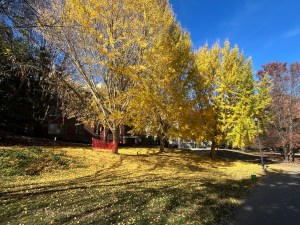
Autumn Passing [Haiku]

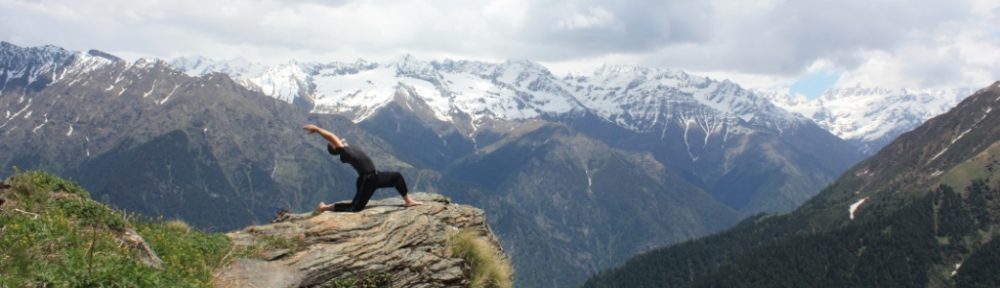
each passing day
more yellow carpets the ground,
more blue shows through.
Leaf Flutter [Haiku]

Autumn leaves
flip and flutter
onto clear water.

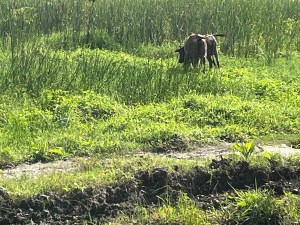
Wetlands Cattle [Haiku]

cattle graze:
each step sinking deeper —
lured by lush green.
A Space Between [Free Verse]

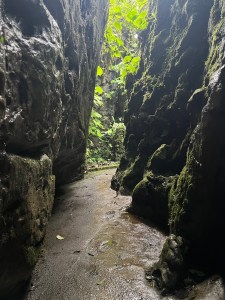
The space between

this & that,

us & them,

then & now,

now & later.

The pregnant pause —
a pause without cause —

Just senseless nothing
in between.
Autumn Rain [Haiku]

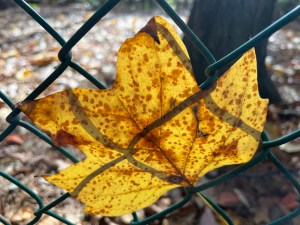
wet yellow leaves
stick to the sidewalk
after Autumn rain.
Bald Mountain [Haiku]

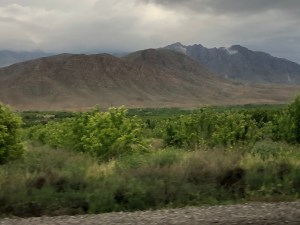
Spring rains stalk up
behind a bald mountain;
a brown flood flows.
FIVE WISE LINES [November 2025]

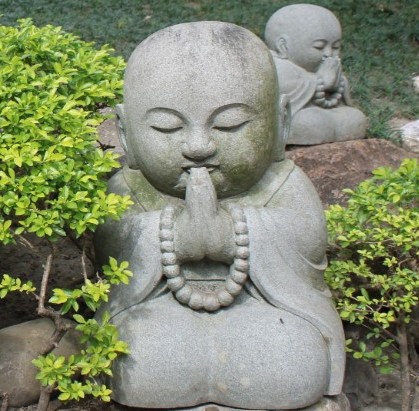
Taken at Fo Guang Shan, near Kaohsiung in Southern Taiwan.

A thing is mighty big when time
and distance cannot shrink it.

Zora Neale hurston; Tell my horse

…if you want to be elected, it is better
to be Mean than to be Funny.

hunter s. thompson; Better than sex

And whosoever shall compel thee to go a mile,
go with him twain.

jesus; Matthew 5:38-40

The only gamblers who will talk openly
are the ones who don’t make money.
The successful ones keep their mouths shut.

Kit chellel; lucky devils

To live a creative life,
we must lose our fear of being wrong.

joseph chilton pearce

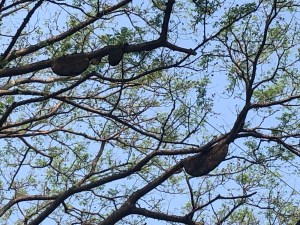
Hive [Haiku]

massive hives
hang from high branches;
no bees in sight.
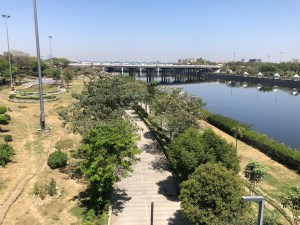
False Water [Haiku]

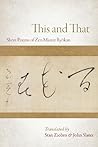
river reflections
tell a tale of still water.
They lie!

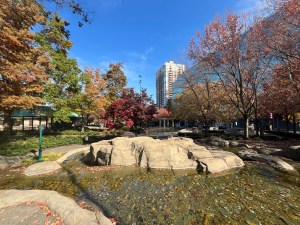
BOOK: “This and That” by Ryōkan [trans. by Stan Ziobro and John Slater]

This and That: Selected Short Poems of Zen Master RyokanThis and That: Selected Short Poems of Zen Master Ryokan by Ryōkan
My rating: 5 of 5 stars

Publisher Site — Monkfish Books

Release Date: March 24, 2026

This is a new selection of Ryōkan’s short poetry (haiku, tanka, and Chinese-Style poems) as translated by Stan Ziobro and John Slater. Ryōkan was a Buddhist monk who lived across the late 18th / early 19th century. These translations are evocative and present the sometimes whimsical and sometimes haunting work of Ryōkan well. While the forms are just three, i.e. haiku, tanka, and kanshi [Japanese Poetry in the Chinese Style,] the style varies, some being imagist and some being more philosophical. Being a monk, Ryōkan’s work is heavily influenced by a Buddhist worldview, as well as by philosophies that interacted with Buddhism — e.g. Taoism.

While I usually have no basis to judge a translation as translation and am left to reflect on it purely as stand-alone verse, in this case, I have enough experience reading translations of Ryōkan to have a feel for his work. I immediately recognized some of Ryōkan’s more famous poems: e.g. the one’s translated in this book as, “Poems? no way // when you see that my // poems aren’t poems // then we can talk poetry” or “Left behind by thief // bright moon // in my window” Yet, at the same time, I felt the translators left some of their own imprint on the poems, and their influence / voice resonated with me.

The book does have front matter to set the stage for readers, and there is a “Notes” section that includes useful background on the poems. I found this ancillary matter useful, but not excessively verbose or intrusive.

If you enjoy Japanese poetry or Buddhist influenced poetry, I’d highly recommend this selection.

View all my reviews