Once there came a man
   Who said:
 "Range me all men of the world in rows."
 And instantly
 There was a terrific clamor among the
   people
 Against being ranged in rows.
 There was a loud quarrel, world-wide.
 It endured for ages;
 And blood was shed
 By those who would not stand in rows,
 And by those who pined to stand in rows.
 Eventually, the man went to death, weeping.
 And those who stayed in the bloody scuffle
 Knew not the great simplicity.
Available in Traditional & Simplified Chinese [w/ multiple translations] at YellowBridge
Packed into the 81 brief chapters of this book is the core Taoist philosophy on life, human relationships, governance, and war. Most often, it offers a wisdom that turns conventional wisdom on its head, advocating for inaction over action, less over more, simplicity over complication, and for recognizing the usefulness of what isn’t.
Some of the book’s central ideas are captured in these quotes:
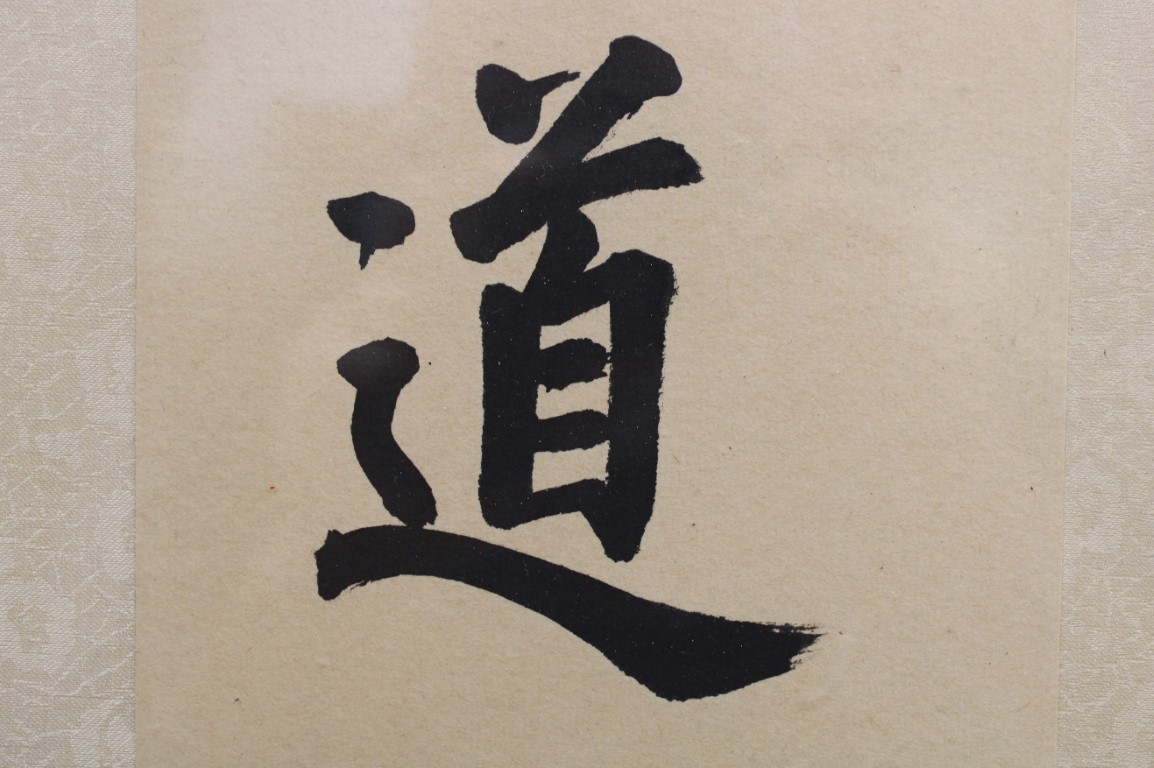
上善若水。水善利万物而不争. “The greatest good is like water. It benefits all without fighting.” [Ch. 8] 金玉满堂,莫之能守 “A house full of jade and gold cannot be guarded.” [Ch. 9] 知人者智,自知者明。胜人者有力,自胜者强。“He who knows others is smart; he who knows himself is enlightened. He who conquers others has power; he who conquers himself is mighty.” [Ch. 33] 柔胜刚,弱胜强。“Softness overcomes hardness; weakness overcomes strength.” [Ch. 36] 道常无为而无不为。“The Dao is constant inaction, yet nothing is left undone.” [Ch. 37] 善者,吾善之;不善者,吾亦善之;德善。“The good, I treat well; the bad, I also treat well. Yeah Virtue!” [Ch. 49] 知者不言,言者不知。“He who knows does not speak; he who speaks does not know.” [Ch. 56] 千里之行,始于足下。“The journey of a thousand li (“miles”) begins with a single step.” [Ch. 64] 天之道,不争而善胜 “The way of heaven is to win without fighting.” [Ch. 73] 信言不美,美言不信。“True words aren’t pleasing; pleasing words aren’t true.” [Ch. 81]
I think this is one of those works that should be read and reread. It may help rewire your brain in useful ways.
The man who says to me, “Believe as I do, or God will damn thee,” will presently say, “Believe as I do, or I shall assassinate thee.”
Voltaire, in On superstition
The real voyage of discovery lies not in seeking new landscapes but in having new eyes.
Marcel proust
The translation of a poem having any depth ends by being one of two things: Either it is the expression of the translator, virtually a new poem, or it is as it were a photograph, as exact as possible, of one side of the statue.
Ezra pound
The people are of supreme importance to the ruler, food is of supreme importance to the people.
Chinese adage
All translators face two choices: leave the reader in peace and drag the author closer, or leave the author in peace and drag the reader closer.
Friedrich schleiermacher (1768-1834) [Referenced in Twenty-Nine GOODBYES, ed. by timothy billings]
Not as religiously as I did in my youth. Counter to the general trend of younger people hollering and protesting but not showing up to the polls, and thus not influencing change because politicians are cued into to the older crowd that tends to show up hell or high water.
Amazon.in Page
This is a translation of a French book about the life and philosophy of Diogenes the Cynic. It’s a thin volume, as there is much that’s unknown about the life of Diogenes, and the dearth of surviving texts means that some of what is believed about Diogenes and Cynic philosophy maybe corrupted by the reports of detractors. I learned a great deal from reading this book, but not because I learned much new about Diogenes, himself. The colorful anecdotes from his life have been extensively discussed.
With respect to what I did learn, it largely fell into three categories. First, I gained insight into the context and environment in which Diogenes lived. Second, I discovered that many of the stories of Diogenes’ life are far less certain than we have been led to believe through the presentations of them in so many books. For example, we know Diogenes was exiled from his native Sinope in relation to a scheme involving currency debasement. This is often straightforwardly stated as “Diogenes was a counterfeiter,” but Roubineau shows that we don’t know much (if anything) about the degree to which Diogenes was involved (i.e. whether he was mastermind, accomplice, or an unwitting pawn.) Third, I benefited from the comparing and contrasting of Cynic philosophy with that of predecessors (e.g. Socratics) and successors (e.g. Stoics,) and – in a few cases – comparisons between Diogenes and other Cynics.
The book consists of four chapters. The first is a discussion of what is known about Diogenes as a historical figure. The second focuses on the Cynics views on economy, wealth, and related ideas. The third explores the Cynic view of the human body and related topics like sex, pleasure, and pursuit of health and well-being. The last chapter considers Diogenes as a teacher and the Cynic approach to practicing philosophy.
I’d highly recommend this book for readers interested in philosophy.
Are you patriotic? What does being patriotic mean to you?
I certainly was as a young man, but increasingly I have shifted towards a more “citizen of the world” worldview. I’m no doubt influenced by my admiration for the life of Socrates (such as we know it,) who was said to have been a valiant and fearsome hoplite warrior in his youth but came to call himself a Citizen of the World. As one becomes governed less by passions and more by reason, it becomes easier to have a logically consistent ethics by doing so.
Consider the question: “Is it wrong to stab a person in the back without warning, a person who you do not know, a person who doesn’t know a thing about you and has never done you any personal wrong, a person who to your knowledge has always lived a good and virtuous life?”
Of course, the immediate impulse is to say that that act is clearly wrong. Really, the only case we can attempt to successfully counter argue would be a soldier in war or a military action acting on lawful orders against an enemy combatant. But everything becomes messy. Is it enough that the soldier is operating on “lawful orders?” In that case, is the soldier a moral individual, if he lacks agency? To what degree can a infantryman or spec ops soldier know that it is – in fact – a lawful order? Can a lawful order be morally and ethically reprehensible and indefensible? The questions abound, and that’s why I suspect Socrates – lover of questions as he might have been – had a shift in philosophy about the matter over the course of his life.
It may seem I’m arguing that this is growth or betterment, but maybe it’s just the natural progression of a life. Maybe we need more passion in our youth and more agency as we age.
Of course, in those elder / “citizen of the world years,” the Athenians straight up murdered their onetime hero, so maybe I have not picked the best role model.











 Tiger Riding for Beginners