FIVE WISE LINES [October 2024]

If any thing is sacred the human body is sacred

walt whitman; Leaves of grass; “I sing the body electric”

Strong in their softness are the sprays of the wisteria creeper;
The pine in its hardness is broken by the weak snow.

Saying of Master Jukyo as Translated by Trevor Leggett in Zen and the Ways

When there is mutual ignorance, confidence indeed is king.

Trevor leggett; Zen and the Ways

Do not see the gate and think it is the house. The house is something which is reached by passing through and going beyond the gate.

YAgyu Munenori’s Art of War (As translated by trevor leggett in Zen and the ways)

Students of the Ways must see clearly that in an untrained man the intellect is like a barrister. It argues clearly and logically, but the aim is not truth, but to reach a predetermined conclusion.

Trevor Leggett; Zen and the Ways

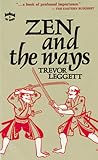
BOOKS: “Zen and the Ways” by Trevor Leggett

Zen and the WaysZen and the Ways by Trevor Leggett
My rating: 5 of 5 stars

Open Library Page

This book is the most densely populated with interesting insights that I’ve read in some time. It’s not new, being first published in 1978, but it takes a variety of approaches to give the reader a better understanding of Zen and the application of Zen mind to martial arts and other activities that found benefit in stillness and clarity. By “the Ways,” Leggett is referring to those arts and activities benefiting from Zen, which include: tea ceremony, flower arranging, painting, poetry writing, and all manner of martial arts. [Often represented by ending “do” in Japanese.] (The latter are dealt with most extensively, but not exclusively.)

The book is arranged in six parts, the first half of which focus mostly upon Zen Buddhism and, particularly, the Kamakura school that found a huge following among warriors and other artists. Those first three chapters take a big to small approach, examining Zen from ever finer levels of detail, starting with an introduction to Zen Buddhism broadly, moving on to the Kamakura developments, and then finally focusing on one particular practice — that of Koans (stories that present riddles which the student can only “solve” in a non-intellectual fashion.)

The second half of the book investigates the ways Zen has been applied to various arts. This is where one sees the varied approaches used to explore the confluence of Zen and artistry. Part Four consists of a series of essays explaining concepts such as ri (universal truth) and ji (formal technique,) ki (vital energy,) and isshin (single-heartedness) / zanshin (lingering awareness.) Part Five consists of historic martial arts scrolls and excerpts, including Yagyu Munenori’s Art of War and Chozan Shisai’s “Tengu’s Guide to the Martial Arts.” The final part consists of stories that illustrate crucial ideas in a readable and memorable fashion.

I was extremely pleased to stumble across a copy of this book in a second-hand bookshop. I’d long ago heard a fascinating story about murders in Edo era Japan of high-level martial artists, all killed in the same manner. They never found the killer, but they figured out how the murders were done easily enough. The killer exploited his knowledge of that school’s techniques to lay a fake that exploited their own technique to create an opening. It’s a cautionary tale that drilling muscle memory is not the end-all be-all of martial arts, and that it can create its own problems. At any rate, I’d never been able to find the source… until now. There is a detailed discussion of it in this book.

For readers interested in how state of mind influences artistic performance, I’d highly recommend this book.

View all my reviews

PROMPT: Hardest

Daily writing prompt
What was the hardest personal goal you’ve set for yourself?

To be an ever-better version of myself. It is relentless, requires engaging fears and weaknesses, and it is worth it.

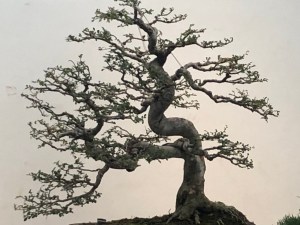
Bonsai [Haiku]

a bonsai tree:
gnarled & twisted,
yet so strong.

“Fragmentary Blue” by Robert Frost [w/ Audio]

Why make so much of fragmentary blue
In here and there a bird, or butterfly,
Or flower, or wearing-stone, or open eye,
When heaven presents in sheets the solid hue?

Since earth is earth, perhaps, not heaven (as yet) ---
Though some savants make earth include the sky;
And blue so far above us comes so high,
It only gives our wish for blue a whet.

Unity [Free Verse]

Many particles to the atom,
Many atoms to the molecule,
Many molecules to the cell,
Many cells to the tissue,
Many tissues to the organ,
Many organs to the system,
Many systems to the organism...

And so it goes,

The many always viewable as
a larger ONE.

BOOKS: “The Black Riders and Other Lines” by Stephen Crane

The Black Riders and Other LinesThe Black Riders and Other Lines by Stephen Crane
My rating: 5 of 5 stars

Project Gutenberg Site

This collection consists of sixty-eight free verse poems, most of which are short (though a small number take up more than a page.) Crane’s poetry is philosophical and often surreal. It’s poetry that’s as likely to spur rumination as it is to evoke intense emotional experience. Some may find Crane’s poetry irreverent because it takes on formal religion and dogmatic groupthink, more generally, but – for others of us – therein lies its appeal.

This collection includes “In the Desert” as well as a number of Crane’s other well-known poems.

I’d highly recommend this collection for poetry readers, particularly those who enjoy poetry of a philosophical bent.

View all my reviews

“Behold, the grave of a wicked man” by Stephen Crane [w/ Audio]

Behold, the grave of a wicked man,
And near it, a stern spirit.

There came a drooping maid with violets,
But the spirit grasped her arm.
"No flowers for him," he said.
The maid wept:
"Ah, I loved him."
But the spirit, grim and frowning:
"No flowers for him."

Now, this is it --
If the spirit was just,
Why did the maid weep?

PROMPT: Attention

What details of your life could you pay more attention to?

When I chop carrots, I should chop carrots; when I walk in the park, I should walk in the park; when I poop, I should poop.

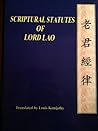
BOOKS: “Handbooks for Daoist Practice: Scriptural Statutes of Lord Lao” by Louis Komjathy [and Lord Lao]

Handbooks for Daoist Practice: Scriptural Statutes of Lord LaoHandbooks for Daoist Practice: Scriptural Statutes of Lord Lao by Louis Komjathy
My rating: 5 of 5 stars

Author Site

This paper presents exposition on, and translation of, an important Taoist work. Like many collections of sutras and other epigrams of wisdom, the “Scriptural Statutes of Lord Lao” are only a couple pages of sayings. To be more specific, they consist of nine practices (九行) and twenty-seven moral precepts. The bulk of the twenty-five-ish pages of this work are a scholarly background on the nine practices and twenty-seven precepts, plus back matter including references and the original (Chinese) “statutes.”

I read this because the nine practices seem like a concise statement of what it means to be Taoist (a topic that can be tremendously complicated given the varied sects, beliefs, and practices that all fall under the heading of “Taoist” — some religious, some philosophical, and some mystical.) Those nine practices are: non-action (which is much more complicated than just sitting on one’s bum,) softness, guarding the feminine, namelessness, stillness, adeptness, desirelessness, contentment, and knowing how and when to yield. The text offers some insight into where these practices come from (e.g. the points in the Dao De Jing that reverence them,) but the scope of the work is far to limited to gain a deep understanding of them (for that one will have to go elsewhere.)

I found reading this short work to be quite beneficial and insightful, despite its thin profile. I’m glad it includes the original text as well as provides citations, as therein much of its value lies.

View all my reviews