There once was a rider of dragons
Who drank alcohol by the flagon,
But dragons are mythic,
So, there was an uptick
In rides when he fell off the wagon.
Category Archives: Myth
BOOKS: “Pawan” by Sorabh Pant
Pawan: The Flying Accountant by Sorabh PantMy rating: 4 of 5 stars
Amazon.in Page
On one level, the more superficial level, this is a superhero fantasy featuring a Vanara (a supernatural monkey-man creature from Indian mythology,) on another level it’s a political satire that riffs on the geopolitics and the military-industrial complex of India. It’s cleverer as the latter than the former.
The story has some clunkiness, including the occasional hard to follow description and sloppy story elements (e.g. the deus ex machina.) That said, it’s pop genre fiction and with regards sloppy story elements they’re par for the course in superhero fiction. My point being that the fact that it’s amusing and mostly readable means it hits its target, strained credulity and logical inconsistencies aside.
The humor is of the broadest range with occasional laugh-out-loud hilarity, lots of mildly amusing jokes, and a few groan-worthy lines that go down like a lead-balloon. That’s not a terrible ratio for a novel.
If you want to check out a book featuring an Indian mythology-based superhero, and you don’t mind a lot of jokes directed at political and national security apparatus leadership, this book is worth looking into.
View all my reviews

DAILY PHOTO: Thar be Dragons


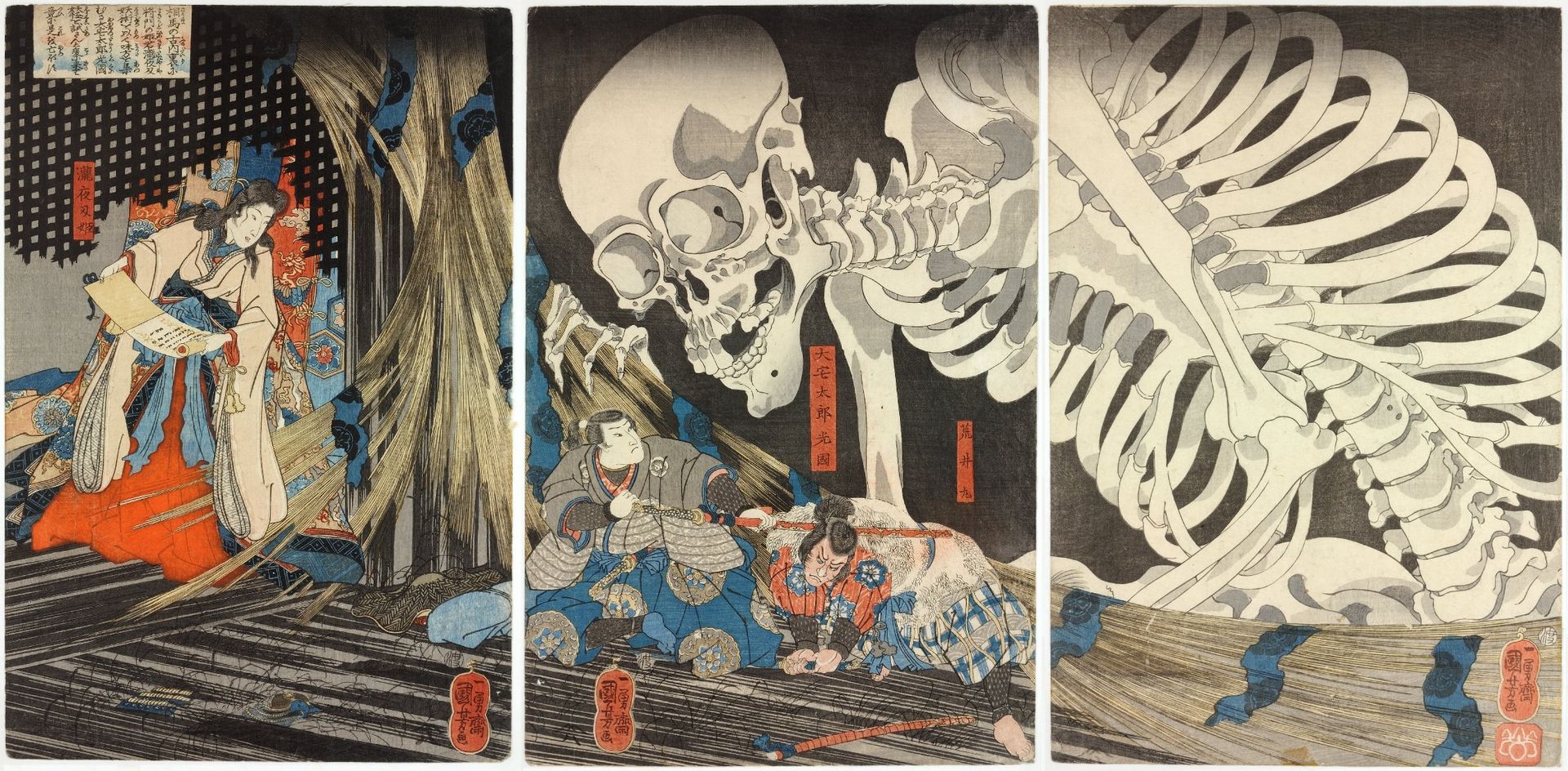
Witch & Skeleton [Free Verse / Senryū]
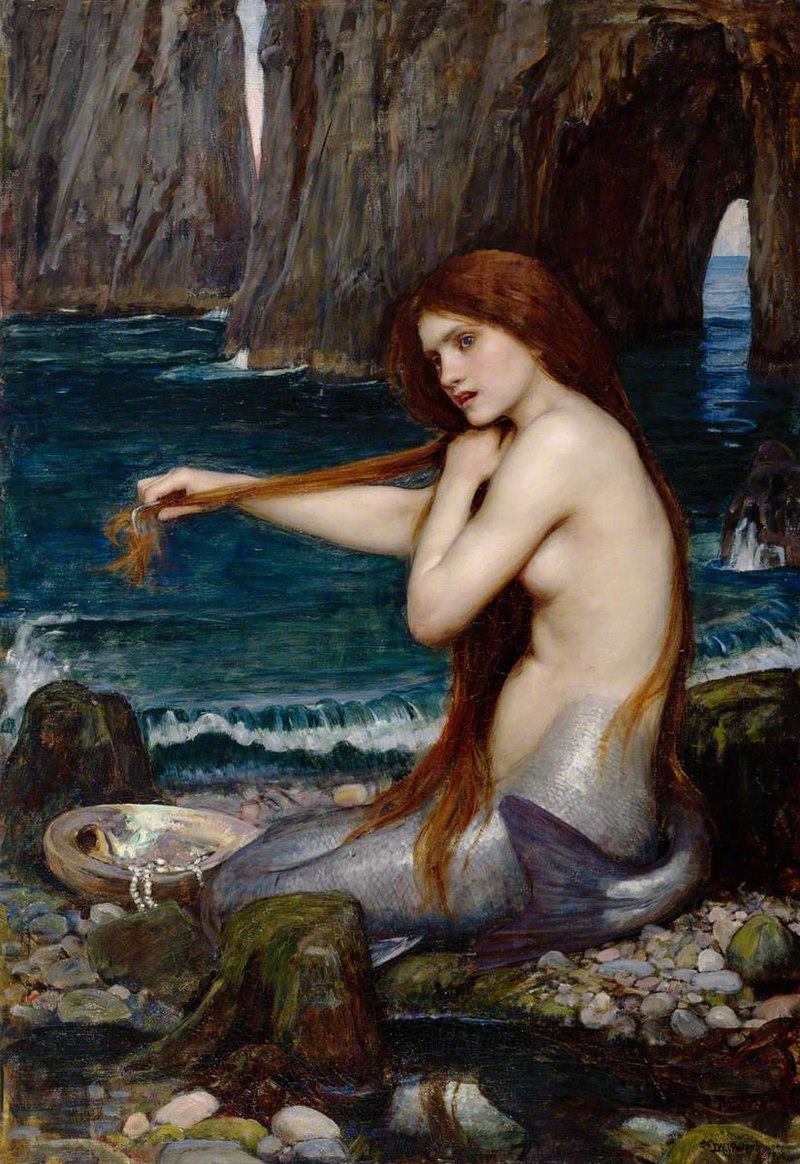
Mermaid [Lyric Poem]
So many miles of coastline,
of rocky coves and outcrops.
Where none can see a straight line,
and water sloshes and slops.
Oh, might one miss a mermaid
hidden among the inlets,
so snug in stone palisade -
a lair of shells and torn nets?
If you say that you've seen one,
I'll not call you a faker.
I rather think it's great fun
to flirt with claims, wiseacre.
A Quick & Dirty Guide for Reading William Blake’s Prophetic Poetry
It’s been said that Blake’s poetry is nearly impenetrable. When people say this, they’re referring to a series of long poems that are often called Blake’s “prophetic books.” It’s not that people struggle much with Songs of Innocence, Songs of Experience, or The Marriage of Heaven and Hell. I doubt anyone is stumbling their way through “The Lamb” or “The Tyger.” In fact, some of Blake’s poetry is highly readable for eighteenth century work.
The challenge is that Blake created his own mythology and he launches in with all these characters that have no sticking power for a reader. This is unfortunate as Blake remains well worth reading for his ideas, his language, and his sui generis worldview. [Even if he doesn’t win you over, Blake will give you something to think about that you’ve probably never considered before.] Blake’s mythology forces the reader to choose between a painstaking read (making notes, re-reading sections multiple times, stopping dead to make connections, etc.) or a casual read that misses most of what Blake is saying because it floats over the connections he is making.
As I’m re-reading Blake, I constructed a chart that helps me track who’s who and what each major character is about. I won’t claim it makes Blake’s prophetic work completely simple and transparent, but it has made reading it more productive and insightful. If you’re reading “Valas,” “Milton,” “Jerusalem” or any of the other prophetic books, I hope it will benefit you as well.

Em/F: these are emanations (i.e. characters that flow from the character from which the pointer originates.) Some refer to these as the feminine forms, hence the “F.”
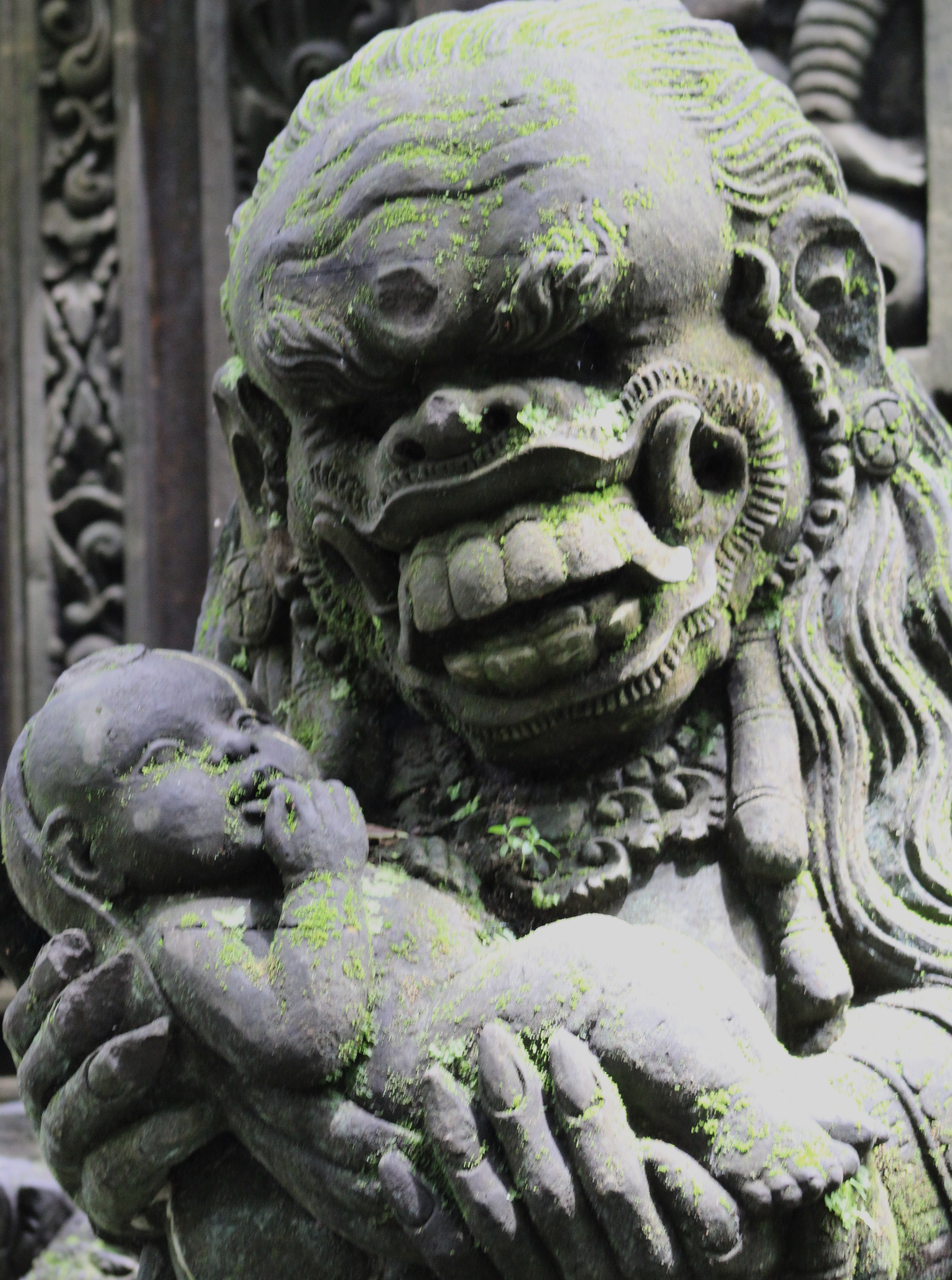
DAILY PHOTO: Strange Statues of the Sacred Monkey Forest
BOOK REVIEW: Classical Mythology: A Very Short Introduction by Helen Morales
Classical Mythology: A Very Short Introduction by Helen MoralesMy rating: 5 of 5 stars
Amazon.in Page
Get Speechify to make any book an audiobook
This book examines the mythology of ancient Greece and Rome, reflects upon how these myths have come to be understood and used in the modern world, and proposes how these understandings may represent partial or incorrect views – in some cases. This approach can be seen from the book’s opening chapter, which investigates how Europa (a figure primarily known for being raped by Zeus) came to be namesake of the continent where classical mythology developed. In later chapters, there’s an exploration of how partial or erroneous understandings of Classical Mythology have been applied to psychoanalysis (ch. 5,) sexuality (ch. 6,) and New Age practices such as astrology and goddess worship (ch. 7.)
I learned a great deal from this book. I particularly enjoyed the discussion about what might have been if Freud had picked a different mythological figure to fixate on, other than Oedipus. How the famed psychiatrist might have extracted lessons that better stood the test of time than those that came about in reality.
While there’s not a great deal of room in a book such as this to explore the full scope of classical myths, the author does use a variety of myths – often well-known stories that don’t require a great deal of backstory – to make the book interesting and thought-provoking.
If you’re looking for a book on Classical Mythology, particularly one that discusses how it (for good or ill) appears in today’s world, I’d highly recommend this brief guide.
View all my reviews
Victory Mythologized [Free Verse]
victory in the palm of the hand (specifically, the winged, laurel-bearing Nike -- goddess who personifies victory) it's a bit on the nose as is the bent front leg as if standing on the chest of a vanquished foe as is the looming, nothing says victory like looming (unless you're a weaver) but victory is never so unambiguously glorious as it's mythologized
BOOK REVIEW: Myth: A Very Short Introduction by Robert A. Segal
Myth: A Very Short Introduction by Robert A. SegalMy rating: 4 of 5 stars
Amazon.in Page
Get Speechify to make any book an audiobook
This book situates myth amid the broader body of scholarship by examining what role myth plays within – or in opposition to – various academic disciplines, including: science, philosophy, religion, the study of ritual, literature, psychology, structuralism, and social studies. The book is organized so as to compare competing ideas of various major scholars in each of the aforementioned domains. So, as the blurb is upfront about, the book doesn’t spend much time talking about what myths are, and the discussion of how myths are structured is only made as relevant to distinguishing various hypotheses.
One does obtain some food-for-thought about what myths are as one learns how different scholars have approached myth. Questions of how narrowly myth should be defined (e.g. only creation stories v. all god and supernatural tales,) and how myths compare to folktales, national literatures, and the like are touched upon. One also learns that some scholars took myths literally (and, therefore, saw them as obsolete in the face of science and modern scholarship,) but other scholars viewed myths more symbolically.
If you’re looking for an introductory book to position myth in the larger scholarly domain and to examine competing hypotheses about myths, this is a great book for you. However, those who want a book that elucidates what myths are (and aren’t) and how they are structured and to what ends, may find this book inadequate for those objectives. Just be aware of the book you’re getting.
View all my reviews