BOOK REVIEW: Your Brain on Yoga by Sat Bir Khalsa

Your Brain on YogaYour Brain on Yoga by Sat Bir Khalsa

My rating: 4 of 5 stars

Amazon page

This Harvard Medical School Guide presents the findings of many scientific studies on the benefits of yoga, and it does so in a manner suitable for the layman. The book is written by Dr. Sat Bir Khalsa, a long time practitioner of Kundalini Yoga and a neuroscience researcher at Harvard, and is co-authored by a science writer trained in journalism.

I became aware of Khalsa’s work when reading William Broad’s The Science of Yoga, a book that is complimentary of Dr. Khalsa and his studies—a favor which Khalsa doesn’t return as he rejects Broad’s work as being overly sensationalist. The book does talk about Khalsa’s research, such as a study with young musicians at Tanglewood that examined how the practice of yoga increased their equanimity. That said, this isn’t merely a summation of Dr. Khalsa’s work. It’s what in academia would be called a literature review, but “literature review” implies a far more dismal reading experience than one gets from this book. It does present anecdotes in a way that is useful for a layman’s book, but would not be well-respected in an academic setting. This work isn’t designed for medical colleagues but rather to be of benefit to run-of-the-mill yoga students and teachers.

This is a very short book at only about 50 pages. The book consists of five chapters after an introduction which sets the stage and gives some relevant background on Dr. Khalsa. Chapter one delves into the effect of stress on the body and mind, and how yoga (and meditation more generally) has been shown to help counter the effects of bad stress (not all stress is inherently bad, as is addressed in the chapter.) Chapter two examines the effect of yoga on the body and in countering a number of common ailments. The third chapter considers how yoga might actually help one to be smarter and more creative. Chapter four presents the results of studies of how yoga can counter depression and improve one’s mood. Chapter five is in a different vein, and might well have been included as an appendix. The last chapter gives an overview of the various types of yoga to assist readers new to yoga on what style might best meet their needs and disposition. This is a nice feature for those new to yoga, but also for veteran practitioners who’ve practiced one style and might not be aware of the wide range of styles out there. (A few of the styles mentioned are popular in India, but I don’t think are as well-known in the West.)

For such a thin book, this work covers a wide range of topics including–but not limited to–the effects of yoga on sleep, the immune system, neural plasticity, memory, math skills, and mood. A nice feature of the book is a series of brief exercises that one can practice to help reduce stress or achieve a desired goal. These practices are generally located at the end of chapters. Finally, while this book isn’t written primarily for doctors and other scientists, it’s endnoted so those interested in tracking down the studies the book references can readily do so.

I’m a big fan of applying a scientific approach to the study of ancient methods such as yoga. I would, therefore, recommend this book for yoga teachers and students who are interested how precisely these practices can assist them. It’s extremely short and easily digested. It’s in no way overbearing with medical jargon and is readily understood by anyone with a basic education in biological science.

View all my reviews

TODAY’S RANDOM THOUGHT: “That” Doesn’t Make You So Mad

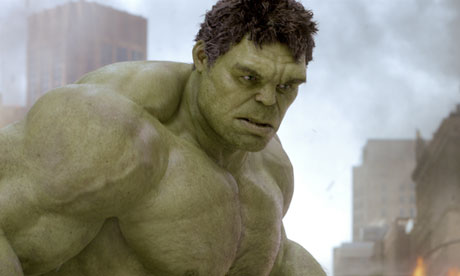
Source: Avengers Movie

Source: Avengers movie

“That makes me so mad!” One hears it all the time. It has to be among the most commonly uttered phrases in the realm of emotional experience. And, of course, it’s completely and utterly wrong. Your anger is a wholly contained neurochemical response. To credit something external with your anger is to grant that person or thing power over you–to enslave yourself. (Stoic philosopher, and former slave, Epictetus was known to piss off gentlemen citizens by asking them if they were “really free.”)


This isn’t to say there isn’t just anger.  However, think about what emotions are. Our emotions are a system evolutionarily evolved to allow us to make decisions with limited or no information. Without emotions our species, if we ever came to be, would have likely become extinct by way of “paralysis by analysis.” We know that happens to people who have neurological damage that keeps them from experiencing emotion. You might think they would become cold and rational Mr. Spocks, but the defining characteristic of such people is that they become paralyzed by indecision. It turns out that we make a lot of decisions with limited information or from an inability to determine a clear winner by way of facts and reason. Emotion plays and important role in those cases.


Chances are that if your immediate gut reaction to something is anger, you probably haven’t worked out a rational argument for your preference. If one has a clear line of reasoning rooted in fact, anger isn’t necessary to justify a position or decision. If your gut reaction to something is emotional, see whether you can  noodle out a rational reason before you swing into too rash an action…. unless the crosstown bus is careening at you.


Paleo-Stressing: Acute v. Chronic Stress

"What happened to the good ole days when I ate you people--not lived in your cages?"

“What happened to the good ole days when I ate you people–not lived in your cages?”

Paleolithic dieting is all the rage these days. I’m no expert on the paleo-diet, but–as I understand it–this refers to the practice of eating the foods consumed by our pre-agrarian ancestors. The idea is that if one consumes the foods that our species is evolutionarily-optimized to eating, one will be healthier.  Whether one believes in the merits of the paleo-diet or not on the whole, it’s hard to argue that one wouldn’t be better off eating less highly-processed and highly-refined foods and more things that look like food at a glance.


Our diet isn’t all that has changed since the days of our pre-agrarian ancestors. Modernity has brought with it an entirely new way of experiencing stress. Eliminating or reducing stress is a common topic of discussion, but not all stress is created equal. There’s a necessary form of stress, a stress that makes one better, stronger, faster, and smarter. We don’t want to willy-nilly eliminate stress; we want to reduce the wrong type of stress.


Our ancestors—like animals–experienced brief periods of intense stress (e.g. saber-tooth tiger attacks), followed by longer periods in which they were free of deadlines, carpools, and after-school activities. Now, no one likes to have a saber-tooth tiger stalking them. It’s unpleasant. Modern humanity has gone to great lengths to eliminate those short bursts of terror, but not without cost. (If you don’t believe me read Robert Sapolsky’s Why Zebras Don’t Get Ulcers.)


Whether or not you believe that eliminating acute instances of terrifying stress is bad for mankind, it’s hard to argue that modernity’s leveling process didn’t eliminate stress, but instead resulted in a chronic stress on a smaller scale. People today have impossibly long daily to-do lists, and they have to accept trade-offs between work, family, and personal development.


It’s true that you don’t get eaten by a giant cat when you drop the ball, but life is so packed diverse events that one may feel like one is dropping some ball constantly. If your boss thinks you’re a model employee, then your kids are probably going to need therapy. If you have a contented home life, your boss may have his or her eyes open for someone who can give the firm consistently 70+ hour work weeks. If you feel you’re doing alright on both the work and family front, your body and / or mind is probably a train wreck.


Chronic [mini] stress may feel better than acute [catastrophic] stress, but it takes its tolls in various ways. First, with our sympathetic nervous system (fight-or-flight reaction) constantly engaged our body’s power to heal itself is reduced. When the parasympathetic nervous system is engaged, the body devotes resources to long-term goals like getting healthier, but in stress mode activities not relevant to immediate survival shut down. This is a great system if you have periodic life and death stress, but is not so good if you’re under constant stress.


Second, chronic stress reduces sleep, and sleep is essential to one’s mental and physical well-being. There are a wide variety of symptoms associated with sleep deprivation such as forgetfulness, decreased concentration, decreased alertness, reduced reasoning ability, diminished problem-solving capacity, and depression—all of which can diminish our physical health through accidents, ailments, suicide attempts, and lack of energy for exercise.


Third, chronic stress can make one fat, with all the health issues that result. Some people use food as a coping mechanism. Other people eat too fast or choose their food poorly because of time constraints or because they are not mindful of eating as their monkey minds churn at a mile a minute. Then there is the more convoluted and complex issue of cortisol–a hormone released under stress that is linked to weight gain in at least some cases. Even if you don’t have a problem on the calorie intake side, the stressed individual may not do so well on the calorie burning side—either because of a lack of time to exercise or a lack of energy.


Modern humans are uniquely suited to chronic stress because we are the only species that achieves the same physiological stress response by remembering and obsessing about a stressful event as experiencing it. Abandoning the modern approach to living isn’t an option most are willing to entertain; but there are ways to combat chronic stress.


Move – Meditate – Mindfully Breath: The bad news is you’ve got to shoehorn these activities into your schedule daily (or at least several times a week.) The good news is that they don’t need to take up a lot of your day. There are a number of systems that address all three components in one handy package such as Qi Gong, Yoga, and some martial arts. I don’t think it matters so much which one chooses as how one goes about one’s practice.


Movement strengthens and strategically stresses the body, but it also increases one’s bodily awareness so that one becomes aware of how stress is manifesting itself in one’s body. Meditation teaches one how to live in the present moment, and it trains one to recognize the seeds of negative thought and emotion earlier so that one can counter-act them. Obviously, breathing is essential to life, but learning to be aware of one’s breathing patterns and to “manually override” the breath patterns associated with harmful emotional states is a beneficial skill.


Massage / Bodywork: Whether self-administered or other-administered (the latter allowing greater distressing–particularly if the masseuse is skilled) massage is an activity, like movement, that can help one become aware of where one is physically holding one’s stress. These physical manifestations of stress can exacerbate the whole experience of stress. One should take time periodically to have bodywork done. A day rarely goes by in which I don’t work on my own neck, shoulders, head, or face, and I occasionally get professional Thai Yoga Bodywork done.


The Places that Scare You: Force yourself to go someplace (not necessarily literally a “place”) that scares you once in a while. This needn’t be skydiving or hand-gliding—but it could be. It may be a martial arts class in which one has to put on the gloves occasionally and go at it. It may be joining Tostmasters and having to give a speech in front of a crowd. It may be traveling to some backwater where you don’t know the language, but you want to learn. This is a very personal issue. (i.e. A Type-A personality he-man may not find that skydiving is outside his comfort zone. If so, sorry, skydiving doesn’t count, he may need to learn ballroom dancing, or something else that truly takes him outside being comfortable.) KEY POINT: The problem with hiding from all stressors is that it doesn’t result in a stress-free life, what happens is that smaller and smaller stressors loom bigger and bigger in one’s mind. Which brings us to…


Perspective:  One must put life’s challenges in perspective. Each person’s problems are important to them, and I don’t want to diminish anyone’s problems, but—come on—you’re not going to be eaten by a freaking saber-tooth tiger.

Yoga for Martial Artists

Long before I ever took a yoga class, I was doing a kind of yoga. It may have even had its roots in India, but it also might have blossomed independently. In the Japanese martial art I study, we called it junan taiso, and many of the poses would be recognizable to a yogi. While it didn’t include the complex and balance-challenging poses seen in yoga, stretches like the butterfly (Poorna Titali Asana), straddle stretch (Upavistha Konasana), and the back stretch (Pashchimottanasana) were virtually identical. As with yoga, the manner of breathing was as important as the nature of the stretch.

Butterfly Stretch (Poorna Titali Asana)

Butterfly Stretch (Poorna Titali Asana)

Back Stretch (Paschimottanasana)

Back Stretch (Paschimottanasana)

Straddle Stretch (Upavisthakonasana)

Straddle Stretch (Upavisthakonasana)

Flexibility is key in the martial arts, and not just the ones with high-flying kicks. Even grapplers and practitioners of the less fancy striking systems gain from increased flexibility, but it isn’t only increases in range of motion that yoga offers.

Let’s consider a modest front kick to a target no higher than the solar plexus. One might be inclined to say, “I don’t need yoga to help with that, I do that kick all the time, and have no problem reaching my target.” Do an experiment. Take a full 30 seconds to do the kick, from the time the foot leaves the floor to the time it extends out, and then hold it for 15 seconds, or so. If you succeeded in this without any problem, you may be good to go.

Front kick, slow-motion style.

Front kick, slow-motion style.

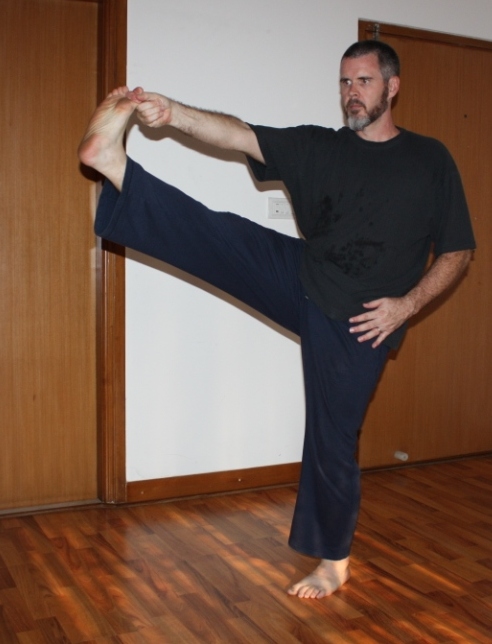
However, there are three problems that might plague one, and yoga is tailor-made to fix two of them. First, you may not have adequate range of motion. You may have thought you did because you can kick at speed and reach the target. But, you say, “Why would I need to kick in slow motion?” You wouldn’t, but this exercise shows you that you are having to use inertia to kick through the resistance of your own muscles. Unless you’re a hardcore bodybuilder that resistance might not seem too daunting, but you are essentially having the brakes applied–albeit softly–to your kick and that’s costing you speed and power.  Yoga can help you develop that range of motion. Consider the pose below, which requires the same type of flexibility.

Hand to Big Toe (Utthita Hasta Padangusthasana)

Hand to Big Toe (Utthita Hasta Padangusthasana)

Maybe you can raise your leg, but keeping it cantilevered in place is too much for you. This means you don’t have the strength to support your own leg. Either your leg is  heavy, your strength is lacking, or both. Building this kind of strength isn’t necessarily yoga’s forte. There are styles and approaches that may help you build that strength, but there are other things you can do that may be more efficient for that purpose–not the least of which is doing a whole bunch of kicks one after the other without a break until your leg is burning, and then doing some more.

You may have had the strength and flexibility, but found it hard to stay on balance. The naysayer says, “Yeah, but that imbalance would never be noticeable at speed. That is (as with the lack of flexibility) one can hide weaknesses with speed. While there maybe some truth in this, a lack of balance will cost you in subtle ways, and yoga can help. There are a number of postures that enhance one’s balance, balance on one’s foot, one’s head, or one’s hands (the latter could be useful for the ground grapplers.)

Warrior III (Virabhadrasana III)

Warrior III (Virabhadrasana III)

Headstand (Shirshasana)

Headstand (Shirshasana)

The Crane (Bakasana)

The Crane (Bakasana)

Tree (Vrksasana)

Tree (Vrksasana)

There are a couple of other areas in which yoga can help one’s performance as a martial artist. One is expansion of bodily awareness of issues of alignment and posture. These might not seem so crucial, but if you are in the martial arts for the long-haul, then having the awareness to make small adjustments can be the difference between chronic ailments or a lack thereof. It can be difficult to discover a misalignment in the quasi-combative environment of martial arts training. It’s easier to notice these issues in the slow and controlled practice of yoga.

Postures like Warrior II and the Side Angle Pose and show you where you are holding tension that you might not otherwise be aware of.

Warrior II (Virabhadrasana II)

Warrior II (Virabhadrasana II)

Side Angle Pose (Utthita Parsvakonasana)

Side Angle Pose (Utthita Parsvakonasana)

It must also be remembered that asana (postures) are only a part of yoga. Another aspect that can be extremely helpful for martial arts is pranayama, or the discipline of breathing.  There’s no substitute for cardio, but that doesn’t mean that one can’t benefit greatly from learning more about how to breath, and the science of breath. This is an area in which yoga excels. The great yogis made extensive study of breath and the effects that are achieved by various types of breathing, and these exercises can expand and strengthen the diaphragm and the muscles of the rib-cage. One tends to see the coup de grace strike and think, “There’s your problem.” However, often it’s fatigue that’s the underlying culprit. Better breathing can reduce fatigue.

Of course, meditation is another critical skill for calming the mind and learning to live in the present. Many martial artists already practice some form of meditation, but this is another option.

There is one more benefit and that is building greater confidence in your ability to exercise control over your body. There are many challenging postures in yoga. I don’t advocate all asana that have been taught historically because there can be such a thing as too much flexibility for a martial artist and some poses exercise joints in ways that were not meant to operate. There needs to be a proper balance of strength and flexibility, a proper tension within /between the skeletal and muscular systems. However, there are many poses that just take a bit of time and effort to develop the skill without putting too much wear on the body.

8-Twists Pose (Astavakrasana)

8-Twists Pose (Astavakrasana)

BOOK REVIEW: The Miracle of Mindfulness by Thich Nhat Hanh

The Miracle of Mindfulness: An Introduction to the Practice of MeditationThe Miracle of Mindfulness: An Introduction to the Practice of Meditation by Thích Nhất Hạnh

My rating: 4 of 5 stars

Amazon page

This book by the renowned Vietnamese Buddhist monk, activist, and poet, Thich Nhat Hanh, offers pointers on how to live a life of mindfulness. Like most of Hanh’s works, this one is brief, concise, and the front and back matter account for about as much verbiage as the chapters themselves.

The seven chapters that make up the book proper examine mindfulness from various angles, with various approaches, and have a loose organization. The most readable of these chapters–owing to its narrative format–is the last, which retells a Tolstoy story about an Emperor who receives three questions and–unable to find suitable answers by offering a reward to his subjects–dons a disguise and visits a hermit sage. Needless to say, the sage (and life events) enlighten the Emperor, and the answers revolve around the theme of mindfulness. Among the most thought-provoking of the chapters is one that proposes that one take one day of the week to focus on mindfulness. Hanh offers advice on how to best select and structure such a day.

While the appended matter of some of Thich Hhat Hanh’s books can read like filler (intended to reach a page quota), that isn’t so much the case with this book. The most valuable of the appendices gives 32 exercises for building mindfulness. Many of these exercises are variations on a theme, and some are much more extensive than others, but it’s a crucial section and might even be called the heart of the book. Likewise, there are five sutra translations that will be appreciated by readers who are actually Buddhist. (Non-Buddhists may find the sutras to be a less colorful and more repetitive restatement of what Hahn has told them in the chapters. If one pays attention to the chapters and does the exercises, reading the sutra’s isn’t necessary for those who are not students of the religion.)

There is an odd postscript by one of Hanh’s students that is like those I’ve seen in other Hanh books. It’s an odd little testimonial. I put it in the filler category as anyone buying the book knows who Thich Nhat Hanh is and about the accolades he has received and, therefore, they don’t need a prologue telling them how awesome he is. It actually detracts from his persona as a wise man, because it makes one wonder who inspired the little ego trip. I suspect this is more a publisher desired addenda than an author inspired one, but, at any rate, it’s not useful. It can be interesting to hear about the war days, but there’s an outlet for that. Furthermore, I would think the place to tell us how awesome the author is would be at the beginning of the book–not the end. If one gets to the back matter, he must have done something to impress one.

I’d recommend this book for meditators, would-be meditators, and anyone who thinks that life is slipping through his or her fingers because of constant stress and a runaway mind.

View all my reviews

DAILY PHOTO: Placid Face Graffiti

Taken in January of 2014

Taken in January of 2014

BOOK REVIEW: Mind Over Medicine by Lissa Rankin

Mind Over Medicine: Scientific Proof That You Can Heal YourselfMind Over Medicine: Scientific Proof That You Can Heal Yourself by Lissa Rankin

My rating: 4 of 5 stars

Amazon page

This book is one of many that challenge the conventional approach to medical care in which a patient is a passive character who just goes to the doctor and does (or ingests) whatever the doc tells them to. In the vein of works by Deepak Chopra and Bernie Siegal, this book is written by medical doctor who has different beliefs on healing. So what’s the niche of Mind Over Medicine, given that there are already a number of prominent medical doctors preaching the same message? That message is that your body is a healing machine and will do MOST (not ALL, none of these individuals advocates abandoning modern medical science) of the heavy lifting of healing, if you create the right conditions. Rankin presents results from scientific studies as the thrust of her book. I’m not really that familiar with Siegal, but you’ll find Rankin’s work a great deal less spiritual and more scientific than the works of Deepak Chopra.

There’s a lot of scientific interest in understanding why some people experience spontaneous remissions from the most lethal of ailments while others succumb to diseases that most people weather with ease. While many people will chalk it up to divine will or chakra nudging or having one’s demons expunged, these aren’t satisfying answers for the scientifically minded individual. However, neither is the extreme skeptic’s suggestion that these are just randomly distributed flukes of nature—and it’s a waste of time to try to explain the outliers. The latter being unsatisfying because phenomena like the placebo effect are well documented.

So what conclusion does Rankin draw from the scientific literature. As suggested earlier, the conclusion is that the body is extremely good at healing what ails it, but it has to be in the right mode to have this healing take place. What’s the right mode? It has to be in relaxed mode, or, in scientific parlance, the parasympathetic system must be engaged. The problem is that when a person is under stress, the body switches into a fight or flight mode. Humanity hasn’t really come to grips with the fact that work deadlines, fears about ailments, or fears that our spouse may be cheating aren’t really the same as our ancestor’s experience of being chased by a saber-tooth tiger. When that ancestor was being chased by a tiger, his or her body shut down everything that wasn’t germane to immediate survival (e.g. digestion is interrupted, blood isn’t evenly distributed but goes to lungs and skeletal muscles, etc.) The tiger chase is over shortly, and the body returns doing its regular at-rest functions (e.g. digesting, healing, etc.) However, if we let our stressors kick us into that immediate survival mode–and just having a disease can be stressing enough in itself–then our healing can be severely or completely curtailed.

Can faith healing, karma cleansing, chakra fluffing, or sugar pills contribute to healing? Sure, but not in the way that the faithful thinks. These systems–each of which has proponents who’ll swear they witnessed first-hand the power of faith or magic or invisible energy (and they are probably not lying)–work because the person who firmly believes in these therapies is able to relax and let their bodies can do what they do.

Does this mean that those who don’t believe in religion or cosmic energy manipulation are out of luck? No. You just skip the middleman and engage in activities such as meditation, yoga, tai chi, or breathing exercises that allow you to put the body in a relaxed state. Secular meditation works just fine if practiced consistently, and particularly if one confronts, addresses, and eliminates the long-terms stressors in one’s life.

At the heart of the book is a discussion about how to go about performing one’s own diagnosis and writing one’s own prescription. As I mentioned earlier, this isn’t about cutting the doctor out. In this case one is diagnosing one’s stressors and prescribing activities to eliminate them. This doesn’t mean one should pass up medical treatment or doctor’s advice. However, it may entail switching doctors if you have a doctor that firmly believes you are incapable of getting better—you don’t need any doubts about your body’s ability to do its thing being foist upon you.

I’d highly recommend this book for scientifically-minded individuals interested in learning how they can help their bodies get into a state conducive to healing.

View all my reviews

BOOK REVIEW: The Equanimous Mind by Manish Chopra

The Equanimous MindThe Equanimous Mind by Manish Chopra

My rating: 4 of 5 stars

Amazon page

Imagine going to a meditation center and living by the following rules:

1. You may not have access to any reading materials.

2. You may not have access to any writing materials.

3. You must leave behind cell phones, tablets, laptops, watches, radios, and other portable electronic devices.

4. While there will be other people around, you are only allowed to talk to your instructor/mentor, and mustn’t acknowledge or interact with others. You will scarcely hear a voice unless you are in meeting with your teacher or listening to the taped lessons in the evening.

5. You will be segregated from the other sex. They will have separate living and meditation spaces.

6. You will eat only the vegetarian meals provided by the center.

7. You will spend your days mostly in meditation—meditation of a rigorously prescribed nature.

8. You have to live by these rules for ten straight days. You are strongly discouraged from attending if you don’t believe yourself capable completing of all ten days.

Could you do it? If your response is, “Sure I can, piece of cake,” you are either an exceptional person or a little deluded. And it’s probably more likely you are like the person who imagines they will be a hero in a bank robbery or mugging, but who ends up catatonically cowering in a puddle of their own piddle. Maybe it shouldn’t be a tough proposition, but it is.

The ten days described are the basic course offered at Vipassana meditation centers around the globe. Except your travel costs, there’s no cost to attend, and you aren’t even allowed to tip the staff–though you can make a donation at the end of the course to assist others. If you happen to be near a center, there’s nothing but will and 10 consecutive days of freedom to keep one from taking the course.

The Equanimous Mind charts Manish Chopra’s personal experience with the course. I bought the book because I intend to attend the course myself, and I craved insight into what the experience is like.

For those who are unfamiliar with Vipassana meditation, it’s nominally a Buddhist method, but practitioners are quick to point out that it’s actually areligious. One need not be Buddhist to attend. One could be a Hindu, a Methodist, or an atheist and get the same value from attendance. Adherents believe that this is the meditation method that Buddha himself taught. For those who thought this sounded awfully cult-like when I described it above, in many ways it’s the antithesis of a cult. There is no central guru to worship. The closest thing to the overarching guru, S.N. Goenka, passed away last year. You don’t have to join a group or swear allegiance. And not only don’t you surrender your life-savings, you don’t have to surrender one, thin dime to have the experience.

Chopra doesn’t write at all about the background of Vipassana, nor much about its philosophy or method. Instead, this book is a retelling of Chopra’s personal experience with the camp. There are many books that deal with those aforementioned topics, and so it’s no loss that this book doesn’t. It does give the reader a first-hand look at what it’s like to live in the camp and what prolonged meditation is like, and thus meets a valuable niche in lending comfort to those who are considering the course–but who are leery of what they will go through.

It’s remarkable that the author had the detailed recollections necessary to construct an entire book. The organization of the book chapters is by day, and so there are ten core chapters. (This is a good way to arrange it as there is apparently some universality to experience day-by-day. Not only are people being taught the same methods, but it seems most people who quit do so on days two or six—indicating many people hit “walls” at the same point.) One will remember that notebooks and writing utensils are prohibited. The last chapter informs the reader that Chopra began frantically outlining the book on his way home. It’s surprising that an entire book sprang from memory. The author does claim that the clarity gained through the course improved his memory.

One can’t help but wonder what the book would have read like if it had been compiled day-by-day as a journal. In other words, how much was the book was framed by the euphoria of just having completed the course? Chopra does mention some low points of the course, but, overall, the picture he paints is rosy. It may be that his experience was just overwhelmingly positive, or he could have been on a high from completing something quite difficult.

Chopra suggests that by the end he had greater mental clarity, decreased vice, increased mental capacity, and was living an idyllic life. I don’t want to sound like I’m treating the account as suspect, and I certainly wouldn’t suggest that Chopra is being blatantly dishonest. However, I worry that Chopra might have oversold the course. It almost reads like he’s been imbued with superpowers (mental, not physical–think Professor Xavier, not superman) at the end of the book. (He doesn’t suggest anything magical, but the claims are pretty impressive.) Maybe this is genuinely his experience, but it sounds a little too good to be true.

I’d definitely recommend this book for people who are considering taking the course. I’m not sure it would be of much interest to a more general reader. As I indicated, one isn’t going to learn a lot about the philosophy or history of Vipassana. One does learn a little about the methods from Chopra’s description, but it is fairly cursory. There is a fair amount of mundane information that people interested in the course will love to know (e.g. what kind of food was served and what it’s like to have to sit through one’s body aches), but which will be less than thrilling for someone who has no interest in taking the course.

View all my reviews

In [Atheological] Praise of Grace & Fasting

IMG_1214Those who’ve read my posts, or who know me, probably know me to be areligious, which–contrary to popular belief–isn’t necessarily the same as being atheist. Personally, and on the whole, I’ve never found enough virtue in religion to outweigh what I believe to be its vices. That being said, I do find behaviors to applaud among the faithful.

First and foremost among these commendable activities is the practice of saying grace before each meal. Of course, what appeals to me isn’t the notion of saying, “Hey, God, you are really groovy for laying this food upon my plate, and it’s my most heartfelt wish that you’ll keep up the good work. Thank you ever-so-much,  and YEEAAAH, God!” [Though if a less borderline-sacrilegious version of this kind of grace is your bag, more power to you.]

What I commend is the taking of a moment to be still and introspective before eating, of taking time to recognize the importance of our food. Of course, one can do this same sort of thing without invoking a God or gods–and some people do so.

One can take a moment to remind oneself to be mindful of how one eats, to not eat too quickly, and to recognize when one is full. (Bodily full not mentally satiated, the two are often not the same and the former will usually arrive first.)

One can take a moment to remember a time in one’s life when one was hungry or thirsty and concerned about whether one would have enough calories or safe drinking water to get through.  In our modern age, I suspect many have never been in a situation to experience such a thought, and are the poorer for it.

One can recollect the image of some hungry soul,  scraping to gather enough food to survive.

One may simply say, hara hachi bu, as Okinawan people do to remind themselves to eat only until they are 80% full.

Whatever you think or say, the goal is to keep eating from being a mindless activity, done on automatic pilot. Failure to be cognizant of what one puts in one’s mouth is the number one killer among human beings–and not just the obese. OK, I admit that I made that statistic up. But of how many statements can it be said that one is better off behaving as if it’s true–regardless of whether it is or not.

On a related note, I also applaud the act of periodic and/or partial fasting as carried out by many religions, as long as the safety of the individual is put before religious dogma, which–to my knowledge–it usually is. One shouldn’t be what my father called a Red Lobster Catholic, the kind who went to Red Lobster on Fridays during Lent and ordered the most sumptuous seafood feast they could afford–missing the point entirely by treating themselves. One also shouldn’t fast to the point that one feels starvation, and then binge and gorge.  One should cut one’s intake in a safe and reasonable manner in order to observe what it’s like to feel biological hunger (as opposed to cravings of the mind,  or boredom hunger.) Then take advantage of the fact that one’s stomach capacity shrinks surprisingly rapidly, allowing one to control one’s intake much more easily.

One needn’t believe that one has to make oneself suffer as a sacrifice to a higher being to see the value of fasting. Fasting done mindfully, and not dogmatically, increases one’s bodily awareness, one’s thankfulness, and one’s pleasure in eating.


Training the Mind


IMG_0520Left to its own devices, the mind is like Indian traffic: chaotic, noisy, slow-moving, relentless, and brimming with latent rage. Meditation is a tool to help unsnarl the traffic jams so that one can observe the mind as something other than indecipherable chaos.


Meditation isn’t the end game. If one goes to the gym daily to lift weights, but one has no interest in–or use for–putting one’s muscles to practical use, one is engaging in an act of vanity more than one of personal development. In the same way, if one builds one’s awareness of the mind, and doesn’t use it for betterment in one’s daily life, what is the point? What do I mean by betterment? I mean defeating the petty elements of one’s nature that cause oneself and others suffering and that keep one living in a world of delusion.


Meditation trains one to take note of the daydreams and obsessive thoughts that run through one’s mind, and to do so progressively sooner—before they can coalesce into a full-blown avalanche of negativity and delusion. In meditation, we observe these errant thoughts and then let them float on down the river. As one lives one’s waking life, however, one may take time to consider what these thoughts and daydreams are doing for one. Often one can remain ignorant of the purposes these thoughts serve, realizing only that they make one feel better temporarily.


A few of the purposes that these errant thoughts may serve are:

martyrdom (i.e. thinking the world is against one so whatever goes wrong is the result of outside forces)

-ego-boosting (imaging one has the confidence to do something one doesn’t in reality)

-empowerment (fantasizing one has power in the face of feelings of powerlessness)

-wishful thinking (imagining a perfect life just a PowerBall ticket away)


So, if these thoughts make one feel better, why shouldn’t one let them fly? For one thing, they keep one from seeing the situation as it is. The fantasy or obsessive thought becomes one’s reality and one remains ignorant of what is real. The problem is that if one wants to fix the problem, one must know what it is (i.e. have a true view of it.) If one imagines that one has no role in the problem, then how can one fix the problem? If the problem is one’s unhappiness, one can always do something—even if one can’t change the external situation.  One’s unhappiness is a function of one’s mind, and is, therefore, under one’s control.


Second, by giving into obsessive thoughts and fantasies, one becomes dependent upon them as crutches, and becomes stuck in a cycle of helplessness.


Third, when one removes oneself from the problem, one denies one’s power to change the situation—or the emotional result. One makes oneself vulnerable to manipulation. If one doesn’t recognize the ability of another person to “make one mad,” one denies them that power. (But this requires accepting that one has a responsibility for one’s emotional state, a sometimes uncomfortable proposition.)


I have a theory that the steadfast pursuit of an enlightened mind will either result in enlightenment or insanity. Why should it result in insanity? Because, the process involves stripping away the coping mechanisms that got one through each day. If one has the internal confidence (i.e. fudōshin, or immovable spirit) to stare in the mirror and see one’s flaws and weaknesses, one may achieve an enlightened state. If one lacks such confidence, seeing those flaws and weaknesses may be depressing. Of course, fudōshin  is just one side of the coin, it also matters whether one has the relative freedom from stress to lead an introspective life or whether one feels the constant pressure that propels most people back into old habits. It’s easier to make positive changes when one’s life radically changes, then the power of routine and habit lose hold.


The challenge is that the pursuit of an enlightened state of mind is a constant job. Some branches of Buddhism and other mystic religions suggest that enlightenment is a tipping point, and that once one achieves that state one is forever enlightened. I’m not in a position to refute such beliefs, but it seems that it’s more like being a sober AA member–there is an ever-present potential to revert to old habits of the mind. So, one must be ever vigilant. There’s no rest until one is dead… as far as I know.