BOOKS: The Shaolin Workout by Shi Yan Ming

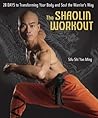
The Shaolin Workout: 28 Days to Transforming Your Body and Soul the Warrior's WayThe Shaolin Workout: 28 Days to Transforming Your Body and Soul the Warrior’s Way by Yan Ming
My rating: 4 of 5 stars

Amazon.in Page

This book presents an exercise regimen based on Shaolin Kung fu as taught by a prominent New York City martial arts teacher. The book moves from gentle joint articulations suitable for anyone through to movements that require some degree of flexibility and athleticism. The sequence is presented in such a way as to build on itself, adding a bit more each time until one is doing the entire sequence.

Interspersed with the descriptions of the physical exercises are meditations, mostly of a contemplative nature. The illustrations are color pictures and provide the sequences of movement, though the textual descriptions will be necessary in many cases to clarify the transitional movements. There are a number of full-page color plates that are very well shot, though mostly for aesthetic (versus educational) purposes.

The book is probably the most pep-talk laden book I’ve ever read. That said, there’s not much discussion of modifications or capacity building for individuals who are incapable of doing the full expression of the techniques.

The practices often reminded me more of yoga than of martial arts. There are many deep stretches and low positions, e.g. similar to Warrior I (Virabhadra I.) It’s true that there are punch and kick movements, but they are done in more of a range-of-motion building way than as one would in combative arts.

It is an interesting set of movements, and I’d recommend it for those who like to work with unconventional workouts and movement systems.

View all my reviews

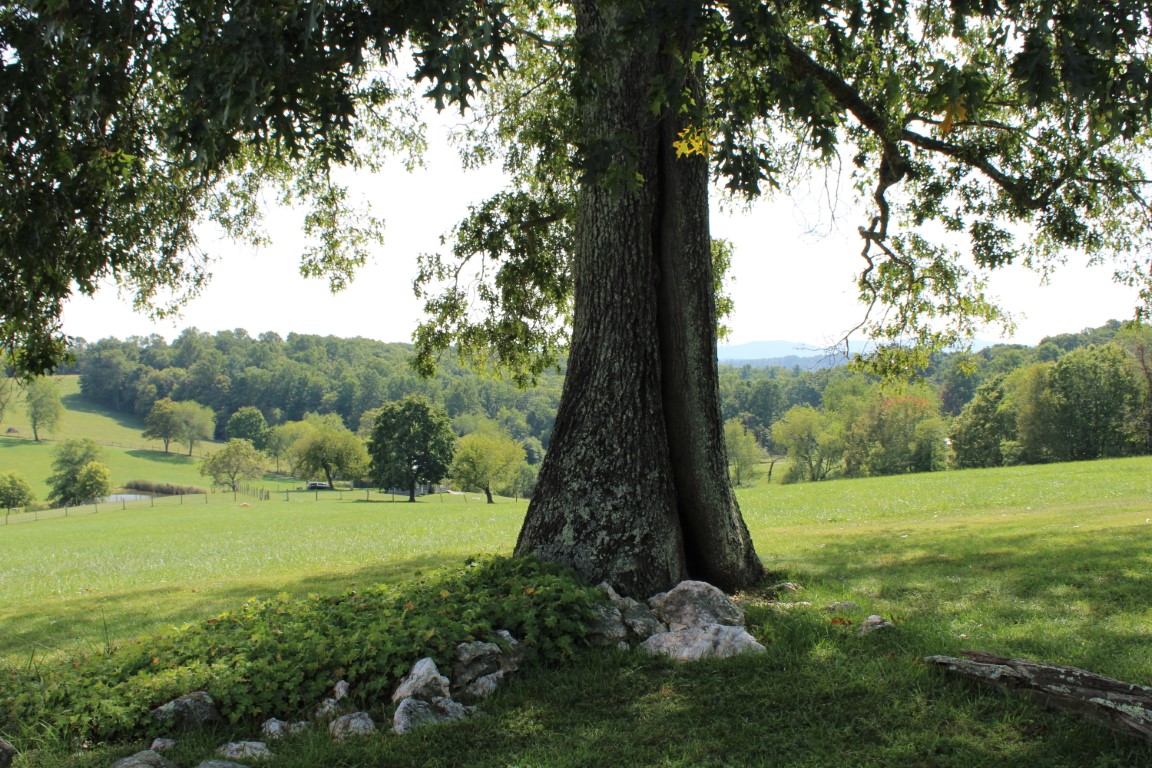
Bodhi Tree [Free Verse]

How to pick a tree
 that one can be resigned
  to sit under until
   Enlightenment?

If the choice is hard,
   you are not ready.

If the choice is easy,
   you are not ready.

If there is no choice,
    perhaps, you're ready.

BOOK REVIEW: Mindfulness in Wild Swimming by Tessa Wardley

Mindfulness in Wild Swimming: Meditations on Nature & Flow (Mindfulness series)Mindfulness in Wild Swimming: Meditations on Nature & Flow by Tessa Wardley
My rating: 4 of 5 stars

Amazon.in Page

Release Date: June 13, 2023

As the title suggests, this is a book about combining mindfulness and swimming in natural bodies of water. It’s part of a large series of “Mindfulness and …” books, and this particular volume is a re-release of a title that came out a couple years back.

While the book does provide an overview the basic methods and considerations for both mindfulness meditation and wild swimming, it’s largely a peptalk or enticement to take up wild swimming as a means to improve awareness (as well as to bolster physical health and mental well-being.) That said, some of this peptalk is artfully, almost poetically, written, and the book is a pleasure to read.

The book discusses solo swims versus those in a group, and it even explores using onshore experiences to bolster mindfulness — e.g. using the sensory experience of the water as a focal point for practicing awareness. The around- (v. in-) water discussions are probably in part because the book uses seasons as a secondary mode of organization, and long and leisurely winter swims in lakes and rivers aren’t an option for people in many parts of the world.

I picked up some interesting food-for-thought in the book, and — as I say — it made for enjoyable reading.

View all my reviews

Cave Days [Haiku]

in the cave,
 surrounded by stone,
  no sight; no sound.

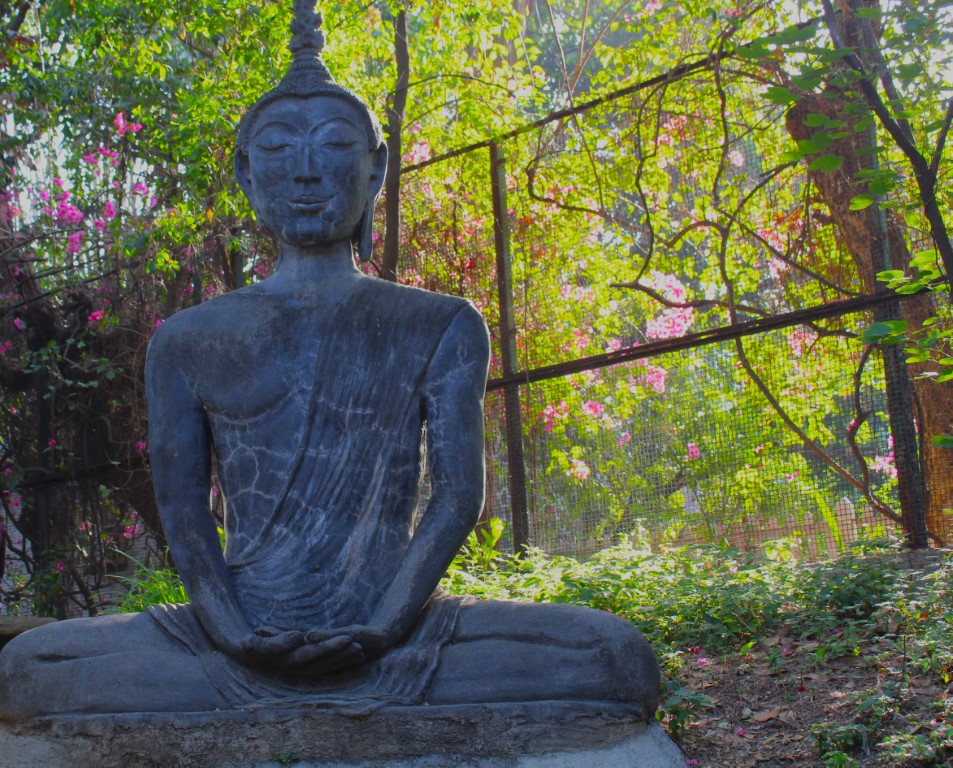
Plays No Favorites [Haiku]

sunlight breaks into
 the forest -- not favoring
  the tranquil yogi.

BOOK REVIEW: Singing and Dancing Are the Voice of the Law by Busshō Lahn

Singing and Dancing Are the Voice of the Law: A Commentary on Hakuin's “Song of Zazen”Singing and Dancing Are the Voice of the Law: A Commentary on Hakuin’s “Song of Zazen” by Bussho Lahn
My rating: 5 of 5 stars

Amazon.in Page

Release Date: December 20, 2022 [In India, may be out in your area.]

This book consists of a collection of essays inspired by the poem, “Song of Zazen,” written by the 18th century Zen master, Hakuin. Hakuin’s poem is brief (about forty lines,) and the essays composed by a present-day Zen priest (Lahn) offer commentary on a stanza-by-stanza basis. The book is divided into fourteen chapters, though the final chapter isn’t a stanza commentary.

I enjoyed reading this book and learned a great deal from it. The book benefits from the fact that the author is not rigidly sectarian. Therefore, the book is not doctrinaire, which warms the reader to the teachings. It’s also useful because it allowed the author to freely draw examples and quotes from a variety of sources, some of which may be more familiar or relatable to neophyte readers.

The last chapter offers a discussion of the fundamentals of zazen (seated meditation) as well as some other ancillary information that may be useful to readers new to Zen Buddhism, its practices, and its sutras. If you’re interested in Zen Buddhist meditation and philosophy, you may want to give it a look.


View all my reviews

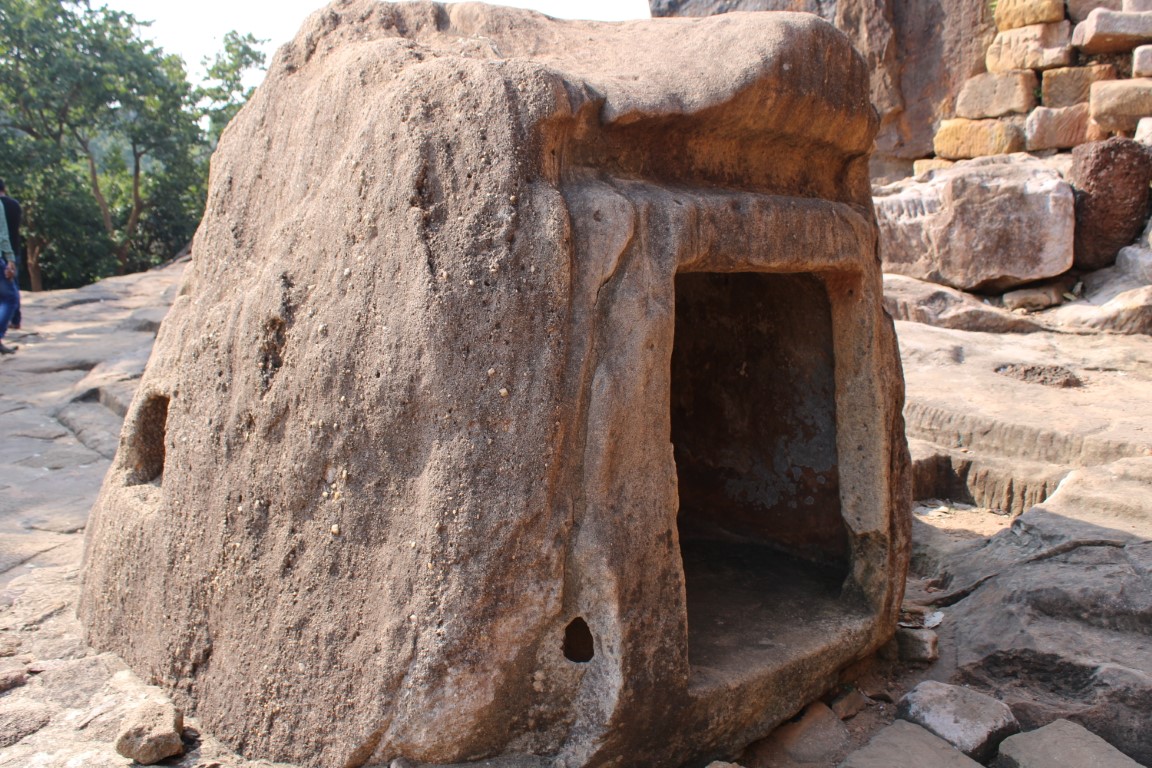
Contemplation Cave [Haiku]

in the mountainside,
there’s a tiny cave entrance:
a perilous climb

Meditation Chamber [Common Meter]

He sat and stilled his weary mind,
and his thoughts slowed their flow.
Until he was a ceaseless void
with nowhere left to go. 

BOOK REVIEW: Walking Meditation by Thich Nhat Hanh & Nguyen Anh-Huong

Walking Meditation (With DVD)Walking Meditation by Thich Nhat Hanh
My rating: 5 of 5 stars

Amazon.in Page

This brief guide to walking meditation lays out a basic practice linking breath and stride, and then explores such topics as: how to apply the practice to varied environments, coping with emotion through [and during] walking, the social dimension of walking meditation, and a few thoughts on applying the practice to jogging. The book is nominally attributed to the beloved Vietnamese Zen Buddhist monk who recently passed (i.e. January 2022,) Thich Nhat Hanh, but it seems the bulk of the book was written by the co-author (Nguyen Anh-Huong.) That said, it’s a clearer distribution of labor than usual for mega-guru books; not only does the author get a co-author credit but the words of Thich Nhat Hanh are presented as textboxes with bylines.

The book is less than a hundred pages of text, but the edition I have came with a CD and DVD (if anyone still has a player for these antiquated technologies. If you’re paying full price, I’d make sure you have some means to play the CD and DVD. I obtained a used copy at a low price, so it wasn’t a concern.) The book’s brevity has both pros and cons. On the pro side, it keeps things simple. The practice is a straightforward one of linking one’s breath to one’s stride, and there’s no tedious elaborations or variations with which to contend. On the con side, if one is looking for insight into improving alignment or biomechanics of walking, that’s not covered in this book. That is probably for the best, because it’s hard to avoid overthinking the practice if one is given extensive directions on stride and the like. This isn’t so much a criticism as an attempt to temper expectations for those who may feel they would benefit from some sort of anatomical or biomechanical insights on walking or physiological insights about the breath.

If you’re looking for a quick and straightforward guide to practicing walking meditation, give it a read.

View all my reviews

BOOK REVIEW: Breathe! You are Alive [i.e. Anapanasati Sutta] Trans. & Commentary by Thich Nhat Hanh

Breathe! You Are Alive: Sutra on the Full Awareness of BreathingBreathe! You Are Alive: Sutra on the Full Awareness of Breathing by Thich Nhat Hanh
My rating: 5 of 5 stars

Amazon.in Page

One evening at the end of a rainy season in Shravasti (present-day Uttar Pradesh near the Nepali border,) the Buddha taught a practice using awareness of breath to quiet the mind. This is a translation with commentary by the Vietnamese Zen monk, Thich Nhat Hanh [RIP, FYI – he passed away on January 22nd.] (To clarify: Annabel Laity translated the book from Vietnamese to English, Thich Nhat Hanh translated versions of the sutra from Pali and Chinese.) The teaching is called the Anapanasati Sutta (i.e. “Sutra on the Full Awareness of Breathing.”) It consists of sixteen variations on the theme of “Breathing in, I know I’m breathing in. Breathing out, I know I’m breathing out.”

The sutra itself is only a few pages long, leaving commentaries and appendices to stretch the book to its barely one-hundred-pages. This isn’t a criticism; the commentary is beneficial because the sutra is bare bones. Even being somewhat aware of basic Buddhist concepts (e.g. impermanence, emptiness, liberation, etc.) I still found that the commentary offered some valuable insight about how to understand these ideas as well as how they relate to the practice. The Appendices consist of a variation on the practice and a translation of Chinese version of the sutra. The latter is a bit redundant, but one can also see little differences in translation that may be informative for some.

Besides presenting the practice, the book explains how it relates to (and is built around the principles from) the “Sutra on the Four Establishments of Mindfulness.” This book outlines the Four Establishments clearly enough to see how the Anapanasati practice is shaped by them. However, it’s worth noting that Thich Nhat Hanh also produced a translation and commentary on the Four Establishments that is entitled “Transformation & Healing.”

As someone who has found breath practices to be among the most effective tools for improving the mind, I benefited from this book tremendously. Besides its discussion of the practice and variations, I learned a lot from the philosophical elaborations that were made. I’d highly recommend this book.

View all my reviews