PROMPT: Negative Feelings

Daily writing prompt
What strategies do you use to cope with negative feelings?

Feel them, but don’t feed them. By that I mean take time to be aware of the feelings, but do not let the mind go into its default mode of fixation upon the object informing these sensations and worst-case scenario building. Give the feelings your attention but recognize that you influence your experience of the world and don’t give the mind free reign to build an illusory scenario that it accepts as its reality. (i.e. Remember what Mark Twain said, “I’ve had a lot of worries in my life, most of which never happened.”)

The biggest problem with negative feelings is that the go-to modern strategy is attempted distraction (by vice, by entertainment, by activity, etc.) this leads the body to turn up the heat. If you give the sensations your attention without adding value judgements, it becomes impossible to obsess. For yoga practitioners who’ve done Yoga Nidra (Yogic sleep) the experience will be familiar. One often begins by being attentive to sounds, by giving the sounds attention without judgement, your mind starts to lose interest and it becomes harder for those sounds to distract you throughout the practice. This approach to negative feelings is much the same.

Also, breathwork that extends the exhalation component of breath will shift the balance toward rest and digest activity.

Ultimately, realize that these feelings are just sensations your body and brain use to turn your attention in certain directions. They have no more power than that, other than what one grants them. They are not identical to — or inextricably linked with — the events of the world that triggered them, and — therefore — you get to be the master of, and not the slave to, your feelings.

The next time you find yourself getting bogged down by a negative feeling, give the feeling a minute or two of pure undivided attention, and then think, “This is a wonderful opportunity to learn how my body and mind work.” See what happens.

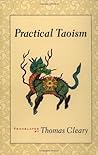
BOOKS: “Practical Taoism” ed. / trans. by Thomas Cleary

Practical TaoismPractical Taoism by Thomas Cleary
My rating: 4 of 5 stars

Publisher Site – Shambhala

Like a number of Eastern systems, Taoism is thought of in many different ways by many different people, and a few of those ways are fairly “out there.” To some, it is a philosophy. To others, it is a religion. To still others, it is a style of magic. By “practical Taoism” Cleary is suggesting that the many varied sources from which he drew snippets, assembling them together to make a coherent whole, reflect some of the more down-to-earth philosophy of “inner alchemy.” [Not to be confused with the “alchemy” in which lead is turned to gold, but sharing the central idea that methods exist to convert a low-quality entity into a high-quality one, but in the case of inner alchemy these methods are breathwork, meditation, and movement techniques that improve one’s vitality as a human being.]

The good news is that Cleary does collect a group of ideas that seem less arcane and cryptic than the average Taoist inner alchemy manual content (or, at least, they are translated so as to seem so.) The bad news is that the average Taoist inner alchemy manual was apparently pretty darn arcane and cryptic, such that even this selection isn’t exactly clear as a limpid stream. Some parts of it are straightforward, but one still has some work to do to make sense of what the original authors were trying to get across. [Some readers will enjoy that more than others.]

Presumably owing to the attempt to simplify through selection and translation, the book isn’t annotated, nor does it feature much ancillary material besides a relatively lengthy introduction to setup the reader with a contextual backdrop. So, there is not a lot of help to clarify ideas that are murky. (I do recognize the translator’s challenge in that there is only so much he can do to try to clarify ideas without imposing upon the authors’ intensions.)

I enjoyed, and learned from, this book — even if I didn’t always feel I was reading a “practical” guide to self-betterment.

View all my reviews
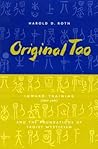
BOOKS: “Original Tao” by Harold D. Roth

Original Tao: Inward Training (Nei-yeh) and the Foundations of Taoist Mysticism (Translations from the Asian Classics)Original Tao: Inward Training (Nei-yeh) and the Foundations of Taoist Mysticism by Harold D. Roth
My rating: 5 of 5 stars

Publisher site – Columbia University Press

This book is built around a translation of an old Taoist manual called “Inward Training” (i.e. 内业,) and the book serves not only to elaborate the meaning of the twenty-six poems that make up the manual, but also to put this work in a context with respect to its place in early Taoist mysticism — which raises further questions as to what constitutes early Taoism and early Taoist mysticism. (Just as the earliest followers of Jesus didn’t think of themselves as “Christians” – at least not as we understand that term – it’s an open question as to when people started to think of themselves as Taoists and how that start relates to when people began holding a set of proto-beliefs that formed the basis of the school(s) of philosophy.)

“Inward Training” presents breathwork and meditational exercises that Roth calls “inner cultivation” — or what some have called “inner alchemy.” The book does contain the entire manual both in Traditional Chinese and an English translation, as well as a much more extensive elaboration of the teachings of the manual. The latter is necessary because, like many old manuals, sparse description, archaic language, and assumptions about common knowledge du jour make it difficult for the layman to get any depth of understanding from the manual, itself.

This is a scholarly work, which means that its readability isn’t the highest and it does dive into matters that will be arcana for non-expert readers. That said, particularly as works of academic philosophy go, its readability isn’t bad. The book is heavily annotated and offers and extensive bibliography.

If you are interested in Taoist practices of breath, meditation, and alignment, this book is well worth investigating.

View all my reviews

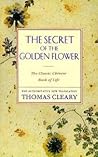
BOOKS: “The Secret of the Golden Flower” ed. / trans. by Thomas Cleary

The Secret of the Golden Flower: The Classical Chinese Book of LifeThe Secret of the Golden Flower: The Classical Chinese Book of Life by Lü Dongbin
My rating: 4 of 5 stars

Online – Archive.org

This is a manual on Taoist inner alchemy practices, particularly a meditative practice called “turning the light around.” The book has been attributed to Lü Dongbin, said to be an immortal who lived during the Tang Dynasty, though there are differing views about the manual’s actual origins. While it is nominally a Taoist manual, it also discusses the Buddhist approach extensively (and Confucian ideas to a lesser extent) such that it could be considered a Buddhist teaching as much as a Taoist one.

The Cleary translation seems to exist not merely to provide an English translation of this Chinese manual, but to combat the misunderstandings perpetrated by the earlier English translation, that of Richard Wilhelm, a translation famously associated with the psychoanalyst Carl Jung. Neither Wilhelm nor Jung had any depth of understanding of Taoist and Buddhist methods and philosophy, and Wilhelm’s grasp of the Chinese language, itself, seems to have been fairly rudimentary. (At least the Chinese of the 1600’s, which is when the edition that Wilhelm is believed to have worked from is dated.) Thus, there is a lot of peddling of the notion that the ideas of this manual were in line with twentieth century psychotherapy in ways that were really not true — either because Wilhelm was mistaken or wanted them to be true or some combination, thereof.

The translation, itself, is quite short and makes up less than half of the text length of this book. More than half consists of extensive notes as well as an Afterward. While I have complained many times about publishers padding out pamphlet length publications to make them salable at book prices, in this case I believe the “ancillary” matter is helpful to achieving a better understanding of the text. The translation itself is not only sparse but features a bit of Taoist and Buddhist arcana that is likely to be unfamiliar — even to those with some understanding of the traditions. The notes and afterward help one to comprehend this book’s ideas much better.

If you’re interested in Taoist inner alchemy or Buddhist meditative practices, this book is worth checking out. That said, it can be a bit of a tedious read, flipping between the translation and the notes to make sense of ideas that don’t readily translate.

View all my reviews

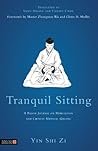
BOOKS: “Tranquil Sitting” by Yin Shi Zi

Tranquil Sitting: A Taoist Journal on Meditation and Chinese Medical QigongTranquil Sitting: A Taoist Journal on Meditation and Chinese Medical Qigong by Yin Shih Tzu
My rating: 4 of 5 stars

Publisher’s Site

This manual is an English translation of a work earlier published in Chinese. It is nominally on Taoist meditation and is written by a Taoist author, but it does include discussion of Buddhist practices as well (specifically Mahamudra.) Also, part of the author’s declared intent with this text is to write in a manner approachable to a wider audience, and because of this sect is rendered less important. So, for example, the book employs more scientific and physiological modes of explanation as opposed to meridians and other conceptual approaches from Traditional Chinese Medicine.

The book is presented in two parts. I found the first part much more beneficial and productive. Said first part is a general guide to meditation. It discusses fundamentals, theory, physiology, and how to align one’s living with a meditative practice (i.e. how diet, breathwork, sleep, etc. influence one’s practice.)

The second part consists of long and fairly detailed descriptions of the author’s experiences with both Taoist and Mahamudra meditation. I didn’t find this part useful, and I believe it may be counterproductive. Discussion of the author’s subjective experience may lead readers to get hung up on chasing identical experiences to the detriment of just practicing. It may give false ideas about “correct” and “incorrect” experiences of the meditation.

Overall, it’s a fine guide to meditation, particularly the first (i.e. larger) part. I can’t say that it breaks a lot of ground. A reader well-versed in meditation may not gain much insight from this book, but it’s as good as any to get started.

View all my reviews

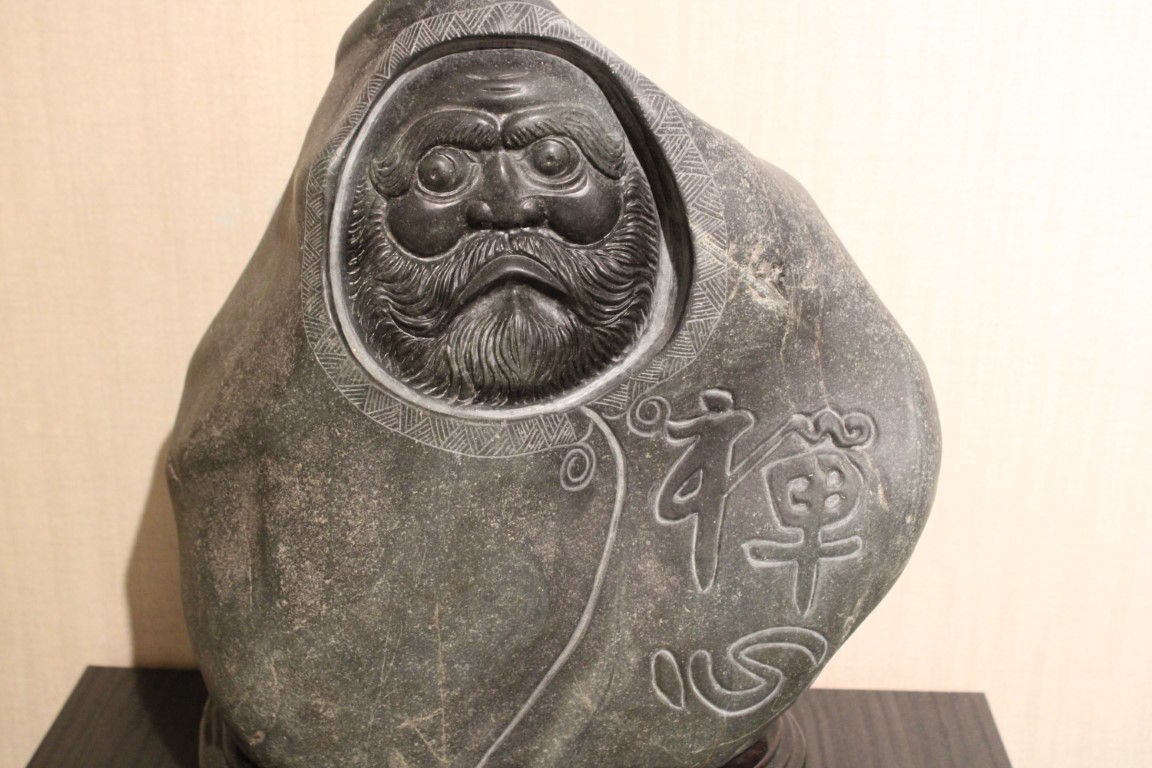
Stone Damo [Lyric Poem]

The stone Bodhidharma,
Meant as more than likeness.
It tries to copy Damo's
Stillness & uprightness.

PROMPT: Negative Feelings

Daily writing prompt
What strategies do you use to cope with negative feelings?

A practice of feeling gratitude is extremely beneficial in that regard. Simple meditative practices help one become aware of thoughts and feelings more quickly, before they are fed through rumination, making the down-spiral cycle easier to disrupt.

And, sometimes, I rant. This usually veers quickly into comedic territory and I’m reminded of the ridiculousness of taking human life too seriously, given the absurdity of being primates in pants who love shiny things. (It would be unimaginable if human life weren’t absurd.)

PROMPT: Clutter

Where can you reduce clutter in your life?

My mind. It’s a constant battle.

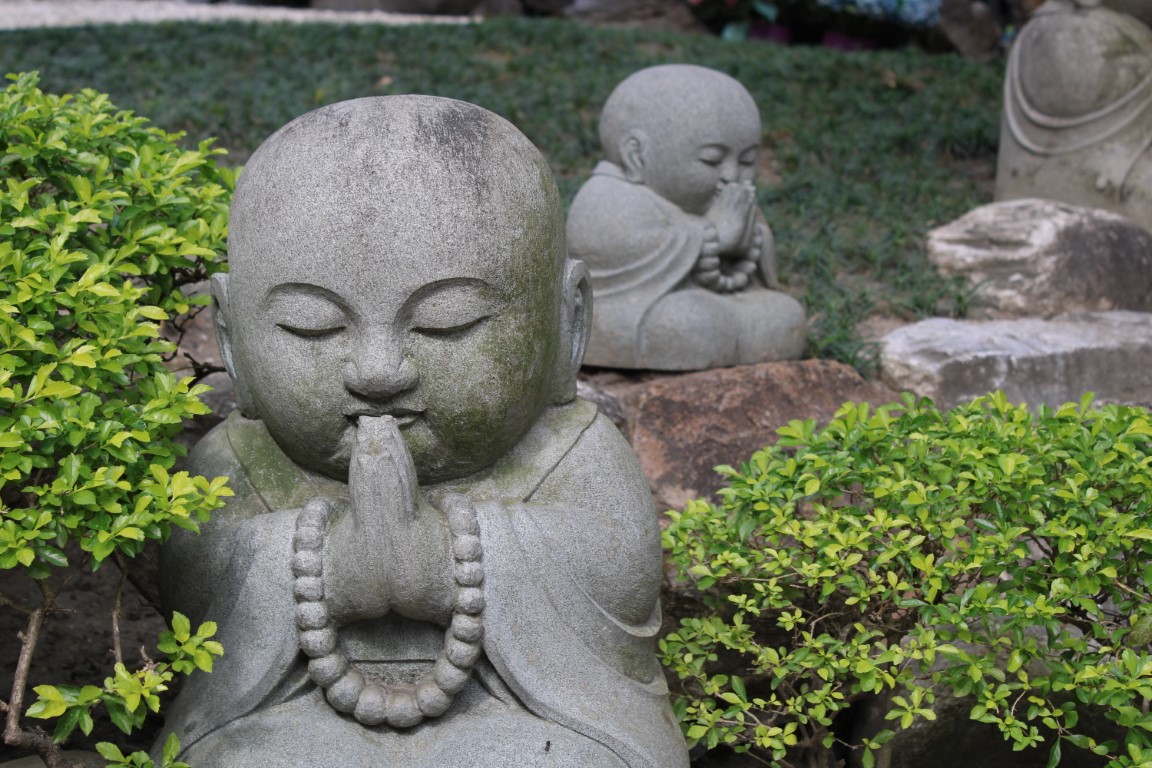
Zen Garden [Lyric Poem]

I see those serene figures sit
 amid Zen Garden evergreens.
Like Benkei, they don't move a whit,
 Their minds are free of thoughts & dreams.

The moss is growing on them, now,
 and birds have left their fecal splat.
Don't envy how they've found the Dao,
 but how they have no need of hats.

BOOKS: The Shaolin Workout by Shi Yan Ming

The Shaolin Workout: 28 Days to Transforming Your Body and Soul the Warrior's WayThe Shaolin Workout: 28 Days to Transforming Your Body and Soul the Warrior’s Way by Yan Ming
My rating: 4 of 5 stars

Amazon.in Page

This book presents an exercise regimen based on Shaolin Kung fu as taught by a prominent New York City martial arts teacher. The book moves from gentle joint articulations suitable for anyone through to movements that require some degree of flexibility and athleticism. The sequence is presented in such a way as to build on itself, adding a bit more each time until one is doing the entire sequence.

Interspersed with the descriptions of the physical exercises are meditations, mostly of a contemplative nature. The illustrations are color pictures and provide the sequences of movement, though the textual descriptions will be necessary in many cases to clarify the transitional movements. There are a number of full-page color plates that are very well shot, though mostly for aesthetic (versus educational) purposes.

The book is probably the most pep-talk laden book I’ve ever read. That said, there’s not much discussion of modifications or capacity building for individuals who are incapable of doing the full expression of the techniques.

The practices often reminded me more of yoga than of martial arts. There are many deep stretches and low positions, e.g. similar to Warrior I (Virabhadra I.) It’s true that there are punch and kick movements, but they are done in more of a range-of-motion building way than as one would in combative arts.

It is an interesting set of movements, and I’d recommend it for those who like to work with unconventional workouts and movement systems.

View all my reviews