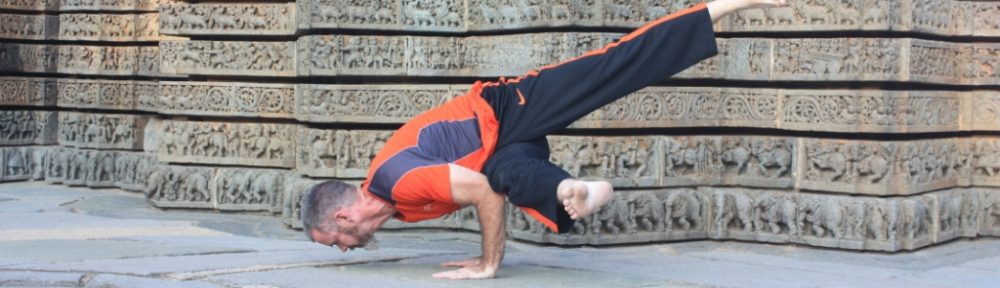
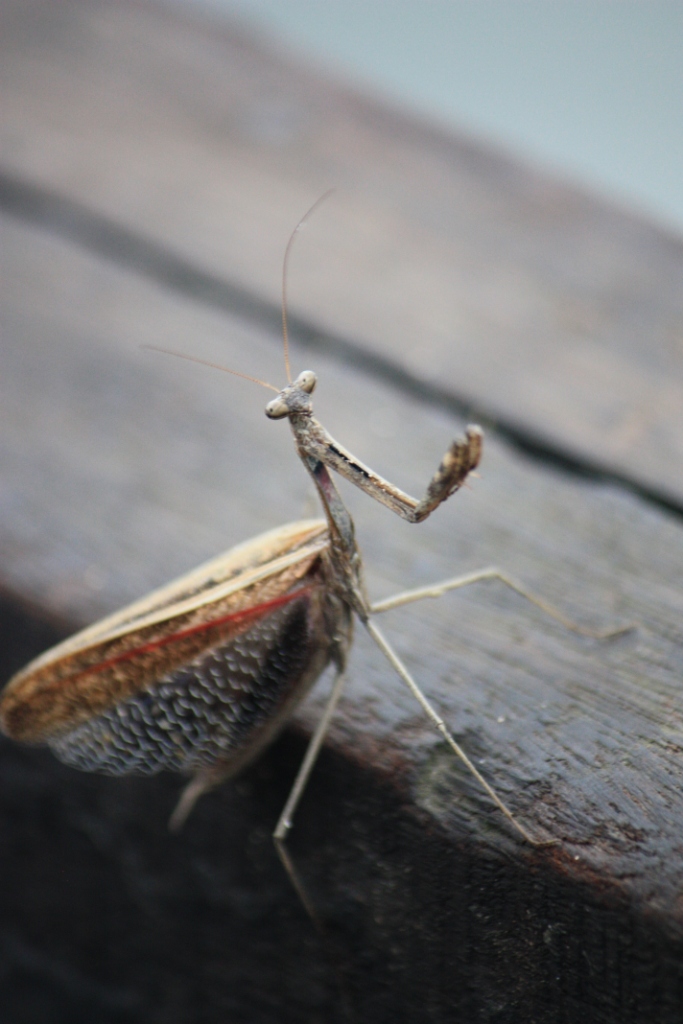
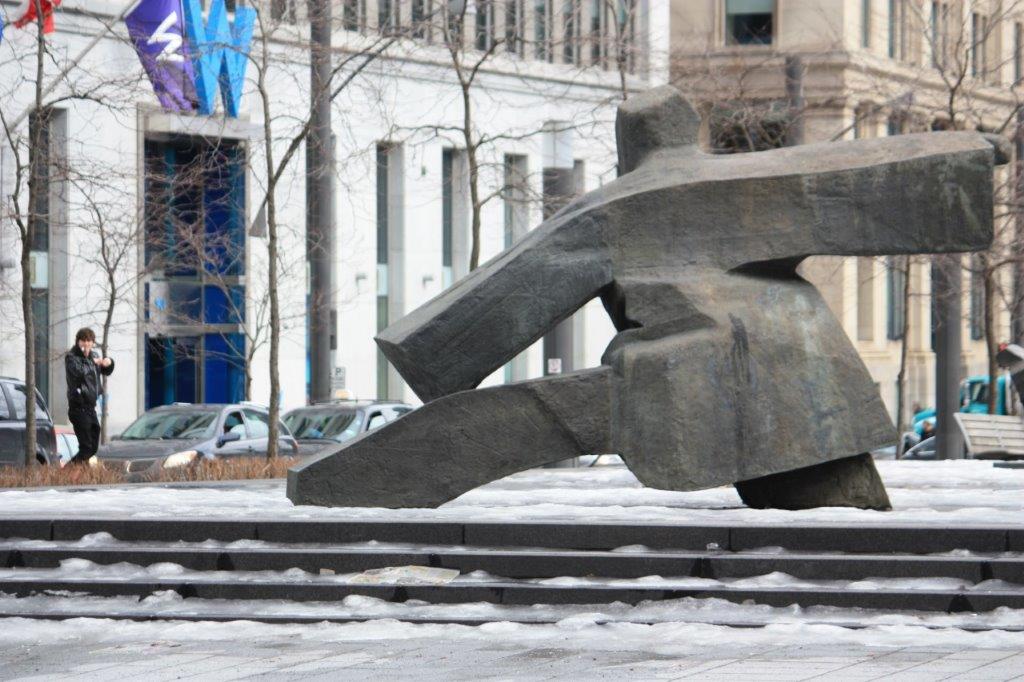
The stone man flows; the snake creeps down - arm becoming viper. It's slow, but silently it flows, stealthy as a sniper. And though he's stone, I feel him go via sympathetic flow. Mirror neurons fire in my brain, taking me high to low... or so it feels.
Category Archives: martial arts
BOOK REVIEW: Breathe by Rickson Gracie
Breathe: A Life in Flow by Rickson GracieMy rating: 5 of 5 stars
Amazon.in Page
Out: August 10, 2021
This autobiography of the phenomenal Brazilian Ju Jutsu practitioner, Rickson Gracie, begins with ancestral origins that include a Gracie who fought in the US Civil War through Rickson’s boyhood in Rio and his professional fights in Japan, and onward to how he reinvented himself after family tragedy and the end of his fight career. Along the way, he conveys lessons learned not only through personal experience and from his father and uncle, the founders of Gracie Ju Jutsu, but also through his studies with Olando Cani — a yogi and developer of bioginastica. While the book is overwhelmingly about a life in Ju Jutsu, Cani’s influence plays a crucial role as the yogi taught Rickson about breath control, and, among a huge pack of skilled Gracie fighters, that ability was pivotal in Rickson’s rise to the top. (The book’s title, “Breathe,” hints at the role breathwork played in Rickson Gracie’s legendary capacities for enduring, flowing, and keeping his head in seemingly unfavorable situations.)
The memoir is candid, offering insights into not only Rickson’s path to success, but also his failings (which, not unexpectedly given his single-minded obsession with Ju Jutsu and fitness, more often involved life as an impetuous youth, as a father, and as a person – generally – than it did his life on the mat.) The book also explores some of the fissures in the Gracie clan and how they grew under the pressure of the family’s mammoth success. With autobiographies, it’s always a challenge to know how true a picture one is getting, but Gracie’s willingness to self-critique makes this book feel truthful.
This book is fascinating and highly engaging. If you’re interested in martial arts, it’s a no-brainer for one’s reading list, but any reader who enjoys a memoir of a life intensely lived will find the book highly readable.
View all my reviews
BOOK REVIEW: The Breaker Omnibus, Vol. 1 by Jeon Geuk-Jin
The Breaker Omnibus Vol 1 by Jeon Geuk-JinMy rating: 4 of 5 stars
Amazon.in Page
Out: July 13, 2021
This manga combines the motifs of traditional martial arts stories with a modern-day setting. A bullied high school student, Shiwoon Yi, discovers that his colorful (if abrasive) substitute teacher, Chunwoo Han, is a martial arts master, and employs numerous tactics to get the teacher to instruct him in the martial arts. However, Chunwoo Han is not interested, his priorities as a womanizing playboy caught up in a martial arts clan war are far removed from helping a student one iota more than he needs to in order to maintain his cover and employment.
Shiwoon Yi grows over the course of the book, learning to be more tenacious and to not give in to fear so readily. However, this growth does not come about from the teachings of Chunwoo Han, he remains unwilling to teach, even when he is begrudgingly coerced into agreeing to it. However, Chunwoo Han does assign the boy a task as a precursor to lessons, a task that – despite nearly killing the boy – forces him to be more disciplined. However, the most effective lesson results from Shiwoon Yi’s shame at almost betraying the only person who is nice to him, a girl in his class whom he is too beleaguered by bullies and low self-esteem to acknowledge.
Chunwoo Han doesn’t really grow throughout the course of the story (action heroes rarely do,) but he does soften his view towards Shiwoon Yi – presumably as a result of a new found respect. While Shiwoon Yi is quite a wimp, he does show a willingness to make the ultimate sacrifice in pursuit of learning martial arts, and that earns him some begrudging regard.
Generally, I found the story to be entertaining. It uses a lot of the familiar martial arts story motifs (e.g. superpowered chi, elaborately named techniques, and the “you kill my master” motive.) These motifs ground it in a genre, even if it results in some trite elements. I wish Shiwoon Yi would have played a greater role in the story’s climax and conclusion. Shiwoon Yi is ostensibly the protagonist, though Chunwoo Han makes a more appealing action star. The ending felt a little gratuitous because it basically jettisoned Shiwoon Yi in favor of making a straightforward concluding battle scene.
The book is presented in manga style, including right-to-left read panels and monochrome art. The art is well drawn, though (oddly) everyone looks like a supermodel – except Chunwoo Han when he is having a meltdown of one kind or another.
It’s a straightforward story, rooted in familiar themes and plot mechanisms. If you enjoy martial arts manga and aren’t expecting complex twists and subversion of expectations, you’ll find it to be an entertaining action-centric story with a good sense of humor.
View all my reviews
BOOK REVIEW: Kill a Man by Steve Orlando
Kill A Man by Steve Orlando
My rating: 5 of 5 stars
James Bellyi is a closeted gay mixed martial arts fighter in contention for the middleweight belt. Amid the pre-fight smack talk, Bellyi is outed by his opponent, the man who current holds the title. The dropping of this bomb throws Bellyi’s career into disarray, his gym quietly drops him, the fight promoter overturns Bellyi’s previous fight, saying that he cheated under the referee’s nose, the organization – name “EFC” for legal reasons, I presume – fearing that much of its fanbase is not ready for a gay champion.
When the EFC finds itself in a bind because losing an injured headliner threatens to bleed the interest out of its upcoming event, they are forced to give Bellyi another shot to work back to a title-fight. With no one in his corner – literally — Bellyi manages a victory, but he knows he’ll need a coach to succeed in the title fight against the man who publicly outed him.
This is where things get interesting. Bellyi’s father, DJ Bellyi, had died due to fight-related injuries when James was still a boy. DJ Bellyi had been trying to stigmatize his opponent, Xavier Mayne, with anti-gay slurs, in part to get Mayne of his game and in part — we learn — because the senior Bellyi was genuinely a homophobic bigot. However, instead of knocking Mayne off his game, what DJ succeeded in doing was throwing a legendarily powerful striker into a seething rage.
While James Bellyi always despised Mayne for killing his father, when he finds himself facing a title fight without “a corner” and with all odds against him, Bellyi decides to pursue Mayne as a coach. Reluctantly, Mayne agrees. This creates overlapping stories between James and Mayne, and the core question is whether the younger generation can learn from what the previous generation went through. We learn that Mayne was traumatized by DJ Bellyi’s death. It’s also about whether and – if so – how the world has changed on a societal level in the intervening years.
I found this book to have an intriguing premise. It’s a simple story. It may seem like I gave it all away in the review, but reading the back-cover blurb gives a reader at least as much insight into the key story elements as did my description. There’s not a lot by way of extra layers. So, its more about whether the details of the story (e.g. the characters’ interactions) resonate with the reader than whether the reader will find some huge unexpected twist. The art is easy enough to follow. The artist uses different color palettes to differentiate different blocks of panels, I believe this is for the purpose of establishing emotional tone (but, perhaps, I misunderstood what was meant to be conveyed and it’s more about differentiating scenes.)
I enjoyed this book, and if you like fight stories you’ll likely enjoy it. It’s like “Rocky” but with the underdog status being less by way of being from down-and-out circumstance and more based in bigotry.
DAILY PHOTO: Respect
5 Reasons to Practice Yang Style 24 Form
With slight variations, this taijiquan (tai chi chuan) sequence is alternatively called: Yang Style 24 Form, the Yang Style Short Form, Beijing Standard Form (occasionally Peking Standard Form), or Simplified 24 Form. Here are some reasons to give it a try.
5.) Widespread: It’s the single most popular taiji form in the world. This means, if you’re the gregarious type, you can join groups in parks all over the world.
4.) Balance: It’s good for your balance and you don’t want to fall and break a hip.
3.) Moving Meditation: It’s a great way for fidgety individuals to work up to meditation. All the meditation without having to stay perfectly still.
2.) Scalability: It’s scalable to fitness level. Because taiji is popular with older people, many modifications have been developed for those who aren’t ready for the classical expression of the form.
1.) Gentleness: There’s virtually nothing to go wrong — as long as you “know thyself.” i.e. There are no contraindications, at least for the simplified form.
POEM: Tai Chi
BOOK REVIEW: T’ai Chi Classics by Waysun Liao
T’Ai Chi Classics by Waysun Liao
My rating: 5 of 5 stars
This book conveys the teachings of three tai chi masters of old: Chang San-feng, Wong Chung-yua, and Wu Yu-hsiang. However, those masters’ treatises take up only a small portion of the book. That’s not a criticism. No doubt the treatises were cryptic and sparse, and so they are presented with commentary embedded rather than as literal translations. The treatises discuss the concepts that each of the masters thought was essential to the art, and the author conveys these complex and ethereal ideas in a way that is as understandable as possible.
Before presenting the three treatises in chapters four through six, the author offers a three chapter background on essential concepts for the tai chi student to understand. Chapter 1 presents historical background on tai chi and differentiates temple style from the family styles of tai chi, as well as giving insight into the philosophical underpinnings of the art. The second chapter offers a primer on chi, the life-force energy that is at the conceptual heart of tai chi. Chapter 3 describes jing and the means by which chi is expanded and transferred.
After the three treatise chapters, there is a final chapter that is intended to take the book from theory to practice. Most of the final chapter is a step-by-step description of a tai chi form, and consists of line drawings of the positions with bullet point descriptions of the movements. However, the chapter begins with some lists of key philosophical concepts as well as clarifying ideas about movement fundamentals.
There are line drawings throughout the book, not only to show physical positions in the practice but also diagrams to help convey the difficult concepts discussed throughout the book as well as Chinese calligraphy characters. Besides the calligraphy, these graphics are crude, looking as one might expect in a notebook. I don’t think the crude form of the graphics is a problem, and the notebook effect it creates may be an intentional aesthetic. As I don’t believe one can learn a martial art or other system of movement from a book, the fact that the graphics don’t offer much detail isn’t a problem.
I found the book to be thought-provoking and would recommend it for students of tai chi and qi gong.
5 Tools to Hulk Your Way Out of Your Comfort Zone

5.) Take a class / Join a group: While I’m partial to yoga and the martial arts, the class could be in any area that presents a challenge. However, there are a couple of advantages to the aforementioned two (to which I would add dance.)
First, these disciplines train one to be expressive with one’s body and to move more freely. This can do wonders for confidence. People store tension in their bodies without even realizing it. Many have postural problems that effect confidence and self-perception. A 2014 New Zealand study found that posture can have a strong effect on emotional state.
Second, no matter who one is, one will be challenged by new approaches to movement. The average person has great difficulty learning to use their body in new ways. One needs to drill in movements conscientiously to achieve competency. Our conscious mind, frequently gets in the way. Even the most athletic and coordinated people will need to work it, failing repeatedly until they succeed.
Why is the challenge so important? Many people go through life afraid to fail, but far too few fear never failing. Sounds idiotic. Nobody wants to fail. I have some hard news. If you’ve never failed, it’s not because you are unmitigatedly awesome in all things. It’s because you’re living in a box and cherry-picking life experiences that feel unthreatening.
If, like me, you’re an introvert, this approach offers the additional benefit of social interaction that is of a predictable / schedulable nature. One needs the interaction, but the problem comes when one has social interactions and / or sensory stimulation that go on too long and in an unpredictable fashion. Therefore, being able to schedule such time is a good way to go about being a more productive introvert.
4.) Writing / Visualization: These two approaches to mentally rehearsing allow one to keep one’s inner critic in check. The problem with simply day-dreaming it is that critic can chirp in without being that cognizant of it.
In visualization, one quiets the mind and can then non-judgmentally acknowledge and dismiss the negative thoughts. In writing–be it as a journal entry, poem, or a story–we may not notice the nagging voice of the inner critic on the first draft, but you can take note of it and undo it in rewrites.
3.) Travel / Living abroad: I should point out that not just any old travel will have the desired effect. Many people plan their travel with the objective of being comfortable at the fore. They eat at places that serve the same kind of food as at home. They stay in hotels with virtually all of the comforts of home, and sometimes many more. This is understandable because the traveler might just be seeking rest. However, if one is seeking the epiphany or enlightenment experiences talked of by backpackers and ashram-dwellers, that’s not something that comes from staying in resorts or eating at American fast food joint. Those kinds of brain changing experiences come when one is stripped from the familiar and has to surrender one’s attachments to the way one thinks the world should be. One’s perception of culture and worldview changes radically when immersed in a foreign environment.
2.) Game it / Roleplay: There’s a big movement to gamify all manner of everyday activities. In her book, “Reality is Broken,” scholar of game design Jane McGonigal describes a game called “Chore Wars” that incentivizes the doing of mundane household chores.
What is it about games that help one move beyond one’s limits? First of all, it incentivizes actions. And if you’ve ever noticed people playing games on their phone or FB for hours on end, you’ll note that it doesn’t take much reward to keep people plugging away—as long as the game is structured well.
Second, good games provide a built-in process of “leveling up.” This means that the challenge keeps being intensified as our skill level advances. Those familiar with Csikszentmihalyi’s conception of “Flow” will recognize that matching skill level to challenge level is one of the most crucial elements in facilitating flow-state.
Roleplaying is a bit like the previously mentioned tools of visualization and gaming in that it’s a way to have a low-cost rehearsal. If one has someone with whom one can engage in such a roleplay, than one also has someone to help make you aware of your inner critic and its deleterious effects. And that brings us to the final tool:
1.) Have a spouse, partner, and or confidant: In “Why Zebras Don’t Get Ulcers” Robert Sapolsky tells a story of being interviewed by a magazine. He was asked what the number one thing that they could tell their readers about reducing stress. To which he replied that the most well-established factor in stress reduction is to have a spouse / life partner with whom to share one’s challenges. Unfortunately, this was a magazine for women business leaders, a significant portion of whom had given up on permanent relationships and families. They, therefore, asked him what else he had. Still it’s hard to overlook the anxiety-fighting effects of having someone around with whom to share one’s dread.
BOOK REVIEW: Hapkido by Scott Shaw
Hapkido: Korean Art of Self-Defense by Scott Shaw
My rating: 4 of 5 stars
When I picked up this book, all I knew about Hapkidō was that it was a Korean martial art, that it wasn’t a sport like its more famous martial cousin—Tae Kwon Do (TKD), and that it was a more comprehensive art (grappling as well as striking) than TKD. I grabbed it because at least one of these mental reductions proved only partially correct and I wanted to know what else I might be getting wrong. In the first paragraph, I learned that Hapkidō was heavily influenced by / a descendant of Daitō-ryū Akijūjutsu. (If that art sounds vaguely familiar, it’s because it was also a big influence for its most famous student, Morihei Ueshiba—i.e. the founder of the Japanese art Aikidō.)
This book is tiny. It’s an overview of the art in less than 100 pages (and, as is common with martial arts books, at least half the space is devoted to photos.) So the first thing a reader might want to be aware of is that you’ve probably read newspaper articles with higher word counts than this book. I’ll leave it to the reader to determine whether that’s a good or bad thing.
The book consists of five chapters, but the last chapter accounts for the majority of the page count (but not the word count.) The first two chapters are histories. The first offers an overview of Korean martial arts situated in the context of national events of the time. The second chapter is a history of Hapkidō and gives one insight into Daitō-ryū Akijūjutsu and how it came to influence the Korean founder of Hapkidō, Choi Yong-Sul.
Chapters 3 and 4 examine aspects of the art that one might call “pre-basics” for lack of a better term. As ki (i.e. life force / energy, those familiar with Chinese arts might know it as “chi” or “qi”) plays a central role in the art, Chapter 3 discusses ki and describes breathing and meditation practices that are used for building energy. Chapter 4 describes break-falls and the art’s one posture / stance (a natural posture.)
Chapter 5 describes, and presents photos of, basic defensive moves of Hapkidō. There are five sub-sections that explore, respectively, the following types of techniques: disengagements (i.e. breaking away from an opponent who has seized one), joint locks, throws, punch defenses, and kick defenses.
I found this book to be concise and informative. If one is seeking a detailed overview of the art, one might want to look elsewhere. However, if one is just trying to figure out what Hapkidō is all about, it should serve you well. I doubt that an experienced student of the art would get much out of this book as it’s just the bare bones. Not everybody is looking to delve into the minutiae.