“A One-String Harp” by Lu Ji [w/ Audio]

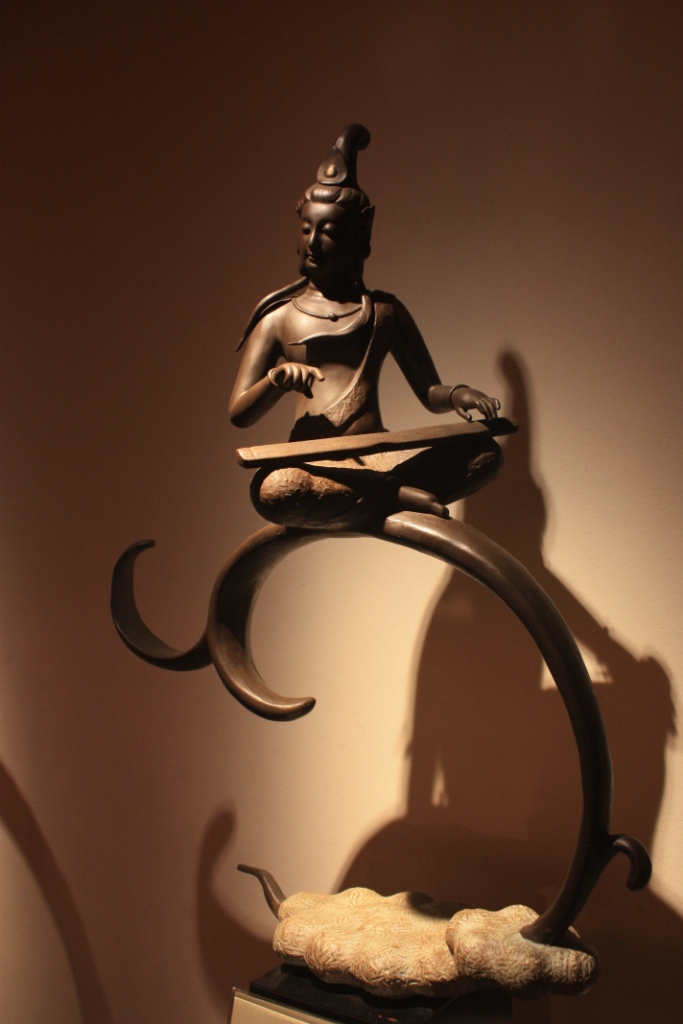
When an author composes too short a poem,
it trails off with a lonely feeling
like looking down at solitude with no friends
or peering into the vast sky, disconnected.
One string on a harp is crisp and sweet
but sings without resonance and harmony.

Translation by Tony Barnstone and Chou Ping in: The Art of Writing (1996) Boston: Shambhala Publications.

BOOKS: “Kokoro” by Natsume Sōseki 

KokoroKokoro by Natsume Sōseki
My rating: 5 of 5 stars

Publisher Site – Pushkin Press

I first read this many years ago in college for a course on Japanese culture. I didn’t have a good reading experience then because this novel is too quiet to hold the concentration of a fidgety mind. However, on rereading it, I found it to be an intense and moving reading experience. It’s a brutally realistic piece of literary fiction, featuring quiet and unexpressive characters who are never-the-less experiencing a kind of agony of living.

The book’s beginning revolves around the relationship between a young man just finishing college and an older, somewhat hermetic, man. By “relationship” I’m not talking about a sexual or otherwise intimate interaction. This strange relationship might best be made sense of by the fact that the young man calls the older, “Sensei” (i.e. “teacher.”) So, it is largely an informal mentor-mentee relationship, but the reader may not really understand why “Sensei” is a reasonable honorific for the old man until the end. The latter portion of the book is Sensei’s “confession,” or the telling of formative events of his life. It is in this confession that we learn that Sensei is not so much a teacher by virtue of conveying abstract scholarly information but rather he teaches by showing the young man his own life story as a cautionary tale.

You must be in a quiet state of mind to keep attuned to this book, but – if you can do so – it is well worth reading. I’d highly recommend it for readers of literary fiction.

View all my reviews

“Fortune-teller’s Song” by Su Shi [w/ Audio]

The crescent moon hangs on a barren tree.
The water clock has stopped and all is still.
Who sees the sad man pace the shore alone?
His shadow slants and curls into a swan.

The startled man stiffens and turns to look;
His grief remains unseen by anyone.
He passes on a seat of fallen log,
And plops down on the wet and cold sandbank.

NOTE: The original title is: 卜算子.

BOOKS: “Strange Tales from a Chinese Studio” by Pu Songling [Trans. by John Minford]

Strange Tales from a Chinese StudioStrange Tales from a Chinese Studio by Pu Songling
My rating: 5 of 5 stars

Publisher Site – Penguin

This is a collection of short stories, almost entirely speculative fiction, dating from the Qing Dynasty (specifically, the late 1600’s to early 17oo’s.) Ghosts, folkloric creatures, and Taoist magic all feature prominently in the stories. The stories average about five pages, but with a wide deviation from stories scarcely longer than today’s micro-fiction to extensive pieces. The Penguin edition collects 104 out of a much larger collection of stories.

The best of these stories are clever and highly engaging, and there are many such tales. Being from Qing Dynasty China, the stories offer a perspective different from one’s typical horror and fantasy short stories. Many of the stories prominently feature eroticism, but not graphically so.

As for the weakness of the volume, even though it selects only a portion of Pu Songling’s original, there are many stories that blend together, failing to distinguish themselves. This is most notable among the fox-spirit stories, of which there are just so many. [A number of them are fantastically unique, but others are just variations on the same.] So, the book can seem a bit repetitive in that sense. However, before you get to the point where you feel you can’t read one more fox-spirit story, you’re quite likely to read a tale that blows your mind.

I greatly enjoyed many of the stories herein. Perhaps, the volume could have benefited from further abridgement, but it’s well worth the read.

View all my reviews

“Under the Trees…” by Ikkyū [w/ Audio]

Under the trees, among the rocks, a thatched hut:
verses and sacred commentaries live there together.
I'll burn the books I carry in my bag,
but how can I forget the verses written in my gut?

Translation by Kazuaki Tanahashi and David Schneider in Essential Zen (1994) HarperSanFrancisco.

BOOKS: “Essential Zen” ed. by Kazuaki Tanahashi & David Schneider

Essential ZenEssential Zen by Kazuaki Tanahashi
My rating: 5 of 5 stars

Google Books Page

This is a collection of short writings (poems, koans, and prose excerpts) on Zen Buddhism arranged into loosely themed sections. The writings tend toward the artistic, creative, and metaphorical, with relatively few straightforward descriptions of technique or philosophy. The writings range from those of Chinese and Japanese monks who lived hundreds of years ago to present-day poets and Zen practitioners. Among the more frequently drawn from sources are: Hanshan, Ikkyu, Dogen, Ryokan, Hakuin, Gary Snyder, Robert Aitken, Seung Sahn, John Daido Loori, Thich Nhat Hanh, and Peter Levitt. But there are many others, including some who have only a single piece included.

There’s a substantial “Notes” section that gives source, translation, and — in some cases — background information. Most of the translations (both Japanese and Chinese) are by the editors, Kazuaki Tanahashi and David Schneider. There are illustrations, but they are all ensō (circular brush paintings) and related forms.

This is a highly readable and insightful collection of short writings, and I’d highly recommend it for individuals interested in Zen or Eastern Philosophy more generally.

View all my reviews

Death Poem of Ikkyū [w/ Audio]

I borrowed these one month ago, yesterday.
I'm returning them today.
I borrowed five and return four --
Repaid, but for Original Emptiness.

NOTE: This is one of three Death Poems attributed to Ikkyū, supposedly the middle one.

“Mulberry Picking” [採桑子] by Ouyang Xiu [w/ Audio]

West Lake is beautiful from a small boat.
Green water wends its way through the lotus,
Sweet grass grows thickly all along the bank,
Faint music wafts from unknown points ashore.

When the wind quits, the Lake is glassy smooth;
The boat is perfectly still for a beat,
Then its movement is betrayed by ripples
And startled waterfowls' furious flapping.

Note: The title “Gathering Mulberry Leaves” was used by Xu Yuanchong for his translation. The Chinese title is: 採桑子 (Cǎi Sāngzǐ)

BOOKS: “Birds, Beasts, and A World Made New” by Guillaume Apollinaire & Velimir Khlebnikov [ed. / trans. Robert Chandler]

Birds, Beasts and a World Made New: Guillaume Apollinaire and Velimir Khlebnikov (1908-22) (Pushkin Press Classics)Birds, Beasts and a World Made New: Guillaume Apollinaire and Velimir Khlebnikov (1908-22) by Guillaume Apollinaire
My rating: 5 of 5 stars

Publisher Site – Pushkin Press

This poetry collection recalls a time and tells a story. Perhaps it’s not right to call it a poetry collection, not because it isn’t one, but because that’s not all it is. Most of the book consists of selections of poetry from Guillaume Apollinaire and Velimir Khlebnikov juxtaposed by themed grouping. But there is also backstory and biography included throughout as well as in the book’s final section.

One might wonder why anyone would construct a two-poet collection featuring a Frenchman and a Russian. Well, the two men did have a number of things in common, most disturbingly that they both died young in the early twentieth century. Apollinaire died at age 38 in 1918 and Khlebnikov died at 36 in 1922. The fact that these men’s writing careers so overlapped is one of the reasons the book works. They waded through a common zeitgeist. Another commonality that makes the collection relevant and intriguing is that both poets had a penchant for experimentalism in their work.

Seeing the work of these poet’s organized as the volume does, one recognizes both similarities and differences. This includes the fact that the tone of each poet’s work ranges widely from whimsical to the brutal morosity of poems on war and the suffering it entails.

I found this collection to offer a powerful reading experience and would recommend it highly to all poetry readers.

View all my reviews
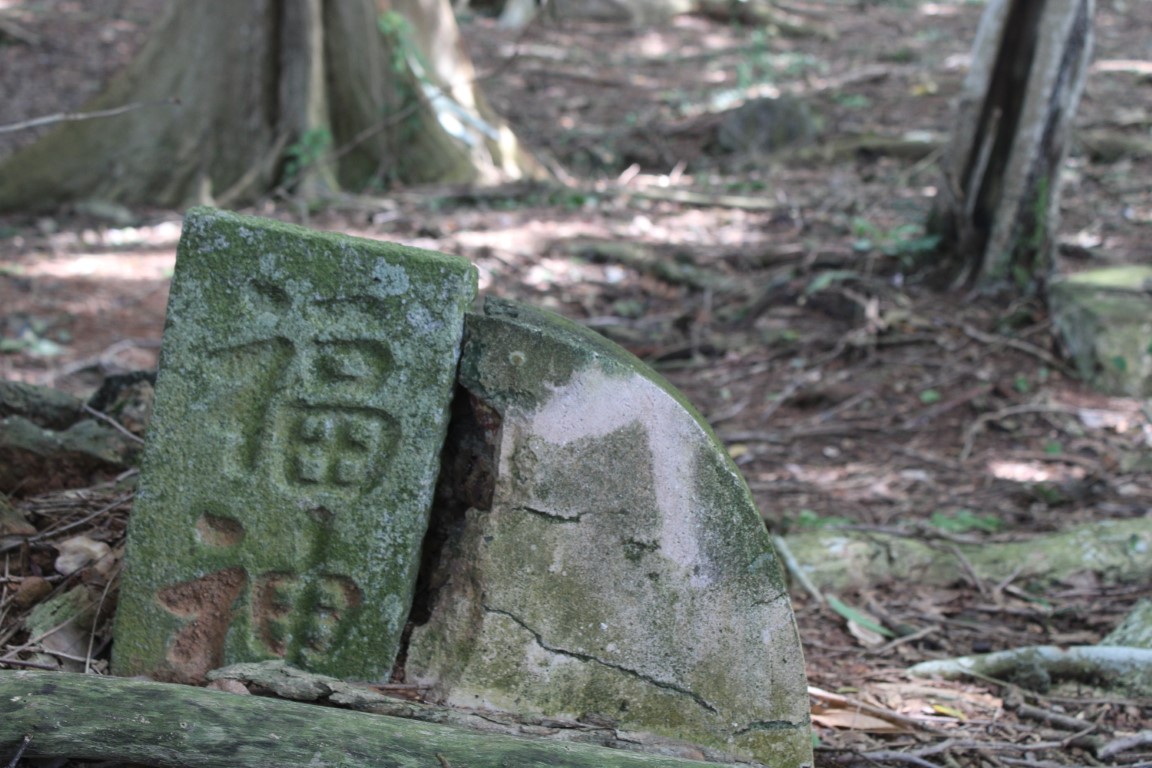
“People ask for the road to Cold Mountain” by Hanshan [w/ Audio]

People ask for the road to Cold Mountain,
but no road reaches Cold Mountain.
Summer sky -- still ice won't melt.
The sun comes out but gets obscured by mist.
Imitating me, where does that get you?
My mind isn't like yours.
When your mind is like mine
You can enter here.

Translated by Kazuaki Tanahashi & David Schneider in Essential Zen (1994) SanFransisco: HarperCollins, p. 2