“I Saw in Louisiana A Live-Oak Growing” by Walt Whitman [w/ Audio]

I saw in Louisiana a live-oak growing,
All alone stood it and the moss hung down
from the branches,
Without any companion it grew there
uttering joyous leaves of dark green,
And its look, rude, unbending, lusty, made
me think of myself,
But I wonder'd how it could utter joyous
leaves standing alone there without its
friend near, for I knew I could not,
And I broke off a twig with a certain
number of leaves upon it, and twined
around it a little moss,
And brought it away, and I have placed it in
sight in my room,
It is not needed to remind me as of my own
dear friends,
(For I believe lately I think of little else than
of them,)
Yet it remains to me a curious token, it
makes me think of manly love;
For all that, and though the live-oak glistens
there in Louisiana solitary in a wide flat
space,
Uttering joyous leaves all its life without a
friend a lover near,
I know very well I could not.

“Afternoon on a Hill” by Edna St. Vincent Millay [w/ Audio]

I will be the gladdest thing
Under the sun!
I will touch a hundred flowers
And not pick one.

I will look at cliffs and clouds
With quiet eyes,
Watch the wind bow down the grass,
And the grass rise.

And when lights begin to show
Up from the town,
I will mark which must be mine,
And then start down!

“Snowflakes” (45) by Emily Dickinson [w/ Audio]

I counted till they danced so
Their slippers leaped the town --
And then I took a pencil
To note the rebels down --
And then they grew so jolly
I did resign the prig --
And ten of my once stately toes
Are marshalled for a jig!

“Spritual” [Poetry Style #13 (精神)] by Sikong Tu [w/ Audio]

All wish to return,
Hoping others will come:
A clear water ride
Where strange flowers bud,
And lime-green parrots fly
The willows, to and from --
The mountain folk arrive
Deep bowls fill with wine...
To take a life beyond
And not end in ash,
But still be of nature;
Who's up to that task?

NOTE: The late Tang Dynasty poet, Sikong Tu (a.k.a. Ssŭ-k‘ung T‘u,) wrote an ars poetica entitled Twenty-Four Styles of Poetry. It presents twenty-four poems that are each in a different tone, reflecting varied concepts from Taoist philosophy and aesthetics. Above is a crude translation of the thirteenth of the twenty-four poems. This poem’s Chinese title is 精神, and it has been translated as: “Essential,” “Animal Spirits,” and “Spirit.”

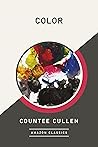
BOOKS: “Color” by Countee Cullen

Color (AmazonClassics Edition)Color by Countee Cullen
My rating: 5 of 5 stars

Available on Project Gutenberg

This excellent collection of lyric poetry is by one of the greats of the Harlem Rennaissance. The poems include a range of forms and sizes from single quatrain epitaphs to poems of several pages, with those in between (including a number of sonnets) being most common. Like Dickinson, Cullen had a fondness for common meter (a.k.a. hymn meter,) and it is prevalent throughout. The topics include serious matters, such as race and death, but there is no lack of whimsicality within these pages.

The book is divided into four sections: “Color,” “Epitaphs,” “For Love’s Sake,” and “Varia.” The first is the most serious of tone. (Interestingly, the epitaphs and other poems on death often take a lighthearted, even humorous, tone.)

I’d highly recommend this collection for poetry readers. It’s fun to read, and the poems are skillfully crafted.

View all my reviews

“The Wise” by Countee Cullen [w/ Audio]

(For Alain Loch)

Dead men are wisest, for they know
How far the roots of flowers go,
How long a seed must rot to grow.

Dead men alone bear frost and rain
On throbless heart and heatless brain,
And feel no stir of joy or pain.

Dead men alone are satiate;
They sleep and dream and have no weight,
To curb their rest, of love or hate.

Strange, men should flee their company,
Or think me strange who long to be
Wrapped in their cool immunity.

BOOKS: “The Penguin Book of Indian Ghost Stories” ed. by Ruskin Bond

Penguin Book of Indian Ghost StoriesPenguin Book of Indian Ghost Stories by Ruskin Bond
My rating: 5 of 5 stars

Publisher’s Website

This is an anthology of stories of the supernatural set in India or built around characters and contexts of India. About half of the stories are by writers of non-Indian ancestry, though some were born or lived extensively in India (e.g. Rudyard Kipling and C.A. Kincaid.) Not all of the pieces are “ghost stories” in a technical sense, but they all revolve around the supernatural or surreal experience.

I enjoyed all the stories in this collection, but among my favorites were: “The Brown Hand” by Arthur Conan Doyle; “The Strange Ride of the Morrowbie Jukes” by Rudyard Kipling; “The Fire-Jogi” by A.C. Renny; “Fritz” by Satyajit Ray; “Anath Babu’s Terror” by Satyajit Ray; “The Yellow-Legged Man” by Sudhir Thapliyal, and “Topaz” by Ruskin Bond.

If you enjoy scary stories, I’d highly recommend this book.

View all my reviews

BOOKS: “Translation: A Very Short Introduction” by Matthew Reynolds

Translation: A Very Short Introduction (Very Short Introductions)Translation: A Very Short Introduction by Matthew Reynolds
My rating: 5 of 5 stars

Publisher’s Site

Language translation is one of those tasks that people take for granted is a straightforward endeavor — especially in the current era in which computers are starting to do a decent job of it. It turns out that translation isn’t at all straightforward, and a number of tradeoffs must be addressed through the act of translating — e.g. should one try to convey the original author’s meaning as closely as possible or should one make the writing as approachable and comprehensible to the readership as possible? This might seem like a false dichotomy, but because languages never map perfectly to each other and reflect differing worldviews, there is always some degree of trade-off necessary.

Reynolds addresses not only cases from literature, but also shows the role that translation (and mistranslation) can play in the legal, political, and business domains as well. I found this book to be interesting and useful in providing food-for-thought on the subject. It is particularly illuminating in its discussion of how translation is changing in an era of AI, and how profound an effect this will have on our future. (e.g. People worry about the death of languages with small followings, but if automated translation becomes cheap and ubiquitous, will the pressure to focus one’s efforts on one of the world’s major languages remain?)

If you are interested in issues of language translation, this is a fine book with which to begin one’s exploration.

View all my reviews

“Forever — is composed of Nows — (690) by Emily Dickinson [w/ Audio]

Forever -- is composed of Nows --
'Tis not a different time --
Except for Infiniteness --
And Latitude of Home --

From this -- experienced Here --
Remove the Dates -- to These --
Let Months dissolve in further Months --
And Years -- exhale in Years --

Without Debate -- or Pause --
Or Celebrated Days --
No different Our Years would be
From Anno Dominies --

BOOKS: “Sweet Hunter” by Teresa of Avila; Trans. by Dana Delibovi

Sweet Hunter: The Complete Poems of St. Teresa of Ávila (Bilingual Edition)Sweet Hunter: The Complete Poems of St. Teresa of Ávila by St. Teresa
My rating: 4 of 5 stars

Publisher Website

This is a bilingual collection of the poems of Teresa of Avila, one of history’s most influential Christian mystics, newly translated by Dana Delibovi. The collection contains about thirty poems, some ecstatic and some philosophic, in both English the original Spanish.

The book also offers an overall introduction and commentaries on each of the five sections by which the poems are grouped. This provides the reader, particularly a neophyte to the history and theology that inform these poems — such as myself — with background useful to better experiencing the poems. I do enjoy bilingual editions even when they are in a source language that I don’t read because they do allow some insight into rhyme, metering, and other considerations of sound. One can observe to what degree the translator emulates form, even if one remains ignorant of the degree to which meaning is captured.

I enjoyed this collection. If you are interested in the poetry of Christian mystics, I’d recommend you give it a read.

View all my reviews