Lament 4 [感遇四] by Zhang Jiuling [张九龄] [w/ Audio]

South of Yangtze, stands of red tangerine
Can endure winter while remaining green.
Is it that the weather there is so warm?
No. Their nature 's to bear a winter storm.
What might well serve the joyful traveler
Will be loathsome peril to passengers.
Fate factors in chance and situation --
Not playing around in cyclic rotation.
You may cultivate crops however you please,
But should heed shade thrown by mountains & trees.

This is the fourth poem in 300 Tang Poems [唐诗三百首] and the final poem of a quartet that opens that collection. The original in Simplified Chinese is:

江南有丹橘, 经冬犹绿林;
岂伊地气暖? 自有岁寒心。
可以荐嘉客, 奈何阻重深!
运命惟所遇, 循环不可寻。
徒言树桃李, 此木岂无阴?

Wen Fu 9 [文赋九] “The Whip” by Lu Ji [陆机] [w/ Audio]

Language can be complex, reason may sprawl,
And words don't always seem to point the way.
Extremes aren't always clear and distinct.
Overhauls are not always an upgrade.
The gist may dwell in a key phrase or two --
Those words the whip that make it race or stay.
Though multitudinous words are in place
They must do more than roar, hiss, or bray.
Overuse of the whip exhausts the horse --
Keep the impulse to whip too much at bay.

The original lines in Simplified Chinese are:

或文繁理富,    而意不指适。
极无两致, 尽不可益。
立片言而居要,乃一篇之警策。
虽众辞之有条,必待兹而效绩。
亮功多而累寡,故取足而不易。

PROMPT: Three Books

List three books that have had an impact on you. Why?

Steven Kotler’s The Rise of Superman changed the way I looked at mind-body development.

Water Margin [a.k.a. Outlaws of the Marsh] convinced me a sprawling epic could be worth reading if it was done well, it kicked my love of Chinese Literature into high gear, and it started me on the path of learning Chinese.

Self-Reliance and Other Essays by Ralph Waldo Emerson had a major influence on my early philosophical development — especially the titular essay.

Now, I’m thinking I should’ve pushed one of these out for Leaves of Grass by Walt Whitman, but perhaps another time.

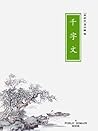
BOOKS: 千字文 [Thousand Character Essay] by 周兴嗣 [Zhou Xingsi]

千字文千字文 by 周兴嗣
My rating: 4 of 5 stars

A version with English commentary can be found at the IFA Gallery

This short work, consisting of just one-thousand characters, is first and foremost a teaching tool for children. While it presents a thousand of the most important Chinese characters, it also delivers lessons on history, ethics, philosophy, and culture by way of short sayings.

It’s arranged into 250 4-character phrases (125 sentences) and reads as a lyric poem, though because it dates to the Sixth Century, the degree to which the rhyme scheme holds varies depending upon the which spoken language one speaks (e.g. Mandarin, Cantonese, or Hakka.)

There have been different versions of this work over the centuries.

This is a much beloved work of literature among Chinese, though its sayings do not necessarily hold up as well as works like Sunzi’s Art of War or Laozi’s Daodejing. Some do, but most are much less relevant than when written.

As someone learning Chinese, I’d highly recommend this work as a way to expose oneself to language while gaining insight into Chinese culture.

View all my reviews

Lament 3 [感遇三] by Zhang Jiuling [张九龄] [w/ Audio]

Alone, the hermit returns home to sleep.
He's cleansed of cares by way of solitude.
He gives thanks and praise to the geese on high
For lifting feelings to grand altitude.
Day or night, his mind holds no intentions,
Who can sense his energy, so subdued?
His flight and submergence self-limited,
Where can he find calm, and still be renewed?

This is the third poem in 300 Tang Poems [唐诗三百首] as well as the third of a quartet of poems entitled Gǎn Yù [感遇] that open the collection. The original in Simplified Chinese is:

幽人归独卧, 滞虑洗孤清。
持此谢高鸟, 因之传远情。
日夕怀空意, 人谁感至精?
飞沉理自隔, 何所慰吾诚?

“Lament 2” [感遇二] by Zhang Jiuling [张九龄]

Verdant orchid leaves of Spring;
Cassia blooms bright in Autumn;
Thriving plants, top to bottom.
Festivals planned by their timings.
Who knows the forest recluse --
Pleased with winds and winds with he.
Plants have stems, branches, and roots
Why beg a belle to pluck their fruits.

This is poem #2 of the 300 Tang Poems [唐诗三百首,] and is the second in a quartet of poems called 感遇 [Gan Yu.] The original poem in Simplified Chinese goes:

兰叶春葳蕤, 桂华秋皎洁; 
欣欣此生意, 自尔为佳节。
谁知林栖者, 闻风坐相悦。
草木有本心, 何求美人折?

Wen Fu 8 [文赋 八] “Edits” by Lu Ji [陆机] [w/ Audio]

Maybe the first lines constrain the last;
Maybe ends insist on openings;
Maybe some truths escape all words;
Maybe dulcet lines tell no truths.
One may need to keep separated --
Beauty and truth -- to avoid wounds.
Inspect and haggle over each word --
Distinctions maybe finer than a hair;
Weigh each edit upon a scale;
Ensure each cut serves its purpose.

Original poem in Simplified Chinese:

或仰逼于先条,或俯侵于后章。
或辞害而理比,或言顺而义妨。
离之则双美, 合之则两伤。
考殿最于锱铢,定去留于毫芒。
苟铨衡之所裁,固应绳其必当。

“Lament I” [感遇一] by Zhang Jiuling [张九龄]

A lone goose flies in from the sea,
Not daring to land in water.
Glimpsing a pair of Kingfisher --
Nested Three Pearl Tree squatters --
It asks, "High up in that rare tree
Of gold spheres, are you not afraid?
Fancy clothes incur points and jeers
And those high up are harshly weighed.
As I roam dark rivers and hills,
Envious hunters give me chills."

This is the first of the 300 Tang Poems [唐诗三百首] and it is also the first of a quartet of poems. The original poem in Simplified Chinese:

孤鸿海上来, 池潢不敢顾; 
侧见双翠鸟, 巢在三珠树。
矫矫珍木巅, 得无金丸惧?
美服患人指, 高明逼神恶。
今我游冥冥, 弋者何所慕?

“Climbing Mt. Xian with Friends” [与诸子登岘山] by Meng Haoran [孟浩然]

Human affairs ever grind on --
Ancient or modern, shit repeats.
Mountains and rivers are changeless.
We climb to find our vista seats.
Cascade, fisher, and bridge -- subdued;
Air grows cold near dreamy, deep pools.
We read an old stone monument,
As tears glisten on cheeks like jewels.

Original Poem in Simplified Chinese:

人事有代谢, 往来成古今。
江山留胜迹, 我辈复登临。
水落鱼梁浅, 天寒梦泽深。
羊公碑字在, 读罢泪沾襟。

Note: This is poem #125 from 300 Tang Poems [唐诗三百首]

Wen Fu 7 “Music” [文赋七] by Lu Ji [陆机]

Matter comes in countless varieties,
And the forms are evershifting, as well.
Writers must dance the varied characters
To dulcet lines where elegance dwells,
Finding the right pace, cadence, and stresses
To blend like harmony in the five hues.
Though the tune fades in and out randomly
And the path is rugged and hazard-strewn,
Those who know the ways of change and order
Will find all falls into place with a flow.
But if one misses the proper pivots
It's like grabbing the tail to steer the nose --
Like yellow painted onto wet, black walls,
One's writing becomes muddy, and it stalls.

The original in Simplified Chinese:

其为物也多姿,其为体也屡迁。 
其会意也尚巧,其遣言也贵妍。
暨音声之迭代,若五色之相宣。
虽逝止之无常,固崎锜而难便。
苟达变而识次,犹开流以纳泉。
如失机而后会,恒操末以续颠。
谬玄黄之粗叙,故浍涊而不鲜。