Thoreau’s Wish [Free Verse]

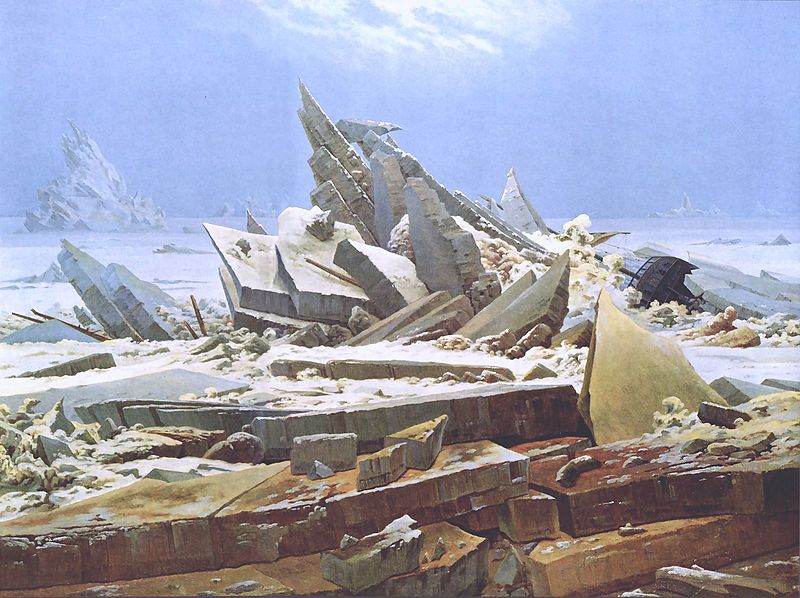
Caspar David Friedrich, Arctic Shipwreck (1824)

“I desire that there may be as many different persons in the world as possible”

Henry david thoreau, Walden

Too many people wish that the world consisted
of those who held the same views as they -

who loved what they loved,
who believed what they believed,
who would do what they would do.

I can't imagine a more boring world than that.

If there aren't those with different:

ideas,
desires,
beliefs,
and values, 

then who will show me something new:
something that -- for good or for ill --
will change my world 
and advance my understanding.

If truth be told,
I'd just as soon spend time 
among the crazy sages who --
having rejected all programming --
will not be made prisoner to a train schedule,
let alone to a norm or convention or protocol.

The madmen who shaman one 
out of all mental conventions.

But such as they are hand forged,
each vibrating at his or her own wavelength --
hard to see and
 not easily found.

Rote Learning [Common Meter]

Words memorized rote are a meal
wholly undigested,
That's why memorization is
utterly detested.

Rote learning is, somehow, bloating
and yet never filling.
One takes it all in by way of 
monotonous drilling,
but while you're still filling your cup
you're already spilling.
You pass your test and purge it all.
It's so unfulfilling. 

If I may, please let me suggest
that here's what you should do:
get the gist, play with it, and find
out what it means to you.

BOOK REVIEW: The Sunny Nihilist by Wendy Syfret

The Sunny Nihilist: A Declaration of the Pleasure of PointlessnessThe Sunny Nihilist: A Declaration of the Pleasure of Pointlessness by Wendy Syfret
My rating: 5 of 5 stars

Amazon.in Page

In this book length essay, Syfret proposes that the reader reconsider the much-maligned philosophy of Nietzsche, arguing not only that it needn’t lead one into a dreary morass of gloomy thinking, but that it might just help one live more in the now while escaping brutal cycles of self-punishment. She has her work cut out for her, but she doesn’t shy from the challenge. Much of what she discusses could just as easily be presented under the guise of the less melancholious brother school called Existentialism, but Syfret embraces the vilified term, at least it’s cheerier side, under the moniker “Sunny Nihilism.”

Nihilism proposes that there is no inherent “god-given” meaning to, or purpose of, life. There’s no god to create such meaning and purpose. This notion is accepted as a given by most scientifically-minded people today, but it still results in the occasional visceral dread. For cravers of meaning, the argument goes like this: at least some of life is suffering, why should I subject myself to suffering if there isn’t some grand purpose and plan.

The retort of many nihilists and existentialists goes, “You only feel that way because you’ve made mountains out of molehills through your obsession with meaning, purpose, and divine plans. The experience of being able to experience life is awesome, but you make the whole of life such a daunting prospect that anything that doesn’t turn out perfectly makes you angst-ridden. You worry far too much, and – what’s worse – you’re usually worried about the wrong things. You’re missing the freedom that comes from being able to choose for yourself what you value and to put your setbacks in perspective.”

The book also explores such related issues as: coping with the pandemic, millennial malaise, celebrity deification, and how technology and social media influence the light and the dark sides of nihilism.

I found the book to be thought-provoking, and I’d recommend it for anyone looking for a philosophy to help them live through the trials of our age.

View all my reviews

Mad Saints & Scientists [Free Verse]

Mad scientists are terrifying.
Mad artists are reassuring
(par for that particular course.)

Mad mathematicians
seem harmless enough,
as long as he or she
stays in his or her lane:
the one with numbers
and angles
and sets.

Mad Saints are the most hated
& most beloved of lunatics.
They serve as necessary examples --
not there to forcibly deprogram one,
but to show that it's an option.
One has the choice to be free,
whether one has the will or desire to be -
that's an open question. 

But those who sink the red pill
must learn that in those waters
thar be monsters.
(If only those of one's own making --
i.e. Nietzsche's abyss staring back.)
Voids can't gaze.
Only that which one crams 
down its abyss-hole
can do the gazing.

On Intrusive Thoughts & Shoving Someone in Front of a Train

The other day I read that a man had pushed a person onto the tracks in front of an oncoming train. 

The week before that, I'd read in a book by Robin Ince that a person who -- having had a baby thrust into his hands -- has intrusive thoughts of throwing said baby out of the nearest window is [believe it, or not] the best person to ask to hold one's baby.

The argument goes like this, the person having these intrusive thoughts is being intensely reminded by his or her unconscious mind that under no circumstances -- no matter what unexpected or unusual events should transpire -- is he to throw the baby out the window (or otherwise do anything injurious.)

I've heard that, at some point, virtually everyone has some type of awkward intrusive thought such as the thought of pushing a stranger in front of a train. 

Most never do it, nor truly want to do it.

Then this one time... someone did.   

BOOK REVIEW: Three Japanese Buddhist Monks by Saigyō, Chōmei, and Kenkō

Three Japanese Buddhist MonksThree Japanese Buddhist Monks by Saigyō
My rating: 5 of 5 stars

Amazon.in Page

This book collects three essays composed between the twelfth and fourteenth centuries. They are in chronological order, but also in order of increasing length, i.e. Saigyō’s piece is a short excerpt, while Kenkō’s essay makes up the bulk of the book.


An excerpt from Saigyō’s Senjūshō tells the story of the monk’s meeting with a wise reclusive meditator on Mt. Utsu. Saigyō tries to talk his way into living / meditating with the hermit, but the sage convinces him that that wouldn’t be good for either of them. The monk goes away, planning on visiting the hermit on his return, but he wistfully tells us that he took another route.


“The Ten-Foot Hut” is about the benefits of a simple, minimalist existence. It discusses Impermanence, and takes the view that having more just means one has more to lose. A quote that offers insight into the monk’s thoughts is, “If you live in a cramped city area, you cannot escape disaster when a fire springs up nearby. If you live in some remote place, commuting to and fro is filled with problems, and you are in constant danger from thieves.” The author’s solution? Build a tiny cabin in the woods and – in the unlikely event it burns or gets robbed while one is away – what has one really lost?


The Kenkō essay makes up about eighty percent of the book. Its rambling discussion of life’s impermanence delves into morality, aesthetics, and Buddhist psychology. There are many profound bits of wisdom in this piece. Though it’s also a bit of a mixed bag in that some of the advice feels relevant and insightful, while some of it hasn’t aged / traveled well.


I enjoyed this book and found it thought-provoking. Some may be disappointed by finding how little of Saigyō’s writing is included (he being the author of greatest renown,) but I found each author had something valuable to offer.


View all my reviews

Confluence [Free Verse]

with each breath
and each step
you feel yourself
merge with the world

pulling the outside in
pressing into the planet

each breath brings oxygen
used by Buddha or Socrates

grit granules that were 
part of mighty mountains
press into your flesh
or become your bones

the world flows through you
as you flow through the world

The Immovable [Free Verse]

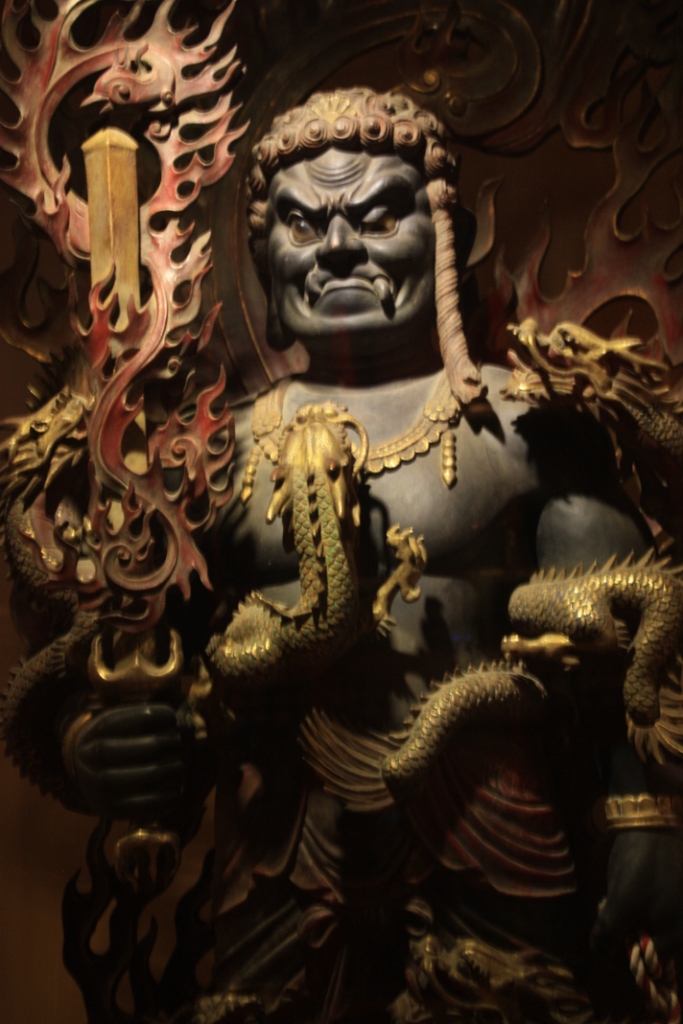
The Immovable,
said to lasso evil
& 
vanquish it with
his flaming sword.

And I have so many
questions...

-can one vanquish evil?

-what material must a
sword blade be made of 
to fatally wound something 
so conceptual?

-why don't we see more
vanquishing these days?
[It seems to be an activity 
that's fallen out of favor.]

where can one obtain 
a conceptual blade 
to vanquish
a conceptual fault?

i conclude that it's
all made of mind.

The Traveler’s Worldview in 14 [More] Quotations

SEE PART I HERE
Though we travel the world over to find the beautiful, we must carry it with us, or we find it not.
- Ralph Waldo Emerson


Love all, trust a few, do wrong to none.
-William Shakespeare, All's Well That Ends Well


Life is like riding a bicycle. To keep your balance, you must keep moving. 
-Albert Einstein 


Some beautiful paths can't be discovered without getting lost.
-Erol Ozan


Live as if you were to die tomorrow. Learn as if you were to live for ever.
-Mahatma Gandhi


There are only two ways to live your life. One is as though nothing is a miracle. The other is as though everything is a miracle.
-Albert Einstein


The journey itself is my home.
-Matsuo Bashō


No matter where you are, you're always a bit on your own, always an outsider. 
-Banana Yoshimoto


There are no foreign lands. It is the traveler only who is foreign.
-Robert Louis Stevenson


One's destination is never a place, but a new way of seeing things.
-Henry Miller


I don't want to die without any scars.
-Chuck Palahniuk, Fight Club


Tell me, what is it you plan to do with your one wild and precious life?
-Mary Oliver


Do not chase after what is true, only cease to cherish opinions.
-unnamed Zen master


If any man be unhappy let him know that it is by reason of himself alone.
-Epictetus


BONUS QUOTATION:

Respect the Gods and Buddha, but don't expect their help.
-Miyamoto Musashi

Balance & the Value of Learning to Fall

I saw something sad in the park this morning. A boy was trying to learn to ride a bicycle, but I could see that he never would — not with his present approach. Why? He had one training wheel, and the bike was leaning about 15-degrees off vertical as he struggled to use the bicycle as a tricycle. I could see that the metal arm that supported the training wheel was starting to bend from the strain — thus making the lean ever more pronounced. [Incidentally, with two training wheels, I think he might rapidly learn to ride because he’d experience tipping from one side to the other, through the balance point.]

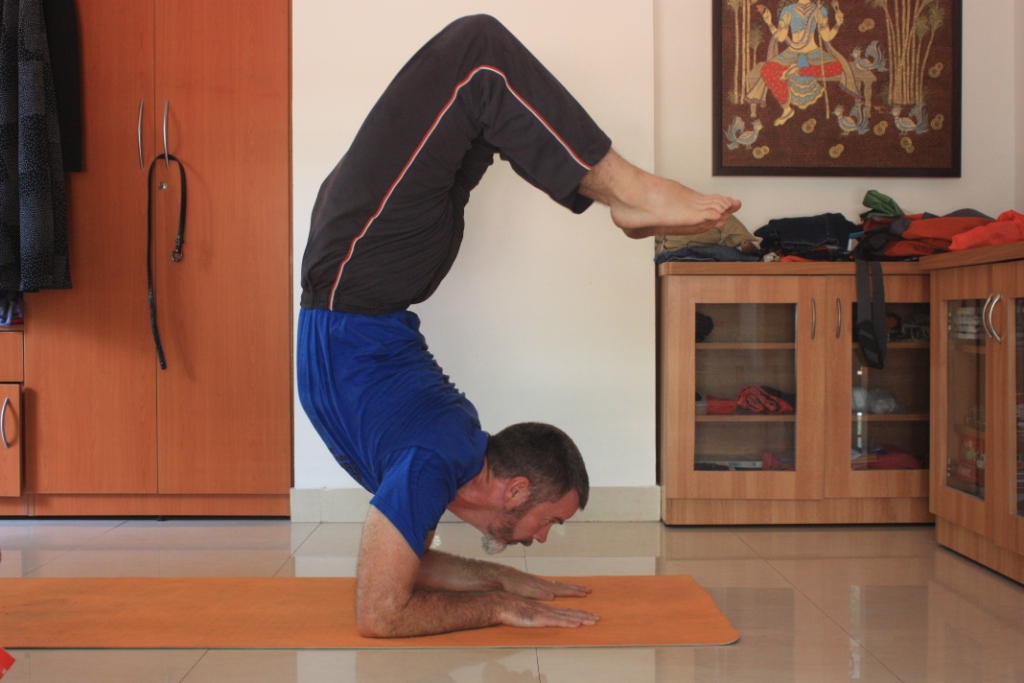
I’ve told yoga students before that there are three timelines for learning inversions (upside-down postures, which all require one’s body to learn to balance 180-degrees out of phase with the balance we all mastered as toddlers.) The first timeline is if you are willing to learn break-falls (i.e. how to safely land when — not if, it will happen — one loses balance.) If so, one can learn any inversion (that one is otherwise physically capable of performing) in an afternoon. Second, if one gets near (but not up against) a wall, and only uses the wall when one is falling towards over-rotation, then one can learn the inversion in a month — give or take. Finally, one can lean up against the wall for a million years and one will not spontaneously develop the capacity to independently do the posture. Why? Because one’s center of gravity is outside one’s body, which means one is in a perpetually unstable state, and one cannot stabilize into a balanced position from a state of falling (and leaning is just falling with a barrier in the way.)

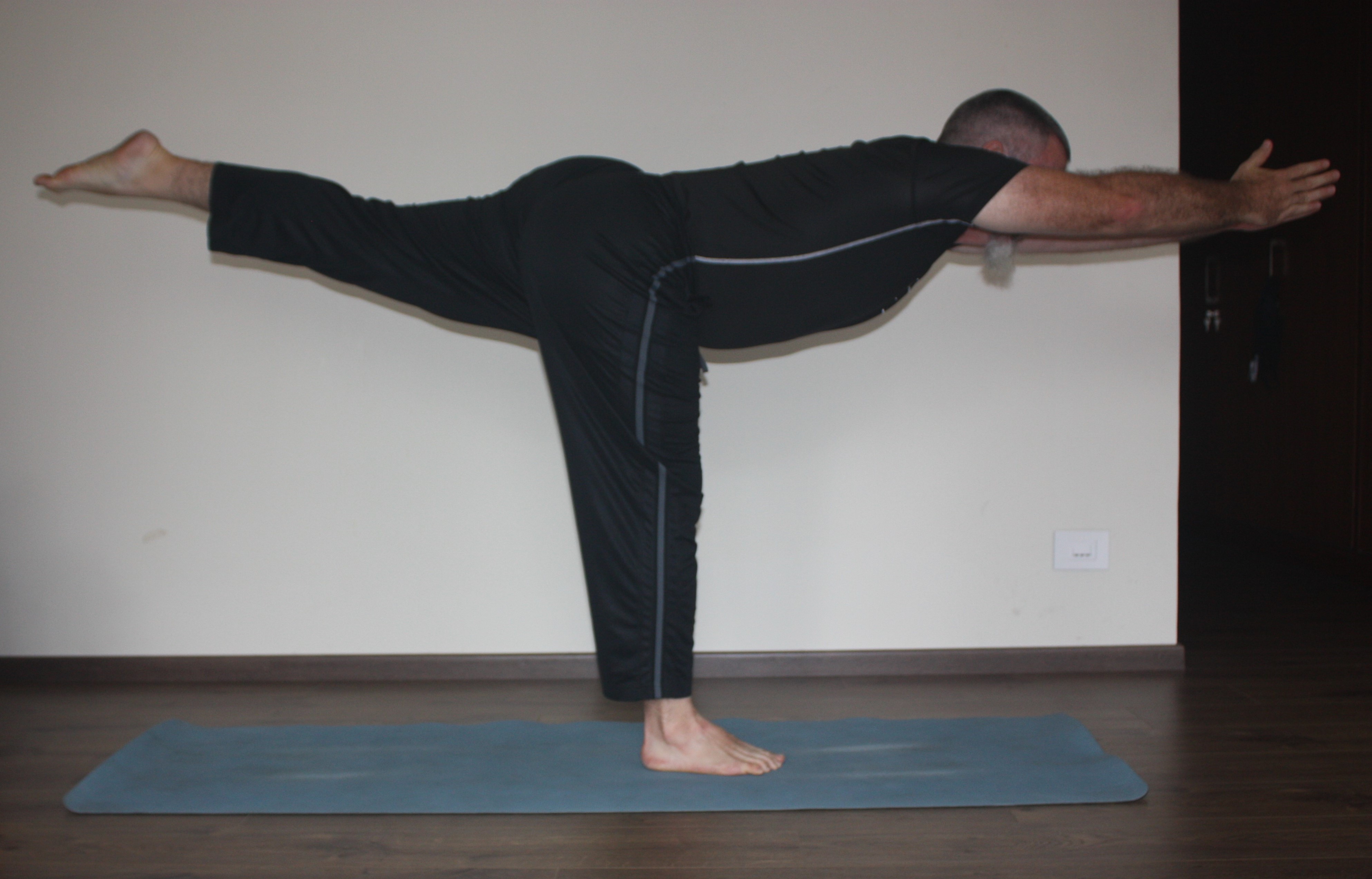
Finding balance requires that the body be able to adjust toward any available direction to counteract the beginning of a fall in the opposite direction. I was fortunate to have studied a martial art that required learning break-falls from the outset, this made learning balances (not just inversions, but also arm balances, standing balances, etc.) much easier because there was no great concern about falling. I knew my body could fall without being injured.

Without falling there’s no learning balance, and if you only fall into the under-rotated position, you are still not learning to achieve stable balance. At some point, you will need to experience the dread fall towards over-rotation.

Time to ditch the training wheels.