ideas accelerate to the surface like air bubbles from whence they came, i cannot say they passed up from below the lit sea from the darkness maybe, like air bubbles, they follow a mostly straight path, but i cannot say for certain what happens below the light i catch only the vapor that drifts up out of the popping bubbles and it must be gathered quickly before it spreads on the wind, becoming lukewarm nothing... damn increasing entropy!
Category Archives: ideas
BOOK REVIEW: Zeno and the Tortoise by Nicholas Fearn
Zeno and the Tortoise: How to Think Like a Philosopher by Nicholas FearnMy rating: 5 of 5 stars
Amazon.in Page
This book presents twenty-five philosophical tools or concepts fundamental to thinking philosophically. Fearn does an excellent job of making these ideas comprehensible while exploring how they can be of practical value in philosophizing (as opposed to diving into conceptual minutiae and the conflicts and debates around them.) The author uses stories, metaphors, and examples extensively, while avoiding jargon or complicated expressions and explanations.
The book is entirely Western-oriented, and one won’t see any discussion of ideas originating outside Europe (or North America by way of immigration from Europe.) That’s not uncommon for English language popular philosophy books, and I don’t think there’s anything nefarious to be read into it, though some will find it a shame. The philosophers whose ideas are addressed span from pre-Socratic Greece to Richard Dawkins (who I’m pretty sure is the only one still living.) The reader learns about reductionism, relativism, the Socratic method, analogy / allegory, teleology, thought experiments, parsimony, pragmatism (of sorts,) induction, skepticism, social contract, utilitarianism, dialectics, falsifiability, memes, deconstruction, and more.
I found this book to be readable and absorbing and would highly recommend it for anyone who would like an overview of the major ideas of Western philosophy and how they can be applied to thinking more philosophically.
View all my reviews
Squishy [Free Verse]

Nothing is straightforward,
or simple.
Everything is a messy mix
of shades
blended in swirling clouds—
chaos clouds.
Those who can redraw the world
with sharp, angular boundaries
are the masters of self-deception:
for all deception is self-deception.
The Flow of Wild Ideas [Free Verse]
We need a flow of wild ideas, though some will drift ever onward, into the vast nowhere: beyond application or reason. One will catch on the shore, others will pile into it, becoming a beaver dam of bad ideas. Unstable? Maybe. But the flood will rise, and lift that stuck idea, and send the whole logjam spiraling out to the deeps where maybe one idea will float apart, and find the light that makes it look worth chasing.
Self Speculation [Free Verse]
What's a Self? ...a soul? ...a set of neuronal activity? ...an illusion? ...a ghost in a machine? ...the body, the brain, & the whole enchilada? Memories can be false, and some always are. Thoughts can be illusory, and some always are. Feelings can be flighty & fickle, and some always are. If one loses a little toe, is one a diminished self, or still whole? What about if one loses a pinky toe-sized mass of brain? So many possibilities: ...death, ...changed personality, ...emotionlessness, ...speech pathologies, ...blindness, ...memory loss, ...coma, ...no discernable change, and so on. What's a Self? ...a dog? ...an embryo? ...an AI? ...an extraterrestrial? What is a self? Am I a self?
Quotations Stumbled Upon [Recently]
To survive in this world you have to be many times a coward but at least once a hero.
Adam Johnson, The Orphan Master’s son
The metaphysical assumptions upon which you want to build your life cannot be an inherited duty.
Patrick levy, Sadhus
It is true that if there were no phenomena which were independent of all but a manageably small set of conditions, Physics would be impossible.
Eugene wigner, the unreasonable effectiveness of mathematics in the natural sciences
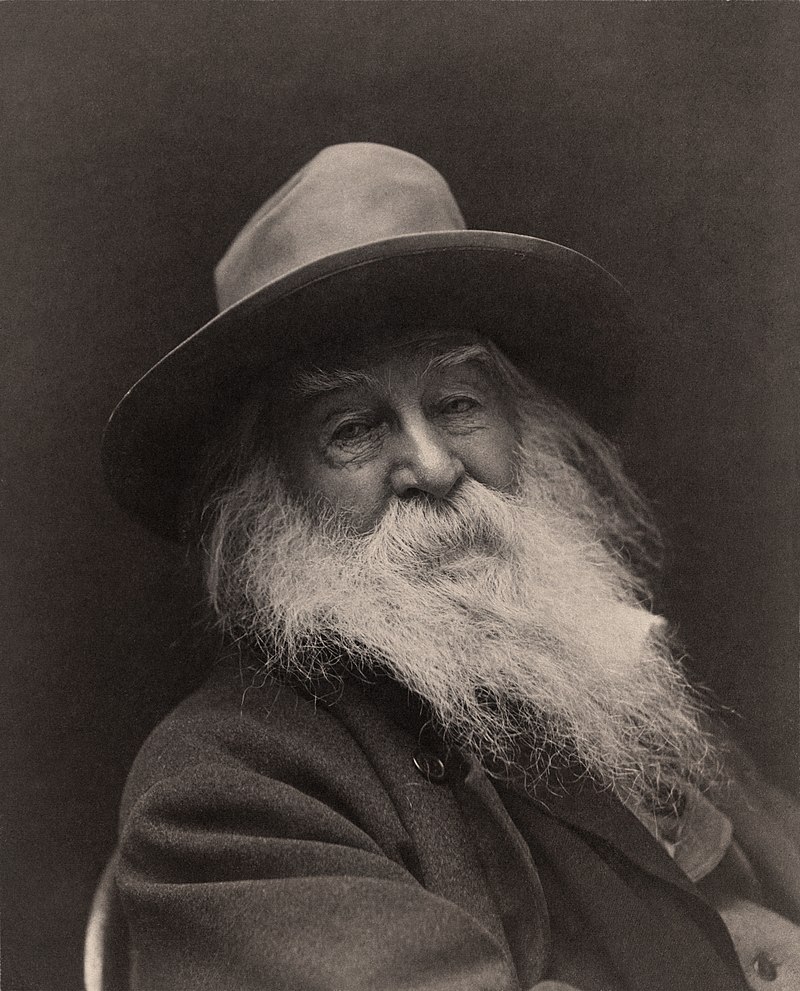
I feel about literature what Grant did about war. He hated it. I hate literature. I’m not a literary West Pointer; I do not love a literary man as a literary man, as a minister of the pulpit loves other ministers because they are ministers: it is a means to an end, that is all there is to it.
Walt whitman, as quoted in Yone Noguchi’s the spirit of japanese poetry
Know that all the sects in existence are a way to Hell.
Nichiren, as quoted by yone Noguchi in the spirit of japanese poetry
It is so easy to convert others. It is so difficult to convert oneself.
oscar wilde, the critic as artist
If you meet at a dinner a man who has spent his life in educating himself — a rare type in our time, I admit, but still one occasionally to be met with — you rise from the table richer, and conscious that a high ideal has for a moment touched and sanctified your days. But Oh! my dear Ernest, to sit next to a man who has spent his life trying to educate others! What a dreadful experience it is!
Oscar wilde, tHE CRITIC AS ARTIST
Buddha Wisdom [Haiku]
Diamondless Diamonds [Free Verse]
Diamondless Diamonds? Sounds like Daoist doublespeak or a crazy Zen koan. But, it's that which has imaginary value, but not real value. Much of what human hands reach for or produce (& which human minds obsess upon) are diamondless diamonds. People stare at them with covetous eyes, but when those eyes saccade away there's no reason to believe the diamondless diamond still exists. Eyes covet what the mind knows to have no particular worth. Diamondless Diamonds may change the world for moments at a time, but then are gone - and instantly forgotten.
BOOK REVIEW: Ashtavakra Gita Trans. by Bart Marshall
Ashtavakra Gita: by Bart MarshallMy rating: 4 of 5 stars
Amazon.in Page
There are many translations of this Hindu classic of Advaita Vedanda, a non-dualist school that teaches the oneness of all things and the illusory nature of the universe that we think we know. “The Song of Ashtavakra” explores self-realization and the path to liberation (i.e. Moksha.) [Ashtavakra was a sage with birth defects from which the name “8 angles” derives. Yoga practitioners will know the name from an arm balance pose that involves balancing the kinked body on bent arms in a manner that was apparently reminiscent of the look of this sage’s body.]
The translation that I read, one by Bart Marshall, is clearly written in readily understandable language. It’s presented as a series of short-form poems arranged into twenty chapters that also form a dialogue between Ashtavakra and Janaka. This version doesn’t contain commentary and analysis as some translations do. Because it’s both highly readable and inexpensively acquired, I’d recommend one give it a chance. If you later decide you’d benefit from commentary, you’ll not be at a loss by having read this version first.
As is common enough in such tracts, the book can be repetitive as it reiterates ideas like the need to avoid desire and aversion and the nature of oneness. That said, there were some quite powerful statements that genuinely expanded on the ideas of the work. (e.g. 18.100: “One of tranquil mind // seeks neither crowds nor wilderness. // He is the same wherever he goes.” Or 3.12 “Why should a person of steady mind, who sees the nothingness of objects, prefer one thing over another?”)
If you’re a student of philosophy or of yoga as a philosophy, I think this is well worth a thoughtful read.
View all my reviews
BOOK REVIEW: The One-Straw Revolution by Masanobu Fukuoka
The One-Straw Revolution by Masanobu FukuokaMy rating: 5 of 5 stars
Amazon.in Page
I kept running into references to this book in my readings about food and farming, and, eventually, I figured it must be a must-read. One topic that’s of interest to me (and should be of interest to everyone) is how [or, perhaps, whether] humanity can be sustainably fed, given the realities of human nature. Fukuoka (d. 2008) was at the vanguard of what’s been called the “natural farming” movement (a term he admitted he didn’t love.) He spent decades growing rice, other grains, and fruits in rural Shikoku, Japan, using a minimalist approach.
The book mixes philosophy, biography, commentary on food / nutrition, and instruction in Fukuoka’s approach to agriculture. Guided by a philosophy of “wu wei” (i.e. “effortless action,”) Fukuoka figured out how to reduce the amount of effort and resources put into farming, while maintaining crop yields that were competitive with the standard farming model. His approach appears backwards, lazy, and unlikely to succeed. He didn’t plow his fields. He planted by casting seed into the previous crop before harvesting it (note: he alternated rice with winter grains.) He didn’t weed, but rather let white clover grow freely and used the stalks and chaff from one harvest as cover for the next (again, rotating crops,) a cover that biodegraded into nutrients. He used no chemicals, neither fertilizer nor insecticide. And yet, important details of his approach kept his yields up while using minimal resources to maximum effect by operating in accord with nature (e.g. no insecticides seems to risk infestation, but it also means that you haven’t killed the creatures that eat pests.)
Fukuoka’s philosophy combines the principles of nature, Buddhist & Taoist concepts, and – believe it or not — something reminiscent of Nihilism (without calling it such.) There are parts of the book that some might find disagreeable. For example, Fukuoka uses an analogy that draws on the Mahayanist view of the distinction between Mahayana and “Hinayana” that Theravadins may find offensive (fyi: the older branch of Buddhism considers “Hinayana” to be derogatory and believes it’s a label based on a mistaken belief.) [To be fair, Fukuoka explicitly stated that he belonged to no religion and he claimed no expertise on the subject.] More likely to take offense are scientists and agricultural researchers, a group who takes it from both barrels. [Fukuoka says his opposition to scientists is that they fill the same role in society as the discriminating mind plays in mental activity, and he values the non-discriminating mind.]
I found this book to be loaded with food-for-thought. It raises a number of questions that aren’t answered inside (e.g. is Fukuoka’s approach scalable?,) but it’s a fascinating and highly readable introduction to natural farming. I’d highly recommend it for those interested in the subject.
View all my reviews