BOOKS: “Smoke and Ashes” by Amitav Ghosh

Smoke and Ashes: A Writer's Journey through Opium's Hidden HistoriesSmoke and Ashes: A Writer’s Journey through Opium’s Hidden Histories by Amitav Ghosh
My rating: 5 of 5 stars

Amazon.in Page

Release Date: February 15, 2024 [NOTE: for this edition; the book is already out in some markets in some additions.]

Ghosh has written a fascinating exploration of the profound global consequences of that pretty red flower, the opium poppy. I find the events surrounding the Opium Wars to be among the most incredible stories humanity has written. It is mind-blowing that a substance could be so utterly addictive as to spur wars and global social and economic upheavals. That substance is, of course, tea. Ah, you thought I was going to say opium (or its relative, heroin,) didn’t you? But while opium is fantastically addictive, its addicts were by-and-large in peaceful stupors in (or on) their clouds during the time in question. It is the uppity Earl Grey addict who was draining Britain’s treasury of precious metals, and — as addicts do in their impoverished desperation — turned to dealing drugs.

There have been many books written on this subject, but Ghosh carves himself a niche. First, while accounts often focus tightly upon the central adversarial relationship of Britain versus China, Ghosh examines at leisure the roles of two lesser discussed players — India (not only as a subject of Great Britain but also as an autonomous actor) and America. The importance of India’s involvement, from being a major producer and processor of opium to sourcing the sepoys who actually fought the Opium Wars, has been largely ignored, and Ghosh helps to clear up distortions in the historical record. Second, the book investigates questions around America’s opioid crisis and what history can tell us about its drivers. In particular, what does the China’s explosion of addiction tell us about what might have spurred America’s crisis?

This is a readable and compelling nonfiction exploration of the influence of opium from a writer who has produced novels (e.g. the “Sea of Poppies” trilogy) set around these historical events.

I’d highly recommend this book for individuals interested in the influence of Opium, particularly if one is curious about how history relates to the recent crises and what role Indians and Americans played in events.

View all my reviews

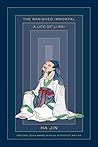
BOOKS: “The Banished Immortal” by Ha Jin

The Banished Immortal: A Life of Li Bai (Li Po)The Banished Immortal: A Life of Li Bai by Ha Jin
My rating: 5 of 5 stars

Amazon.in Page

Li Bai is considered to be one of China’s best poets of all time, writing during the Tang Dynasty (618-907 AD,) a time swole with poetic greats. However, it’s not just a prolific collection of extant masterpieces that make Li Bai worthy of a biography intended for a general audience. Li Bai was also a compelling character. He was, at once, a drunk and a genius; a swordsman of some skill and a card-carrying Daoist. It’s not just that he could edit drafts into brilliant poems, but he was said to be gifted at spontaneously spouting clever verse. He was constantly struggling to gain a post in government, but failed time and again. Even when his poetic renown became so great that he was given a post in the Imperial court, he was disappointed to find that it was largely ceremonial and that he would have no great impact on anything. He had a stunning fall from grace when he aligned with the wrong side during a civil war and was lucky to have been exiled rather than executed.

Ha Jin, a prominent present-day Chinese author best known for the novel Waiting, does an excellent job of exploring Li Bai’s life. What I particularly enjoyed is that Ha Jin (a poet himself) discusses how events in Li’s life spurred some of his great poems (which are often included in whole or in part.) Ha Jin is also careful to make clear when biographical accounts diverge, and there are many unknown or disputed details of Li’s life. In fact, there is a bit of a mythology around Li Bai, as one might guess from the title – which refers to a nickname bestowed upon the poet based on the belief that he was a Daoist immortal.

I’d highly recommend this book for readers of biography, those interested in Chinese history, or those who are intrigued by rebellious poetic souls.

View all my reviews

St. Crispin’s Day Speech [from HENRY V] by William Shakespeare [w/ Audio]

This day is call'd the feast of Crispian.
 He that outlives this day, and comes safe home,
 Will stand a-tiptoe when this day is nam'd,
 And rouse him at the name of Crispian.
 He that shall live this day, and see old age,
 Will yearly on the vigil feast his neighbours,
 And say "Tomorrow is Saint Crispian."
 Then will he strip his sleeve and show his scars,
 And say "These wounds I had on Crispian's day."
 Old men forget; yet all shall be forgot,
 But he'll remember, with advantages,
 What feats he did that day. Then shall our names,
 Familiar in his mouth as household words --
 Harry the King, Bedford and Exeter,
 Warwick and Talbot, Salisbury and Gloucester --
 Be in their flowing cups freshly rememb'red.
 This story shall the good man teach his son;
 And Crispin Crispian shall ne'er go by,
 From this day to the ending of the world,
 But we in it shall be remembered --
 We few, we happy few, we band of brothers;
 For he today that sheds his blood with me
 Shall be my brother; be he ne'er so vile,
 This day shall gentle his condition;
 And gentlemen in England now a-bed
 Shall think themselves accursed they were not here,
 And hold their manhoods cheap whiles any speaks
 That fought with us upon Saint Crispin's Day.

PROMPT: Historical Figure

If you could meet a historical figure, who would it be and why?

Assuming no babel fish technology – i.e. that we’d need a common language – I’d say William Blake, Walt Whitman, or Mark Twain. The latter would probably be the most fun, the middle the most uplifting, and the first the most insightful (or perhaps most mystical.)

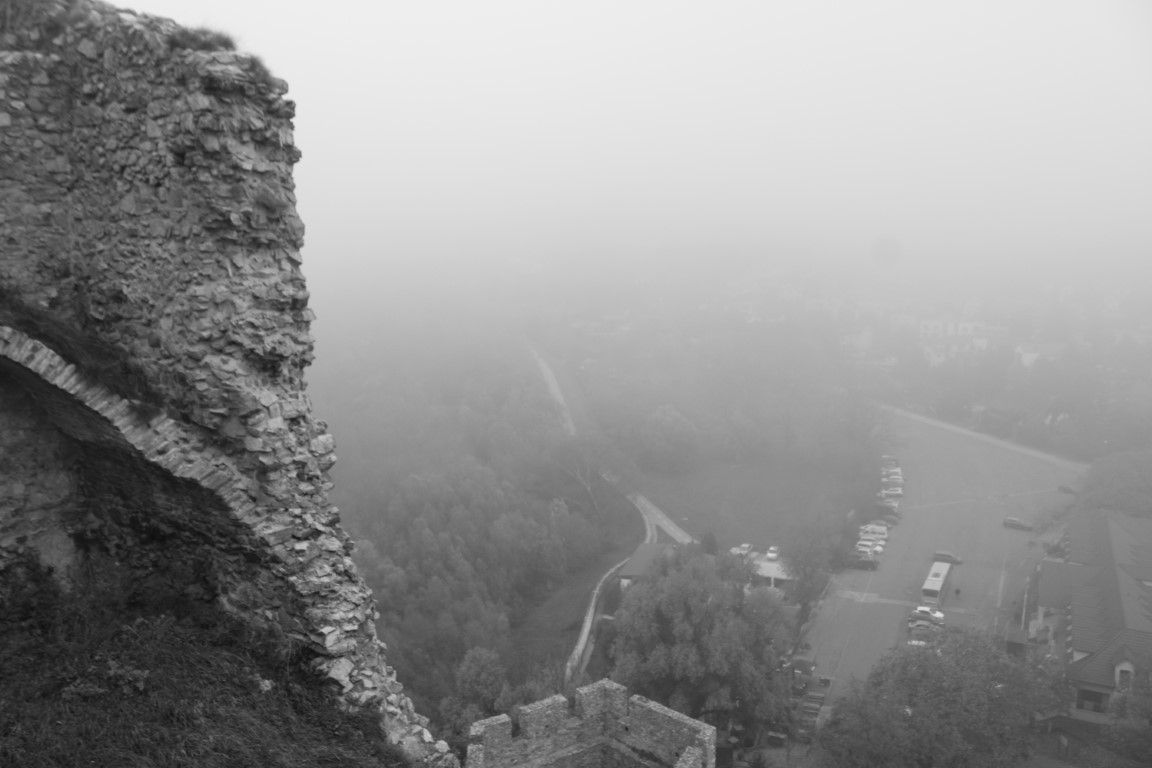
Rampart Perspective [Common Meter]

From atop an old stone rampart,
   one's head within the clouds,
 one expects to see an old oxcart
   through that foggy shroud.

But down below, the modern day:
   buses, cafes, and cars.
 I turn my head the other way,
   and the world 's as it was:

Back in the times when that fortress
   was besieged and battered,
 and nothing moved freely but for
   a flag -- singed and tattered. 

There's a certain romantic view
   of long-gone days of old,
 but I think I'll be heading down
   before I catch a cold. 

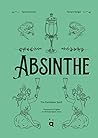
BOOKS: Absinthe by Tania Brasseur & Tamara Berger

Absinthe: The Forbidden Spirit: An Intoxicating History of the Green FairyAbsinthe: The Forbidden Spirit: An Intoxicating History of the Green Fairy by Tania Brasseur
My rating: 4 of 5 stars

Amazon.in Page

Release Date: February 27, 2024

The biography of a beverage might not seem exhilarating, but absinthe has no ordinary history. It rose from obscurity as a regional drink indigenous to parts of France and Switzerland to international celebrity by becoming popular with artistic geniuses of the era — e.g. Oscar Wilde. Some of whom credited the drink with more than just a pleasant tipsy sensation. Then it received its own prohibition while other alcoholic beverages remained perfectly legal. Of course, as with other prohibitions, Absinthe’s legend rose and taste for it didn’t disappear. Eventually, its prohibition ended, and absinthe was freed to have a second life.

This book is primarily a history of absinthe’s rollercoaster ride existence. However, it also discusses wormwood and other prominent ingredients, the distillation process, as well as the mythology that grew up around the beverage.

If you’re curious about the beverage and its mythos, I’d recommend you give this book a look.

View all my reviews

BOOKS: Bohemians: A Very Short Introduction by David Weir

Bohemians: A Very Short Introduction (VERY SHORT INTRODUCTIONS)Bohemians: A Very Short Introduction by David Weir
My rating: 5 of 5 stars

Amazon.in Page

This book examines the brief life of the Bohemian artistic lifestyle, exploring how it came about, what it looked like in its heyday, what led to its demise, and by what / whom it was replaced (e.g. the Beats.) It is an intriguing examination of the subject. I will say, there were points that I felt the book had become lost in the weeds, but at other points I found it fascinating. I concluded that my own calculus was to find it interesting when it discussed the lives and works of artists who are still deemed to have relevance and influence today (e.g. Baudelaire, Picasso, and Whitman,) and not so much when it was elaborating on artists and works that have fallen into obscurity among the general populace (e.g. Henry Murger’s Scenes of Bohemian Life.) So, that may be more a reflection on me than on the book.

The author touches upon the fictional influences that inspired Bohemianism, the places where the lifestyle thrived (e.g. Paris and New York,) the philosophy and – particularly – the political philosophy of the Bohemians (e.g. often Anarchists or – at least – anti-government.) One of the topics that most interested me is how the successor artistic communities differed from the Bohemians.

If you’re interested in who the Bohemians were and how they differ from other artistic communities (before and after,) this book is well worth the brief read required.

View all my reviews

PROMPT: Historical Event

What historical event fascinates you the most?

It varies over time. For a long time, it was the Second World War and the Holocaust. How do you get the rise of Nazis and the horrors that sprang therefrom? Sadly, I think that question has been answered to my — for lack of a better word— satisfaction.

The execution of Socrates has spurred a great deal of thought.

In terms of what is not so much a historical event, but historical processes, I’m intrigued by the life of Buddha.

Then there are a lot of explorer / adventurer travels.

PROMPT: Historical Events

What major historical events do you remember?

From the Iranian Hostage Crisis onward, pretty much all of them — given they were considered “major” in whatever place I was living at the time.

DAILY PHOTO: Ukrainian National Museum [Chicago]