BOOK: “The Adventures of Tom Sawyer” by Mark Twain

The Adventures of Tom SawyerThe Adventures of Tom Sawyer by Mark Twain
My rating: 5 of 5 stars

Available Online – Project Gutenberg

This is Twain’s best-known and probably most beloved work — though arguably neither his best nor most impactful piece. It tells the tale of a mischievous but warmhearted boy, Tom Sawyer, and a series of formative events in Sawyer’s youth from learning how to trick other kids into doing his chores to being trapped deep in a cave with his sweetheart. While there is a plot throughline involving the closest thing the novel has to a villain, Injun Joe, for the most part the story is episodic. That’s for the best because if too much weight were placed on that throughline, it’s resolution would feel flat. As it is, we see Sawyer and his friends, particularly Huck Finn, subjected to trials and challenges (often of their own making) that present moral dilemmas and the need to steel themselves for the occasion.

It’s often been said that this book isn’t as powerful or influential as its sequel, Adventures of Huckleberry Finn, which this book sets up nicely I should point out. It is probably true that Huck Finn is more profound. That said, Tom Sawyer could be said to be a cleaner read in that Huck Finn gets a bit muddled, particularly toward its end.

I’d highly recommend this book for all readers.

View all my reviews

PROMPT: Book from Childhood

Do you remember your favorite book from childhood?

Green Eggs and Ham is the earliest children’s book that made an impression — mostly for its catchy lyricism. Robinson Crusoe was the first story that resonated.

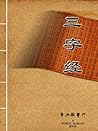
BOOKS: 三字经 by 王应麟 [“Three Character Classic” by Wang Yinglin]

三字经三字经 by 章炳麟
My rating: 5 of 5 stars

Available online — Project Gutenberg

This is a Confucian primer written in lines of three characters. It’s a children’s book in the sense that it’s aimed at children, but not necessarily with respect to being presented in a manner most conducive to childhood learning. (While it’s concise, the material isn’t presented in an interesting or memorable form. i.e. It’s intended for brute force rote memorization.)

The book consists of five sections, ranging between twenty-four and one hundred and six lines (72 to 318 characters per chapter.) The first introduces Confucian virtues. The second offers a broad overview of classics of Chinese philosophy. The third section lists the dynasties of China. The penultimate section describes ideal behavior from a Confucian perspective. The last, and briefest, section is largely a pep talk on studying hard.

As someone learning Mandarin Chinese, it’s interesting to see how sentences are formed in this sparse format, and this text offers insight into Chinese history and philosophy, in addition to providing a good early reader.

If you are interested in learning elementary Confucianism or you’re learning Chinese and looking for short and simple texts for reading, I’d recommend one look into the Three Character Classic.

View all my reviews

BOOKS: “The Story of Chinese Characters” by Fang Zeng

Languages - The Story Of Chinese Characters: 汉字的故事 (Bilingual Chinese with Pinyin and English - Simplified Chinese Version) - Preschool, Kindergarten (Educational ... Books For Smart Kids: 聪明宝宝益智成长绘本 Book 2)Languages – The Story Of Chinese Characters: 汉字的故事 (Bilingual Chinese with Pinyin and English – Simplified Chinese Version) – Preschool, Kindergarten by Elite Panda book
My rating: 5 of 5 stars

Publisher’s YouTube Channel

This story book is apparently perfect for preschoolers and definitely is for someone newly learning Chinese. It is the tale of a man who goes hunting and his mild trials and successes. It’s not a gripping tale, but that’s perfect for those new to the language as it allows simple language and concepts. The language is grammatically and semantically straightforward. This bilingual book presents Chinese characters, pinyin with tone markers, and the English translation all on the same page.

The story teaches a few rudimentary Chinese characters (person, mountain, boat, bird, etc.,) particularly ones that are either pictographic or lend themselves to pictographic memory tricks. (For those unfamiliar with Chinese, it is a common misconception that all the characters are pictographic. In fact, about eighty percent of characters appear as they do because of their spoken sound quality [i.e. they appear similar to another character with the same sound, but often with an entirely unrelated meaning.]) The illustrations not only tell the story but invokes the shape of the character that is under study.

I found this book useful for learning to read in Chinese. A little more separation of the pinyin and characters might be nice so one could cover it up to focus on reading characters, but I was clearly not the intended demographic. I don’t see any reason why the book couldn’t work either way, i.e. for English learning Chinese speakers as well as English speaking Chinese learners.

View all my reviews

BOOKS: “A Child’s Garden of Verses” by Robert Louis Stevenson

A Child's Garden Of VersesA Child’s Garden Of Verses by Robert Louis Stevenson
My rating: 5 of 5 stars

Amazon.in Page

Until recently, I was only acquainted with Stevenson as a novelist, but I had a powerful experience with his poem “The Hayloft” (included in this collection.) I was intrigued by how a poem written by a nineteenth century Scot could prove so nostalgia-inducing for me, having been a 20th century American farm-boy. So, I read the collection, and found that “The Hayloft” was only one of many examples that had such an effect. Others include: “Land of Counterpane,” “Block City,” and “Land of Nod.” The nostalgic power of the poems derives from the fact that Stevenson does a phenomenal job of capturing a child’s enthusiasm for play, and in that regard I’m sure the collection will resonate more broadly than just I, or even than just farm kids.

Afterall, there’s a lot of Stevenson’s experience that is dissimilar to mine. Besides his era and his nationality, his mentions of nurses, gardeners, and cooks is surely much different from my own upbringing, being devoid of household staff. But the book only needs to draw upon that love of play and imagination to take one back.

For a work from the nineteenth century, this collection of 50+ lyric poems has aged well. There is the occasional word like “gabies” or “whin” to send one to a dictionary, but those archaic or obsolete terms are rarities. Furthermore, the lyricism of the poems makes them easily read or sung.

I’d highly recommend this collection for poetry readers, particularly children or those looking to reexperience childhood.

View all my reviews

PLAYTHINGS by Rabindranath Tagore [w/ Audio]

CHILD, how happy you are sitting in the dust, playing with a broken twig all the morning.

 I smile at your play with that little bit of a broken twig.

 I am busy with my accounts, adding up figures by the hour.

 Perhaps you glance at me and think, "What a stupid game to spoil your morning with!"

 Child, I have forgotten the art of being absorbed in sticks and mud-pies.

 I seek out costly playthings, and gather lumps of gold and silver.
 
 With whatever you find you create your glad games, I spend both my time and my strength over things I never can obtain. 

 In my frail canoe I struggle to cross the sea of desire, and forget that I too am playing a game. 

BOOKS: The Crescent Moon by Rabindranath Tagore

The Crescent Moon : Poems and Stories [Paperback] [Jan 01, 2017] Rabindranath TagoreThe Crescent Moon : Poems and Stories [Paperback] [Jan 01, 2017] Rabindranath Tagore by Rabindranath Tagore
My rating: 5 of 5 stars

Available free at Project Gutenberg

Amazon.in Page

This is a collection of forty poems that are all connected by the theme of childhood. Many are in the voice of a child, but others are in a parent’s voice as he contemplates the nature of youth and how life has changed — or simply as he looks upon a sleeping infant. Some are brief stories or vignettes and others are scenes or philosophical reflections. Among the more well-known inclusions are: “Playthings,” “Paper Boats,” “The Gift,” and “My Song.”

This is Tagore at his most playful, but it retains his usual clever musing.

View all my reviews

PROMPT: Childhood Book

Daily writing prompt
Do you remember your favorite book from childhood?

I remember an adaptation or condensed version of Defoe’s Robinson Crusoe. The castaway theme probably resonated with my introverted nature.

BOOK REVIEW: The Curious Incident of the Dog in the Night-Time by Mark Haddon

The Curious Incident of the Dog in the Night-TimeThe Curious Incident of the Dog in the Night-Time by Mark Haddon
My rating: 5 of 5 stars

Amazon.in Page

Christopher Boone, an autistic teenager, decides he must solve the murder of his next-door neighbor’s dog, Wellington. Boone is extremely bright, but nearly dysfunctional in high-stimulation environments. He displays a number of the characteristics common among those on the Autistic Spectrum, including: constructing an exacting routine and set of rituals for living, the inability to tolerate deviations from said routines and rituals, and challenges in dealing with emotions and physical contact. The book isn’t really the murder mystery or Sherlock-style crime fiction it sounds like (though it does play on those genres and references Sherlock, a character that appeals to Christopher,) but, ultimately, the book is about the humor and drama of family life as both are impacted by the presence of a special needs child.

The book is humorous, and if you’ve seen TV shows like “Young Sheldon” or Netflix’s “Atypical” you’ll be familiar with the kind of humor – i.e. the humor of the disconnect between how neuro-atypical characters experience / perceive the world as opposed to how “neuro-typical” characters do so. Where this book does a better job than those shows is in its comfort of going just a bit further with the math and science jokes and references, presumably recognizing that readers are likely to follow the thinking a bit better than the average tv viewer. In fact, the book uses diagrams and even the rare equation to distinguish how Christopher sees the world.

What I think this book does best is putting the reader into Christopher’s shoes so that when he is doing something that most of us would consider a routine act of living, e.g. taking the subway, we are as on the edge of our seat as we would be in any hero’s journey that featured monsters and mayhem.

I’d highly recommend this book for all fiction readers. It’s highly readable, engrossing, funny, and, at times, heartrending.

View all my reviews

BOOK REVIEW: The Storyteller’s Handbook by Elise Hurst

The Storyteller's HandbookThe Storyteller’s Handbook by Elise Hurst
My rating: 5 of 5 stars

Amazon.in Page

Out: June 14, 2022

This is a book, but not one that one reads but rather one that one writes. It contains more than 50 imaginative and fantastical artworks intended to help creative parents build their own stories, while helping their children learn to become storytellers. There is a forward by Neil Gaiman (who has worked with the artist on previous occasions) and an introduction by Hurst, but otherwise there’s almost no text.

The animate subjects of the book are children and animals, but not just any animals. They are mis-sized, misplaced, mythical, imaginary, anthropomorphized, and extinct creatures in search of a clever explanation for their existence and behaviors. The usual suspects of our beloved stories are most well-represented: bears, lions, foxes, rabbits, birds, and fish – for example. But there are also less well-known creatures: mollusks, a mantis, kangaroo, koala, and armadillo. The settings are also designed to fuel the imagination: oceans, hot air balloons, impossibly floating places of all sorts, cities of gothic and fantastical architecture.

If you’re looking for a storybook where you have a graphic prompt to trigger your own story, this is a beautifully illustrated example of such a work.


View all my reviews