BOOK REVIEW: The Critic as Artist by Oscar Wilde

The Critic as Artist: With Some Remarks Upon the Importance of Doing NothingThe Critic as Artist: With Some Remarks Upon the Importance of Doing Nothing by Oscar Wilde
My rating: 5 of 5 stars

Amazon.in Page

Free to Read Online

In this dialogue, the characters of Ernest and Gilbert reflect upon the value, nature, and limits of artistic criticism. Ernest serves largely as foil and questioner, taking the everyman view that critics are failed artists and that criticism is a puny endeavor that isn’t good for much. Gilbert, on the other hand, defends criticism of art as an art unto itself, and a difficult one at that, one that requires revealing elements and ideas of the artistic piece that the artist didn’t put in the piece in the first place. Throughout, Gilbert lays down his counterintuitive bits of wisdom about the job of the critic, the characteristics of good critics, and – also – about artists and art, itself. [Ideas such as that all art is immoral.]

Oscar Wilde was famed for his wit, quips, and clever – if controversial – turns of phrase, and this dialogic essay is packed with them. A few of my favorites include:

“The one duty we owe to history is to re-write it.”

“Conversation should touch everything, but should concentrate itself on nothing.”

“If you wish to understand others you must intensify your own individualism.”

“Let me say to you now that to do nothing at all is the most difficult thing in the world, the most difficult and the most intellectual.”

“Ah! don’t say that you agree with me. When people agree with me I always feel I must be wrong.”

“…nothing worth knowing can be taught.”

This is an excellent essay, and I’d highly recommend it for anyone who’s interested in art, criticism, or who just likes to noodle through ideas. You’re unlikely to complete the essay as a convert to all of Gilbert’s tenets, but you’ll have plenty to chew on, mentally speaking.


View all my reviews
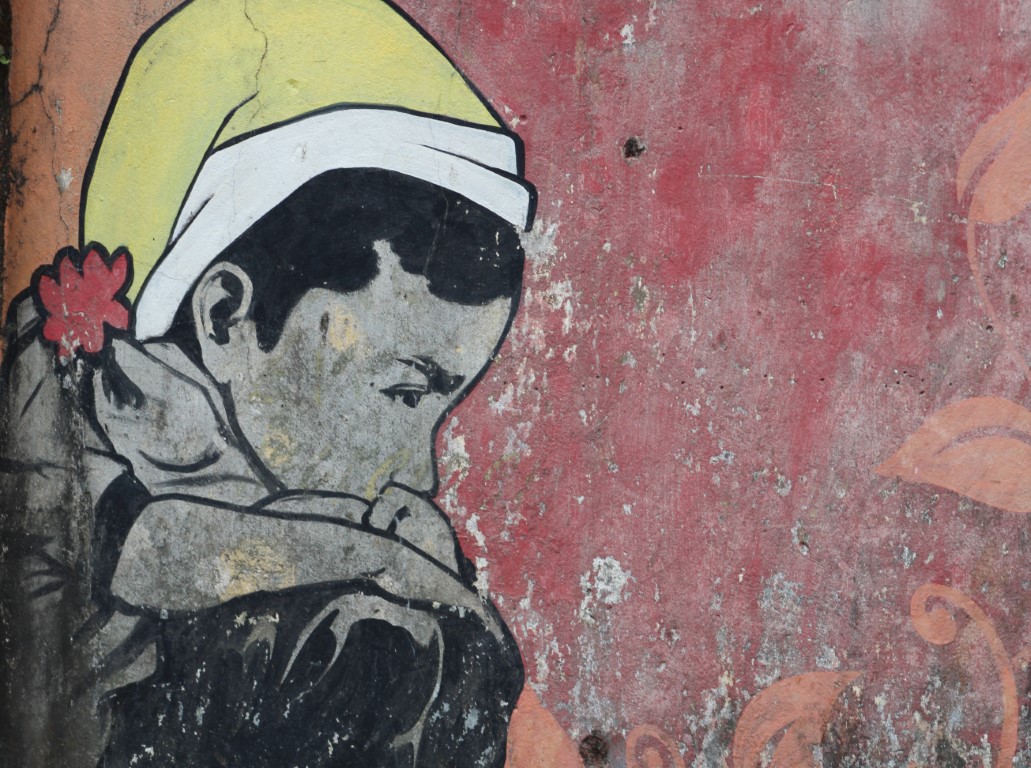
DAILY PHOTO: Gangtok Graffiti

Taken in May of 2022 in Gangtok

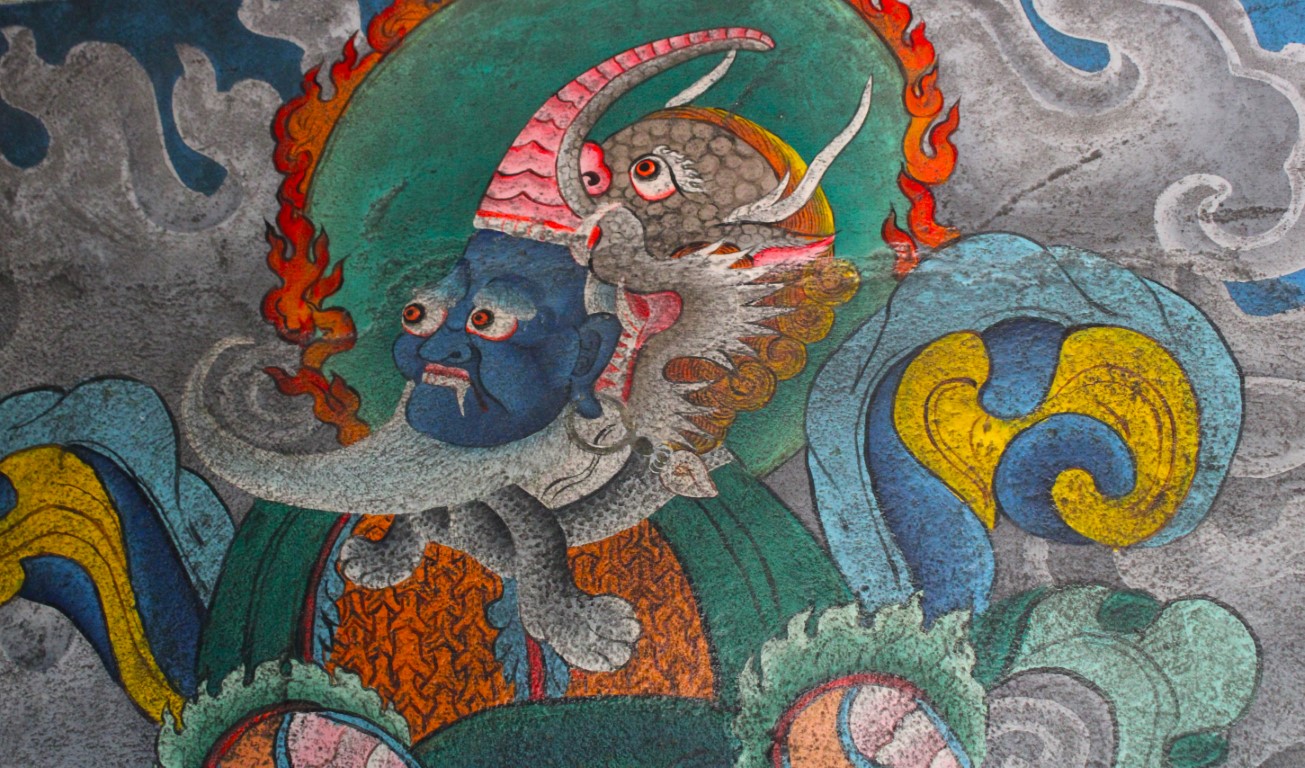
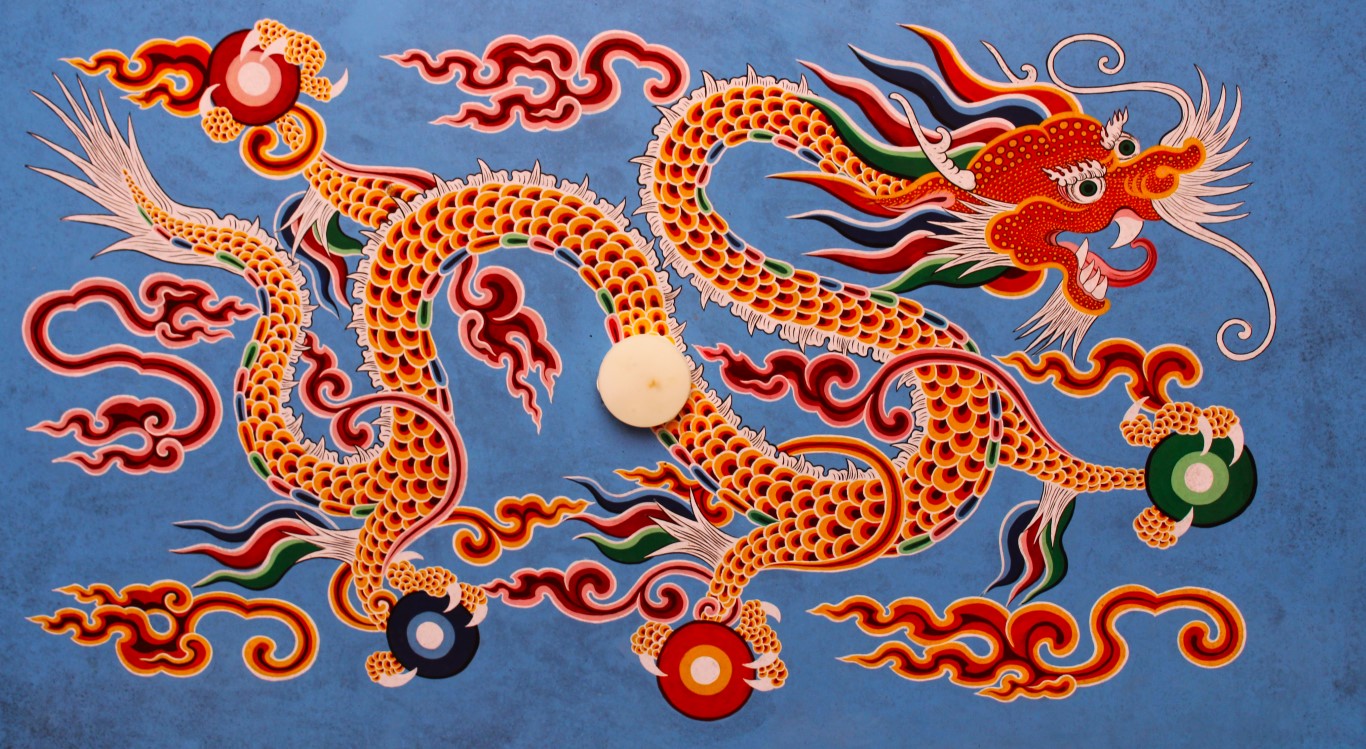
DAILY PHOTO: Gompa Art, Ravangla

Taken at the Bon Monastery near Ravangla, Sikkim

Taken at the Ravangla Gompa in May of 2022

Clouds & Bamboo [Haiku]

cliffside bamboo
becomes a sumi-e
when clouds roll in

Beauty Lost [Haiku]

Buddha statues’
fine robes & bejewelment;
what would he have worn?

BOOK REVIEW: Genius: A Very Short Introduction by Andrew Robinson

Genius: A Very Short IntroductionGenius: A Very Short Introduction by Andrew Robinson
My rating: 4 of 5 stars

Amazon.in Page

This book examines the myths and realities of that state of capability we call genius. It’s not about “geniuses” as individuals who test well on IQ exams, or who are eligible for Mensa membership, but rather about those luminaries who’ve made breakthroughs that changed the course of their discipline. It considers artistic and literary type geniuses (Shakespeare and Picasso) as well as scientific geniuses (e.g. Einstein and Darwin,) as well as discussing the differences (perceived and real) between these groups and the intriguing rarity of crosscutting figures (e.g. Da Vinci.)

The bulk of the book evaluates characteristics that are (rightly or wrongly) commonly associated with genius, including: heredity, education, intelligence, creativity, madness, personality traits, and discipline. Don’t expect clear and straightforward connections. That’s not the author’s fault. There just aren’t any traits unambiguously linked to genius in an uncomplicated way. One might expect education would be an unequivocal boon to genius, but it can be a hindrance to genius in its training of conformity. There may be a disproportionate number of geniuses with mental health issues, but there are even more without them. Hard work maybe a necessary condition, but it’s clearly not a sufficient one.

The book addresses a few other related subjects, beyond the traits associated with geniuses. For example, the degree to which genius can be defined and what it means if we can (or can’t) do so. Few individuals would be unanimously judged geniuses, and to the degree some are, mightn’t that say more about the public’s role in bestowing genius rather than the individual’s earning the designation. There is also discussion about eureka moments versus slow-builds.

This book is thought-provoking and raises intriguing and counter-intuitive debates. If you’re interested in the perception, the reality, and the interplay between the two with regard to genius, check it out.

View all my reviews

Watchable Monsters [Free Verse]

They were written into 
the lives of ancients,

written into the oldest
stories,

carved into cave
& temple, alike.

These beasts terrorized
and defended --
sometimes both
at the same time.

Towering stacks of hours
were lost to the
beastly crunch of their teeth.

Early peoples tried 
feeding bleating creatures 
to these intermediate beasts --
these watchable monsters:

 one's too scary to chase,
but too still to run from.

But they were as relentless
in their non-hunger
as they were in inspiring
long chains of possibility.

BOOK REVIEW: Ways of Seeing by John Berger

Ways of SeeingWays of Seeing by John Berger
My rating: 5 of 5 stars

Amazon.in Page

This book challenges one to not just look at what’s in a picture, but to reflect upon the nature of seeing and what it tells one about the deeper meaning of a painting or photograph. For example, who is seeing – i.e. whose perspective would the picture be from and what might the artist be saying about such a person? Also, what are the subjects looking at, and what does that convey (e.g. come-hither, lost in thought, etc.)

The book’s seven chapters alternate text + picture chapters (the odd chapters) with ones that are only pictorial (i.e. the even chapters.) The first chapter lays out the concept of ways of seeing, and subsequent chapters consider how those ideas can be applied to specific questions. Chapter three, for example, discusses what the differences between how men and women are depicted says about inherent societal biases. Chapter five explores the relationship between possessing and seeing, and also how everyday people begin to be rendered in art. Chapter seven investigates what the author calls “publicity” and how pictures are used to evoke dissatisfaction with what is and desire to be something else. Here one sees how advertising and marketing exploits these concepts.

The picture-only chapters are intriguing. One can see the commonality in the pictures and practice discerning what the author is trying to convey. One of the book’s central ideas is that seeing precedes reading, and that we learned to extract information from images before we did so from words.

The book has strange formatting, employing bold text and thumbnail art. The font didn’t bother me. I don’t know whether it was used to raise the page count on a thin book, or what. I will say that the thumbnail art can be a little hard to make out, even in the Kindle edition where it can be magnified somewhat. Most of the paintings can be internet searched quite easily, but the advertisements that are used to show how art is applied to marketing, not so much.

I found this book to provide excellent food-for-thought, and would recommend seeing / reading it.


View all my reviews

DAILY PHOTO: Agora Sculptures & Skyline, Chicago

Taken in the Summer of 2018 in Chicago

Mud [Kyōka]

the mud patterns
carved in the tidal zone
beat any
work of art by
Andy Warhol