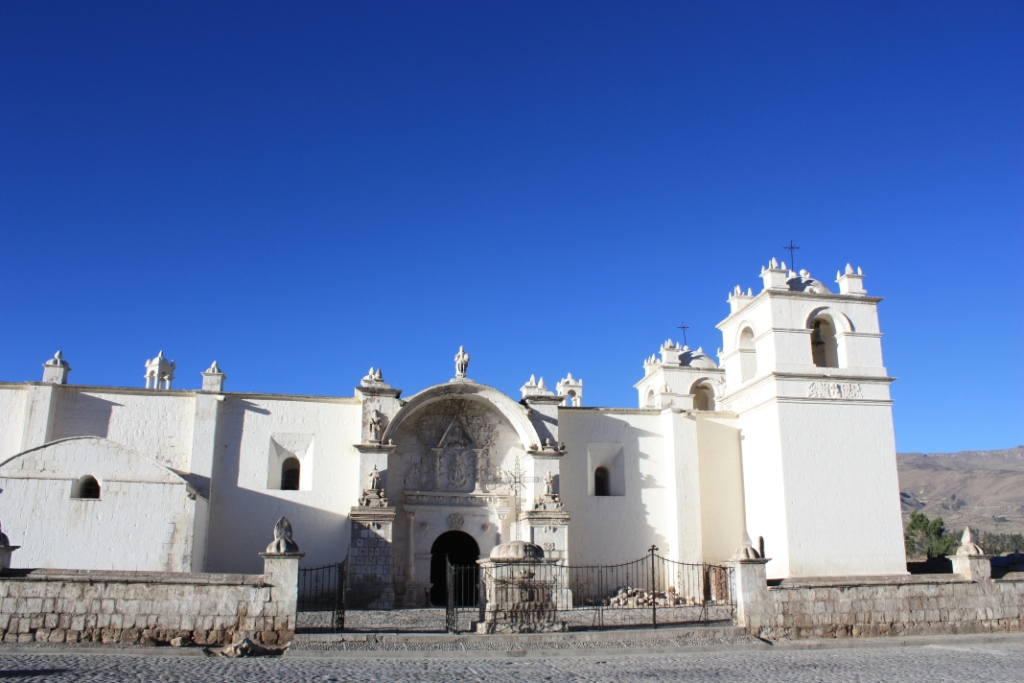
DAILY PHOTO: A Few Views of Stone Mountain Lake

“Long, too long America” by Walt Whitman [w/ Audio]

Long, too long America,
Traveling roads all even and peaceful you learn'd from joys and prosperity only,
But now, ah now, to learn from crises of anguish, advancing, grappling with direst fate and recoiling not,
And now to conceive and show to the world what your children en-masse really are,
(For who except myself has yet conceiv'd what your children en-masse really are?)

BOOKS: “The Song of Hiawatha” by Henry Wadsworth Longfellow

The Song of HiawathaThe Song of Hiawatha by Henry Wadsworth Longfellow
My rating: 5 of 5 stars

Project Gutenberg edition

This epic poem borrows from American Indian folklore and legend to build a fictional life story for the protagonist, Hiawatha. (There was an actual Hiawatha, but his life story apparently in no way resembles that of Longfellow’s Hiawatha, which is good because the fictional one had to deal with ghosts, tricksters, and deities.) The poem is part hero’s trials, part love story, and part tale of the supernatural, blending real world type tragedy with an otherworldly form.

The choice of trochaic tetrameter makes the poem rhythmically readable, while evoking a drumming sound that contributes to atmospherics.

When the poem came out in the mid-19th century, it faced some controversy. It was claimed that it was a knock off of the Kalevala of Finland. Longfellow’s reply was that he was influenced by that poem’s rhythm (the Kalevala is also trochaic,) but that all the plot events where from his conversations with American Indians and researchers, thereof, (or, presumably his own imagination,) and that any coincidence of events was owing to the broad brushstrokes of them both being heroic tales.

I enjoyed reading this poem and would highly recommend it for poetry readers and lovers of American Literature.


View all my reviews

DAILY PHOTO: Summer Scenes, Arabia Mountain Park

DAILY PHOTO: Chicago Mural, Two Views

DAILY PHOTO: Atlanta Midtown

DAILY PHOTO: Chicago Street Scenes

BOOKS: “Smoke and Ashes” by Amitav Ghosh

Smoke and Ashes: A Writer's Journey through Opium's Hidden HistoriesSmoke and Ashes: A Writer’s Journey through Opium’s Hidden Histories by Amitav Ghosh
My rating: 5 of 5 stars

Amazon.in Page

Release Date: February 15, 2024 [NOTE: for this edition; the book is already out in some markets in some additions.]

Ghosh has written a fascinating exploration of the profound global consequences of that pretty red flower, the opium poppy. I find the events surrounding the Opium Wars to be among the most incredible stories humanity has written. It is mind-blowing that a substance could be so utterly addictive as to spur wars and global social and economic upheavals. That substance is, of course, tea. Ah, you thought I was going to say opium (or its relative, heroin,) didn’t you? But while opium is fantastically addictive, its addicts were by-and-large in peaceful stupors in (or on) their clouds during the time in question. It is the uppity Earl Grey addict who was draining Britain’s treasury of precious metals, and — as addicts do in their impoverished desperation — turned to dealing drugs.

There have been many books written on this subject, but Ghosh carves himself a niche. First, while accounts often focus tightly upon the central adversarial relationship of Britain versus China, Ghosh examines at leisure the roles of two lesser discussed players — India (not only as a subject of Great Britain but also as an autonomous actor) and America. The importance of India’s involvement, from being a major producer and processor of opium to sourcing the sepoys who actually fought the Opium Wars, has been largely ignored, and Ghosh helps to clear up distortions in the historical record. Second, the book investigates questions around America’s opioid crisis and what history can tell us about its drivers. In particular, what does the China’s explosion of addiction tell us about what might have spurred America’s crisis?

This is a readable and compelling nonfiction exploration of the influence of opium from a writer who has produced novels (e.g. the “Sea of Poppies” trilogy) set around these historical events.

I’d highly recommend this book for individuals interested in the influence of Opium, particularly if one is curious about how history relates to the recent crises and what role Indians and Americans played in events.

View all my reviews

DAILY PHOTO: Chicago River Scenes

BOOKS: The Canceling of the American Mind by Greg Lukianoff & Rikki Schlott

The Canceling of the American Mind: Cancel Culture Undermines Trust and Threatens Us All―But There Is a SolutionThe Canceling of the American Mind: Cancel Culture Undermines Trust and Threatens Us All―But There Is a Solution by Greg Lukianoff
My rating: 5 of 5 stars

Amazon.in Page

This book presents an in-depth exploration of cancel culture in its many varied manifestations, from both the left and the right of the American political spectrum. The biggest part of the discussion is with respect to the educational system, and particularly higher education. Sadly, this is because the institutions that used to be among the most formidable bulwarks of free speech, expression, and academic freedom have increasingly become untenable to multiple points of view. (The authors point out that there have been more dismissals of faculty members for cancel culture speech and expression issues than there were during the McCarthy era for political stance.)

However, the book doesn’t restrict itself to education, but also investigates cancelations in journalism, publishing, the scientific community, standup comedy, and the medical and psychiatric communities. The authors also present cases of the effect that wokeness and other expression limiting activities are having in these areas. One of the most disturbing revelations to me was the role of wokeness in psychotherapy and the negative effect it may have on people getting the help they need.

The book presents a series of cases in detail to advance the discussion. It also has a couple chapters that examine the tactics that are used to apparently “win” debates by silencing / demoralizing the opposition while avoiding any actual contest of ideas. The authors go through tactics favored by the Right as well as those by the Left. (Though it’s clear that, in a race to the bottom, both sides adopt the approaches of the other side that seem to be effective. e.g. the Left is getting into book banning (historically a Conservative tactic) and the Right is getting into cancelling and shout-downs (usually Progressive tactics.)) I think it was smart to have two authors, one from the left and one from the right, in order to help ensure balance in the project. That said, as the Left has been in the cancel culture vanguard, they come up more often.

Some have called this a sequel to “The Coddling of the American Mind,” with which it shares a co-author, Greg Lukianoff. I don’t know that I’d think of it that way. While it does address some of the same issues as background, psychology and child development are not at the fore in this book (Jonathan Haidt – the other co-author of “Coddling” is a psychologist,) but rather are the legal, cultural, and political issues.  

This is probably the most important book I’ve read this year (and, being late November, it’s likely to retain that status) and I’d highly recommend it for all readers.

View all my reviews