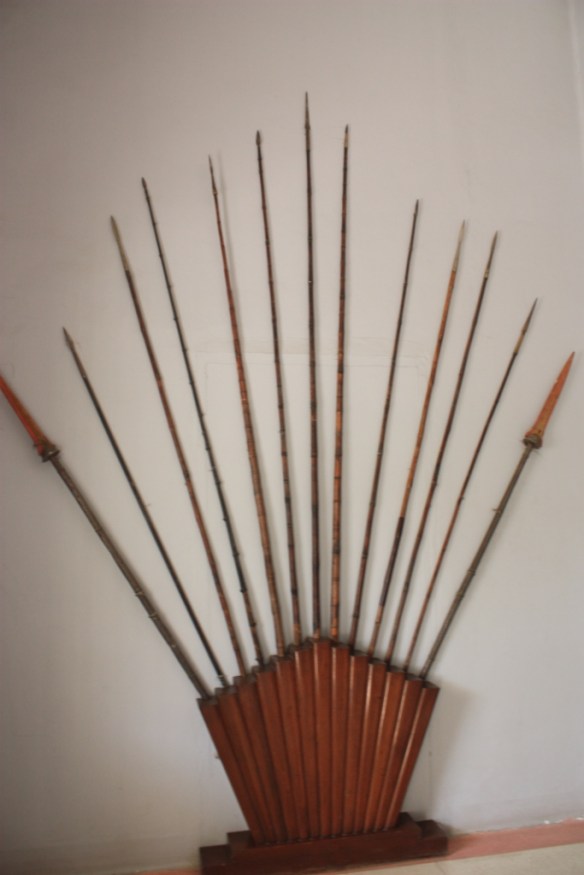
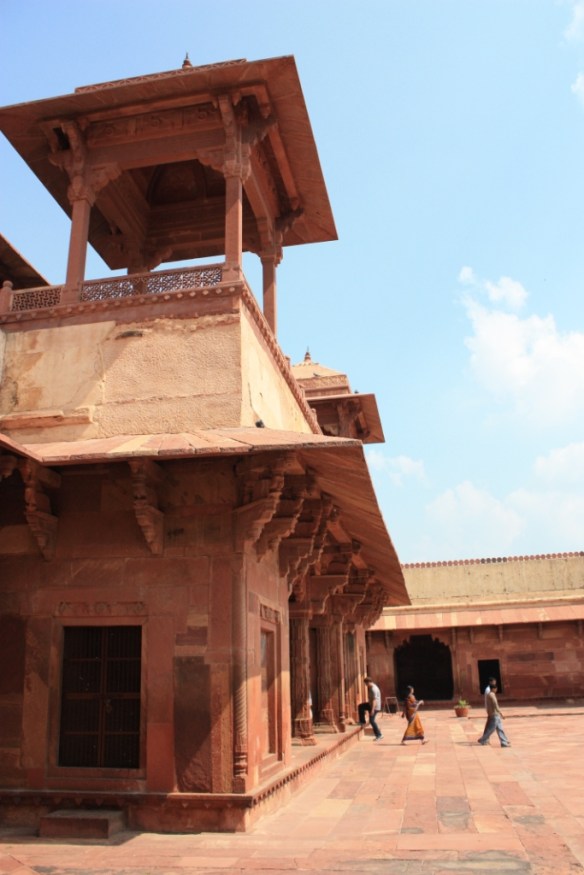
Taken in December of 2015 near Hoi An



 Turtle Island by Gary Snyder
My rating: 4 of 5 stars
If you’re not a reader of latter-20th century American poetry, then maybe you’ve heard of Gary Snyder’s fictional doppelgänger, Japhy Ryder, even if you haven’t heard of Snyder, himself. Ryder appears in Jack Kerouac’s “Dharma Bums” as a friend and mentor to Kerouac’s own fictional persona, Ray Smith. If you do remember Ryder, you have some insight into the themes that recur throughout this collection. Said themes include reverence for nature and an appeal to Eastern philosophical and religious traditions–most specifically Zen. Though there are other themes that you might not be expecting, such as fatherhood and the overarching theme of North America.
This collection consists of 63 pieces divided into four parts. Except for those of the last part, the pieces are all poetic. In other words, there are 58 poems and five short prose essays. The poems cover a lot of ground, though they are all free verse. Some of them are spare and others are prose poetry. They range from a few lines to a few pages. The vast majority of the poems put nature at the fore. Some have the tone of haiku—though not its form. By that I mean the tendency to describe without letting in analysis or judgement, attempting to offer a pure reflection of scenes from nature. There are some points at which Snyder veers into political commentary, e.g. with lists of statistics—some of which have no meaning as written (see: “Fact” the first piece in the section “Magpie’s Song”) and rants against the Liquid Metal Fast Breeder Reactor (LMFBR)–a technology that one suspects the poet knows no more about than does the reader. But for the most part the poems are portraits of North American wilderness, and can be enjoyed as such.
I found this collection to be enjoyable and evocative. Snyder transports one into North America’s great outdoors. I’d recommend this work for poetry readers.
 Reality: A Very Short Introduction by Jan Westerhoff
My rating: 4 of 5 stars
If one has an inquisitive nature and finds oneself with a bit of time on one’s hands, one is likely to question reality eventually. What is reality? What does it mean to be real? (Yeah, just like Morpheus’s “How do you define ‘real?’”) How could we know if we weren’t in the reality we think we are? Does it matter? i.e. If we aren’t in the reality we think we are, do we have any other choice than to behave as if we are—in other words is there any hope of escaping whatever unreality our consciousness exists in?
Does the quantum world not make a lick of sense relative to the world as we know it because the ancestors who are simulating us never expected us to get far enough to investigate that scale before we crashed? And now, like the writers and directors of an unexpectedly popular and long-lived TV show, they have to find a way to cobble some convincing story together because their overlords aren’t willing to scrap a perfectly functional simulation as it’s churning out huge amounts of data. Of course most people quickly dismiss such possibilities as sci-fi, but—then again—that dismissal is what one would do if one was programmed to be psychologically pained by the idea that the lunatic shouting and running naked through the streets may have found freedom, while you–who appears to be fully successful in living life—are an automaton, a slave pure and simple?
Philosopher Jan Westerhoff provides a brief survey of the many ways reality has been questioned over time and what evidence proponents cite—or, if not evidence per se, what inexplicable phenomena at least make the possibility seem feasible. The book consists of just four chapters. The first chapter offers a context by discussing dreams and simulations. Dreams are one of humanity’s first sources of doubt about reality. This was most famously summed up by the Taoist philosopher Zhuangzi’s quote “Now I do not know whether I was then a man dreaming he was a butterfly, or whether I am now a butterfly, dreaming I am a man.” The simulation hypothesis suggests that societies eventually develop a capacity to run extremely advanced simulations that would feel very real, and, furthermore, the proliferation of such simulations would make it much more likely that we are in one than in a real world.
The next three chapters examine three subjects where reality is taken for granted, but which each face challenges. The author starts with the most basic component of reality, matter. If you ask someone how they know the world is real, they might just knock on wood or kick a stone. Of course, that response only goes so far because there are a lot of entities we consider real that aren’t made of matter (e.g. is an economic recession real?) and so it’s definitely not a complete way of looking at the topic. There’s also the fact that all this hard and solid stuff we experience is mostly empty space. In this chapter, Westerhoff spends much of his time examining the basics of quantum mechanics, and the quantum strangeness that has put it in the minds of many that the world is probably not what we think it to be.
Chapter three explores the reality of a person. This is where people have the hardest time questioning reality, because most of us are quite certain that we exist. Descartes statement of: “I think, therefore, I am” nicely sums it up. But is there a place associated with personhood, or is it an emergent property? If it has a point of origin, where is it? Westerhoff describes the famous rubber hand experiment that shows that the connection between mind and body is more illusory than we think. He discusses many of the syndromes that challenge our intuitive beliefs about what it means to be a person, e.g. Cotard syndrome, in which individuals firmly believe that they don’t exist. (Note: this topic—at least the scientific dimension—is covered in detail in Anil Ananthaswamy’s book “The Man Who Wasn’t There.”)
Chapter four explores whether time is really what we think it is, and what it feels like to us. A lot of this chapter takes up findings about free will. A famous study in the neurosciences showed that before people make a decision at a conscious level, there is activation of subconscious parts of the brain such that what feels like a decision freely and consciously made is actually already made before the consciousness ever becomes aware of it. This study, now overwhelmingly validated by replication, presents a major challenge to our notion of free will—which isn’t to suggest we’re necessarily being fed a decision from some mysterious elsewhere but if some combination of our limbic and enteric nervous systems are making decisions without conscious input, then what is the nature of freedom in free will?
The book has an interesting Conclusion that gives the reader a map to consider the various ways reality might exist (or not.) This isn’t a dichotomous question—i.e. it’s not necessarily a matter of the world is real or it’s not. Instead, it can be thought of more as a continuum between everything is real and nothing is real with various way-points in between such as “I am all that is real” or “Everything is real, but me” and various ways of considering how some of the world might be real while some of it is not. Among the latter models, the relevant factor maybe consciousness (i.e. conscious may be unreal or maybe it’s the only thing that’s real.)
There are a number of graphics used to support the text, most of these are photographs and artworks, but some are diagrams. There is a “References and Further Readings” section in this book that is more substantial than most of the ones I’ve seen in AVSI (A Very Short Introduction) series books. It’s organized by chapter.
I’d recommend this book for anyone interested in the topic. I think the author does a great job in a small space of introducing various conceptions of reality. He draws on well-known works of film and literature to help clarify issues, and provides many thought-provoking ideas. It’s readable and doesn’t get bogged down in minutiae.
 A Wrinkle in Time by Madeleine L’Engle
My rating: 5 of 5 stars
The Murry family feels mopey. There are a number of run-of-the-mill factors in the family malaise. Meg, the story lead, doesn’t fit in in school, and is frequently in disciplinary trouble. Her younger brother, Charles Wallace, is thought to be mentally deficient because he doesn’t talk to strangers, but he is—in fact—a genius. However, the big cloud hanging over this family’s head is that their father hasn’t been heard from for a year. He isn’t the type of father who goes out to the store for cigarettes and never comes back. Instead, Alexander Murry—Meg’s dad—is a loving father and husband who happens to be a renowned scientist who sometimes does work for the government. Even when he’s off doing top-secret work, however, he checks in with his wife and kids on a regular basis, but now there’s been no communication for months. The townspeople both pity the Murrys and think them to be living in denial because they maintain that Alexander Murry will soon come back.
While the book begins with a real world premise and feel, it soon becomes apparent that things aren’t what they seem–at least not around the Murry household. (Things not being as they appear recurs as a theme throughout this book.) Our first inkling of this unusualness comes when we realize that Charles Wallace isn’t only a genius and preternaturally mature, he also appears to be psychic. Events really turn strange when Meg’s mother, Katherine, goes out to investigate a noise and comes back into the house with an old lady who—surprise of surprises–Charles Wallace knows, a Mrs. Whatsit. And, as he seems to do with everyone, Charles Wallace begins talking to the old lady as if he were a sage old man.
The story follows the adventures of Meg, Charles Wallace, a boy named Calvin O’Keefe as they go with three mysterious visitors (one of whom is the aforementioned Mrs. Whatsit) in search of Alexander Murry. While O’Keefe is a popular kid and a jock, he doesn’t really feel he fits in. In that way, he’s a counterpoint to Meg. Meg doesn’t fit in and it gets her in trouble. O’Keefe pretends to fit in, but has angst about it. Furthermore, O’Keefe seems to have some sort of supernatural ability—perhaps not of the level of Charles Wallace, but enough to exacerbate his feeling of being an outcast among his own family and community. It’s Calvin’s feeling that he’s at home with the Murrys that accelerates his inclusion in the story.
The sci-fi elements of this book, as with many other great works of children’s science fiction, facilitate the teaching of simple moral /ethical lessons. Don’t rush to judgement about people—Aunt Beast is one of the most endearing characters of the book. Fitting in is not all it’s cracked up to be, and if everyone were the same, what a dreary existence life would be. And, ultimately, love conquers all.
I’d highly recommend this book for children and adults alike. The story is highly readable owing to narrative tension and mystery.

5.) Take a class / Join a group: While I’m partial to yoga and the martial arts, the class could be in any area that presents a challenge. However, there are a couple of advantages to the aforementioned two (to which I would add dance.)
First, these disciplines train one to be expressive with one’s body and to move more freely. This can do wonders for confidence. People store tension in their bodies without even realizing it. Many have postural problems that effect confidence and self-perception. A 2014 New Zealand study found that posture can have a strong effect on emotional state.
Second, no matter who one is, one will be challenged by new approaches to movement. The average person has great difficulty learning to use their body in new ways. One needs to drill in movements conscientiously to achieve competency. Our conscious mind, frequently gets in the way. Even the most athletic and coordinated people will need to work it, failing repeatedly until they succeed.
Why is the challenge so important? Many people go through life afraid to fail, but far too few fear never failing. Sounds idiotic. Nobody wants to fail. I have some hard news. If you’ve never failed, it’s not because you are unmitigatedly awesome in all things. It’s because you’re living in a box and cherry-picking life experiences that feel unthreatening.
If, like me, you’re an introvert, this approach offers the additional benefit of social interaction that is of a predictable / schedulable nature. One needs the interaction, but the problem comes when one has social interactions and / or sensory stimulation that go on too long and in an unpredictable fashion. Therefore, being able to schedule such time is a good way to go about being a more productive introvert.
4.) Writing / Visualization: These two approaches to mentally rehearsing allow one to keep one’s inner critic in check. The problem with simply day-dreaming it is that critic can chirp in without being that cognizant of it.

In visualization, one quiets the mind and can then non-judgmentally acknowledge and dismiss the negative thoughts. In writing–be it as a journal entry, poem, or a story–we may not notice the nagging voice of the inner critic on the first draft, but you can take note of it and undo it in rewrites.
3.) Travel / Living abroad: I should point out that not just any old travel will have the desired effect. Many people plan their travel with the objective of being comfortable at the fore. They eat at places that serve the same kind of food as at home. They stay in hotels with virtually all of the comforts of home, and sometimes many more. This is understandable because the traveler might just be seeking rest. However, if one is seeking the epiphany or enlightenment experiences talked of by backpackers and ashram-dwellers, that’s not something that comes from staying in resorts or eating at American fast food joint. Those kinds of brain changing experiences come when one is stripped from the familiar and has to surrender one’s attachments to the way one thinks the world should be. One’s perception of culture and worldview changes radically when immersed in a foreign environment.
2.) Game it / Roleplay: There’s a big movement to gamify all manner of everyday activities. In her book, “Reality is Broken,” scholar of game design Jane McGonigal describes a game called “Chore Wars” that incentivizes the doing of mundane household chores.
What is it about games that help one move beyond one’s limits? First of all, it incentivizes actions. And if you’ve ever noticed people playing games on their phone or FB for hours on end, you’ll note that it doesn’t take much reward to keep people plugging away—as long as the game is structured well.
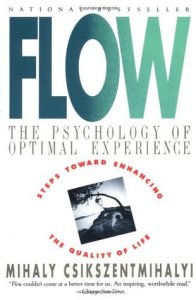
Second, good games provide a built-in process of “leveling up.” This means that the challenge keeps being intensified as our skill level advances. Those familiar with Csikszentmihalyi’s conception of “Flow” will recognize that matching skill level to challenge level is one of the most crucial elements in facilitating flow-state.
Roleplaying is a bit like the previously mentioned tools of visualization and gaming in that it’s a way to have a low-cost rehearsal. If one has someone with whom one can engage in such a roleplay, than one also has someone to help make you aware of your inner critic and its deleterious effects. And that brings us to the final tool:
1.) Have a spouse, partner, and or confidant: In “Why Zebras Don’t Get Ulcers” Robert Sapolsky tells a story of being interviewed by a magazine. He was asked what the number one thing that they could tell their readers about reducing stress. To which he replied that the most well-established factor in stress reduction is to have a spouse / life partner with whom to share one’s challenges. Unfortunately, this was a magazine for women business leaders, a significant portion of whom had given up on permanent relationships and families. They, therefore, asked him what else he had. Still it’s hard to overlook the anxiety-fighting effects of having someone around with whom to share one’s dread.

Taken in October of 2015 at Sarnath
i’m a figment
a wisp of consciousness
once spun across the universe
now unspun and dangling
once entangled with
all that is, was
or
ever could be
now
a
dead wire