Unknown's avatar

About B Gourley

Bernie Gourley is a writer living in Bangalore, India. His poetry collection, Poems of the Introverted Yogi is now available on Amazon. He teaches yoga, with a specialization in pranayama, and holds a RYT500 certification. For most of his adult life, he practiced martial arts, including: Kobudo, Muay Thai, Kalaripayattu, and Taiji. He is a world traveler, having visited more than 40 countries around the globe.

POEM: Roadside Dog

Tail tucked.

Eyes weary and watery.

A roadside dog.

A part pulls it to the edge,

seeking to shoot into the street.

Amid the roaring chaos machines

that rumble and surge

–shrill or silent.

A part pulls it back,

claiming the comfortably known.

A stretch of sidewalk free of danger,

free of metal monsters,

devoid of food.

Sitting at the roadside,

fear fades as its hunger heightens.

Until the dog is compelled to propel

itself in among the hurried humans

& their rolling death boxes.

DAILY PHOTO: Alappuzha Architecture

Ganapathi Temple, Taken July 30, 2017.


POEM: Stone

someday someone will stumble on the stone

a stone outlasting skin and bone

a stone surface pocked and mossy

though once it shone polished glossy

brushing off letters worn shallow

on a stone face bleak and sallow

rendered so by nature and time

twins spoiling all not in its prime

they’ll read a name with bookend dates

and be shown they hold a common fate

should one become legend and myth

you’ll still not outlive your monolith

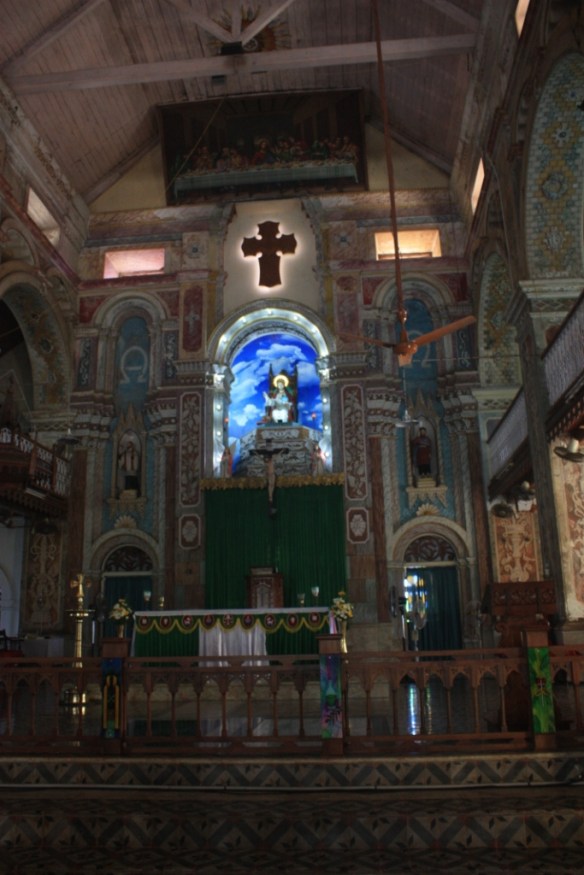
DAILY PHOTO: Santa Cruz Cathedral of Kochi: Inside & Out

Taken on July 30, 2017 in Kochi (Cochin.)


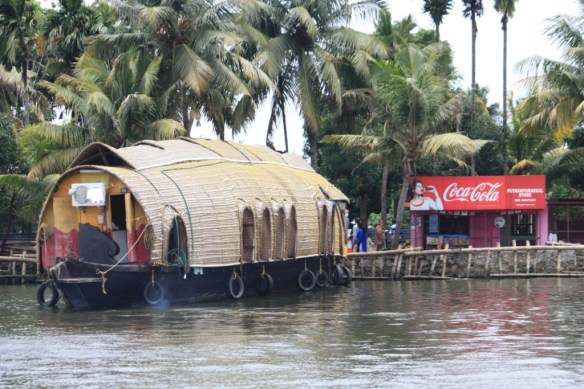
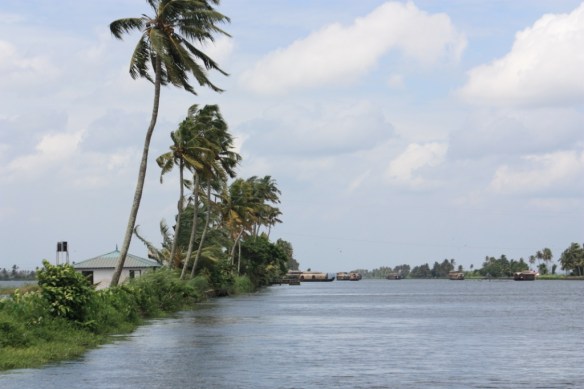
DAILY PHOTOS: Boats on the Backwaters

Taken on June 29, 2017 in Kerala

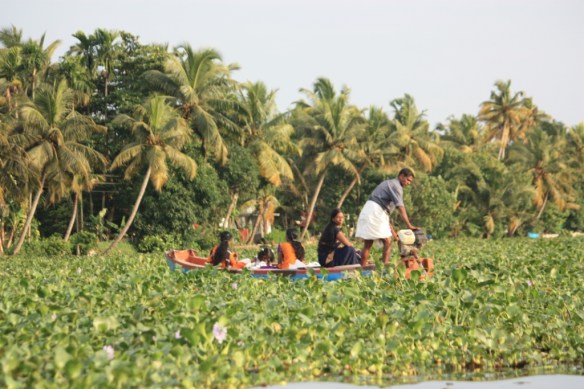
DAILY PHOTO: Scenes from the Backwaters

Taken on June 29, 2017 near Alappuzha in the Backwaters of Kerala


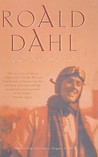
BOOK REVIEW: Going Solo by Roald Dahl

Going SoloGoing Solo by Roald Dahl
My rating: 5 of 5 stars

Amazon page


This is the second installment of Roald Dahl’s autobiography, and it covers the period from the time when the famous children’s author left home to work Shell Oil in East Africa, through his adventures as a pilot in the Royal Air Force (RAF) during World War II, concluding with his return home to England. In short it covers the earliest years of his adulthood, before he wrote such classic books for children as: “BFG,” “Matilda,” and “Charlie and the Chocolate Factory.”

In fifteen chapters, Dahl discusses his mysterious shipmate on the ship to Africa, a lion attack, an unwanted visitor in the form of a green mamba snake, and Dahl’s early experience of the war before he became a pilot. Becoming a pilot represents a shift in the book’s tone. From that point, it’s more of a war story, with the higher tempo of life and death situations that entails. That isn’t to say there’s no life and death in the first part, but it’s more quirky and humorous. In the chapters about his life as a pilot, Dahl describes crash landing in the desert and his subsequent recuperation, how he was posted to Greece where the German Air Force had a fleet of planes that made Britain’s look minuscule by comparison, and then his squadron’s move to Palestine to what would be his last battle-filled days before he was relieved from flight operations and sent home.

The stories throughout are as well crafted, as one might expect from a master storyteller. Dahl follows the advice (often-attributed to Elmore Leonard, but which has been around for decades in some words or another) to, “…leave out all the parts readers skip.” There is a tension throughout the book. It’s a much different approach than the previous volume, “Boy” which plays off the dramas of the adult-child interaction.

There are many graphics throughout the book, mostly black-and-white photos, but also maps and documents, but no other ancillary matter.

I’d highly recommend this book. If you want to know how to write a memoir that people will read, this is how it’s done. Dahl doesn’t try to take us from cradle to grave. He’s happy giving us the parts we won’t skip.

View all my reviews

BOOK REVIEW: Crossing the Heart of Africa by Julian Smith

Crossing the Heart of Africa: An Odyssey of Love and AdventureCrossing the Heart of Africa: An Odyssey of Love and Adventure by Julian Smith
My rating: 5 of 5 stars

Amazon page


This book tells two tales in parallel, connected by one theme: travel for love. The author, Julian Smith, recounts the experience of Ewart Grogan, an English explorer whose life straddled the 19th and 20th centuries. Grogan traveled the length of Africa from South to North and recounted his experience in a book entitled “From Cape to Cairo.” The purpose of his grand endeavor was to prove his worth as man. Grogan was in love with a woman whose family was of higher station, and he believed that if he could only do what had never been done before, then the objections to his “marrying up” would dissolve.

The other story is Smith’s own attempt to retrace Grogan’s route across the length of the continent. While Smith doesn’t have to prove his worth, his motivations are more complex and tied up with his engagement to be married. Maybe Smith’s motivation is best summed up as a desire to prove to himself and / or his fiancé that he had sufficient commitment and fortitude to get him through rough times—a characteristic relevant to both marriage and crossing some of the world’s least developed countries.

Of his own admission, Smith’s journey was to be far less arduous than Grogan’s by virtue of the fact that he’d be traveling by taxis, motorcycles, buses, and ferries. Grogan and other 19th century explorers were subject to hazards far graver and more ever-present. For one thing, in Grogan’s day virtually everybody who spent any significant time in Africa got malaria. It wasn’t a question of if but when and how seriously. Even if you escaped malaria, there were myriad other tropical diseases to bring one to one’s knees. Next, there was the tribal environment in which one would travel through dozens of tribal territories, all of whose chiefs expected tribute and many of which were outright hostile. For Smith, rule of law was present in some form or fashion along most of his route, such that no one could just murder him and get off scot-free. There was also the risk of crew desertions that could cripple an expedition. Traveling parties had to carry huge amounts of goods from surveying equipment to gifts to medicines to food stuffs. Still, they had to obtain many of the party’s needs along the route. Among other things, this meant hunting animals that weren’t as docile as livestock. Anything less than an instant kill meant having to trudge into tall grass after a wounded creature that had a far greater killing capacity at close range.

This isn’t to say that Smith’s journey was adventure free. Anyone who has traveled in Africa knows that getting from place to place remains a slow and exhausting process. And many of the things that undermined Grogan’s trip also undermined Smith’s, e.g. the author suffered extended fever. But the most devastating factor for Smith’s travels was the fact that parts of Sudan were lawless and a brutal war was being fought. While Grogan barely managed to drag himself through the swampy landscape, Smith was unable to proceed overland because of the conflict. In telling of his travels, Smith discusses many of the dilemma’s that traveler’s face today (e.g. to give people money or not, how to contend with bureaucrats.) Among the travels that modern-day readers might be interested in is Smith’s visit to a gorilla sanctuary.

I enjoyed this mix of travelogue and history. The book gives one insight into the changing nature of the world and, particularly, what was once called the Dark Continent. [Note: while that may sound either racist or awash in a negativity bias, I’ve read that the reason it was called that was that when the 19th century explorers were traveling through much of the continent was unmapped, i.e. blacked out.]

I’d recommend this book for anyone who is interested in travel in Africa—past or present.

View all my reviews

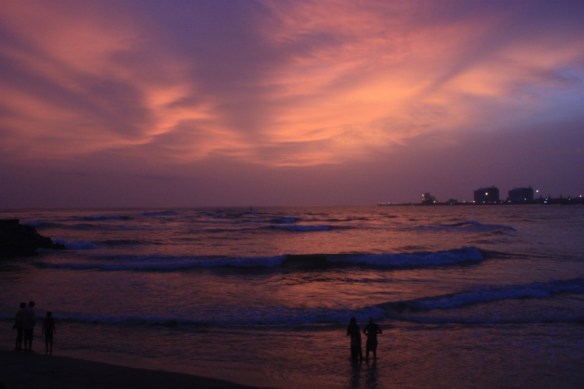
DAILY PHOTO: Sunset Over the Arabian Sea

Taken on July 30, 2017 at Kochi (Cochin) from Mahatma Gandhi Beach


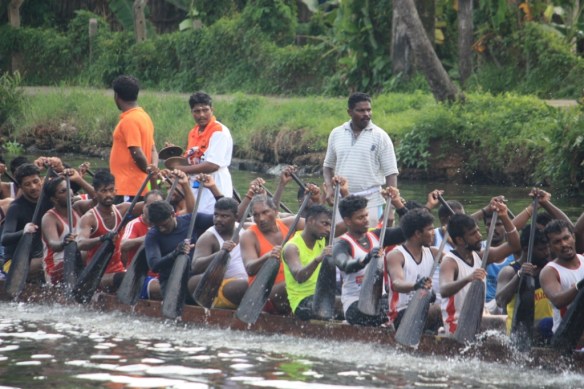
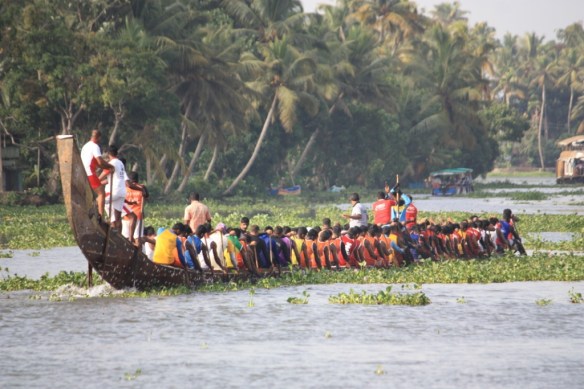
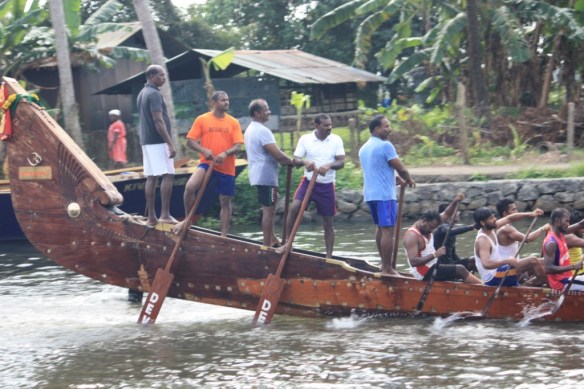
DAILY PHOTO: It Takes A Village to Row a Boat Keralan Style

Taken on July 30, 2017 near Alappuzha in the Backwaters of Kerala