When it travels through the crack,
who knows if it will come right back?
Is it a crack in space or time,
or in the fabric of your mind?
“Maybe it’s matter” said the Mad Hatter,
“But if it goes in fat, it’ll come out flatter.”


When it travels through the crack,
who knows if it will come right back?
Is it a crack in space or time,
or in the fabric of your mind?
“Maybe it’s matter” said the Mad Hatter,
“But if it goes in fat, it’ll come out flatter.”
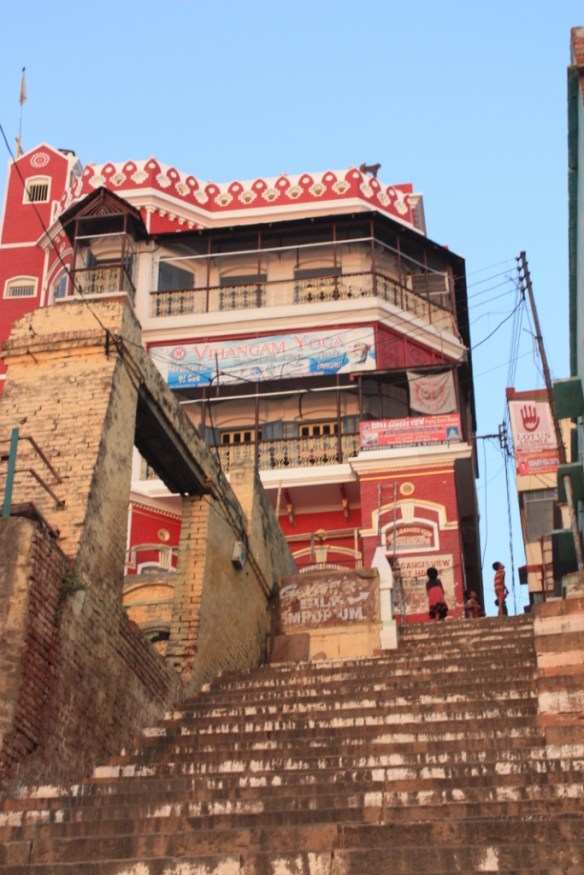
Taken in October of 2015 in Varanasi (Benares)

The river twists through a barren landscape.
Filling with flotsam, detritus, and silt,
dragging death downstream,
it will pour into a bright, blue sea.
You should savor that scene,
but your view is from above,
and so you see a shit-colored plume
splaying into the clear, calm waters.
And you fear the shit stain
will spread across the sea.
But it doesn’t.
It seems to settle.
You never knew the clear and calm could
subdue those murky, mucky waters.

Taken in July of 2014 in Kochi (Cochin.)
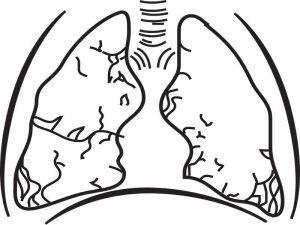
Pranayama (breath exercise) is a crucial part of yogic practice. While I may spend less time on the pranayama portion of my practice than the asana (postural) part on most days, I’ve come to view pranayama as at least as important. (i.e. It packs a lot of punch.) With that in mind, here are a few fun facts about respiration for you your consideration:
5.) Asthma Fact: People in richer countries are more likely to have asthma, but–within more wealthy countries–poor people are disproportionately effected. (Asthma is a condition in which lung tissue becomes inflamed, and thus it’s hard to breath.)
Source: Krucoff & Krucoff. 2000. Healing Moves. New York: Three Rivers Press. p. 288
Yogic Relevance: There’s at least some preliminary evidence that yoga practice can benefit asthma patients. Mekonnen, D. & Mossie. A. 2010. “Clinical Effects of Yoga on Asthmatic Patients: A Preliminary Clinical Trial.” Ethiopian Journal of Health Science. Vol. 20(2). pp. 107-112.
4.) Altitude Fact: At the summit of Everest, atmospheric pressure is about 30% of what it is at sea level.
Source: Coulter, H.D. 2001. Anatomy of Hatha Yoga. Allahabad: Himalayan Institute India. p. 96.
Yogic Relevance: The slow deep breathing you sometimes teach in pranayama courses could be a life-saver. Bilo G. et. al. 2012. “Effects of Slow Deep Breathing at High Altitude on Oxygen Saturation,” Pulmonary and Systemic Hemodynamics. PLoS ONE. Vol. 7(11): e49074. https://doi.org/10.1371/journal.pone.0049074.
3.) Lung Fact: If one extracted, flattened, and laid side-by-side the 300 million alveoli of the average person’s lungs, they would cover an area greater than the average one bedroom apartment. (Alveoli are the little sacks at the end of the bronchioles where oxygen and carbon dioxide are exchanged.)
Source: Hymes. A. 2009. “Respiration and the Chest: The Mechanics of Breathing.” in Science of Breath: A Practical Guide by Swami Rama. Honesdale, PA: The Himalayan Institute Press.
Yogic Relevance: Vital capacity (total amount of air one can breath in and out of those little sacks) is increased through yogic practice. Karthik, P.S. et. al. 2014. “Effect of Pranayama and Suryanamaskar on Pulmonary Functions in Medical Students.” Journal of Clinical and Diagnostic Research. Vol. 8(2). pp. BC04 -BC06.
Note: there has been confusion about the degree to which yoga helps VO2 max (maximum oxygen utilization), at least in comparison to other forms of exercise, because there has been mixed results in the literature. The consensus seems to be the effect–if any–isn’t large compared to cardiovascular exercises. The strength of the pump (i.e. the heart) seems to have more to do with this particular measure than the lung’s holding capacity. While VO2 max is an important measure for athletes, the fact that it may not be improved by yoga doesn’t mean yoga doesn’t offer many fine benefits for athletes. As I recall, this is dealt with at length in Broad’s book (i.e. Broad, W.J. 2012. The Science of Yoga: The Risks and Rewards. New York: Simon & Schuster.)
2.) Nose Fact: Rhinologists (doctors specializing in noses) figure that the nose has around 30 functions in the breathing process (e.g. moisturizing and warming air, catching foreign matter, directing airflow, and much more.)
Source: In the aforementioned Swami Rama book Science of Breath in a chapter entitled, “Following Your Nose: Nasal Function and Energy” by Rudolph Ballentine, MD.
Yogic Relevance: Alternate Nostril Breathing (Nadi Shodhana) is shown to tone the parasympathetic nervous system (PNS, i.e. the part of the autonomic nervous system involved in rest & digest functions.) Sinha, A.N., et. al. 2013. “Assessment of the Effects of Pranayama / Alternate Nostril Breathing on the Parasympathetic Nervous System.” Journal of Clinical and Diagnostic Research. Vol. 7(5). pp. 821-823.
1.) Pace Fact: At about 5 breaths per minute, most people’s thinking is clearer than usual.
Source: Brown, R. & Gerbarg, P.2012. The Healing Power of Breath. Boston: Shambhala Publications.
Yogic Relevance: The breath is our most powerful tool for controlling the mind. Vindicated!
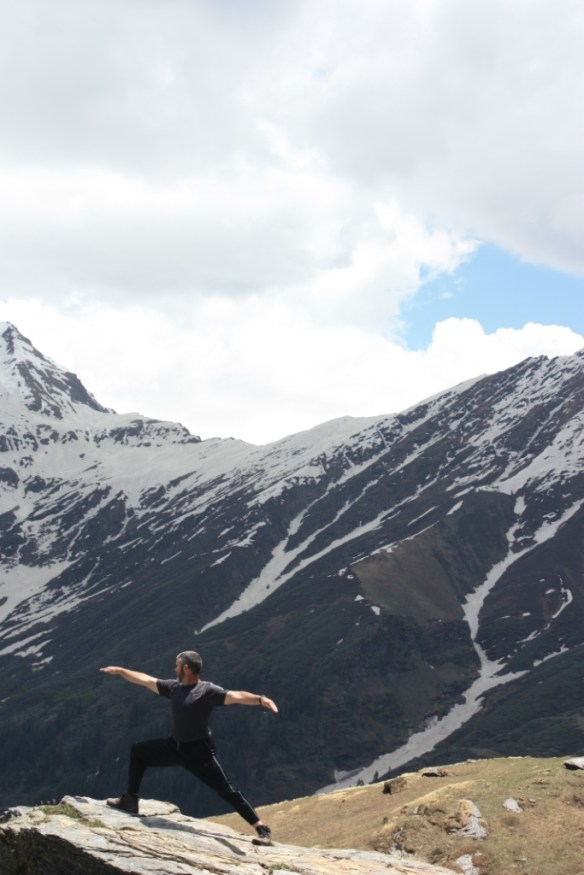
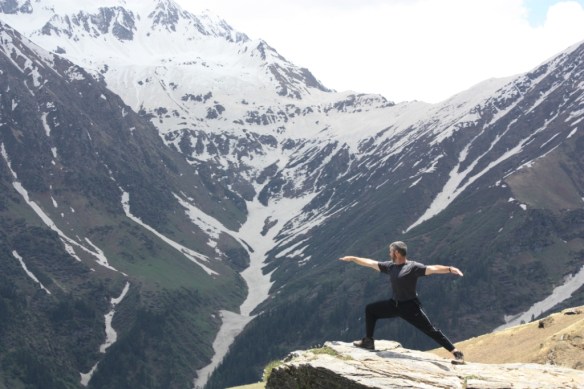
Taken in June of 2015 in Kullu District of Himachal Pradesh
 Hapkido: Korean Art of Self-Defense by Scott Shaw
My rating: 4 of 5 stars
When I picked up this book, all I knew about Hapkidō was that it was a Korean martial art, that it wasn’t a sport like its more famous martial cousin—Tae Kwon Do (TKD), and that it was a more comprehensive art (grappling as well as striking) than TKD. I grabbed it because at least one of these mental reductions proved only partially correct and I wanted to know what else I might be getting wrong. In the first paragraph, I learned that Hapkidō was heavily influenced by / a descendant of Daitō-ryū Akijūjutsu. (If that art sounds vaguely familiar, it’s because it was also a big influence for its most famous student, Morihei Ueshiba—i.e. the founder of the Japanese art Aikidō.)
This book is tiny. It’s an overview of the art in less than 100 pages (and, as is common with martial arts books, at least half the space is devoted to photos.) So the first thing a reader might want to be aware of is that you’ve probably read newspaper articles with higher word counts than this book. I’ll leave it to the reader to determine whether that’s a good or bad thing.
The book consists of five chapters, but the last chapter accounts for the majority of the page count (but not the word count.) The first two chapters are histories. The first offers an overview of Korean martial arts situated in the context of national events of the time. The second chapter is a history of Hapkidō and gives one insight into Daitō-ryū Akijūjutsu and how it came to influence the Korean founder of Hapkidō, Choi Yong-Sul.
Chapters 3 and 4 examine aspects of the art that one might call “pre-basics” for lack of a better term. As ki (i.e. life force / energy, those familiar with Chinese arts might know it as “chi” or “qi”) plays a central role in the art, Chapter 3 discusses ki and describes breathing and meditation practices that are used for building energy. Chapter 4 describes break-falls and the art’s one posture / stance (a natural posture.)
Chapter 5 describes, and presents photos of, basic defensive moves of Hapkidō. There are five sub-sections that explore, respectively, the following types of techniques: disengagements (i.e. breaking away from an opponent who has seized one), joint locks, throws, punch defenses, and kick defenses.
I found this book to be concise and informative. If one is seeking a detailed overview of the art, one might want to look elsewhere. However, if one is just trying to figure out what Hapkidō is all about, it should serve you well. I doubt that an experienced student of the art would get much out of this book as it’s just the bare bones. Not everybody is looking to delve into the minutiae.
 Tai Chi Chuan Classical Yang Style: The Complete Form Qigong by Yang Jwing-Ming
My rating: 5 of 5 stars
This book is one stop shopping for students of the Yang Style Tai Chi Chuan Long Form (i.e. 108 forms.) That’s not to suggest that it only describes the sequence of that form. It does that, but it also offers lessons in the history of the art, explanations of chi and qigong, and elucidation of the fundamentals of the art.
The book is divided into four parts. Chapter one examines the history of this martial art and places Tai chi chuan in the context of Chinese martial arts as well as the Yang Style within the context of Tai chi chuan. The nine sections of the first chapter also explore Tai chi chuan as a means to healthy living, and provide guidance to students on how to go about taking up the practice.
Chapter two consists of five parts that delve into the concept of chi (qi), or energy. This section mixes together mythology of traditional Chinese theory on chi with scientific explanations where science has something to say on the matter.
The third chapter describes the 13 postures of Tai chi chuan, which are a set of fundamentals that feature prominently in the martial art. This is a relatively brief section and is where the book becomes photo intensive.
The fourth chapter offers students guidance about the unarmed element of Yang Style of Tai chi chuan. While the capstone of the chapter is a systematic walk through the Long Form, there’s also coverage of some Yang Style fundamental movements as well as presentation of meditation practices taught in the system. It should be noted that this book doesn’t cover the sequence of the Yang Style Short Form (a.k.a. 24 Forms, or the Beijing Standard Form.) (I mention that because that’s the most popular form in the world and many students may want to learn about it specifically. This book offers many insights into the minutiae of the component forms, but doesn’t describe it as a sequence.) There is a fifth chapter, but it’s only a brief conclusion.
With respect to ancillary matter, like most martial arts books, it’s graphic-intensive. The bulk of the graphics are photos that are used in chapters 3 and 4 to clarify the movements and postures. Said photos have arrows and other figures drawn onto them to help clarify the movement involve. There are also a few line diagrams and maps, and chapter 2 has a many scientific photos, diagrams, and anatomical drawings.
There are three Appendices. The first provides a list of the forms of the Yang Style Long Form. The second is a glossary of the many Chinese terms mentioned in the book. The final Appendix provides information about the DVDs that are available to be used in conjunction with the book (there are markers throughout the book to provide suggestions of when students should turn to the video lessons.) There are end-notes of cited material, but I read the Kindle edition, and most of these were unavailable because Chinese characters didn’t convert to the electronic format. This was no big deal for me because I couldn’t read the Chinese reference material anyway, but if you read Chinese, you might opt for the hard copy of the book.
I learned the Yang Style short and long forms several years ago, and bought this book to provide some background and technical guidance. I found the book to be interesting and informative, and would recommend it—particularly if you’ve learned the Yang Style (but one may find the early chapters interesting even if one hasn’t.) The author uses a number of entertaining and educational stories and the book is readable and insightful for students of all levels.

Taken in December of 2016 in Vienna