



Taken on June 26, 2017 at Amboseli National Park



Taken on June 21, 2017 at Chobe National Park in Botswana

Running into an old gas station,
I found it but a thin facade.
I’d tripped into a simulation
coded by a tacky two-bit god.
I checked my watch, the world stood still.
Eternity lived on this back lot set?
Should’ve taken that damn red pill,
for this world has gone over-budget.

Taken in June of 2017 at Chobe National Park

Taken on June 18, 2017 in Mosi-oa-Tunya National Park, Zambia
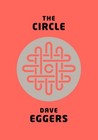 The Circle by Dave Eggers
My rating: 5 of 5 stars
In Eggers’ novel, the Circle is a technology giant that looks a lot like Google + FaceBook + PayPal + Twitter all wrapped together under one corporate roof. Mae Holland, the book’s lead, is a young woman hired into the firm owing to her close friendship with a college roommate turned high level executive at the Circle, Annie. Even though Mae is brought in to work what is called “customer experience” (i.e. customer service) doing seemingly tedious work, Mae is in hog heaven. She left a job doing tedious work in a depressing environment with minimal support, and so this job personalizing boilerplate responses in a fascinating place with the opportunity to move up is a dream. The Circle is a utopian workplace where engineers are given free rein to experiment, where great minds and performing artists come to hang out, and where one gets handsomely rewarded for playing on one’s social media at work. All one needs to thrive at the Circle is a sharp mind and a willingness to accept that one’s days of privacy and solitude are behind one.
The Circle is the dystopia that some would say we are on the cusp of and others think we’ve already plunged into. It’s not Orwell’s gray dystopia of brutal state force. Neither is it Huxley’s bright and shiny dystopia of drugs and free loving. It’s a dystopia in which people willingly give up all privacy and negate the need for a neo-KGB by posting every idiotic thing that they do directly to the worldwide web. However, as in Huxley’s “Brave New World,” we see that the most nefarious character isn’t necessarily the most dangerous. The Circle is headed by an executive trinity. There’s the tech genius who we know little about until the book’s end–except that his life runs contrary to what the Circle seeks in its employees in that he’s fiercely private to the point of being mysterious. There is Tom Stenton who is the face of greedy capitalism, a loathsome character in every way imaginable. However, the real danger comes from the likable–and seemingly reasonable–Eamon Bailey who’s an idealist who thinks that people can perfect if they have no shadows in which to make mischief.
Mae is introduced to us as a likable character. She’s a hardworking but human girl next door. When we are introduced to Mercer, her ex-boyfriend and the face anti-Circle-ism, we assume that she’s being reasonable in her dislike of him. Even though he sounds reasonable, she knows him. Mercer rails against this corporatized surveillance state, and initially one may not be able to tell whether he’s a Luddite or the voice of reason. As the story goes on, however, the reader is likely to like Mercer more and more and Mae less and less. But the question remains until the end whether Mae will do the right thing as she becomes aware of the full—disturbing–picture of the Circle.
I got engrossed in this book. It’s absorbing both because of good character development and an intriguing story. That’s probably why the novel was made into a film that came out earlier in the year. It’s one of those books with the readability of popular commercial fiction, but which provides some food for thought. Some of the twists you may figure out, but the book keeps one wondering until the reveals.
I’d recommend this book for fiction readers—particularly if you have any pictures on social media with a drink in your hand or bad judgement in progress.
The movie trailer, if you’re interested:
 Wired to Grow by Britt Andreatta
My rating: 3 of 5 stars
This is one of those books that is hard to rate and review. It does a thing well, and if one is looking for a book of its strengths, it’ll serve one well. That thing it does well is to concisely and clearly summarize research in neuroscience relevant to learning new skills. If that is something one is interested in, and one hasn’t done much reading on the subject yet, this book will get one up to speed in just over 100 pages while offering insight into where to go to flesh out what one has learned.
That said, if one has read up on pop-sci neuroscience and /or self-help books applying said research, one is likely to find that this book offers little value-added while lacking the depth and narrative approach of competing works. The latter is particularly intriguing as this is a book about effective learning, and it seems clear that humans like learning through stories. However, Andreatta does little story telling beyond brief mentions of approaches she’s used in her seminars and occasional recaps of the stories of the researchers whose work she’s drawn upon. Some may find this isn’t so bad because it keeps the book compact. Story telling is page intensive. On the other hand, a lack of story-telling means that the material is a bit less prone to stick than it might otherwise be.
The author’s approach to making the material stick is to hang it on a three-phase model (learn-remember-do) and to keep it brief. Many of the chapters consist largely of bullet points, and in places the book feels like a PowerPoint handout. (I’ll let the reader decide whether that’s a good thing or not.)
The book is organized into twenty chapters arranged in five parts. (That tells one a lot about the brevity of chapters, given the book is 102 pp.) The five parts consist of: I.) an overview of neuroscientific fundamentals; II.) a description of research related to the “learn” phase of Andreatta’s model; III.) the same for the “remember” phase; IV.) coverage of the “do” phase; and V.) a section called “design” that helps the reader to apply what they’ve learned in the earlier parts to build approaches to teaching and learning.
There is some useful ancillary material. First, there are many graphics of a variety of types (pictures, line drawings, tables, and graphs) that are nicely drawn and effective. Second, there are “Your Learning Journey” sections interspersed throughout the book. These are one page or less exercises that are designed to help one put one’s learning to use. Thirdly, there is a bibliography that includes crucial reference materials divided by type: i.e. journal / scholarly research, books, journalistic / media accounts, and cited scholars. Finally, there are apparently additional resources accessible online, e.g. downloadable pdf files, but I didn’t investigate these features.
I would recommend this book for those looking for a concise summary of recent developments in neuroscience as they apply to education and learning. If you’re well-read on the subject, however, you might not find that this book delivers much extra. It should be noted that the author is speaking from an educator’s perspective (i.e. not a scientist or psychologist) and readers may find that a plus or not.

5.) Adopt a power posture: There’s been a lot of research in recent years suggesting that posture isn’t a one-way street–i.e. body doesn’t necessarily have to follow our mental state. One can reverse the flow, improving one’s mental state by adopting a strong and confident posture.
One of the most thorough discussions of this phenomena is in Amy Cuddy’s book Presence, which famously mentions the “Wonder Woman” pose. However, another widespread example is using the up-and-outward fist pumping posture that is widely seen among humans and even other primates (i.e. with arms outstretched as Usain Bolt is seen above.)

I got my eye on you
4.) Master eye contact: This is dreadfully difficult for an introverts such as myself. We tend to look anywhere but the eyes.
If one is traveling in risky places, it’s important to have a grasp of the fine art of eye contact. If one doesn’t make any eye contact, then one risks looking zoned out–potentially inviting aggression. If one rapidly looks away, offering too short an eye contact period, one appears intimidated–potentially inviting aggression. However, if one’s eye contact is too long, it may trigger some primal fight impulse, or–at a minimum–suggest you have taken more interest in the individual–which may invite aggression. This means one has to balance a fine line that says, “I see you, you know I saw you. Now I’m going to do me and let you do you.”
3.) Adopt the opposing viewpoint: Say you find yourself obsessing about some perceived slight or wrong. While you want to address this issue, you want to be calm enough to avoid saying or doing something you’ll regret. You want to be seen as a sensible individual while being persuasive. The key is seeing both sides, and taking a moment to realize that your opposition is probably not the black-hearted villain of his own story. He likely has some reason for his behavior. Maybe it’s even a reason you can empathize with, given your own experience–i.e. being overworked and distracted, facing a decision that only allows for a best worst option, etc.
2.) Visualize it: It may seem as though anything that occurs solely in the mind can’t have that much force, but–in fact–it can. Visualizing can help one get over one’s anxieties. By systematically considering how events will unfold, one can break the cycle of worst-case scenario creation that the brain readily falls into. This will make an activity seem less intimidating and more manageable.
1.) Start small: Often when a person would like to be more kind or compassionate, she’s flummoxed or overwhelmed by the scale of the problem. She sees problems that she can’t make a dent in. So schedule one small act of kindness in a week or maybe a bigger one monthly, or as is possible. Do it, see its value, and be content.
One also sees a need for starting small with advanced physical practices. If you can’t do a yogasana or martial arts move, figure out what capacity building or modifications one needs to get to the end goal. Then take it on bit-by-bit. There are many videos on how to systematically build up to challenging maneuvers like the press handstand or planche, moves that almost no one can do with out a great deal of prep work.