“Water Dragon Chant” by Ge Changgeng [w/ Audio]

A screen of cloud veils the mountain,
And cold monkeys squawk from green pines.
Fungi abound, but seeds dormant,
Searching for sprouts -- alas, in vain.
Somewhere near there's a fairy cave
Where flutes and lutes are often played.
Its Way is overgrown with moss,
And the old stone gate yields no clue.
Where have all the fairy folk gone?

Looking back, there's an endless plain
Where flowers fall like streaming tears.
It's easy to grow old; Where is
the messenger to bring some news?
To tell who the Golden Phoenix charms?
Waking from a deep, restless dream
What remains are blooms on the stream.

“Jade Cup” by Zhang Ju [w/ Audio]

The West winds tumble fallen leaves;
Autumn 's yellow, though blooms are shy;
I brush at dust upon my sleeves;
The horses' hoofprints dot the frost;
Moonlit cocks crow amid grain sheaves;
The road to town: no passersby.

Fame 's not gained by effort or skill,
And would fade away ten years hence.
Please don't dance, but drink your fill.
Six Dynasty tales flow away:
Diluted as waters spread and spill.
The world feels like dream and pretense.

“With a Clean Heart” (Tiszta szívvel) by József Attila [w/ Audio]

Have no mother, have no dad,
have no country, have no God,
no cradle, no winding sheet,
no lover, no kisses sweet.

Haven't eaten for three days,
my head spins, the body sways...
Twenty years! My might, my gale,
twenty years are now for sale.

If there is no customer,
sell it to Devil in hell.
With a clean heart, I will steal,
If need be, I'll even kill.

They'll catch me and hang me up,
with soft earth cover me up,
and death-bringing grass will start
from my beautiful, clean heart.

Translation by Frank Veszely in Hungarian Poetry: One Thousand Years (2023) Altona, Manitoba: Friesen Press, pp. 156-157.

NOTE: This poem got Attila expelled from university and preemptively scuttled any possibility of a career in academia. (Hence, my affinity for it. Any poetry that extracts such a cost is probably excellent poetry.)

BOOKS: “Hungarian Poetry” trans./ed. by Frank Veszely

Hungarian Poetry (Folk, Classical and Modern) in English: 1000 yearsHungarian Poetry (Folk, Classical and Modern) in English: 1000 years by Frank Veszely
My rating: 5 of 5 stars

Author Site

This anthology of Hungarian poetry translated into English presents some interesting and evocative examples of Hungarian poetry, ranging from anonymous folk poetry of early kingdoms to 20th century pieces by still-living poets. I can’t speak to how the translations compare to the originals, but I will say that they were a pleasure to read and employed metering and rhyme to maintain some of the feel of the originals. This book introduced me to many poets with whom I was only familiar from names on subway stations, city squares, and parks, having traveled extensively in Hungary (plus a few of whom I’m sure I’ve never heard. Note: poetry is huge in Hungary, but because the Hungarian language is not broadly spoken, it remains largely a secret to outsiders.)

That said, the anthology is not so broad ranging as one might expect from its subtitle. The nineteenth and twentieth century selections take up the bulk of the volume. It does make sense that there is a much larger (and more likely to have survived) selection from recent times. However, there also aren’t as many poets included as one might expect. Ostensibly, one reason for this is that Veszely doesn’t shy away from including lengthier pieces. Whereas an anthology like this would often favor short pieces and / or excerpts (and, thus, might include more voices,) this one contains many multi-page poems. That said, while most of the biggest names seem accounted for (e.g. Vorosmarty, Csokonai Vitez, Arany, Petofi, Jozsef Attila, etc.,) there are conspicuous absences of prominent and important poets (and, perhaps, of categories of poets as well.)

Short bios of each of the contributing poets make this an introduction to many interesting figures scarcely known to non-Hungarians, as well as it is a sampling of their poetry. Each of the four sections also has some background historical information. This history is useful because there is a lot of nationalistic / jingoistic poetry in this volume, particularly among the nineteenth century poets (as was the style of the day.)

I should point out that some will find this book excessively nationalistic. (A book titled for the state can be expected to have some superpatriotic pieces, but this goes a bit beyond that.) For my part, I was not troubled by the poetry content, knowing that nineteenth century Hungarian poetry was notoriously nationalistic. Also, once one gets into the twentieth century poetry it gains much more diversity of content, e.g. nature, art, etc. My own concern about nationalism was more about the Part Four introduction, which paints Hungary as an innocent little lamb, always being victimized. Taking history from this introduction, one might think that Hungary was forced into the Axis and struggled to get free of it from the onset. This view would be more defensible if the invasion of Nazi Germany to firm up the Hungarian alliance had occurred in, say, 1941, instead of the spring of 1944 (when everyone knew the Third Riech was on its death bed.) In point of fact, Hungary’s leadership seem to have had their own ambitions (not to mention their own rampant antisemitism) going into this alliance.

I enjoyed these translations immensely, and felt I learned about the poets and the times in which they lived. That said, while I did like that Veszely included some longer pieces in full, it might have been nice to see a bit more diversity in the selection as well.

View all my reviews

“The Joy of Words” by Lu Ji [w/ Audio]

Writing is joy --
so saints and scholars all pursue it.

A writer makes new life in the void,
knocks on silence to make a sound,
binds space and time on a sheet of silk
and pours out a river from an inch-sized heart.

As words give birth to words
and thoughts arouse deeper thoughts,
they smell like flowers giving off scent,
spread like green leaves in spring;
a long wind comes, whirls into a tornado of ideas,
and clouds rise from the writing-brush forest.

Translation by Tony Barnstone and Chou Ping in The Art of Writing (1996) Boston: Shambhala.

BOOKS: “The Romance of the Three Kingdoms” by Luo Guanzhong

Three Kingdoms (4-Volume Boxed Set)Three Kingdoms by Luo Guanzhong
My rating: 5 of 5 stars

Publisher Website – Penguin

The edition that I read was the Penguin abridged version that fits this sprawling epic into a single volume of a little over 600 pages. This is one of the four Great Classics of Chinese literature (along with Journey to the West, Water Margin, and Dream of the Red Chamber.) It offers a fictionalized telling of a period of Chinese history featuring a three-way civil war, especially centered upon the Han attempt to maintain its Imperial line against challengers, a fight that would ultimately end in the reunification under the Jin.

I’ve loved reading the Chinese classics. While this book and Water Margin feature massive ensembles of characters and could become clunky and cumbersome to read, they don’t because stories are told in intense battle-sized chunks and with a profound capacity to build character hooks that maintain clarity despite so many characters.

I would break this book up into three parts. The first (and by far the bulk of the story) focuses on a trio of great warriors that form a kind of blood-brother pact: Xuande, Guan Yu, and Zhang Fei. Under Xuande’s leadership, these men fight to keep the Han imperial line intact. (It’s fair to say it could also be seen as focusing on the opposition to these men, notably Cao Cao.) The next bit continues the action as the masterful strategist, Kong Ming, tries to keep the wheels rolling on Xuande’s army after the dramatic deaths of the aforementioned trio, and finally there is a section in which it is as though all the great warriors are gone, resulting in an inevitable reunification as there are no longer those who can fight insurmountable odds. As I describe it, it might seem anticlimactic, but it is far so, but I would count it a tragedy.

To me, this book read more like historical fiction than did Water Margin, the latter (also excellent) is almost like fantasy: its characters are so much larger than life as to be veritably superhuman. That said, this novel does feature some magic, but the characters feel much more life-sized — if not without a measure of grandiosity.

I’d highly recommend this book for readers of historical fiction. It’s highly engaging and readable, despite being long and of epic of proportions.

View all my reviews

“Without desire everything is sufficient” by Ryōkan Taigu

Without desire everything is sufficient.
With seeking myriad things are impoverished.
Plain vegetables can soothe hunger.
A patched robe is enough to cover this bent old body.
Alone I hike with a deer.
Cheerfully I sing with village children.
The stream under the cliff cleanses my ears.
The pine on the mountain top fits my heart.

Translation by Kazuaki Tanahashi and Daniel Leighton in Essential Zen (1994) HarperSanFrancisco.

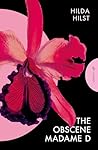
BOOKS: “The Obscene Madame D” by Hilda Hilst

The Obscene Madame DThe Obscene Madame D by Hilda Hilst
My rating: 4 of 5 stars

Publisher Site – Pushkin Classics

Release Date: May 27, 2025

This strange novella features a lot of stream-of-consciousness exchanges between the lead and her common-law spouse / lover. Hille, the protagonist, is a woman who’s decided to withdraw from her normal life and live a celibate, hermetic existence in a recess under the stairs of the home she shares with Ehud (her lover / long-time partner.)

It is a thought-provoking and philosophical work and will be most of interest to readers who like such books. On the other hand, it isn’t likely to have much appeal for readers of commercial fiction. It’s not story-driven and isn’t even deeply character-driven. [Except in the sense of showing thought processes that encourage the reader to drill down into the character’s psyche.] This book has been placed in the genre of (and titled as) erotica (or even pornography,) but I would say that it is much less accurately defined as such than other works of that category, including Hilst’s “Letters from a Seducer.” This isn’t to say the book doesn’t use graphic language or mention past sexual activity, but it’s not erotic at the core. It’s not shy about sex or “vulgar language” by any means, but it is a book about a woman who has given up sex along with other activities of ordinary life.

Ultimately, I’d recommend this book for readers of psychological and philosophical literary fiction. It is not intensely readable as a story and is not intensely erotic as erotica, but it does keep a curious person wondering about the motives and future of Hille.

View all my reviews

“A One-String Harp” by Lu Ji [w/ Audio]

When an author composes too short a poem,
it trails off with a lonely feeling
like looking down at solitude with no friends
or peering into the vast sky, disconnected.
One string on a harp is crisp and sweet
but sings without resonance and harmony.

Translation by Tony Barnstone and Chou Ping in: The Art of Writing (1996) Boston: Shambhala Publications.

BOOKS: “Kokoro” by Natsume Sōseki 

KokoroKokoro by Natsume Sōseki
My rating: 5 of 5 stars

Publisher Site – Pushkin Press

I first read this many years ago in college for a course on Japanese culture. I didn’t have a good reading experience then because this novel is too quiet to hold the concentration of a fidgety mind. However, on rereading it, I found it to be an intense and moving reading experience. It’s a brutally realistic piece of literary fiction, featuring quiet and unexpressive characters who are never-the-less experiencing a kind of agony of living.

The book’s beginning revolves around the relationship between a young man just finishing college and an older, somewhat hermetic, man. By “relationship” I’m not talking about a sexual or otherwise intimate interaction. This strange relationship might best be made sense of by the fact that the young man calls the older, “Sensei” (i.e. “teacher.”) So, it is largely an informal mentor-mentee relationship, but the reader may not really understand why “Sensei” is a reasonable honorific for the old man until the end. The latter portion of the book is Sensei’s “confession,” or the telling of formative events of his life. It is in this confession that we learn that Sensei is not so much a teacher by virtue of conveying abstract scholarly information but rather he teaches by showing the young man his own life story as a cautionary tale.

You must be in a quiet state of mind to keep attuned to this book, but – if you can do so – it is well worth reading. I’d highly recommend it for readers of literary fiction.

View all my reviews