PROMPT: Negative Feelings

Daily writing prompt
What strategies do you use to cope with negative feelings?

A practice of feeling gratitude is extremely beneficial in that regard. Simple meditative practices help one become aware of thoughts and feelings more quickly, before they are fed through rumination, making the down-spiral cycle easier to disrupt.

And, sometimes, I rant. This usually veers quickly into comedic territory and I’m reminded of the ridiculousness of taking human life too seriously, given the absurdity of being primates in pants who love shiny things. (It would be unimaginable if human life weren’t absurd.)

BOOKS: “Great Minds on Small Things” by Matthew Qvortrup

Great Minds on Small Things: The Philosophers' Guide to Everyday LifeGreat Minds on Small Things: The Philosophers’ Guide to Everyday Life by Matthew Qvortrup
My rating: 4 of 5 stars

Amazon.in Page

This book was inspired by Voltaire’s Philosophical Dictionary, a collection of essays by the French polymath put out in several editions and which covered topics such as: “Adultery,” “Free Will,” “Kissing,” and “Nakedness.” In some ways, the inevitable comparison that results from such a “reboot” as this proves the connection between the books to be apt. But in at least one sense, the comparison is unfortunate.

On a superficial level, comparison is apt. Not only does this book expound upon a range of alphabetized topics, often of an “everyday” nature, but it uses many of Voltaire’s topics. It should be noted that Qvortrup’s book also includes many topics that Voltaire didn’t address, notably topics such as “cars” that didn’t exist in Voltaire’s day. One difference that benefits the book greatly is that (as the title suggests,) Qvortrup’s book draws on ideas of a wide range of thinkers, mostly philosophers but also artists of a philosophical bent. [Whereas, Voltaire’s book is a single-point of view, his own.] The “great minds” in this book range from the ancient world to that of the present. While it is (by the author’s admission) Western-centric, it does reference Eastern thinkers (e.g. Taoists and Buddhists) more than many books I’ve read that weren’t as self-aware of their own Eurocentrism.

Where the comparison to Voltaire’s dictionary is not so apt is that Qvortrup’s book rarely mixes wit and stimulation in the way for which Voltaire had a genius. This doesn’t mean Qvortrup’s book isn’t witty or thought-provoking, but just that it’s rarely both, simultaneously. In dealing with a topic like flatulence it can be witty but trivial, in expounding on the ideas of Kant it is intriguing but not usually amusing. That said, the book is laden with interesting ideas and insights into seminal thinkers that most people will find unexpected, if quirky. It is also the case that the overall tone of this book is lighter and more aimed at amusement than is Voltaire.

I found this book to be compelling, readable, and well worth the time, and would recommend it for readers of pop philosophy.

View all my reviews

PROMPT: Billboard

If you had a freeway billboard, what would it say?

“If you think there’s a Hell, you’re already there.”

I think it works on two levels… at least.

PROMPT: Favorite Place

Daily writing prompt
Do you have a favorite place you have visited? Where is it?

No. I try to see wherever I’m at as being as good as any other place I’ve been. And, of course, it is — only my perceptions change and can drive value judgements. The places and the peoples are just different. If one starts ranking and rating places, one can kill the ability to see what is beautiful and spectacular about a particular place. If a place didn’t have redeeming features, people wouldn’t live there. And, by the way, if people don’t live there, that’s probably my favorite place on earth.

PROMPT: Principles

Daily writing prompt
What principles define how you live?

What happens in the external world does not DETERMINE one’s mental / emotional experience.

It’s better to see oneself as a student than as a master — at any stage of life and development.

Be tolerant. No one knows enough to justify smug superiority.

Self-expression is what we live for, and it is curtailed to everyone’s detriment.

PROMPT: Changed Mind

Daily writing prompt
What’s a topic or issue about which you’ve changed your mind?

Oh so many things. My epistemological stance is that one should be ready to drop any belief like a hot rock in the face of better information or better means to understanding.

One of the most fundamental changes is that I used to take for granted that there was a god. Now I’m agnostic about whether there is one, and am virtually certain that – in the unlikely event there is a god – it (she? they? he?) bears no resemblance to any of the tribally derived deities of the various world religions.

I used to think introversion was something that could be, and should be, overcome. Now, I believe the healthy approach is in accepting it and managing one’s life so that it’s not a problem. Truth be told, in my youth, I had a lot of grandiose ideas about what was possible with regards to the mind, ideas which I have jettisoned in favor of one’s that better match the empirical evidence.

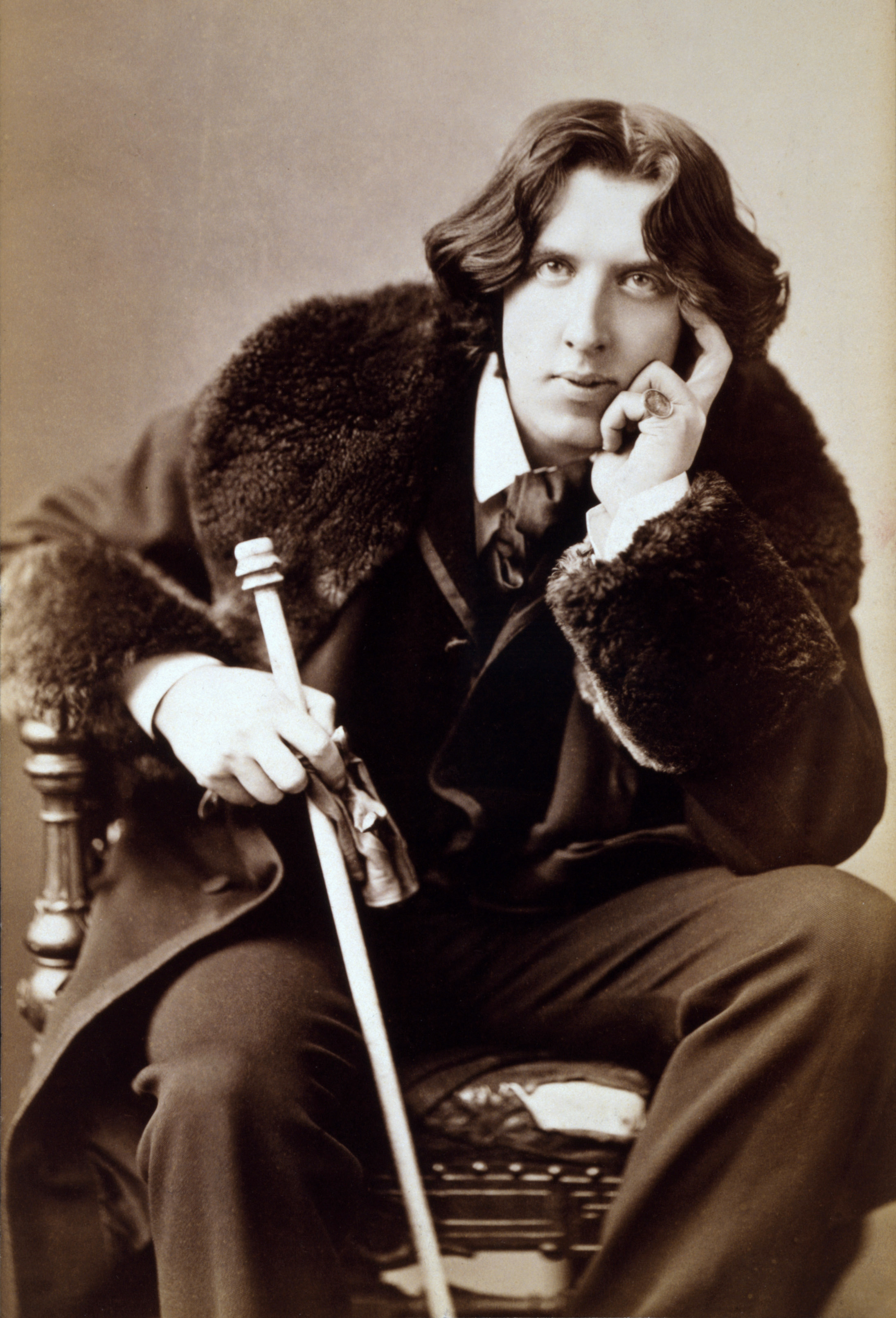
Five Wise Lines from The Picture of Dorian Gray by Oscar Wilde

Nowadays people know the price of everything and the value of nothing.

All art is quite useless.

The books that the world calls immoral are books that show the world its own shame.

A great poet, a really great poet, is the most unpoetical of all creatures. But inferior poets are fascinating.

You will always be fond of me. I represent to you all the sins you never had the courage to commit.

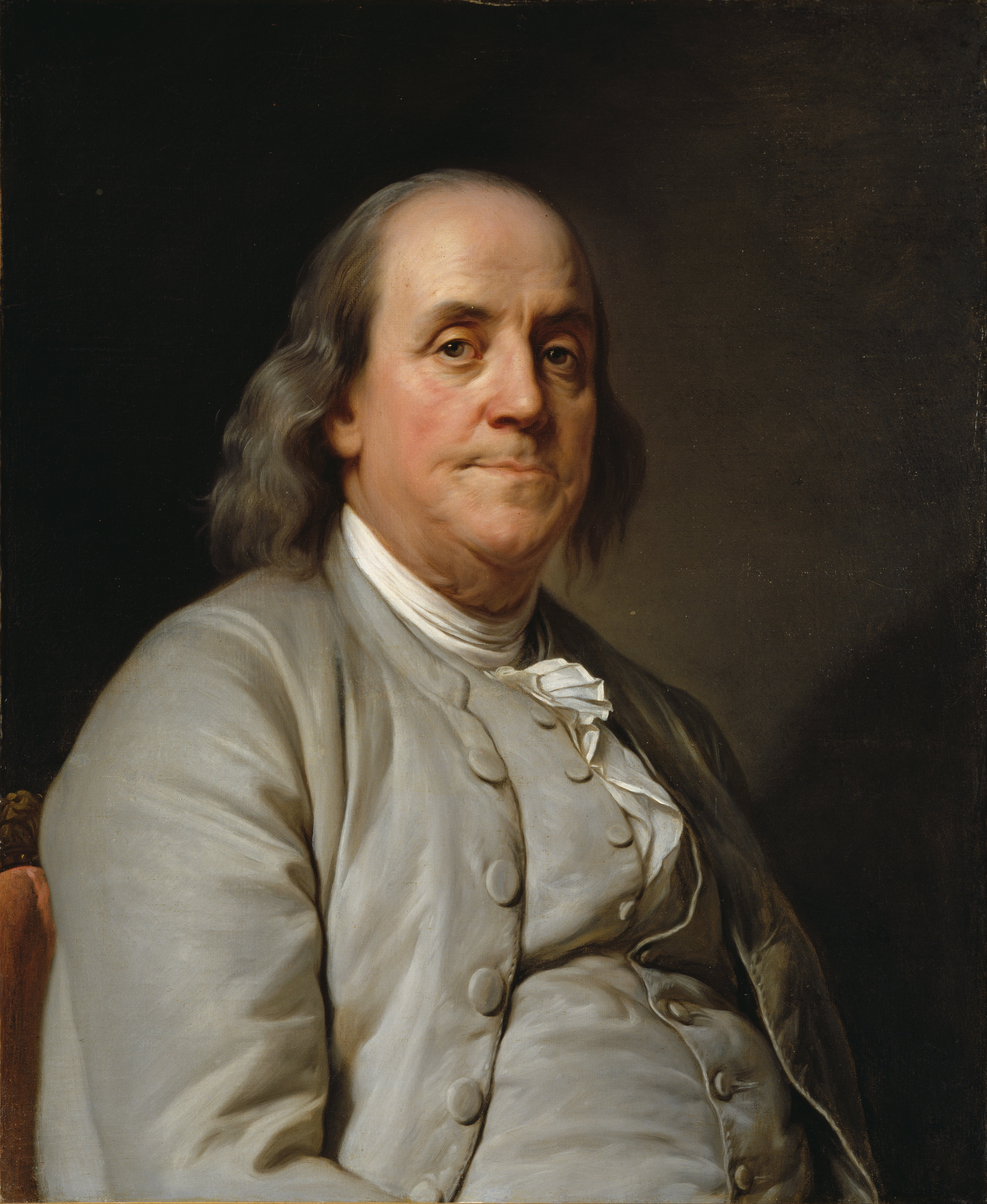
Five Wise Lines from Ben Franklin

Either write something worth reading or do something worth writing.

Never ruin an apology with an excuse.

In wine there is wisdom, in beer there is Freedom, in water there is bacteria.

Many people die at twenty five and aren’t buried until they are seventy five.

Never confuse Motion with Action.

And Five Honorable Mentions:

Three may keep a secret, if two of them are dead.

How many observe Christ’s birthday! How few his precepts!

It is the first responsibility of every citizen to question authority.

If all printers were determined not to print anything till they were sure it would offend nobody, there would be very little printed.

Tis a great confidence in a friend to tell him your faults; greater to tell him his.

PROMPT: Writing

Daily writing prompt
What do you enjoy most about writing?

First, the infinite variety of ways it allows one to express oneself. Second, the puzzle of dancing letters into sentences. Finally, the thought that the right combination of letters might cause someone to pee himself.

PROMPT: Modernity

Daily writing prompt
What would you change about modern society?

Modern mankind traded a life of struggle with occasional moments of terror (e.g. saber-tooth tiger attack) for a life of comfort with constant nagging anxiety (e.g. 40-, 60-, 80-hour work weeks and constant deadlines,) and hasn’t adapted well in the process. As such there are more mental health problems, inability to deal with adversity (or even conflicting ideas,) and an inability to exploit the freedom available. (i.e. The Enlightenment and subsequent liberal movements ensured that government and employers can’t exert undue influence over individuals’ lives, but still most people remain heavily constrained in their pursuit of self-betterment / self-realization by their exhaustion, comfort-addictions, or anxieties.)

There are two interrelated changes that I think would make for a much healthier society. First, education needs to put back some Socratic learning in education — i.e. active engagement of students with thinking and questioning [versus memorizing and skill practicing.] Presently, we have people graduating from colleges who may or may not be prepared for a job of corporate minionship, but who – upon hearing an idea that they find disagreeable – are unable to do anything but be angry or scared or anxious [i.e. from an idea.] An education that challenged students to contend with ideas (be they ideas that seem uncomfortable or feel reprehensible) through dialogue and critique, would convey some of the emotional intelligence (the lack of which has hamstrung our species, a species that may have intellectual intelligence out the wha-zoo.)

Second, we should have some sort of true coming-of-age ceremony of the variety only a few indigenous / tribal societies still do. I don’t mean a Bar Mitzvah or Quinceañera where the child is thrown a party and then they collect envelopes of cash. I mean the kind in which one goes out in the woods for seven days and stays alive solely of one’s own abilities. It’s true that we would have fewer human children, but the ones who came back would not only be more capable but would also be more in command of their emotional and mental selves. [And, to be perfectly frank, the last thing this planet needs are more humans running around — especially ones who need a vast carbon footprint to merely stay alive.]

Finally, we all need an intervention for phone / computer addiction: maybe two weeks in which there is no internet availability, whatsoever.