PROMPT: Physical Exercise

What is your favorite form of physical exercise?

I’m a big fan of them all. I like to move it, move it.

Each in its time.

Though the less special equipment I need access to, the better. I’m a firm believer that one needs only the body and mind to keep a fit body. It’s all a matter of how, how often, how intensely, and how safely one moves one’s body. Gadgety fitness can become too fetishist, and not build integration of the body as much as is ideal.

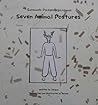
BOOK: “Seven Animal Postures” by Jeogun [Trans. by Dowon]

Seven Animal PosturesSeven Animal Postures by Jeogun
My rating: 4 of 5 stars

Publisher Information – Sunmudo Daegeumgangmun Foundation

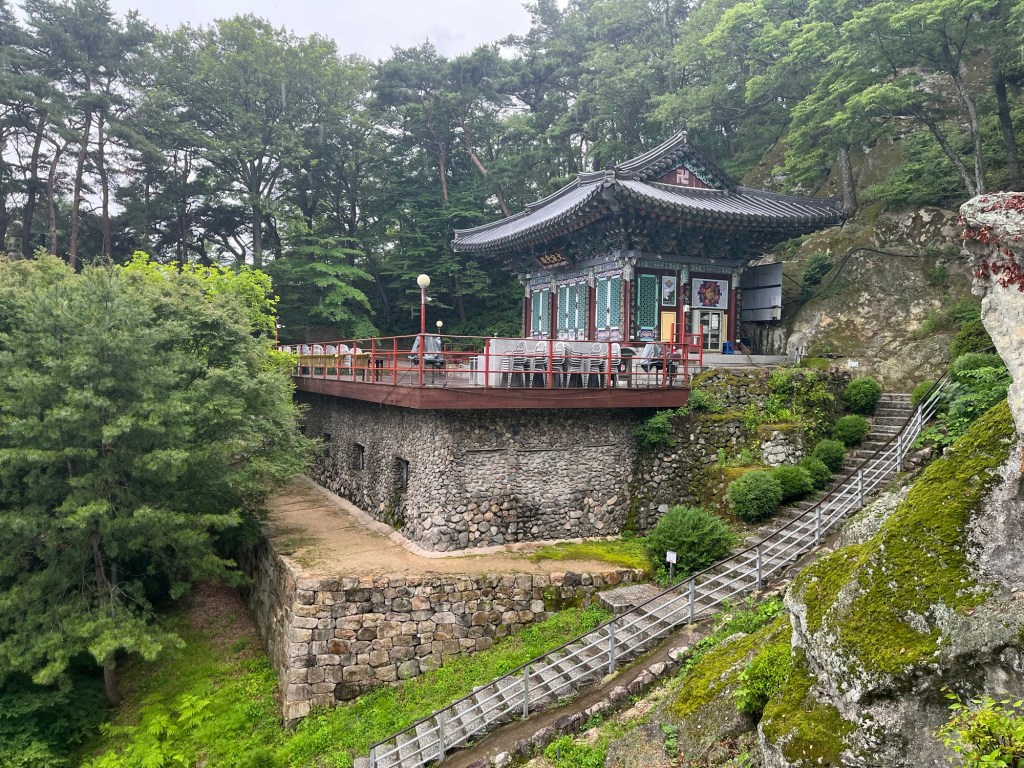
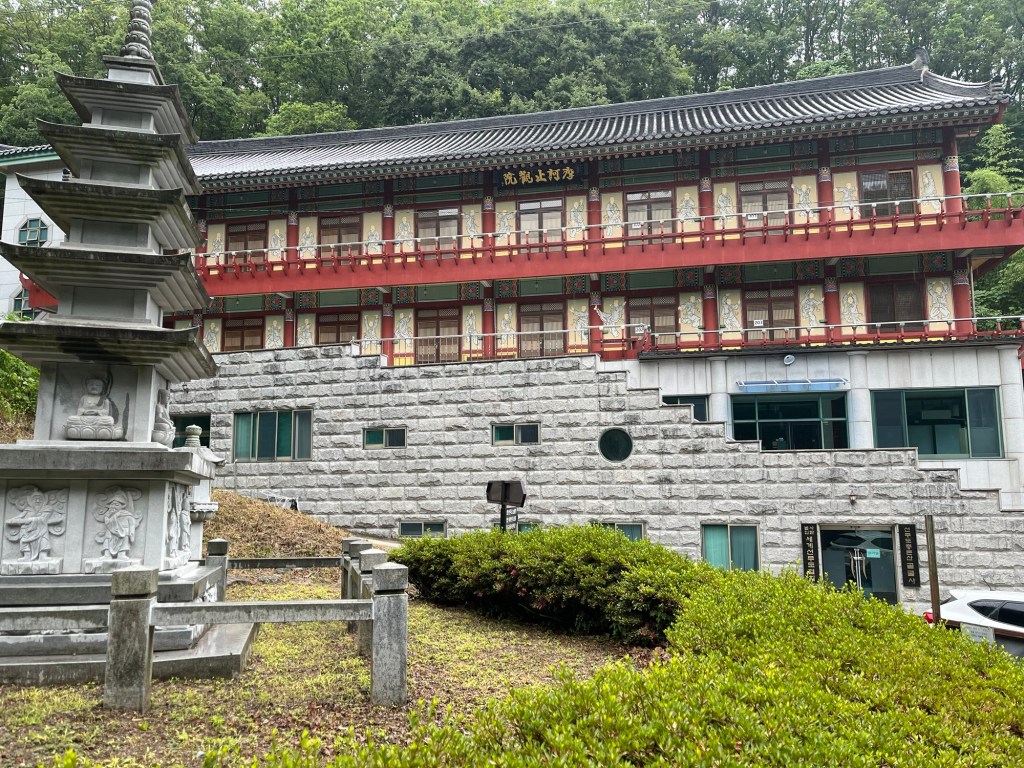
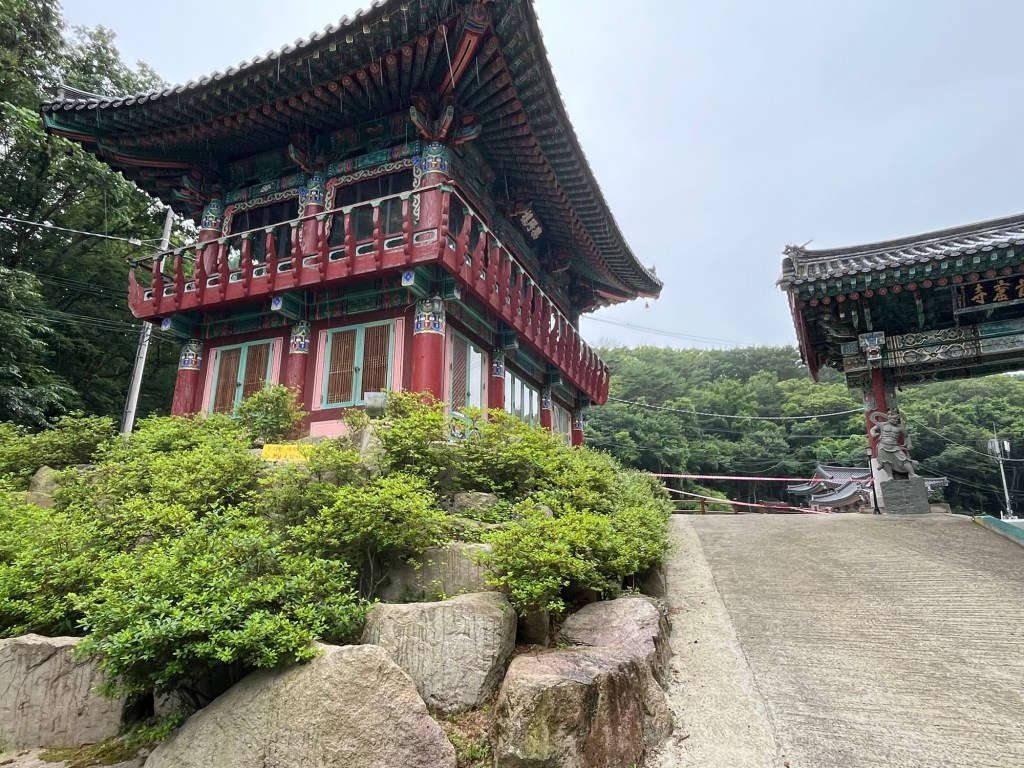
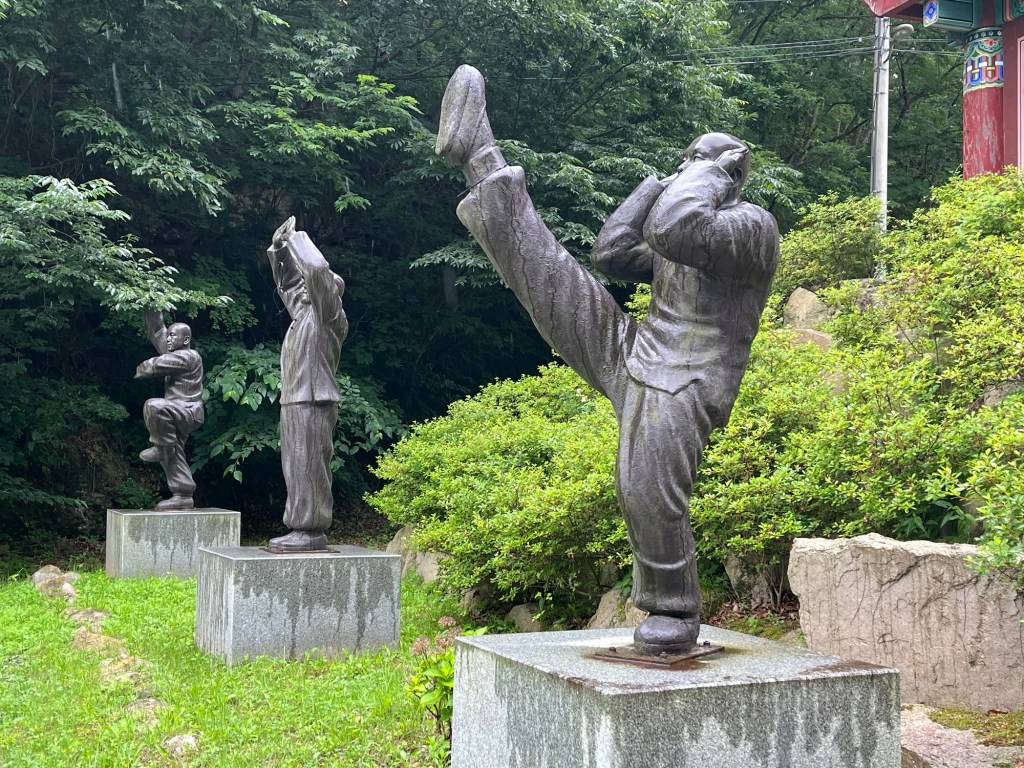
I bought this book in the gift shop of Golgulsa Temple [i.e. Stone Buddha Temple,] in the countryside outside of Gyeongju, South Korea. Golgulsa is a fascinating place. It’s sort of the Shaolin Temple of Korea, teaching martial arts and qigong (energy work) alongside meditation and Buddhist philosophy. The Korean Buddhist martial art is called Sunmudo, and I’d never heard of it before traveling to Korea.

At any rate, this book is a 35-page guide to a set of qigong practices known as the “Seven Animal Postures” (or Yeongdongipgwan.) It’s a set of exercises that are similar to qigong practices like the Eight Pieces Brocade, and not greatly dissimilar to yogasana (i.e. yoga’s postural practices.) [FYI: The animals of these exercises are Tiger, Dragon, Deer, Monkey, Bear, Turtle, and Crane.]

The book offers a little bit of background on Sunmudo and the benefits of it, but is mostly a guide to the movement, breath, and postural details of these seven exercises. It has line drawings to help elaborate upon the text. My only gripe would be that the paper the book is printed on to make it more visually interesting has blocks of darker color that make it a little harder to read than is necessary.

If you are interested in qigong or yogic practices that are a bit more off the beaten path, you may find this one interesting.

View all my reviews

DAILY PHOTO: Golgulsa: The Korean Shaolin

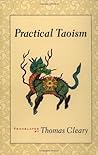
BOOKS: “Practical Taoism” ed. / trans. by Thomas Cleary

Practical TaoismPractical Taoism by Thomas Cleary
My rating: 4 of 5 stars

Publisher Site – Shambhala

Like a number of Eastern systems, Taoism is thought of in many different ways by many different people, and a few of those ways are fairly “out there.” To some, it is a philosophy. To others, it is a religion. To still others, it is a style of magic. By “practical Taoism” Cleary is suggesting that the many varied sources from which he drew snippets, assembling them together to make a coherent whole, reflect some of the more down-to-earth philosophy of “inner alchemy.” [Not to be confused with the “alchemy” in which lead is turned to gold, but sharing the central idea that methods exist to convert a low-quality entity into a high-quality one, but in the case of inner alchemy these methods are breathwork, meditation, and movement techniques that improve one’s vitality as a human being.]

The good news is that Cleary does collect a group of ideas that seem less arcane and cryptic than the average Taoist inner alchemy manual content (or, at least, they are translated so as to seem so.) The bad news is that the average Taoist inner alchemy manual was apparently pretty darn arcane and cryptic, such that even this selection isn’t exactly clear as a limpid stream. Some parts of it are straightforward, but one still has some work to do to make sense of what the original authors were trying to get across. [Some readers will enjoy that more than others.]

Presumably owing to the attempt to simplify through selection and translation, the book isn’t annotated, nor does it feature much ancillary material besides a relatively lengthy introduction to setup the reader with a contextual backdrop. So, there is not a lot of help to clarify ideas that are murky. (I do recognize the translator’s challenge in that there is only so much he can do to try to clarify ideas without imposing upon the authors’ intensions.)

I enjoyed, and learned from, this book — even if I didn’t always feel I was reading a “practical” guide to self-betterment.

View all my reviews

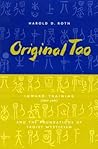
BOOKS: “Original Tao” by Harold D. Roth

Original Tao: Inward Training (Nei-yeh) and the Foundations of Taoist Mysticism (Translations from the Asian Classics)Original Tao: Inward Training (Nei-yeh) and the Foundations of Taoist Mysticism by Harold D. Roth
My rating: 5 of 5 stars

Publisher site – Columbia University Press

This book is built around a translation of an old Taoist manual called “Inward Training” (i.e. 内业,) and the book serves not only to elaborate the meaning of the twenty-six poems that make up the manual, but also to put this work in a context with respect to its place in early Taoist mysticism — which raises further questions as to what constitutes early Taoism and early Taoist mysticism. (Just as the earliest followers of Jesus didn’t think of themselves as “Christians” – at least not as we understand that term – it’s an open question as to when people started to think of themselves as Taoists and how that start relates to when people began holding a set of proto-beliefs that formed the basis of the school(s) of philosophy.)

“Inward Training” presents breathwork and meditational exercises that Roth calls “inner cultivation” — or what some have called “inner alchemy.” The book does contain the entire manual both in Traditional Chinese and an English translation, as well as a much more extensive elaboration of the teachings of the manual. The latter is necessary because, like many old manuals, sparse description, archaic language, and assumptions about common knowledge du jour make it difficult for the layman to get any depth of understanding from the manual, itself.

This is a scholarly work, which means that its readability isn’t the highest and it does dive into matters that will be arcana for non-expert readers. That said, particularly as works of academic philosophy go, its readability isn’t bad. The book is heavily annotated and offers and extensive bibliography.

If you are interested in Taoist practices of breath, meditation, and alignment, this book is well worth investigating.

View all my reviews

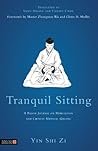
BOOKS: “Tranquil Sitting” by Yin Shi Zi

Tranquil Sitting: A Taoist Journal on Meditation and Chinese Medical QigongTranquil Sitting: A Taoist Journal on Meditation and Chinese Medical Qigong by Yin Shih Tzu
My rating: 4 of 5 stars

Publisher’s Site

This manual is an English translation of a work earlier published in Chinese. It is nominally on Taoist meditation and is written by a Taoist author, but it does include discussion of Buddhist practices as well (specifically Mahamudra.) Also, part of the author’s declared intent with this text is to write in a manner approachable to a wider audience, and because of this sect is rendered less important. So, for example, the book employs more scientific and physiological modes of explanation as opposed to meridians and other conceptual approaches from Traditional Chinese Medicine.

The book is presented in two parts. I found the first part much more beneficial and productive. Said first part is a general guide to meditation. It discusses fundamentals, theory, physiology, and how to align one’s living with a meditative practice (i.e. how diet, breathwork, sleep, etc. influence one’s practice.)

The second part consists of long and fairly detailed descriptions of the author’s experiences with both Taoist and Mahamudra meditation. I didn’t find this part useful, and I believe it may be counterproductive. Discussion of the author’s subjective experience may lead readers to get hung up on chasing identical experiences to the detriment of just practicing. It may give false ideas about “correct” and “incorrect” experiences of the meditation.

Overall, it’s a fine guide to meditation, particularly the first (i.e. larger) part. I can’t say that it breaks a lot of ground. A reader well-versed in meditation may not gain much insight from this book, but it’s as good as any to get started.

View all my reviews

PROMPT: Physical Activity

Daily writing prompt
What are your favorite physical activities or exercises?

I don’t have a favorite, but there are several that I could not maintain health and sanity without, including: hiking, yoga, calisthenics, taiji / qigong, free movement, and at least one cardio (I currently swim and run.) I’m currently struggling with juggling.

BOOK REVIEW: The Healer Within by Roger Jahnke

The Healer Within: Using Traditional Chinese Techniques To Release Your Body's Own Medicine *Movement *Massage *Meditation *BreathingThe Healer Within: Using Traditional Chinese Techniques To Release Your Body’s Own Medicine *Movement *Massage *Meditation *Breathing by Roger Jahnke
My rating: 4 of 5 stars

Amazon page


This book examines how four techniques – movement, massage [specifically, self-applied], breathing exercises, and meditation — can be used to facilitate a robust immune system and to stimulate the body’s innate healing capacities. Jahnke, as a Doctor of Oriental Medicine, specializes in Traditional Chinese Medicine (TCM,) but he acknowledges that these activities aren’t the exclusive domain of that system. The book is designed to be one-stop shopping for an individual seeking to build their own self-healing practice either as preventive medicine or as a part of one’s treatment regimen for an ailment or infirmity.

The thirteen chapters of the book are divided into five parts. The first two chapters form the book’s first part, and they discuss the body’s innate healing capacity and the literature on the roles of mind and self-applied activities on health outcomes.

Part II forms the heart of the book, and it consists of chapters three through seven. Chapter three offers insight into the process of building a personal practice from the four key activities including guidelines for how to organize disparate parts into a whole and how to fit it into one’s life overall. The other four chapters provide examples and techniques for each of the four components of the system: gentle movement (e.g. qiqong), self-applied massage, breathing exercises, and meditation and deep relaxation techniques.

Part III expands on the issues touched upon in Chapter 3. That is, it explores in greater detail the nature of building and deepening a personal practice.

Part IV, entitled “The Way of Nature,” provides a philosophical context for a global self-healing movement and describes how a community can be built around this endeavor. There are three chapters in this section. The last part consists of only one chapter and it describes a potential future self-healing regime. Throughout the book there is a recognized that, while modern medicine is invaluable, it’s also developed a dysfunction by undervaluing the role of the body’s innate healing factor, while not only removing the patient from of the driver’s seat but also stuffing them in the trunk as a sort of cargo in the health and healing process.

The book has line drawings to help clarify the techniques. There are several pieces of back matter (an appendix, a bibliography, and a resources section) to help make the book more useful. [The appendix is a little strange and unfocused for an Appendix. It’s almost more of a Reader’s Digest Condensed Version for someone who wants to get to brass tacks, but it does offer some interesting insight into how a community built around these ideas has formed.]

I found this book to be informative and believe it offers a great deal of valuable insight into how to not only develop one’s own preventive medicine activities, but also how to situate those activities within a community of like-minded individuals. I thought the author did a good job of presenting scientific evidence for building a self-healing practice while not becoming too bogged down technical detail and offering a way of thinking about it for those who look at such activities in more metaphysical or spiritual terms. I’d recommend this book for anyone who is considered engaging in health enhancing activities.

View all my reviews

5 Reasons to Practice Yang Style 24 Form

With slight variations, this taijiquan (tai chi chuan) sequence is alternatively called: Yang Style 24 Form, the Yang Style Short Form, Beijing Standard Form (occasionally Peking Standard Form), or Simplified 24 Form. Here are some reasons to give it a try.


5.) Widespread: It’s the single most popular taiji form in the world. This means, if you’re the gregarious type, you can join groups in parks all over the world.

4.) Balance: It’s good for your balance and you don’t want to fall and break a hip.

3.) Moving Meditation: It’s a great way for fidgety individuals to work up to meditation. All the meditation without having to stay perfectly still.

2.) Scalability: It’s scalable to fitness level. Because taiji is popular with older people, many modifications have been developed for those who aren’t ready for the classical expression of the form.

1.) Gentleness: There’s virtually nothing to go wrong — as long as you “know thyself.” i.e. There are no contraindications, at least for the simplified form.