PROMPT: Gratitude

Daily writing prompt
How do you express your gratitude?

I have a daily practice of FEELING gratitude for this awesome life and all that contributes to said awesomeness. I don’t place much emphasis on EXPRESSING emotion beyond the usual social protocols and niceties. Quite frankly, I think expression of gratitude is overrated. It binds the process up with ego and desire for reciprocity, and the next thing you know you’ve lost all touch with the experience of gratitude and the powerful influence it has on fostering a positive outlook.

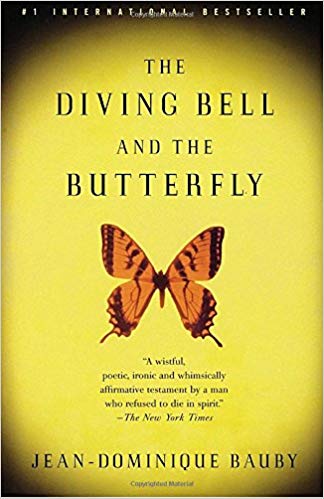
Furthermore, when one emphasizes expression, one tends to develop a blind-spot, thinking that the only entities worthy of consideration of gratefulness are other intelligent beings (or constructs attributed intelligence — e.g. gods.) I begin (though do not end) my practice of gratitude with my body (/ mind) and its systems. I’ve been told many people have trouble fostering gratitude when they focus on their body, but I don’t think one really understands gratitude if one can’t feel deep gratitude for one’s body and mind (literal warts and all.) For the body is the means by which one experiences everything, and one can only be unconditionally grateful for it. [For those who have trouble being grateful for body and mind, I’d recommend the book, “The Diving Bell and the Butterfly” by Jean-Dominique Bauby. It’s a short read because it was dictated using eye-blinks by a man who developed “Locked-in Syndrome,” a condition that left its author only with conscious control of an eyelid.]

More Information Here

PROMPT: Good Life

Daily writing prompt
What are the most important things needed to live a good life?

1.) Good company; 2.) studiousness; 3.) a sense of humor, and 4.) the capacity to let go of that which has no value.

Hit by a Hard Word [Free Verse]

How is being hit by a hard word
 different from being hit by 
  a brick or a bat?

To burn, the spark of a hard word
  must find some kindling inside
   the recipient, elsewise it can't ignite. 

If someone points at me and screams:

"YOU ARE SUBPAR AT ALGEBRA!"

I remain unwounded.

[I'd like to say that it doesn't burn
  simply because it's true, 
   but the truth or falsity of hard words 
   is -- perhaps sadly -- not a major
   ignition factor.

 The kindling is a thing that sits inside one --
  something that makes one care,
   probably a complex mélange of factors.

 The truth of hard words? 
   That is an outside factor.]

Even if I were to discover that,
  to the person who issued the insult,
   there is no greater disparagement 
   than to cast aspersions upon a 
   person's middle school-level
   mathematics competency, 

I would remain unwounded. 

If I were to feel any sort of way
  about uncovering that knowledge,
   it would be to feel sort of bad 
   for the person who issued the taunt.

Now, how to burnproof one's soul,
  that is the question?

PROMPT: Quote

Do you have a quote you live your life by or think of often?

Four, actually:

Be kind, for everyone you meet is fighting a hard battle.

Plato (attributions vary)

There is nothing either good or bad, but thinking makes it so.

William Shakespeare (in HamLet)

Contentment comes not so much from great wealth as from few wants.

Epictetus

If you reject the food, ignore the customs, fear the religion, and avoid the people, you might better stay home.

James a. Michener

The Most Important Lesson in All of Human Living [DAILY PROMPT]

Describe something you learned in high school.

A Psych teacher told us a story of what he called “a gestalt of expectations.” A man from a city in the East is driving out West, and he passes a gas station – despite being low on fuel. (He’s used to gas stations being everywhere.) Anyhow, he runs out of fuel. He can’t see anything around except desolate desert bisected by a line of asphalt. He decides to walk back to the gas station he passed ten miles back. There is no one traveling on this remote stretch of desert road. As he’s walking in the intense heat, it comes to his mind that the employee at the service station is really going to gouge him on the price of gas and a jerry can. As he walks and walks, skin prickling with the heat, he keeps thinking about how he’s going to get screwed by the gas station attendant and also how he’ll be chided and ridiculed for running out of gas in the middle of the desert. He imagines it in great detail. Finally, bedraggled and with heaving breaths, he arrives at the station. The gas station attendant rushes out to help this poor man, and the man punches the attendant square in the nose (for all the offenses taking place solely in the man’s mind.)

In a broader formulation, I think this is the most important lesson any human can learn. Our personal perception of what we experience is not equal to what it is that we experience (the exterior world.) This is why some people dealt a crappy hand can turn it into a wonderful life, and also why some people who seem to have it all commit suicide in the prime of life.

I could be angered or dismayed that the single most important lesson I learned in secondary school was via off-curriculum ramblings during an elective class, but I choose not to. Instead, I’ve been trying all my life to make that bit of knowledge into wisdom.

BOOK REVIEW: The Meaning of Life: A Very Short Introduction by Terry Eagleton

The Meaning of LifeThe Meaning of Life by Terry Eagleton
My rating: 5 of 5 stars

Amazon.in Page

“What is the meaning of life?” This is the question thrown at anyone accused of being a philosopher – professional or lay – though mostly in jest. In the present day, that is. In centuries past, large portions of the population took for granted that it was a question that had a knowable answer (one dictated by religion.) But as that answer became decreasingly satisfying to an increasing portion of the populace, people began to see the question as both fundamentally unanswerable and as a means to chide / test individuals who claimed wisdom or had the claim thrust upon them.

In this concise guide, Eagleton takes on the question, beginning with consideration of whether it is even a sound question. (Or, is it a question like: “What is the meaning of cabbage?” or “What color is a hypothesis?”) After considering many of the problems with the question, from the meaning of “meaning” to the presumptions about what a life has (and what it is) the book also considers some of the post-Nietzschean answers to the question and the challenges that confront them. [One that I hadn’t thought much about criticizes that many of these recent attempts are individualist (i.e. find your own meaning, one consistent with the peculiarities of your own unique life.) Is it reasonable to think that the question can only be answered at the level of granularity of the individual? Maybe, it can only be, but I did appreciate that it gave me something to think about.]

It should be pointed out that Eagleton doesn’t consider himself a philosopher. He’s primarily a critic and English literature professor. This had its advantages. First, Eagleton drew upon works of literature that explore the question, which both made for some interesting insights while also breaking up dense tangles of philosophizing. Second, much of the book deals with linguistic issues. Are the words and grammar of the question, “What is the meaning of life?” useful, and – if so – how do we understand the nature and limits of the question?

I found this book intriguing and provocative. It does have thickets of dense language, but also has its fun moments as well.


View all my reviews

BOOK REVIEW: Extreme Survival by Michael Tougias

Extreme SurvivalExtreme Survival by Michael Tougias
My rating: 4 of 5 stars

Amazon.in Page

Release Date: December 6, 2022

This book presents lessons from survival under intense, life-threatening turns of events. It focuses on the psychology of a survival mindset. The author has expertise in maritime survival, and a large portion of the cases explored involve survival at sea. Though the author did seek to include some variety, including concentration camps, home invasions, climbing accidents, etc. However, the maritime focus is worth noting because it’s in contrast to competing books which tend to give roughly equal discussion to a variety of different threats to survivorship.

There are three books I’ve read in recent years on extreme survival – i.e. Kamler’s “Surviving the Extremes,” Ashcroft’s “Life at the Extremes,” and Ripley’s “The Unthinkable.” Of these, the book that is most similar to Tougias’s is Ripley’s. The first two books focus much more on the physiology of survival in extreme environments. However, Ripley’s book also focuses on the psychological / mindset dimension of survival, though through a more diverse set of disasters.

The maritime focus didn’t bother me for three reasons. First, I’d rather have a person with expertise focus in that area than stumble about in lesser-known fields. It allowed Tougias to focus more on the stories of those with whom he’d conducted first-hand interviews. [The author did engage in a variety of stumbling in Chapter 8 [on the sunk cost fallacy] when he discussed the sunk cost fallacy as a separate but similar situation to those survival scenarios he’d already described [which were also cases of sunk costs] – i.e. it sounded like Tougias believes the sunk cost fallacy only applies to financial costs, which isn’t how economists look at the matter.] Second, survival at sea is one of the most intense scenarios I can imagine facing (i.e. I’m not concerned about survival in space, and I feel more experienced, competent, and -thus- less viscerally responsive to survive on terra firma – e.g. high elevation, deserts, etc.) Thirdly, since the book was on mindset, it didn’t need to be as diverse as the Kamler and Ashcroft books which examined the physiology of challenges presented by varied environments.

That said, I’d give a slight edge to the Ripley book, if you could choose only one. Still, this was a solid book on the subject, and did a great job with narrative examples and explanation of lessons. My criticisms are small. For example, like many books, chapters begin with quotations, but I felt they were the wrong quotations. Opening quotes are a widespread and fine approach when the quote is one that taps into the theme of the chapter. However, often the quotes in this book were from people involved in cases that were later presented within the chapter, and so the quotes often lacked context. If the quotes were meant to be hooks, some landed better than others. (A few simply left me befuddled.) On the other hand, the author did an excellent job with summaries at the end of the chapters.

All in all, this was a well-written book on survival, and I learned a great deal from reading it. If you don’t plan on reading multiple books on the subject, you might look into others first, but it’s certainly worth reading. And it’s a topic that gets one interested in reading more.


View all my reviews

Enlightenment in Four Bits of Shakespearean Wisdom

If you’re looking to attain Enlightenment, you may have turned to someone like the Buddha or Epictetus for inspiration. But I’m here to tell you, if you can put these four pieces of Shakespearean wisdom into practice, you’ll have all you need to uplift your mind.

There is nothing either good or bad, but thinking makes it so.

william Shakespeare, Hamlet

Through Yoga, practitioners learn to cultivate their inner “dispassionate witness.” In our daily lives, we’re constantly attaching value judgements and labels to everything with which we come into contact (not to mention the things that we merely imagine.) As a result, we tend to see the world not as it is, but in an illusory form.

The fault, dear Brutus, is not in our stars, but in ourselves.

William shakespeare, julius caesar

In Psychology class, you may remember learning about the self-serving bias, a warped way of seeing the world in which one attributes difficulties and failures to external factors, while attributing successes and other positive outcomes to one’s own winning characteristics. Like Brutus, we need to learn to stop thinking of our experience of life as the sum of external events foisted upon us, and to realize that our experience is rooted in our minds and how we perceive and react to events.

The fool doth think he is wise, but the wise man knows himself to be a fool.

william shakespeare, as you like it

A quote from Hamlet also conveys the idea, “There are more things in heaven and earth, Horatio, than are dreamt of in your philosophy.” If you grasp this idea, you may become both humbler and more readily capable of discarding bad ideas in favor of good. It’s common to want to think of yourself as a master, but this leads only to arrogance and to being overly attached to ineffective ideas. Be like Socrates.

Cowards die many times before their deaths; The valiant never taste of death but once.

william shakespeare, julius caesar

Fears and anxieties lead people into lopsided calculations in which a risky decision is rated all downside. Those who see the world this way may end up living a milquetoast existence that’s loaded with regrets. No one is saying one should ignore all risks and always throw caution to the wind, but our emotions make better servants than masters. One needs to realize that giving into one’s anxieties has a cost, and that that cost should be weighed against what one will get out of an experience.

There it is: Enlightenment in four bits of Shakespearean wisdom.

BOOK REVIEW: Move by Caroline Williams

Move: How the New Science of Body Movement Can Set Your Mind FreeMove: How the New Science of Body Movement Can Set Your Mind Free by Caroline Williams
My rating: 5 of 5 stars

Amazon.in Page

This book presents a pop science accounting of some of the more interesting scientific literature on the benefits of moving one’s body – be it through dance, martial arts, walking, or otherwise. That being active is an important element of maintaining a healthy mind and body will come as no surprise. Still, there are a number of specific points this book makes that may come as a surprise to many, such as that those who do an hour of intense exercise a day but otherwise live desk warrior lives may not be as well off as they think.

As the topic (and the scientific literature from which the book draws) is huge, the author focuses specifically on the mental benefits of physical movement, both attitudinal / psychological benefits and cognitive benefits such as improved creative thinking or memory. I found the book’s organization to be beneficial, and – in particular – believe it was a smart move to include chapters on breath and rest – topics that are integral to a life of movement, but which might not spring to mind. Particularly, the chapter on breath discusses findings on synchronization of breath and movement more than does many books on breath or movement, as well as offering extensive discussion of the benefits of 3 and 6 breath per minute (bpm) breathing.

There are a lot of books out there on this subject – though usually they focus either on exercise or on a particular approach to movement. Those who read extensively on the topic may not find much that is new in this book. However, I think “Move” holds its own, and also distinguishes itself in some of its fine points of emphasis. Certainly, if one is looking for a book to introduce someone to the benefits of movement, this is a prudent choice.


View all my reviews

BOOK REVIEW: The Art of Losing Control by Jules Evans

The Art of Losing Control: A Guide to Ecstatic ExperienceThe Art of Losing Control: A Guide to Ecstatic Experience by Jules Evans
My rating: 5 of 5 stars

Amazon page


This is a philosopher’s account of sampling from the various wells of ecstatic experience. It’s one of many works these days on what the ancient Greeks called ekstasis. There’s been major interest in investigating the topic in recent years. Historically, religion was the means by which people pursued ecstasy, but – increasingly — people who don’t care for the dogma and tribalism of religion are starting to crave its more blissful and ego-shedding aspects.

As a work of immersion journalism, the book is a mixed bag. Evans does seek some firsthand experience of most of the topics covered, but the extent of his immersion and his discussion of it varies greatly. For example, he goes into great detail in pursuing and discussing mystic Christianity, but isn’t so comprehensive in discussing neo-Tantrism (i.e. Western, or sex-centric, Tantra) and his discussion of psychedelics draws heavily upon decisions / experiences made as a teenager (which, it could be argued, is a little like commenting on the Eucharist based on that time you got drunk on Boone’s Farm and scarfed down a bag of Doritos. Though, to be fair, the author is clear and cognizant that his youthful dalliances weren’t necessarily equivalent to a conscientious pursuit of heightened consciousness, but are more a warning to heed Leary’s advice on “set and setting.”) At any rate, if you are expecting immersion journalism on the level of Michael Pollan’s “How to Change Your Mind” you’ll find this book isn’t consistently on par (though it does have its moments.) That said, Evans does a fantastic job of researching the topic and presenting interesting perspectives on the subject, and he does so with humor and inquisitiveness. (I will say that in the latter chapters I sometimes found myself very intrigued by the discussion, but it would occur to me that I couldn’t see a direct link being made to the pursuit of ecstatic experience. Maybe it was just me, but if he strayed, he strayed interestingly – which is better than the alternative.)

The book consists of an introduction and ten chapters. The chapters cover such approaches to ecstasy as: religion (primarily Christianity is discussed, obviously focusing on sects and subsects that pursue [rather than shun] ecstatic experience), the arts, rock-n-roll (with an intriguing focus on its surprising resemblance to religion), psychedelic substances, meditation, neo-Tantrism, war and violence, communing with nature, and transhumanist efforts.

With the exception of Evans’ investigation into meditation, for which his experience involved Vipassana — a nominally Theravadin Buddhist system, Evans’ book focuses heavily on Western approaches. I actually enjoyed this because it seems like there is much more discussion of Eastern approaches and those rooted in them.

The book is annotated and has a section of photos in the back as well as a few other graphics where needed.

I enjoyed this book and learned lot from it. As immersion journalism it displayed a wide variance of depth and openness, but it was well-researched and the information was delivered in a light and readable manner.

View all my reviews