BOOK CHAT: Walking by H.D. Thoreau

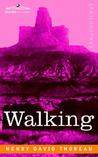
WalkingWalking by Henry David Thoreau

My rating: 5 of 5 stars

Amazon page

Thoreau paints a portrait of walking in such grandiose terms that one will cease to think of putting one foot in front of the other as one of life’s mundane tasks. He’s not talking about just any walking, however. He’s not talking about the mall walkers who briskly exercise in temples of consumerism. He’s not talking about those who walk through the park with top 40 hits blaring from their iPod ear buds.

Thoreau is talking about those individuals he calls saunterers. To saunter, as to stroll, is to walk in a leisurely and aimless fashion. Thoreau’s walking is that which:
-takes place in nature.
-leaves worldly worries behind.
-is not a trivial time commitment.
-is more an exercise of the mind and spirit than of the body.

To the mall walker, Thoreau would point out the error of a missed opportunity to get away from mankind’s chaos and enjoy nature. As he puts it, “The most alive is the wildest.” and “…all good things are wild and free.” He’s also clear in that walking for exercise misses the point by injecting hurriedness into a time that should be about slowing down.

On those with iPods, cellphones, or other contrivances that distract one from the environs, Thoreau is equally clear, “What business have I in the woods if I am thinking of something outside the woods?”

Thoreau’s essay broadens as it progresses. From a commentary on the virtues of sauntering, the essay turns to the glories of nature, the character of America, and the state of thought in his contemporary society. These may seem like unrelated concepts, but there is a string of logic that connects them.

The connection to nature and the virtue of wildness should be clear. It’s nature that is the optimal backdrop of sauntering. It’s in nature that one can be set free from the troubles of the world of man and obtain a glimpse of god. It’s in nature where creativity breeds with chaos turned down and native brilliance turned up.

Thoreau’s discussion of America is tied to the theme of walking in a couple of ways. The first is as a land made for walkers. For example, he points out that a man could pitch a tent almost anywhere in North America without great risk of becoming a meal. The same couldn’t be said of India or Africa or Siberia, where man isn’t the sole predatory creature. The second is America as a place with room to venture out into uncharted territory. Thoreau points out that we may look to the East for the lessons of our predecessors, but a person should look West for opportunities to grow in one’s own right. Of course, Thoreau’s America was different from today’s America.

The end of the essay broadens out even further. Thoreau comments upon mankind and the state of ideas and thought. He echoes Socrates when he talks about that age-old question of whether it’s better to be ignorant (to know one knows little) or deluded (to think one knows a lot, but be drowning in false knowledge.) A reader may suggest that this is a false dichotomy. Why can’t one know most everything and not have a one’s body of knowledge rife with false knowledge? I can’t say, but all of the evidence suggests that if such a state exists, it’s the domain of God or gods (if such entities exist.)

Thoreau also bemoans what he sees as the decline of thinking man. What does this have to do with walking? I think Thoreau answers in the following quote:
“So it would seem few and fewer thoughts visit each growing man from year to year, for the grove in our minds is laid waste—sold to feed unnecessary fires of ambition, or sent to mill—and there is scarcely a twig left for them to perch on.”

I think that everyone should read this thin book–really an essay and not a full-scale book. The problems Thoreau notes have only gotten worse in our modern age. Far too few take the time to walk, and to acquire the benefits of sauntering.

View all my reviews

DAILY PHOTO: Yellow Blossoms

Taken November 2, 2013 at Hampi.

Taken November 2, 2013 at Hampi.

The Hampi area is painted from a different palette than most of Karnataka. Instead of uniform green, the brownish-red of the boulders dominates, and, while green lines the spaces between the rock, the vivid yellow of these flowers decorate the base of many hills.  Of course, there remain islands of green, in the form of corn fields, banana plantations, and palm groves.

DAILY PHOTO: Garden Overlook

Taken September 21, 2013 in Nandi Hills, India.

Taken September 21, 2013 in Nandi Hills, India.

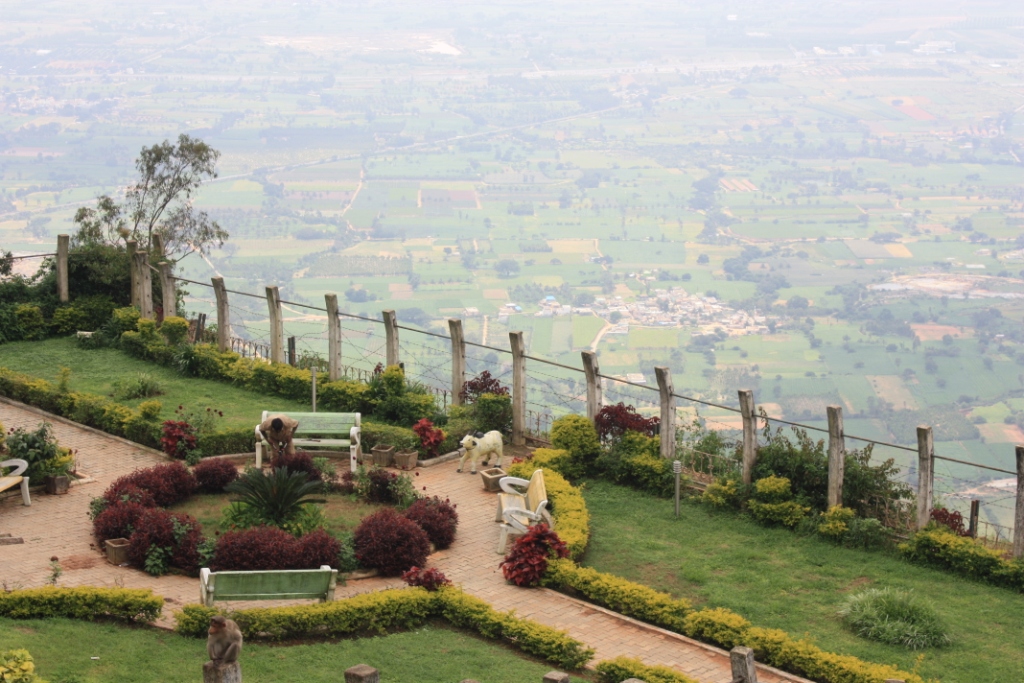
This garden sits behind a little inn at the top of Nandi Hills. In the background is a town and farmland as seen from the hilltop.

DAILY PHOTO: The Tree of Life

Taken September 3, 2013

Taken September 3, 2013 in Lal Bagh Botanical Gardens

DAILY PHOTO: Daisy Train

Taken August 25, 2013 in Big Tree Preserve in Sandy Springs

Taken August 25, 2013 in Big Tree Preserve in Sandy Springs

DAILY PHOTO: Lime Green Butterfly

Taken in the fall of 2012 in Phnom Penh

Taken in the fall of 2012 in Phnom Penh

DAILY PHOTO: Caye Caulker Corsage

Taken on Caye Caulker in Belize

Taken on Caye Caulker in Belize

DAILY PHOTO: Riding the Rock

Image

IMG_4022

DAILY PHOTO: Bathing Copperhead

Taken July 2012 at the Reynolds Nature Preserve

Taken July 2012 at the Reynolds Nature Preserve

10 Tips for Averting Tiger Attacks

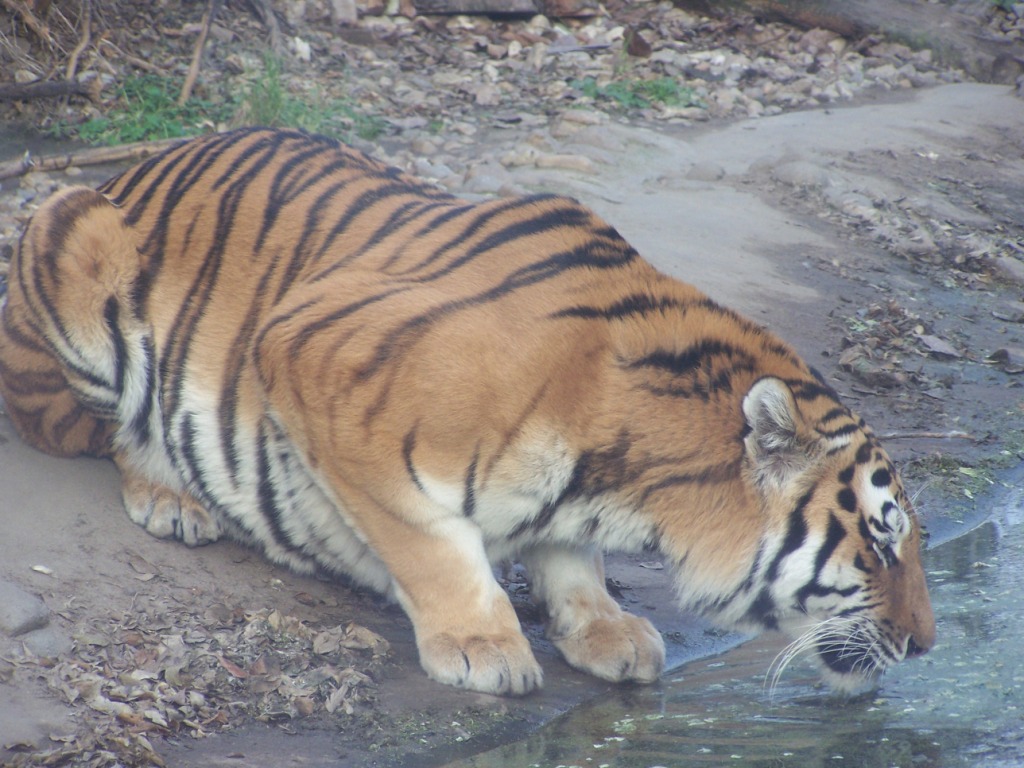
As with mean drunks, never interrupt a drinking tiger

As with mean drunks, never interrupt a drinking tiger

I was working on a short story that involved a tiger attack, and–knowing almost nothing about the subject–I did a little research. I found some fascinating factoids. Here are some important tips to keep in mind in tiger country:

1.) Avoid squatting postures as it’s thought that many tiger attack victims are cases of mistaken identity. That is, sometimes an individual crouching to do his business or whatnot is mistaken for a tastier species. Apparently, tigers don’t realize that humans are the only creatures that wear clothing. Despite attempts by missionaries to educate tigers on biblical stories such as that of Adam and Eve, tigers continue to see themselves as god’s favorites.

2.) Avoid wearing leather, it makes you smell and taste like cow. While cows are sacred in India, tigers have denied receiving that memo. Or perhaps tigers are like members of PETA and are attacking those wearing animal hides to make a bold statement… but I doubt it.

3.) Avoid carrying meat in your pockets. Enough said.

4.) If one is attacked, don’t immediately counter-attack. Some tigers are just trying to express their passionate feelings on the subject of breakfast cereal, and one would not like a needless fight to ensue. One should only partake in needless fights when one has a good shot at winning– no offense to any one who has ever fought Manny Pacquiao.

5.) Don’t leave your dead out and about. Apparently, human is an acquired taste that tigers will find a fun exotic treat once they get used to it. We are the Rocky Mountain Oysters of the tiger world.

6.)  Be aware of your surroundings, and–as with Zombies–CARDIO-CARDIO-CARDIO. Tigers can run at speeds of up to 35 miles per hour (56km/hr.) for short bursts, but have the stamina of a pack-a-day smoker. If you can keep them from getting close to you, they’ll lose interest.

7.) Stay in the city. Tigers almost never go into the city because they tend to attract unwanted attention. The average tiger weighs about 400 pounds (180 kg.) and the orange and black stripe pattern that camouflages surprisingly well in wild sticks out everywhere except Paul Brown Stadium or the lingerie section of an inner-city K-Mart.

8.) If you are attacked, the tiger will leap up and put its fore paws on one’s shoulders to push one over onto one’s back so that the cat can leisurely crush one’s neck in his or her mouth. When the tiger rears up on its hind-legs you may either try a kick to the crotch or to engage the predator in a foxtrot. The former offers a 1 in 10,000,000 chance of success. The latter has never been tried before, and so no one can rightly speak to its likelihood of success, though it’s suggested that one not try to lead (You must recognize that–at that point– you are the tiger’s bitch.)

9.)  Because humans aren’t ideal tiger food but we are slow, weak, and are skilled in disciplines like “managerial analysis” rather than hunting or survival in the wild, man-eating tigers tend to be the old and infirm cats that find gazelle and antelope both too fast and jungle savvy. Because only the oldest of cats tend to attack, a sure strategy is to get your attacker talking about how things were back in his day and how the current generation of tigers are all misfits and hooligans.

10.)  If you’re attacked, make loud noises and violent “shooing” gestures with your arms. You’ll still be eaten, but you will appear quite brave on the video in comparison to those who go fetal and poo themselves.

Best wishes and be safe out there.