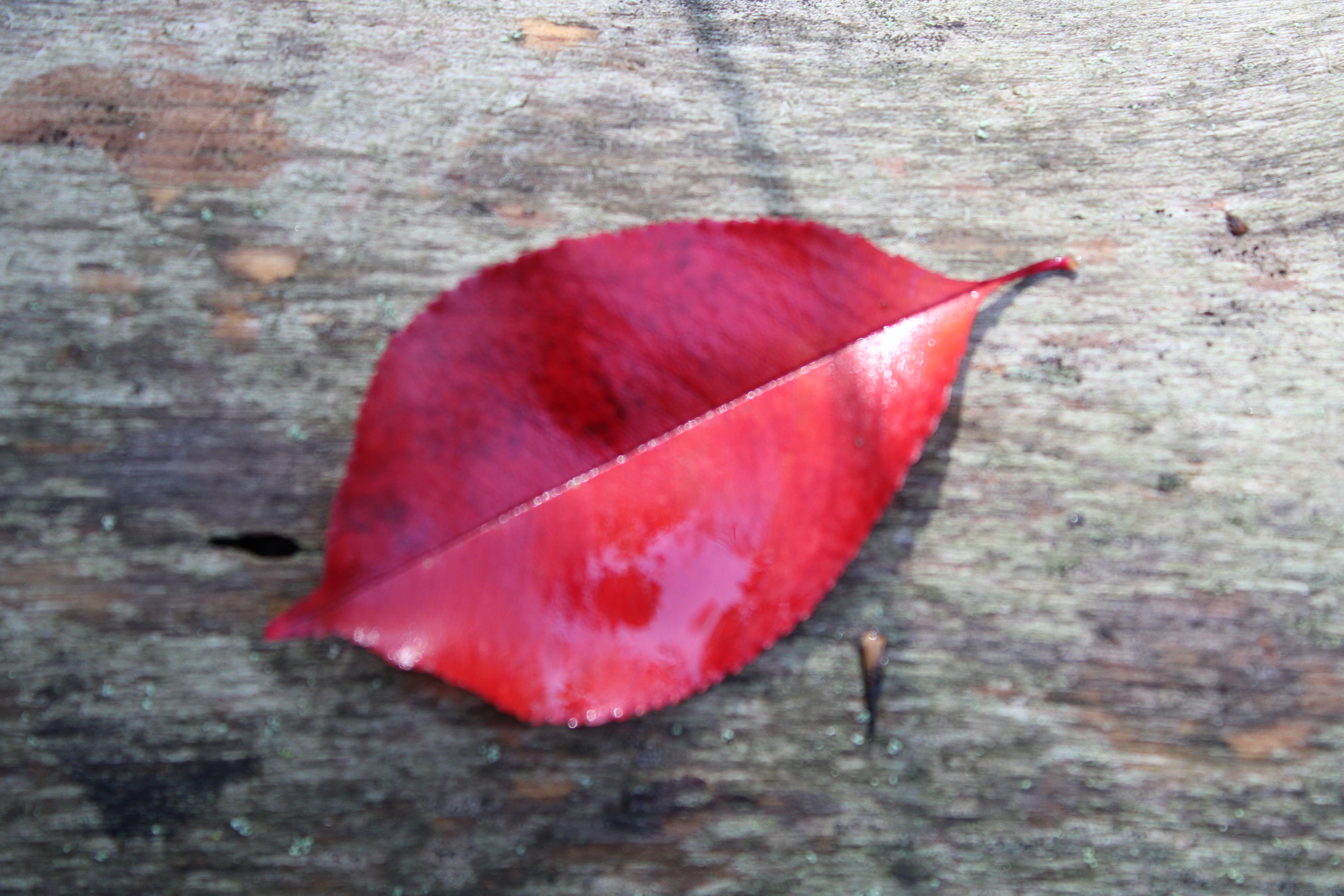
nestled between rocks the smooth-worn driftwood roots assume the form of a pile of writhing snakes, 'til the mind untangles truth
Tag Archives: mind
Enlightenment in Four Bits of Shakespearean Wisdom
If you’re looking to attain Enlightenment, you may have turned to someone like the Buddha or Epictetus for inspiration. But I’m here to tell you, if you can put these four pieces of Shakespearean wisdom into practice, you’ll have all you need to uplift your mind.
There is nothing either good or bad, but thinking makes it so.
william Shakespeare, Hamlet
Through Yoga, practitioners learn to cultivate their inner “dispassionate witness.” In our daily lives, we’re constantly attaching value judgements and labels to everything with which we come into contact (not to mention the things that we merely imagine.) As a result, we tend to see the world not as it is, but in an illusory form.
The fault, dear Brutus, is not in our stars, but in ourselves.
William shakespeare, julius caesar
In Psychology class, you may remember learning about the self-serving bias, a warped way of seeing the world in which one attributes difficulties and failures to external factors, while attributing successes and other positive outcomes to one’s own winning characteristics. Like Brutus, we need to learn to stop thinking of our experience of life as the sum of external events foisted upon us, and to realize that our experience is rooted in our minds and how we perceive and react to events.
The fool doth think he is wise, but the wise man knows himself to be a fool.
william shakespeare, as you like it
A quote from Hamlet also conveys the idea, “There are more things in heaven and earth, Horatio, than are dreamt of in your philosophy.” If you grasp this idea, you may become both humbler and more readily capable of discarding bad ideas in favor of good. It’s common to want to think of yourself as a master, but this leads only to arrogance and to being overly attached to ineffective ideas. Be like Socrates.
Cowards die many times before their deaths; The valiant never taste of death but once.
william shakespeare, julius caesar
Fears and anxieties lead people into lopsided calculations in which a risky decision is rated all downside. Those who see the world this way may end up living a milquetoast existence that’s loaded with regrets. No one is saying one should ignore all risks and always throw caution to the wind, but our emotions make better servants than masters. One needs to realize that giving into one’s anxieties has a cost, and that that cost should be weighed against what one will get out of an experience.
There it is: Enlightenment in four bits of Shakespearean wisdom.
Midnight Circus [Free Verse]
The Midnight Circus was not as it seemed. It was bright colors: motion-blurred. It was the tinny monotony of music box-style tinkling tunes & organ tones. One could even make out the scent of fried foods and cotton candy, among the many other [uncircus-like] odors. But there was also the story a mind wrote to dance sensory facts into sensory fictions; that was where the falsity lie. If one opened one's eyes, letting them focus: there'd be sparking wires, & flames licking ever closer. The shrill organ tones would become screams. The summer night's humid heat would become third degree burns. The circus smells would become dust and death and acrid burnt combustibles. So, he didn't open his eyes to war or his impending demise, but let his mind march into that big musty, canvas tent, surrendering to its irreality.
Slant [Free Verse]
They told it slant, but not all the truth, and it rolled into the ears of the willing and into the minds of the faithful. And in those minds it was built into a swift machine, one of great power -- if little reality. But deaths never required reality of motive, only reality of matter. So, the wild stories became wild ideas that were the bane of us all.
Endogenous High [Free Verse]
hot-injected molecule - squeezed into my bloodstream, shooting me into bliss & i ride that tide, rising & rising on the swell breath jagged, mind rapt with nothingness, & brain firing in electric tangles i'm seeing, but not attaching i'm being, but nothing in particular in time, my ride will be at an end, and I'll be back to the world of strange disasters
Beautiful Scum [Tanka]
Cold Shore [Free Verse]
Was it a lifetime ago, or was it a dream? I remember it being a long drive to a cold shore. And I sat alone on that shore, and I sought a shark -- not out in the waters, but within myself. Finding nothing, I felt the thing to do was to rattle in rhythm with the twisted hustle of pounding waves, and I awoke, shivering under piercing points of light that somehow felt cold, & made me feel cold - deep inside.
Avalanche [Free Verse]
One false footing erases the screeched blackboard writing that'd formed in my mind & everything becomes a blank, white emptiness -- Not a good empty. Not a good quiet. The emptiness of blinding pain. That's the slow, cold death of falling into a drift and then cascading, tumbling, tumbling, in an avalanche. Wrenched asunder - or so it feels - and left to go numb in a silence so total that i know it's my first experience with true silence. We all fall down? That's what the plague rhyme says, isn't it? -- Madmen & Holymen, and those who take this fall and are twisted into a grotesque blend of both. Which way is up? Tiny seedlings can tell, but I cannot. I'm lost -- 50/50, I dig myself deeper into my own doom. My life trickles in a file of hours, dripping into that dim distance of non-time. I'll stay lost until the spring thaw when I'll ride the glacial runoff to complete my tumble as a gray and bloated thing.
On Intrusive Thoughts & Shoving Someone in Front of a Train
The other day I read that a man had pushed a person onto the tracks in front of an oncoming train. The week before that, I'd read in a book by Robin Ince that a person who -- having had a baby thrust into his hands -- has intrusive thoughts of throwing said baby out of the nearest window is [believe it, or not] the best person to ask to hold one's baby. The argument goes like this, the person having these intrusive thoughts is being intensely reminded by his or her unconscious mind that under no circumstances -- no matter what unexpected or unusual events should transpire -- is he to throw the baby out the window (or otherwise do anything injurious.) I've heard that, at some point, virtually everyone has some type of awkward intrusive thought such as the thought of pushing a stranger in front of a train. Most never do it, nor truly want to do it. Then this one time... someone did.
BOOK REVIEW: Move by Caroline Williams
Move: How the New Science of Body Movement Can Set Your Mind Free by Caroline WilliamsMy rating: 5 of 5 stars
Amazon.in Page
This book presents a pop science accounting of some of the more interesting scientific literature on the benefits of moving one’s body – be it through dance, martial arts, walking, or otherwise. That being active is an important element of maintaining a healthy mind and body will come as no surprise. Still, there are a number of specific points this book makes that may come as a surprise to many, such as that those who do an hour of intense exercise a day but otherwise live desk warrior lives may not be as well off as they think.
As the topic (and the scientific literature from which the book draws) is huge, the author focuses specifically on the mental benefits of physical movement, both attitudinal / psychological benefits and cognitive benefits such as improved creative thinking or memory. I found the book’s organization to be beneficial, and – in particular – believe it was a smart move to include chapters on breath and rest – topics that are integral to a life of movement, but which might not spring to mind. Particularly, the chapter on breath discusses findings on synchronization of breath and movement more than does many books on breath or movement, as well as offering extensive discussion of the benefits of 3 and 6 breath per minute (bpm) breathing.
There are a lot of books out there on this subject – though usually they focus either on exercise or on a particular approach to movement. Those who read extensively on the topic may not find much that is new in this book. However, I think “Move” holds its own, and also distinguishes itself in some of its fine points of emphasis. Certainly, if one is looking for a book to introduce someone to the benefits of movement, this is a prudent choice.
View all my reviews