
Startle Response [Haiku]

even in death
 the scorpion can evoke
  momentary fear.
Scarecrow [Free Verse]

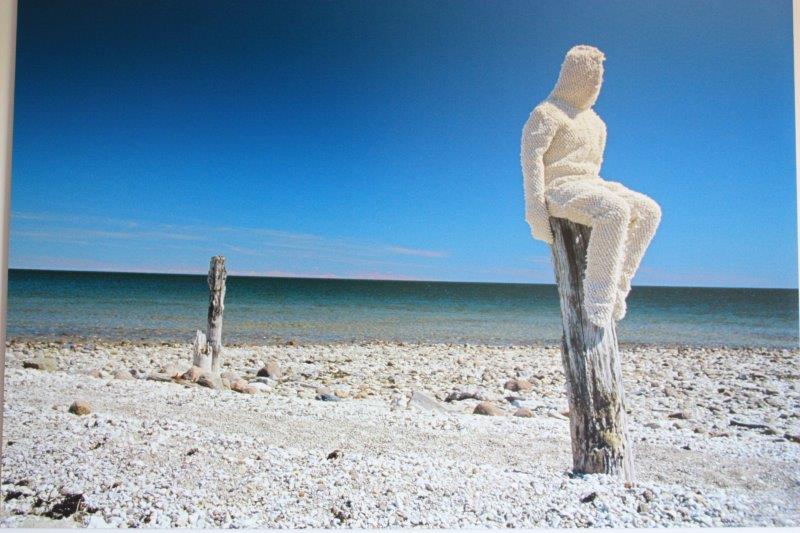
Scarecrow, n. - that which exists 
                         solely to evoke fear.

There are so many scarecrows:
   global - the end of the world
                    as we know it.
   societal - the end of the tribe
                    as we know it.
   individual - scarecrows of the soul.

Scarecrows lead us into the worst
        versions of ourselves: 
 The one who's stressed, and mean
        because of it.
 The one who imagines conspiracy
        around every corner.
 The one who sees threat in every
        change & in every difference.
 The one who wants an orderly world
        of people just like themselves -
        familiar, cozy, and lacking surprises.

Scarecrows even march us off to war,
        and war should be the scariest state
              imaginable --
        death doled out on a random basis.
 
War should be the scariest, but terrible certainties
         spur less fear than any old uncertainty.

BOOK REVIEW: Talking to Strangers by Malcolm Gladwell

Talking to Strangers: What We Should Know About the People We Don’t KnowTalking to Strangers: What We Should Know About the People We Don’t Know by Malcolm Gladwell
My rating: 5 of 5 stars

Amazon.in Page

This book uses a model that Gladwell has employed to great success in many books. That model goes like this: 1.) find some research findings that are counter-intuitive or otherwise in opposition to the consensus view (and preferably not well-known outside academia;) 2.) carefully select some fascinating real-world cases that seem to highlight said findings; 3.) skillfully present the cases in a highly readable and evocative narrative form, making surprising reveals for maximum effect.

In this case, the beating heart of the book is research by a University of Alabama, Birmingham professor, Timothy Levine, that shows that people are bad at catching liars because we are wired to accept statements as true and that some portion of population present appearances out of kilter with their truthfulness. (i.e. Some people come across as liars — even when telling the truth, and others appear truthful with pants ablaze.) This contradicts earlier research that suggests liars always have tells. [Interestingly, if true, Levine’s research upends studies Gladwell used in his previous book “Blink,” research by Paul Ekman that suggested that liars have “leakage” of “micro-expressions” that reveal their true emotional state. Gladwell admits his views have changed on the Ekman work. It’s the price of dealing with ground-breaking counter-intuitive research: sometimes, it’s not going to validate as well as one would like – not unlike the controversy about the Anders Ericsson’s “10,000-hour rule” that is the core of Gladwell’s 2008 book “Outliers,” and which seems much less robust in light of subsequent research.)

Gladwell employs a number of compelling stories to show how even individuals who should be the best of us at telling truth from lies (e.g. counter-intelligence officers, industry experts, and veteran law enforcement officers) do dismally at spotting lies and at grasping the true nature of what strangers hold in their hearts. [It should be noted that people are better truth detectors than lie detectors because of the aforementioned truth bias.] Readers also learn quirky facts such as why the sitcom “Friends” is insanely popular in many non-native English-speaking countries. (e.g. In Vang Vieng, Laos, I witnessed this myself, with several cafes and restaurants playing “Friends” on a loop all day every day.) The book also presents discussion of research overturning the idea that facial expression of emotions is universal.

I found this book to be an intriguing read and would highly recommend it for those interested in learning why it’s impossible to “read” strangers. I don’t know how well the ideas will validate, but the cases are interesting and compelling.


View all my reviews

BOOK REVIEW: Body Am I by Moheb Costandi

Body Am I: The New Science of Self-ConsciousnessBody Am I: The New Science of Self-Consciousness by Moheb Costandi
My rating: 5 of 5 stars

Amazon.in Page

In this book you’ll learn about: a man who wanted a perfectly healthy leg amputated, a fisherman who felt like his hands were crab claws, a woman who felt she wasn’t responsible for the actions of her hand, various people who’ve experienced “Alice in Wonderland Syndrome” [i.e. feeling one has shrunk or stretched,] and about many other issues stemming from the body’s sensory and motor integration with what we think of as the mind. For most of us, the most powerful take-away to be gained from this book is just how wonderful and awe-worthy it is that we have bodies that are so well integrated and coordinated that we can go about life engaging in all sorts of fascinating and productive activities.

While this isn’t the only book that addresses this subject, I think it’s a topic worth learning more about and reflecting upon in depth. We can get so out of touch with the fact that our body is integrated with our mental and sensory experiences that we take “brain in a vat” scenarios as a given for the near future, as if one is the sum of one’s neuronal connections. This book will disabuse one this notion. In fact, the final chapter (Ch. 10) questions the proposition that copying consciousness is a matter of mastering such neuronal mapping. It’s easy to miss how much of our emotional experience is rooted in what’s happening in our guts and heart, and how much all the non-central nervous system parts of the body play in our conscious experience of the world.

I learned a great deal from this book and would highly recommend it.

View all my reviews

BOOK REVIEW: The Exquisite Machine by Sian E. Harding

The Exquisite Machine: The New Science of the HeartThe Exquisite Machine: The New Science of the Heart by Sian E. Harding
My rating: 5 of 5 stars

Amazon.in Page

Release date: September 20, 2022

Get Speechify to make any book an audiobook

In this book, a renowned heart researcher presents an overview of what we know (and don’t know) about the human heart: i.e. what can go wrong with it and why, how [and to what degree] it fixes itself, and what modern medicine can do to treat or replace a damaged heart. I learned the most from the middle of the book – i.e. chapters five through seven. Chapter five explores plasticity in the heart, plasticity is a concept that most people associate with the brain and its ability to rewire itself to contend with damage or changing needs. The other two chapters look at how the heart can be damaged, specifically as a result of emotional experience. A “broken heart” isn’t necessarily a misnomer.

Chapter four is also intriguing but takes the win for “which one of these things is not like the others.” It deals with big data, though not in a general sense but rather as it applies to gaining a better understanding of the heart. This chapter discusses a common challenge of medical research: that it’s hard to come up with large enough study groups of patients with close enough to the same problem to draw solid conclusions. Four also discusses the potential of the vast amount of data that exists, e.g. Fitbit heart rate figures.

The last couple chapters deal largely with the future of heart repair through genetic / biological means (as opposed to via mechanical hearts and technologies, which are dealt with in Chapter nine.) This is where the book gets to be a challenging read for a readership of non-experts. It gets technical and jargon- / acronym-heavy.

The heart is an astounding entity, relentlessly at work, rarely giving up despite regularly being subjected to intense shocks, an organ tied to our whole being in a way that humans have always felt – if only just begun to understand. If you’re interested in learning more about this magnificent organ, check this book out.

View all my reviews

Buddha Wisdom [Haiku]

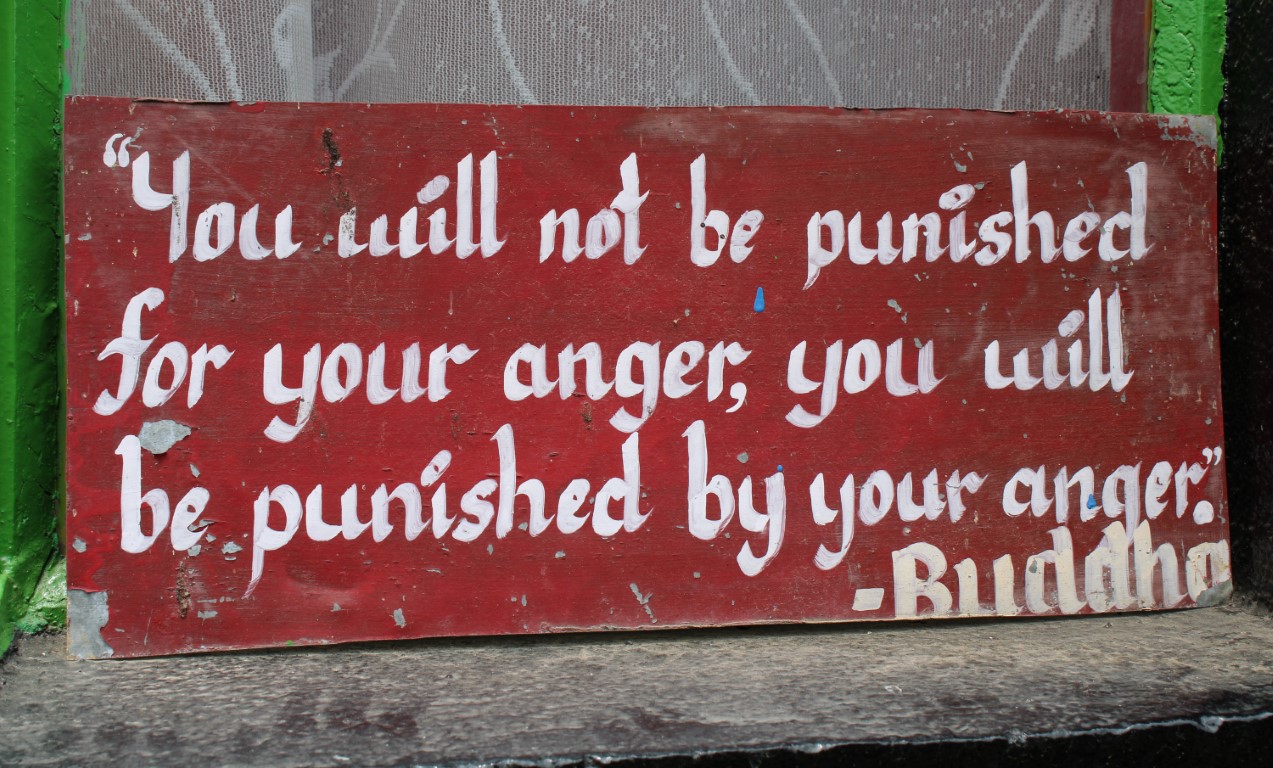
in the temple yard,
i read the Buddha's words,
and feel their wisdom

Avalanche [Free Verse]

One false footing
erases the screeched blackboard
writing that'd formed in my mind
& 
everything becomes a blank, white
emptiness --

Not a good empty.
Not a good quiet.
The emptiness of blinding pain.

That's the slow, cold death
of falling into a drift
and then cascading,
tumbling,
tumbling,
in an avalanche.

Wrenched asunder -
or so it feels -
and left to go numb in a
silence so total 
that i know 
it's my first experience 
with true silence. 

We all fall down?
That's what the plague rhyme says,
isn't it? --

Madmen & Holymen,
and those who take this fall
and are twisted into a 
grotesque blend of both.

Which way is up?
Tiny seedlings can tell,
but I cannot.

I'm lost --
50/50, I dig myself deeper
into my own doom.

My life trickles in a file of hours,
dripping into that dim distance 
of non-time. 

I'll stay lost until the spring thaw
when I'll ride the glacial runoff
to complete my tumble
as a gray and bloated thing.
The Emotional Beast [Free Verse]

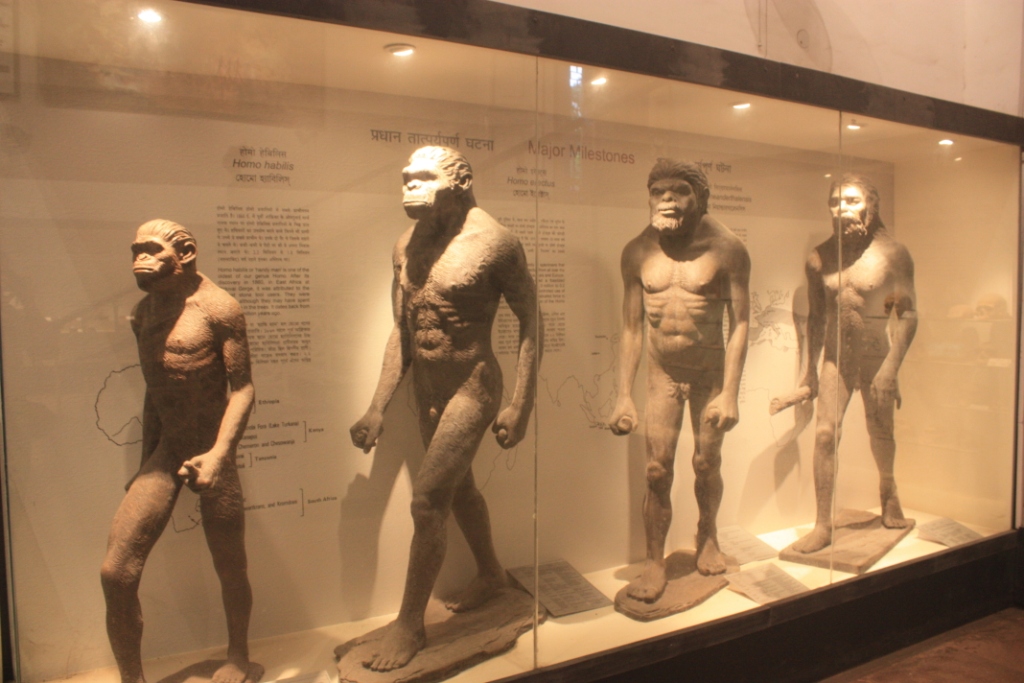
We laud our rational side

- The Thinking Man -

But we're emotional beasts
to the core.

To use that old
[and disparately applied]
chestnut:

Of emotions, 
better master
than servant.

Poetry is a conduit
to emotional savvy.

That's part of the reason
Plato urged poetic restraint;

he found the emotional
inferior to the rational,
and thought most youngsters 
couldn't behave responsibly
in the face of poetry's 
emotional power.

It's also where Aristotle
found virtue in poetry,
its ability to induce 
catharsis.

Could they both 
be right?

BOOK REVIEW: Laches by Plato

LachesLaches by Plato
My rating: 5 of 5 stars

Amazon.in Page

Project Gutenberg

This early Socratic dialogue asks, “what is courage?” Two older gentlemen, Lysimachus and Melesias, regret that they never had their mettle tested. The seniors ask two younger men who’ve served in battle, Nicias and Laches, whether the elder men should have their sons learn the art of fighting in armor to build courage in the young men. Nicias and Laches suggest that Socrates, who showed great valor in battle, should be asked the question.

Lysimachus believes this to be a good idea because then they have a tie-breaker if the two disagree. However, Socrates leads Lysimachus to understand the folly of this approach. What if the dissenter is the only one who truly knows what courage is and how it can be pursued? Socrates admits he has no great expertise in the matter, but is willing to help determine whether Nicias or Laches is more qualified to answer the question.

Laches goes first and defines courageousness as standing one’s ground in battle. However, under Socrates’ interrogation, Laches has to admit that a man who stays in place foolishly can’t be thought more courageous than one who fights in strategic retreat.

Nicias presents a definition that is more nuanced. Nicias says that courage is knowledge of what is fearful and what is hopeful. One might expect this to please Socrates because the philosopher famously believed that ethical behavior sprang from knowing – i.e. if a man knew what was right, he would act virtuously. However, as Socrates questions Nicias a couple issues become apparent. First, Nicias admits that the courageous person must know what is fearful and hopeful in the future as well as present (and who knows that?) Second, Nicias can’t really differentiate courage from virtue as a whole.

This brief dialogue is short, focused, and well worth reading.

View all my reviews

POEM: Fear in Motion [Day 20 NaPoMo: Sestina]

[A sestina consists of six-and-a-half six-line stanzas. It generally follows a metrical pattern, though there is no consensus agreement on a particular meter. (In English language poetry, pentameter is common but not universal.) Sestinas don’t rhyme, but instead use a pattern of repetition of the end-words. So the last word of each line in the first stanza becomes the last word of a line in the other stanzas, but in a rotated order. In this poem, I’ll be using the most common rotational scheme. The envoi (i.e. the three line stanza at the end) must use all six end-line words — three are set as end words and the other three can appear anywhere in its designated line.]
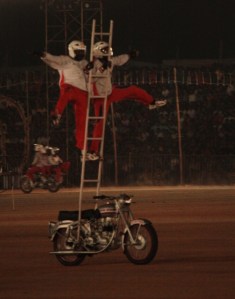


The fluid dynamics of fear:
spreads like fire, but rolls like water.
Through contact or its lack, it creeps.
There’s fear of what is and what’s not —
fear of loud noises and the dark,
of nightmares that seep into day.


Some feel it at the end of day —
that looming specter, rising fear,
as if strength were leached by the dark —
vigor melting; salt to water.
But it’s what lies unseen, and not
the darkness, that gives one the creeps:


-the monster men and lurking creeps
-not today, but some future day
-that those you love might love you not
-the stealth beasts you don’t know to fear
-whether your roof will shed water,
-and your lamp banish all the dark.


When you hear a sound in the dark
and up your spine a tingle creeps,
like the rill of flowing water.
But it can’t hold ’til break of day.
It’s too fluid a form of fear.
It dives where your conscious cannot.


Go. Seek those cloaked fears but you’ll not
see more than shadow in the dark.
Fear is shadow and shadow, fear.
It’s mind myths that give one the creeps;
fears can’t survive the light of day.
They flow and are still — like water.


In my dream, I’m in flood water,
near a plane the pilot could not
save. Hoping to float ’til the day
arrives to free me from the dark.
But I hear something swims or creeps.
It must. Unseen motion is fear.


Treading water in seas so dark
that not a soul can see what creeps
from timeless void to day of fear.