PROMPT: Friend

What quality do you value most in a friend?

The ability to converse intelligently on a wide range of subjects.

PROMPT: Emojis

Daily writing prompt
What are your favorite emojis?

As might be expected of a device that only exists to facilitate lazy, I don’t have impassioned feelings about any emoji, but I do use the “thumbs up” more than all others combined, so I guess it would be fair to say that’s it. “Thumbs up” is very versatile, and if one is being so lazy as to use an emoji for communication, one might as well go all out an add ambiguity to the mix. “Thumbs up” just says, I have some kind of feeling between indifferent and ecstatic about what you’ve just said.
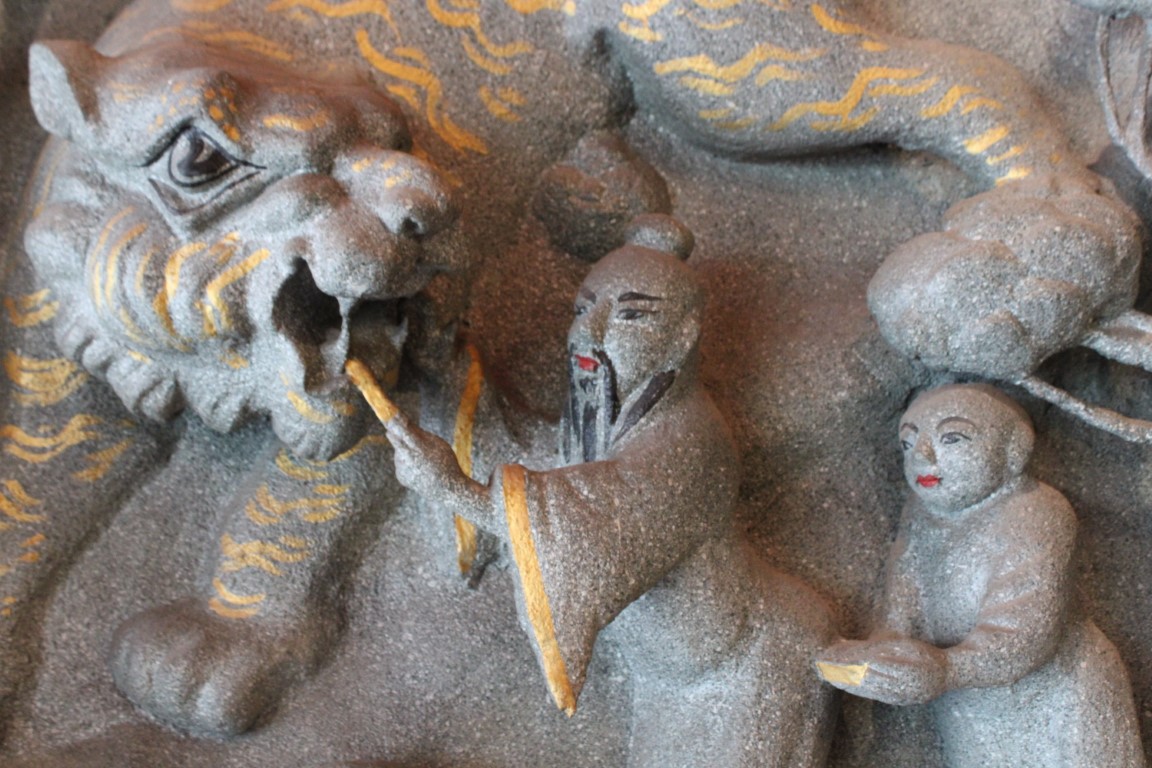
“Yes, I have a thousand tongues” by Stephen Crane [w/ Audio]

Yes, I have a thousand tongues,
And nine and ninety-nine lie.
Though I strive to use the one,
It will make no melody at my will,
But is dead in my mouth.

The Writing on the Wall [Free Verse]

I see the writing on the wall,
and find it untrustworthy
because of all the stories
of valiant warriors
framed for treason
with forged poems
scrawled on tavern walls.

And of the virtuous men
who did write rancorous poems,
but did so while blackout drunk.

And I wonder whether the words
I am seeing are forged or written
under the influence
of intoxicants,
or -- possibly -- they are the truth.

But I cannot read them,
so I find them irrelevant,
though they may convey
crucial information,
such as:
- the existence of a vampire infestation, or
- the presence of cholera in the town well.

So, I can see the writing on the wall,
but I find it neither trustworthy
nor relevant --
(though my life may depend
on its contents.)

PROMPT: Online Communication

Bloganuary writing prompt
In what ways do you communicate online?

Snarkily, sincerely… all sorts of ways, really.

BOOKS: The NEW Comedy Bible by Judy Carter

The NEW Comedy Bible: The Ultimate Guide to Writing and Performing Stand-Up ComedyThe NEW Comedy Bible: The Ultimate Guide to Writing and Performing Stand-Up Comedy by Judy Carter
My rating: 5 of 5 stars

Amazon.in Page

As the title suggests, this is a soup-to-nuts exploration of building a standup comedy act. While the bulk of the book discusses how to build jokes that work in a comedy club setting, it also gives helpful tips on relevant issues such as stage fright, hecklers, bombing and bomb recovery, set arrangement, and editing material. It offers many insights that may seem counterintuitive to a neophyte reader.

In writing, there is a common distinction made between “plotters” and “pantsers” (as in “by the seat of one’s pants.”) Plotters do a lot of research and outline everything thoroughly before beginning to write (as most people understand the writing process.) Pantsers like to get right into the typing and are willing to have a much messier process in exchange for greater feelings of spontaneity and surprise. A similar distinction seems to exist in standup comedy. Jerry Seinfeld might be the posterchild for the comedic plotter, writing and rewriting jokes on paper and having an already finely honed collection of jokes when he goes into the comedy club to revise through audience feedback. Other comedians seem to like to work by riffing and editing material on the fly. My point is: this book will definitely appeal most to plotters. That said, I think it has a lot of useful information that will save pantsers a great deal of trouble, but I suspect those with intense pantser proclivities will be skeptical of such a step-by-step approach.

The book is set up as a workbook woven into an instructional guide. That is, it has exercises throughout. It also presents a lot of jokes and partial bits by headlining comics to help the reader see how successful comics apply the principles in question.

I enjoyed reading this book and found it helpful. I thought that many of the exercises were quite helpful in triggering joke ideas. If you are looking for a book that deals in both joke writing and comedic delivery, I’d highly recommend this book.

View all my reviews

PROMPT: First Impression

What’s the first impression you want to give people?

There is no first impression I’d like to give everyone. For most people I’m good with “seems decent enough,” but there are people I’d be quite happy to think me a lunatic. I guess the most useful first impression would be to be seen as one who can spot someone who is manipulative, a friendship “level jumper,” or of nefarious intent so as to minimize the approach of such people in the first place. [The problem is that most such people see themselves as charismatic and gregarious rather than as manipulative. They don’t realize their stank shows through.]

Let It Fly! [Free Verse]

Stand on a hill and howl.

Don't wait for the perfect moon.

Gather your thoughts, 
  & wash the:
      cliches,
      doublespeak, 
      technocratic jargon, and
      weasel words
 out of mind & mouth.

(Those shitty words, phrases,
     and qualifiers are heavy,
      and will weigh down 
       your message & 
        keep it from sailing.) 

Then, belt it out.

Let your words fly.

Express your authentic self.

Huff & Puff, 
    and let the bricks fall 
     where they may.

BOOK REVIEW: Talking to Strangers by Malcolm Gladwell

Talking to Strangers: What We Should Know About the People We Don’t KnowTalking to Strangers: What We Should Know About the People We Don’t Know by Malcolm Gladwell
My rating: 5 of 5 stars

Amazon.in Page

This book uses a model that Gladwell has employed to great success in many books. That model goes like this: 1.) find some research findings that are counter-intuitive or otherwise in opposition to the consensus view (and preferably not well-known outside academia;) 2.) carefully select some fascinating real-world cases that seem to highlight said findings; 3.) skillfully present the cases in a highly readable and evocative narrative form, making surprising reveals for maximum effect.

In this case, the beating heart of the book is research by a University of Alabama, Birmingham professor, Timothy Levine, that shows that people are bad at catching liars because we are wired to accept statements as true and that some portion of population present appearances out of kilter with their truthfulness. (i.e. Some people come across as liars — even when telling the truth, and others appear truthful with pants ablaze.) This contradicts earlier research that suggests liars always have tells. [Interestingly, if true, Levine’s research upends studies Gladwell used in his previous book “Blink,” research by Paul Ekman that suggested that liars have “leakage” of “micro-expressions” that reveal their true emotional state. Gladwell admits his views have changed on the Ekman work. It’s the price of dealing with ground-breaking counter-intuitive research: sometimes, it’s not going to validate as well as one would like – not unlike the controversy about the Anders Ericsson’s “10,000-hour rule” that is the core of Gladwell’s 2008 book “Outliers,” and which seems much less robust in light of subsequent research.)

Gladwell employs a number of compelling stories to show how even individuals who should be the best of us at telling truth from lies (e.g. counter-intelligence officers, industry experts, and veteran law enforcement officers) do dismally at spotting lies and at grasping the true nature of what strangers hold in their hearts. [It should be noted that people are better truth detectors than lie detectors because of the aforementioned truth bias.] Readers also learn quirky facts such as why the sitcom “Friends” is insanely popular in many non-native English-speaking countries. (e.g. In Vang Vieng, Laos, I witnessed this myself, with several cafes and restaurants playing “Friends” on a loop all day every day.) The book also presents discussion of research overturning the idea that facial expression of emotions is universal.

I found this book to be an intriguing read and would highly recommend it for those interested in learning why it’s impossible to “read” strangers. I don’t know how well the ideas will validate, but the cases are interesting and compelling.


View all my reviews

BOOK REVIEW: The Information by James Gleick

The Information: A History, a Theory, a FloodThe Information: A History, a Theory, a Flood by James Gleick
My rating: 5 of 5 stars

Amazon.in Page

Information is one of those topics that remains obscure not because it’s rare or hidden, but because it’s everywhere and the term is used for so many purposes it’s not thought of cohesively. It might seem like a book on this topic would be hopelessly boring by virtue of the fundamental meta-ness of the material. Instead, Gleick had a vast sea of topics and stories involving intense stakes for humanity from which to choose, e.g.: how did we learn to communicate and advance said capability until it was arguably the most important feature of our species, by what instructions are people “assembled,” might the most fundamental layer of reality be informational, and – in recent decades — will our species drown in flood of cheap information?

Given the vast sprawl of the subject matter, organization becomes a crucial question. In a sense the book is chronological, presenting humanity’s experience with information in more or less the order we came to think about the subject. I think this was a wise move as it starts from what most people think of when they think of information – i.e. language and its communication. That makes it easier to wrap one’s head around what comes later, and to see the conceptual commonalities. This approach might seem self-evident, but an argument could be made for starting with information as the word is used in Physics (as addressed in Ch. 7 – 9,) an argument that that approach is more fundamental and generically applicable, and while it might be both of those things, it wouldn’t be as easily intuitively grasped.

I found this book to be fascinating and easily followed — even though it covers some conceptually challenging topics, it does so in an approachable manner. It is over a decade old, but holds up well – though I think there is much more to say these days about the detrimental effects of information overload, a topic discussed at the end of the book. I recommend it for nonfiction readers.

View all my reviews
