Wen Fu 5: “Writing Styles” [文赋五] by Lu Ji [陆机] [w/ Audio]

Among ten thousand writing styles,
There's no one standard or measure.
The styles: many, muddled, and free --
Form, the unattainable treasure.
Talent in word-wrangling shows skill.
Idea conveyance shows craft.
Writers strive 'twixt have and have not --
Unyielding in shallow or deep draught.
An escape artist of fine lines --
Yet time and space consume in kind.
Intricacy excites the eye,
But frugality soothes the mind.
One of few words is not confined.
Verbose writers drift the Undefined.

The original in Simplified Chinese:

体有万殊,物无一量。
纷纭挥霍,形难为状。
辞程才以效伎,意司契而为匠。
在有无而黾勉,当浅深而不让。
虽离方而遯员,期穷形而尽相。
故夫夸目者尚奢,惬心者贵当。
言穷者无隘,论达者唯旷。

“Down to Jiangling” [下江陵] by Li Bai [李 白]

I left Baidi amid ochre clouds --
Crossed a thousand li by day's end.
Monkeys howled and chased along each bank;
My skiff slipped past ten thousand mountains.

The original in Simplified Chinese:

朝辞白帝彩云间
千里江陵一日还
两岸猿声啼不住
轻舟已过万重山

Note: this is poem #269 of the 300 Tang Poems [唐詩三百首.]

PROMPT: Reread

Daily writing prompt
What book could you read over and over again?

If plays count as books, then most of Shakespeare’s plays. I’ve already reread a number of them (e.g. Hamlet, Macbeth, Merchant of Venice, and A Midsummer Night’s Dream.)

I’ve read Whitman’s Leaves of Grass, a couple times in full (and segments of it many times over) and expect to get to it again. I’ve read Voltaire’s Candide a couple times.

I could definitely see rereading Journey to the West, Water Margin, and Romance of the Three Kingdoms, but at this point I’m hoping my Mandarin will get good enough to read them in Simplified Chinese.

I’ve read a number of nonfiction texts multiple times — e.g. Sunzi’s Art of War, Miyamoto Musashi’s Book of Five Rings, Laozi’s Dao De Jing, and Emerson’s Selected Essays.

I’m generally not a fan of rereading books because there is so much awesome stuff out there to be read a first time. For all the reading I’ve done, there is still a massive number of classics that I have yet to touch. Usually there has to be a good reason for a reread, e.g. a new translation that promises to be improved / simplified, the book is just so potent as to still have lessons packed in after the first read, it’s a challenging read and the first go leaves a lot on the table, or — like The Little Prince — its enjoyment-to-time investment ratio is high.

Wen Fu 4: “Ekstasis” [文赋四] by Lu Ji [陆机]

It's all the amusing matters
That sages admire without bounds.
Writers find their way through the void --
Knock on silence to find its sound.
Silk scroll messages from afar,
The bard's words surge forth from the heart.
Words and ash grow to overflow --
Thoughts transcend depths to become art.
Flowery fragrance pungently sprawls;
Plants shoot forth verdant greenery.
The brush winds swirl to whirlwinds
Clouds climb above the academy.

Note: I previously posted other translators’ (Barnstone and Chou) version of this poem as The Joy of Words @ https://berniegourley.com/2024/12/31/the-joy-of-words-by-lu-ji-w-audio/

Original poem in Simplified Chinese:

伊兹事之可乐,固圣贤之所钦。
课虚无以责有,叩寂寞而求音。
函绵邈于尺素,吐滂沛乎寸心。
言恢之而弥广,思按之而逾深。
播芳蕤之馥馥,发青条之森森。
粲风飞而猋竖,郁云起乎翰林。

PROMPT: Character

Daily writing prompt
If you could be a character from a book or film, who would you be? Why?

Wu Song (武松) from Water Margin (水浒传.)

Because he’s a traveler with zero f#&ks to give. There is no more freedom to be had than that.

“Bamboo Grove Cabin” [竹里馆] by Wang Wei [王维] [w/ Audio]

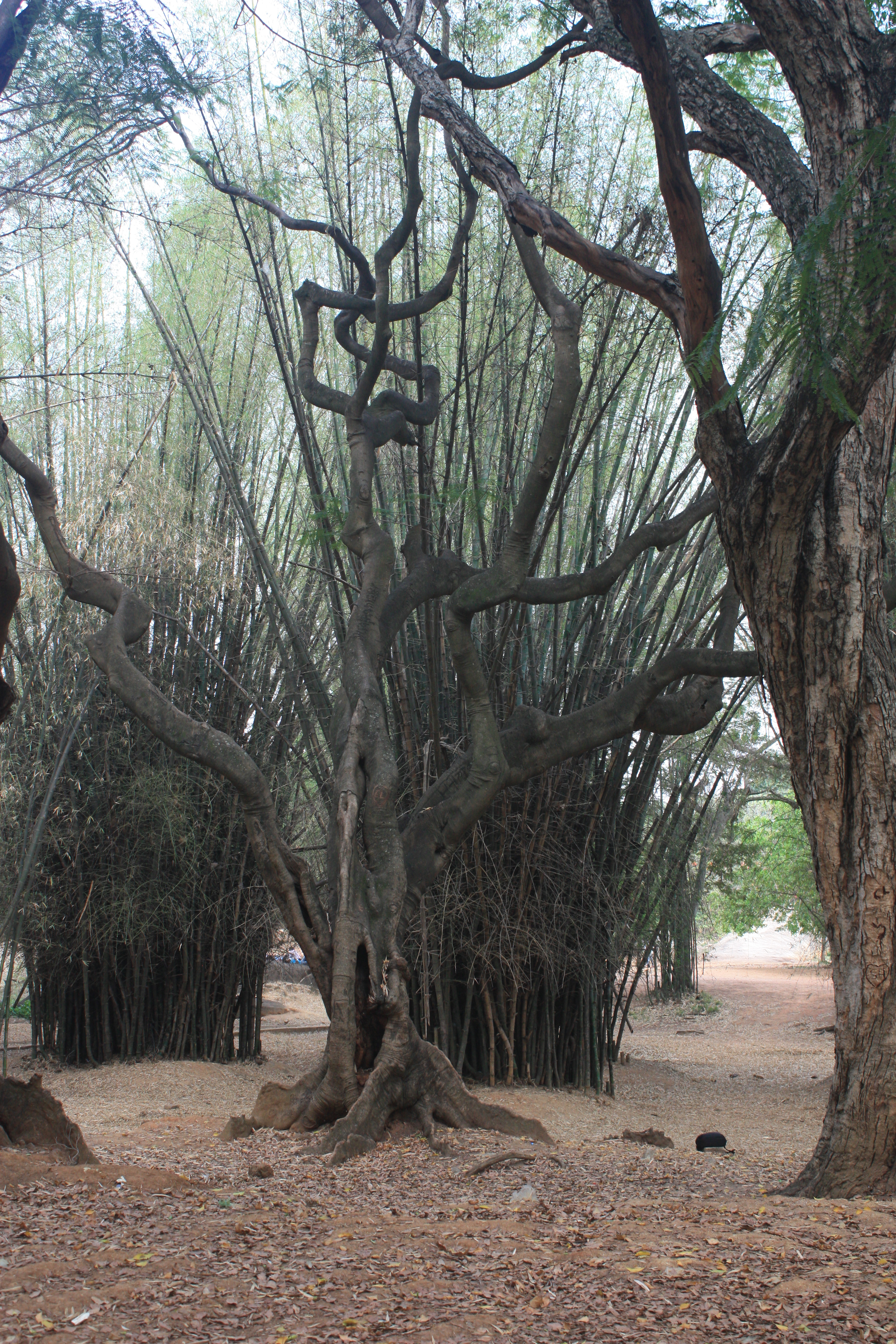
Sitting alone -- secluded bamboo grove:
I whistle or pluck my zither;
People don't know my deep forest;
Moon and I shine on each other.

Original in Simplified Chinese:

独坐幽篁里
弹琴复长啸
深林人不知
明月来相照

“Night Rain Sent North” [夜雨寄北] by Li Shangyin [李商隐] [w/ Audio]

When am I coming home? I don't know.
At Bashan, night rains swell Autumn ponds.
Recall, candles in your West Window?
Ah, through night rains, to talk and bond!

The original in Simplified Chinese:

君问归期未有期, 巴山夜雨涨秋池。
何当共剪西窗烛, 却话巴山夜雨时?

Note: This is poem #298 of the 300 Tang Poems [唐诗三百首.]

Wen Fu 3 [文赋三]: “The Writing Process” by Lu Ji [陆机] [w/ Audio]

After choosing one's scope of thought,
Turn the words and note their order.
Embrace the hot ones, feel their burn;
Knock on lines and hear their timbre.
Use the branches to shake the leaves,
And waves can be traced to their source.
Make the hidden come visible;
Make the difficult seem simple.
A tiger's transformation startles --
Birds take flight on sight of dragons.
Sometimes words nest into each other;
Sometimes, jaggedly, they won't mesh.
With a clear, contemplative mind
Hordes filter through to easy speech.
Heaven and Earth contained within:
All things flow from the brush with ease.
Starting timidly with dry mouth,
Ending with a wandering brush.
Meaning is borne by a stout trunk,
Language hangs like leaf and fruit.
Make words and intended meaning match
As moods show clearly on a face.
When happiness comes, laugh & smile,
And with sorrow let loose a sigh.
At times words flow spontaneously;
At times one bites one's brush, musing.

The Original in Simplified Chinese:

然后选义按部,考辞就班。
抱暑者咸叩, 怀响者毕弹。
或因枝以振叶,或沿波而讨源。
或本隐以之显,或求易而得难。
或虎变而兽扰,或龙见而鸟澜。
或妥帖而易施,或岨峿而不安。
罄澄心以凝思,眇众虑而为言。
笼天地于形内,挫万物于笔端。
始踯躅于燥吻,终流离失所于濡翰。
理扶质以立干,文垂条而结繁。
信情貌之不差,故每变而在颜。
思涉乐其必笑,方言哀而已叹。
或操觚以率尔,或含毫而邈然。

“Spring Thoughts” by Li Bai [w/ Audio]

Yan grass shimmers like silken jade.
Qin mulberry trees' green leaves droop.
Your homecoming is now at hand
As heartbreak has me thin and stooped.
Spring Winds and I are strangers --
Why, past my curtains, the inward swoop?

Chinese Title: 春思; Original poem in Simplified Chinese:

燕草如碧丝, 秦桑低绿枝;
当君怀归日, 是妾断肠时。
春风不相识, 何事入罗帏?

Note: this is poem #7 in “300 Tang Poems” [唐诗三百首]

“Night Travels” by Du Fu [w/ Audio]

Slender grass waves in a light breeze;
Tall-masted boat rocks in the night.
Stars hang low, over the vast plain;
The river moon struggles for height.
I'll never gain fame by the brush --
Too old for civil service posts...
Wading, wading, what am I like?
A sandpiper on the mud coast!

The original in Chinese (Title: 旅夜書懷):

細草微風岸, 
危檣獨夜舟。
星垂平野闊,
月湧大江流。
名豈文章著,
官應老病休。
飄飄何所似,
天地一沙鷗。

This is Poem 113 of “Three Hundred Tang Poems,” i.e. 唐诗三百首