BOOK REVIEW: The Book of Massage by Lucinda Lidell

The Book of Massage: The Complete Step-By-Step Guide to Eastern and Western TechniquesThe Book of Massage: The Complete Step-By-Step Guide to Eastern and Western Techniques by Lucy Lidell

My rating: 4 of 5 stars

Amazon page

I picked up this book because I recently began studying Thai Yoga Bodywork (TYB.) While The Book of Massage doesn’t specifically deal with Thai massage, as a neophyte, I figured some general reading was in order, and there aren’t a lot of widely available books that deal with Thai massage specifically (at least not where I currently reside.)My first testimonial of this book is that I looked through over a dozen books on massage at my local bookstore, and this is the one with which I walked home.

I found Lidell’s book to be a valuable resource. The book covers three approaches to massage: oil massage, shiatsu, and reflexology. As the subtitle suggests, this book addresses both Eastern and Western approaches to massage. The section labeled simply “Massage” is one that deals largely in the Western approach, as it’s suggestive of the Swedish style of massage. This involves oil, no / few clothes on the recipient, and a variety of strokes that are delivered over relatively broad areas (as opposed to the deeper acupressure approach of the latter methods.) The oil massage chapter begins with an overview including what type of oil to use and the basic strokes, and then provides a sequence before delving into specific techniques for various body parts or groups of body parts.

Shiatsu is a Japanese form of massage that is based on the concepts of Traditional Chinese Medicine (TCM.) I found this style to be much closer to what I’ve learned in TYB. Like TYB, both patient and recipient are clothed, there is no oil, acupressure is the norm, it requires no table, and there is a match up between what are called “energy lines” in TYB and “meridians” in Shiatsu. Shiatsu even employs similar stretching techniques to those that are the hallmark of TYB. I can imagine these systems having a common ancestral art.

The order of the shiatsu chapter is basically the same as the chapter on Massage. First, there’s necessary background information. This consists of a couple of pages on the basic Taoist concepts on which TCM is based (e.g. Chi, Yin & Yang, and the five elements) and related vocabulary like “tsubo” (pressure points) and meridians. The section then goes on to address basics of posture and bodily tools (palms, thumbs, elbows, knees, etc.), the sequence of the massage, and then the specifics of various body parts.

Reflexology massages only the feet and hands in the belief that points on these appendages map to other parts of the body. In other words, practitioners believe one can increase wellness throughout the body by working points on only the feet or hands. It’s said that the roots of reflexology may be ancient and that it may have been practiced in Egypt in 2300BC, but the modern school was developed by an American physician in the early 20th century. TYB does borrow from reflexology (though not necessarily the modern form of it), so some of this was also similar to what I learned in TYB. Again, the order of this section went from the generic information one needs toward the specifics of how to apply a given technique on a particular part of the foot or hand.

In addition to the three core sections, there were chapters before and after that provide the reader with useful information. Some of this was banal but obligatory (e.g. a brief history of massage and a discussion of the importance of touch among the human species), but some of it was essential practical information such as how to create the proper environment and how to center oneself before delivering a massage. There was also information that will be useful for some about massages involving babies, expectant mothers, the elderly, athletes, and oneself.

Perhaps the most beneficial of the “supplementary” chapters was one that dealt with the subject of how to read bodies. This may seem like an odd topic. However, it’s useful to be able to recognize where an individual holds his tension or where her posture is off–a problem that can create many muscular difficulties. There’s a short overview of anatomy, which I found useful, and a shorter overview of “chakras and auras,” which I personally didn’t find useful but can see where others might.

There are several strengths and relatively few weaknesses to this book. I found the organization to be logical. The graphics are a combination of photos and line drawings, and they work well together. I thought it was great that the author explained that Shiatsu is to be done in comfortable, loose-fitting clothing and that the only reason the graphics display the masseuse in a skin-tight body suit was so that the baggy clothing wouldn’t inhibit the reader’s view. Also, I found the written descriptions worked well with the graphics. One often needs a written cue as to where to find a certain point or line, and just showing it in a picture can be misleading given the wide variety of body types as well as the granularity of the graphic in contrast to the specificity of a point one may need to hit.

I suppose I should warn the easily mortified and / or very religious that there are full and partial frontal nude photographs in the section on oil massage. [I doubt such people are a major demographic for giving or receiving massage, but one never knows.]

I don’t have a lot of complaints. As it’s set up like a workbook, a spiral binding might have been nice, but I recognize the huge challenges of that. Plus, I’m not certain that one can or should learn massage from a book. Rather one should look at it as information to support study with a skilled teacher–or to experiment with once one has already developed some skill. The sections early and late in the book that talk about the importance of human touch didn’t add much, but they were also brief.

If you’re looking for a book on massage that covers a broad set of bases, but yet gives adequate detail for learning, I think this book is a good choice. I’d say it piqued my interest in learning Shiatsu.

View all my reviews

BOOK REVIEW: Ender’s Game by Orson Scott Card

Ender's Game (Ender's Saga, #1)Ender’s Game by Orson Scott Card

My rating: 4 of 5 stars

Amazon page

Ender’s Game is the story of a boy, Ender Wiggin, whose intelligence and capacity for ruthlessness lead the military establishment to believe that he’s the last hope for mankind. The book is set in a future after the Earth has been invaded twice by an alien species called the buggers, and now the Earth is planning its own “preemptive” invasion to end the bugger threat once and for all.

The novel follows Ender’s life from his short home life as a “third”—a rare third child for which special permission must be granted—through his post-war life. (This entire timeline transpires before adulthood.) The bulk of the novel takes place in Battle School, where Ender receives his training in military tactics and strategy and spends much of his time in zero gravity war games. He rises up through the ranks quickly, as expected, but not without stirring some animus in the process. He learns strategy both through war games and through the mind-field of real world animosity by others who are jealous or feel insulted by his brilliance.

As Commander material, Ender is considered to be in the Goldilocks zone. His older brother, Peter, is too cruel; his sister, Valentine, is just too kind. (All three Wiggin children are geniuses.) Ender has the right mix to fight the buggers. His problem is that the world forces him to be ruthless and his compassionate side makes it hard to cope.
While Ender leaves home young and early in the novel, there is a subplot involving the older Wiggin children that is revealed over the course of the book—showing the reader more of the tormenting brother and the loving sister who shaped his worldview. Ender does interact with Valentine in person on a couple of occasions, but his only interaction with Peter is a brief mention of correspondence at the end of the book.

Ender is an intriguing character. He is always the outsider, by birth as a third and then through isolation in Battle School that is facilitated by the conflicted head of the Battle School, Col. Graff.

I won’t get into the ending except to say that there is a twist at the novel’s climax. I will say that the reveal of this twist felt a little anti-climactic to me. However, as the real story isn’t about fighting the buggers, but Ender’s internal struggle, this isn’t as dismaying as it might otherwise be.

One can tell that this is a series book because it climaxes and resolves relatively early, leaving a fair amount of space to set up the next book. This actually helps the twist offer some surprise because the reader sees that there are so many pages left for the novel to resolve itself.

Card does an interesting thing in making the central character stronger than everyone around him–at least until he’s introduced to his new guru, Mazer Rackham–the Commander who won the key battle of the second bugger invasion and who is alive by virtue of a relativistic trip. Ender’s superiority seems like a recipe for boredom, but it works because what we don’t know is whether Ender is stronger than everyone else pitted against him combined, and, moreover, we don’t know whether he is strong enough inside to withstand all the horridness to which he is subjected. A lot of the tension of the novel is really internal to Ender. Unlike Peter, who would revel in ruthlessness, Ender is tormented by all of the violence he must perpetrate.

I’d recommend this novel. It has its flaws, but it is quite readable and Ender’s character is intriguing from start to finish.

The movie version is coming out tomorrow. I haven’t seen it, but here is the trailer.

View all my reviews

BOOK REVIEW: American Gods by Neil Gaiman

American Gods (American Gods, #1)American Gods by Neil Gaiman

My rating: 5 of 5 stars

Amazon page

American Gods is the story of a hapless and gentle brute who goes by the nickname “Shadow.” We meet Shadow as he is being released from prison a few days early because the wife that he loved dearly has passed away. While the description of Shadow’s imposing size and criminal activity might lead us to believe he’s an unsavory character, we find him sympathetic from the outset–though we don’t learn that it was virtue more than vice that landed him in prison until late in the book.

Given that the name of the book is American Gods others who’ve read it may wonder why I say it’s about Shadow instead of being about a war between America’s old gods and its new ones (e.g. technology and mass media.)The latter statement is more likely what one will read on the dust jacket. However, for me it was the character of Shadow that kept me reading. As with any great novel’s main character, Shadow is put in predicament after predicament, and one must see how he’ll handle them. Eventually, we suspect that enough will be enough and he will have to choose to act in his own best interest rather than in the moral manner.

The importance of character in this novel doesn’t mean that it’s lacking a plot. Early on we are given a great hook when Shadow is introduced to the character of “Wednesday.” The hook is that Wednesday seems to know things about Shadow that no one could, and he makes a proposal to Shadow. The reader is thus drawn in and wants to know how Wednesday knows the impossible and whether Shadow will agree to the vague offer. While we don’t know what agreeing will mean for Shadow, we suspect that it’s tailor-made to land him back in hot water.

While Shadow seems to be always ending up with the short end of the stick, what makes things interesting is that he’s not dumb. He doesn’t stumble into these traps unwittingly. Rather, Shadow defies convention and, by some measures, is really quite a sharp man. Often, he sees the folly of his decisions but is compelled by virtue to act in ways that put him at risk.

Shadow is on a journey of self-discovery throughout the book, and what he ultimately discovers about himself is spectacular.

In a way American Gods is Neil Gaiman’s commentary on America, and Shadow represents America at its most virtuous. We see plenty of America’s faults and failings in the process, its vainglory and hunger for power. But in Shadow we see a character who is honor bound to do what he thinks is the right thing–even when it comes at great personal cost and even when he knows he is being manipulated.

I found this novel to be highly readable and would recommend it. It has Gaiman’s characteristic humor, darkness, and dark humor.

View all my reviews

BOOK REVIEW: Gitanjali by Rabindranath Tagore

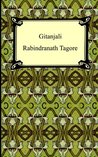
GitanjaliGitanjali by Rabindranath Tagore

My rating: 5 of 5 stars

Amazon page

Get Speechify to make any book an audiobook

Gitanjali is the most well-known work of the Bengali polymath Rabindranath Tagore. Tagore was the first non-European winner of the Nobel Prize for Literature (1913.) While Gitanjali is a work of poetry, Tagore didn’t restrict himself to this form, but also wrote stories, novels, plays, and music.

Gitanjali translates to “Song Offerings” and while the English version is a translation, it was translated by Tagore himself. Thus, there is no need to wonder whether the translator got it right or injected too much of his own worldview into the process.

This collection of 103 poems (the original Bengali has 157)displays both beautiful language and thought-provoking sentiments. This may be why the work is so beloved and stands the test of time.

I’ll share a few of my favorite passages:

“The child, who is decked out with prince’s robes and who has jeweled chains round his neck loses all pleasure in his play;…” -Poem VIII

“O fool, to try to carry thyself on thy own shoulders! O Beggar, to come to beg at thy own door!” -Poem IX

“On the day when the lotus bloomed, alas, my mind was straying, and I knew it not.” -Poem XX

“On the seashore of endless worlds children meet.” -Poem LX

“In the moonless gloom of midnight I asked her, ‘Maiden, what is your quest, holding the lamp near your heart? My house is all dark and lonesome,– lend me your light.’ She stopped for a minute and thought and gazed at my face in the dark. ‘I have brought my light,’ she said, ‘to join the carnival of lamps.’ I stood and watched her little lamp uselessly lost among lights.” -Poem LXIV

“And because I love this life, I know I shall love death as well.” -Poem XCV

The edition I have, which is published in India by Rupa Press, contains Tagore’s Nobel Prize acceptance speech as well. (The Amazon page I’ve linked to shows the edition that I read, but the cover shown above is a different version. The poems are all the same because Tagore self-translated, it is only the supplemental matter that is different.)

I highly recommend this collection of poems.

View all my reviews

BOOK REVIEW: Pocket Guide to Hatha Yoga by Michele Picozzi

Pocket Guide to Hatha Yoga (The Crossing Press Pocket Series) (The Crossing Press Pocket Series)Pocket Guide to Hatha Yoga (The Crossing Press Pocket Series) by Michele Picozzi

My rating: 4 of 5 stars

Amazon page

Having moved to India, I’ve been wanting to take advantage of the wealth of expertise in yoga. However, part of the problem is that there is such a wealth of knowledge. There are many different schools, each with different approaches and focal points, and each of those with separate branches. So I began, as I often do, among the shelves of one of my local bookstores. (Yes, here in India, we still have local bookstores [plural emphasis intended.])

That is where I picked up Michele Picozzi’s Pocket Guide to Hatha Yoga. A slight book of only about 100 pages, this guide serves as a sort of “Yoga for Dummies.” (I’m aware that there is a book by that title, but it’s probably not as concise.) Despite a mild bias against learning about yoga from Westerners (what’s the point of being in India–yes, I realize it’s irrational), I picked up this thin guide because it was only 70 rupees (less than $1 US), and I like the way it was organized.

It begins with a quick overview of the many schools of yoga. Next, it does the same for the many branches of Hatha yoga–which by all accounts seems to be the most popular school. I found this very helpful. The book doesn’t get bogged down in the minutiae, but rather presents a short paragraph hitting the highlights that differentiate one sect from another.

Then the book gets to the meat of the subject (my apologies to vegetarians for that analogy.) It gives helpful tips for one who has never been in a yoga studio before. Then it has chapters on postures (asana), breathing exercises (pranayama), and meditation (dhyana.)We learn that these are but three of yoga’s 8-fold path (not to be confused with Buddhism’s 8-fold path.) For the neophyte, it may be news to learn that there is more to yoga than just bendy poses.

The last chapter deals with basics of a yogic/ayurvedic diet. Here I learned that the Dalai Lama isn’t a vegetarian, among many more important advice about how and what yogis and yoginis should eat.

There are appendices containing line drawings of about 45 of the most fundamental asanas (all of the graphics in the book are line drawings), a glossary, and a list of references.

If you are brand new to yoga, I would recommend this book. You can get it through Amazon for only a little more that 70 Rupees.

View all my reviews

BOOK REVIEW: Man of Steel by Greg Cox

Man of Steel: The Official Movie NovelizationMan of Steel: The Official Movie Novelization by Greg Cox

My rating: 3 of 5 stars

Amazon page

This is the first novelization of a movie I’ve reviewed. In fact, I haven’t even seen the movie yet. However, from the trailers I can see a little of how the book describes the events of the movie. In the afterword the author, Greg Cox, indicated that he hadn’t yet seen the completed movie. (Not surprisingly, considering the desire to get the book out in time.) He presumably worked mostly from the screenplay, and perhaps some unedited scenes from the movie. At any rate, unlike a movie adaptation of a novel, one expects a novelization to be spot on with the movie’s story.

As I’ve said in other posts, it’s hard to do Superman really well. Stories are all about tension, and it’s hard to build tension if your hero is indestructible and has god-like powers. [The sequel is supposedly Batman v. Superman, and one has to wonder how this can be done well. Batman is formidable, but the Joker sometimes gets the best of him, and the Joker is no Superman.] At any rate, I think this rendition does a better job than most, and vastly better than the epicly-awful 2006 Superman Returns.

The story begins on a dying planet Krypton as a coup led by General Zod takes place. Both Jor-El (Superman’s father) and Zod believe the planet is dying, and that urgent steps need to be taken to save the Kryptonian race. However, they differ vastly on how to go about saving the race. Zod believes in saving certain blood lines, and Jor-El believes in a much more balanced and progressive approach.

When we are introduced to Clark Kent/Kal-El/Superman, he is a young man who is living a secret life. He engages in episodes of heroic derring-do, but has not yet donned the costume and is forced to move nomadically from one dead-end job to the next as his powers are revealed. There are also many flashbacks to cue us in to his troubles and dilemmas as a child.

Shortly after Kent realizes who he is and gets some Kryptonian backstory, Zod and his band of zealots shows up–newly escaped from the phantom zone. The climax and resolution of the movie involve Superman’s battles with Zod and the General’s fierce underlings–with a love interest subplot between Lois Lane and Superman.

What this story does right is to introduce a strong foe for Superman to battle. Not only does Zod have a numerical advantage, he is a life-long warrior and is thus more experienced. Zod’s second-in-command, Faora Hu-ul, is a worthy adversary in her own right. This is not Superman versus a green, glowing rock.

The challenge of this type of story (as with movies like The Avengers) is that, having set up an “immovable object meets irresistible force” scenario, it’s extremely hard to resolve the tension in a manner that is both logically and emotionally satisfying. While I have criticized movies for this, if the visuals are impressive enough it seems to work with viewers. It works because it creates enough emotional satisfaction for one to suspend concern about whether the resolution makes any sense based upon what is known from earlier in the story. It’s harder to reliably do this in writing. Therefore, you may find the ending a bit flat after an intriguing build up.

I doubt it’s worth reading the novelization and seeing the movie, except if one is interested in how one’s internal view of it matches with the movie (in which case one should avoid the trailers and read the novelization first.)

View all my reviews

For those who do want to view the trailer.

BOOK REVIEW: Mostly Harmless by Douglas Adams

Mostly Harmless (Hitchhiker's Guide, #5)Mostly Harmless by Douglas Adams

My rating: 3 of 5 stars

Amazon page

[NOTE: If you would like to read my reviews of the first four books, you can do so by following the hyperlinked title: 1.) The Hitchhiker’s Guide to the Galaxy 2.) The Restaurant at the End of the Universe  3.) Life, the Universe, and Everything 4.) So Long, and Thanks for All the Fish]

This is the fifth and final installment in The Hitchhiker’s Guide to the Galaxy series (not including Eoin Colfer’s And Another Thing, which I don’t.) Fans of the series will recognize “Mostly Harmless” as the sum total of the Earth’s entry in The Hitchhiker’s Guide to the Galaxy.

The story focuses on a trio of characters from the original book’s cast: Arthur Dent (of course), Tricia McMillan (a.k.a. Trillian), and Ford Prefect–with the Random addition a new fourth feature character. As the series had already begun trending, this story is more human-centric than the earliest installments. The central story could be divorced from the sci-fi genre with relatively minor modifications. However, as Restaurant at the End of the Universe uses time travel as a sci-fi plot device, this book uses the concept of a parallel universe.

The story begins with our main characters separated from one another. Arthur Dent is making sandwiches of Perfectly Normal Beast (an Orwellian turn-of-phrase as one might expect) on the planet where he crash landed. Trillian, or one of them, is reduced to doing an interview with an astrologer. Ford Prefect is breaking into his place of employment to avoid the accountants in his usual manner of hijinks.

Adams throws each of these characters a monkey wrench. Dent finds out he has a daughter, Random Dent, and that her mother–Trillian–is dropping her on his doorstep. Ford discovers that the Guide is under new and nefarious management, and that they have created an edition with dire ramifications. Trillian, or one of them, gets her big break being picked up by a Grebulon ship only to discover they want her to advise them on astrology.

The notion that no one escapes the feeling of being without a home is a central theme in the book.

This isn’t Adams’ best work. The story has grown stale. It lacks the creative brilliance derived from plot devices like the Infinite Improbability Drive, and–while there may be something to be said for a story with more humanity– it leaves one missing idiosyncratic characters like Zaphod and Marvin. That being said, even at his worst Adams is amusing and thought-provoking. If you enjoyed his earlier books, you could certainly do worse than to finish the series. In the unlikely event that Adams isn’t your cup of tea, this final installment probably won’t revise your assessment.

View all my reviews

BOOK REVIEW: Ip-Man Portrait of a Kung Fu Master by Ip Ching, et. al.

IP Man: Portrait of a Kung Fu MasterIP Man: Portrait of a Kung Fu Master by Ip Ching

My rating: 3 of 5 stars

Amazon page

Ip Man led an interesting life. The master of Wing Chun Kung Fu lived through tumultuous times that included the Boxer Rebellion, the Sino-Japanese War, and China’s Communist revolution. After the Japanese occupation he served for a time as a police chief. Coming from a wealthy family, he experienced a riches to rags fall when the Communists took over. He had to move from his home in Foshan to Hong Kong. His use of kung fu was not restricted to the training hall, but, rather, included a few real world altercations. A couple of films have been made(loosely) about his life.

All that being said, this book doesn’t do a great job of capturing the life of this intriguing man. To be fair, the book isn’t really a biography proper–though the title might lead one to believe it was. However, it’s not entirely clear what the book is. Its fifteen chapters are each built around a principle and use vignettes from Ip Man’s life to illustrate how the Grandmaster lived virtuously. This makes the book seem more like treatise on martial arts philosophy and/or strategy. However, some chapters do a better job of making clear what the actual principle is and how the events of Ip Man’s life exemplify them than do others. In some parts it does a great job but in others it’s only lackluster.

There are some fascinating stories about the man’s life in the book, but they are generally told in a lifeless manner. In part this may be done on purpose as we are told that Ip Man eschewed embellishment and favored humility, but it makes the reading experience less than gripping. It’s also probably that some of the details were lost when Ip Man died in 1972. This lack of detail leaves one at times wondering. Throughout most of the book we get a picture of Ip Man as a virtuous warrior. However, there is one vignette in which we read about the Grandmaster picking a fight with a man by taunting him with humiliating insults about the man’s appearance. Ip Man does this to teach his student a lesson in courage. His lesson notwithstanding, this behavior paints Ip Man as anything but virtuous–rather than a humble martial arts master he becomes a pathetic bully. The author, Ip Man’s son Ip Ching, suggests that this might have been a setup for the student’s benefit, but with the prior assent of the bullied man. At any rate, there was no fight because the bullied man backed down–whether because it was staged or out of genuine fear remains unknown.

For some readers the most surprising omission will involve a lack of any mention of the man who was far and away Ip Man’s most famous student, namely Bruce Lee. There may be a number of reasons for this omission, including a desire to prevent the teacher’s story from being overshadowed by his student’s fame. However, most readers would probably like some inkling of how the ill-fated superstar came to train with Ip Man and what he learned from him. In fact, the only reference to the entertainment aspect of kung fu is a picture caption that shows Shek Kin, the villain “Mr. Han” from Enter the Dragon, at Ip Man’s funeral.

I would recommend this book only for those that have a particular interest in martial arts. It does offer tidbits of interesting events from Ip Man’s life as well as a few great life lessons. It benefits from being a concise book, and thus is not a major time investment to read. However, I don’t know that–short as it is–it would hold the interest of the general reader. Hopefully, someone will take on a more extensive English-language biography of this fascinating man’s life while there are some key people still alive to be interviewed about his life story.

View all my reviews

BOOK REVIEW: World War Z by Max Brooks

World War Z: An Oral History of the Zombie WarWorld War Z: An Oral History of the Zombie War by Max Brooks

My rating: 4 of 5 stars

Amazon page

World War Z, as the subtitle suggests, is written as a series of interviews of key (or in some cases typical) people involved in the Zombie War. The viewpoints addressed include various political leaders, military service members of various branches and nations, strategic planners, doctors, and even civilians caught up in the diaspora that resulted from the plague.

The approach of the novel is unusual. To the degree there is a lead character, it’s the UN employee who conducts all the interviews. However, we don’t experience the interviewer’s story arc and are left with very little insight into this individual. Rather, the story is a global arc of mankind’s experience of zombies from “patient zero” through the clean up in the years following the war. And, it is a global tale. The stories of these individuals take one to places like Chongquing, Meteora, the Amazon, Barbados, Johannesburg, the Alang ship breaking yard (an excellent choice for a post-apocalyptic setting, I must say), Denver, and even onto a ballistic-missile-toting submarine sitting on the ocean floor.

Where Brooks’s book excels is in making one think, and in that regard it does an excellent job. This isn’t about edge-of-the-seat adrenaline injections to which most Zombie book authors aspire. I don’t deny that there are emotional parts to the book, but the tension is reduced by virtue of being a collection of survivors’ tales. That is, we know the story-tellers survived more-or-less intact. Also, because of the intrusions of the interviewer and the authenticity of responses (some are more skilled and open story tellers than others), we never lose sight of the fact that this is a couple of people talking war stories.

That being said, we take a cook’s tour of gut-wrenching food for thought over the course of the novel. Consider a government that abandons its citizenry, and even uses some as bait to help save others. Brooks tugs at the readers’ heartstrings through an interview with a K-9 soldier who describes the role of man’s best friend. Brooks portrays the best and worst that mankind has to offer–as one would surely expect to experience them in such a world gone wrong.

I must admit, some of the topics may be more interesting to me as a social scientist than they will be to others. One interviewee discusses the mismatch between job skills needed and job skills available in a rapidly evolving post-apocalyptic landscape. This speaks to present-day society as much as it does to a dystopian future. The author devotes an interview to questioning the man responsible for reestablishing trust in the dollar in an economy that has by necessity reverted to barter. There is also discussion of revolutions in governance that find their catalyst in the Zombie War. There are intriguing turns of events such as the makeshift flotillas of U.S. citizens converging on Cuba because Fidel’s authoritarian regime was uniquely prepared to close itself off during the earliest days of the outbreak.

With the movie coming out this Friday (June 21), I will say that I can’t see much in common between the book and the trailers for the movie that I’ve seen to date. However, I can imagine the movie being an extension or outgrowth of one of the many vignettes expressed in the book. This is not to say that the movie will be bad (or that it won’t be), but if one sees the movie one will still be left with impetus to read the book.

I enjoyed World War Z because it makes one think–a feat that isn’t the strong suit of Zombie literature.

View all my reviews