BOOK REVIEW: Leaves of Grass by Walt Whitman

Leaves of GrassLeaves of Grass by Walt Whitman

My rating: 5 of 5 stars

Amazon page

There are a number of editions of this collection of poems, as Whitman apparently continued to revise it right up until his death. The 1855 edition is popular but there is a “Deathbed Edition” which–as the name implies–is the closest thing to a final draft that exists.

Back in the day (the late 19th century), this was considered racy and controversial stuff, and the collection got Whitman fired from is civil service job as well as a great many vitriol-filled reviews. Like the works of Emerson and Thoreau, with whom Whitman shared some beliefs, it was also controversial in that the poem put man at the fore and religion was shunted out of the picture. (Trust in yourself and don’t blindly follow anyone was still a heretical notion among many at the time.) This isn’t to say that Whitman eliminated spirituality from his work (any more than Emerson did), references to the soul are commonplace—but it’s a mystic spirituality. There were features outside the “prurient” and religious that angered many, such as Whitman’s shining of light on the barbaric institution of slavery. However, today Leaves of Grass is considered one of America’s greatest and most beloved works of poetry, and for good reason. It beautifully reflects an America that was changing, an America subject to a new era of ideas both from science and from distant lands.

It should be noted that this is a life’s work. If you are expecting a typically thin poetry collection, you will be in for a surprise. Leaves of Grass is of a page count normally reserved for histories and epic novels. The collection consists of 35 “Books” that are quasi-themed sub-collections of poems. Individual poems vary greatly with some being only a few lines and some running for pages. Most of the poems are free verse, though there are sections that display a meter (specifically iambic pentameter.) Free verse is poetry without meter or rhyme. If you didn’t know there was such poetry, you may want to work through your Doctor Seuss before you crack open a tome like this one.

There are a few themes that are repeatedly revisited. One idea that made the collection so controversial is that it exalted in the human form and the physicality of humanity. In recent years, a lot of discussion of this work revolves around whether Whitman was or wasn’t homosexual or bisexual. Not that it matters, but the fact is there is a dearth of information about what form of sexuality Whitman practiced—if any, but one can imagine why people wondered. Whitman writes descriptively about both the male and female forms, and was not shy about verse that suggested lying with this gender in one poem and the other in the next. The poem “I Sing the Body Electric” is probably the most famous example of Whitman’s discussion of the body.

However, perhaps the most striking theme is a celebration of America, both in its natural state and as it was shaped by the people who settled there. In multiple poems one sees long strings of description and exposition about the various states of the United States. Whitman paints pictures of the nation as a collage showing the variations among its constituent parts. To a lesser extent, he does the same for the world (e.g. see Book VI.)

I enjoyed this collection, although I will admit I read it a bit here and a bit there over a long time period. I, therefore, probably missed some of the depth of meaning coming from how the poems were arranged. Maybe someday I’ll have time to go back and read it once more. However, the beauty of this collection is that it’s so many different things. It meanders like a river, and peers overland with an eagle-eyed view. It offers scenes that are like a hard-boiled work of film noir and ones that are like Ansel Adams pictures. It’s not anti-god, but rather about the god within, or the god within the blade of grass. Leaves of Grass offers brilliant turns of phrase, bold descriptions, and always interspersed with the author’s personal philosophy.

View all my reviews

BOOK REVIEW: An Introduction to Yoga by Annie Besant

An Introduction to YogaAn Introduction to Yoga by Annie Besant

My rating: 3 of 5 stars

Amazon page

Given what the word “yoga” brings to mind these days, I’ll first note that this isn’t the book for one who’s looking to improve a stiff downward dog, or even an errant kapalbhati breath. There’s no mention of such physical practices. This is a philosophy book–or theosophy if you want to get technical about it. Besant’s definition of yoga makes this clear, “Yoga is the rational application of the laws of the unfolding of consciousness, self-applied in an individual case.” The book is actually a series of lectures by Besant delivered in 1907 at the 32nd anniversary of the Theosophical Society. If it were being released today it might be called “An Introduction to Yogic Philosophy” or “An Introduction to Jnana Yoga” to avoid confusion. Jnana Yoga is the path of knowledge, as opposed to Karma Yoga (the yoga of action) or Bhakti Yoga (the yoga of devotion,) and it’s Jnana Yoga that’s the focus of this work.

I was ignorant of who Annie Besant was when I read this book. I’d heard of the Theosophical Society, but mainly in the context of being an organization that Jiddu Krishnamurti had been a prominent member of, but then had a falling out with. (Given my respect for—and alignment with– the ideas of Krishnamurti, I must admit that this biased me a bit against the Society–perhaps unfairly.) If you’re not familiar with Theosophy, the name probably gave you a big clue about what it’s all about. The “theos” (as in theology) refers to the divine or godly, and “sophia” (as in philosophy) means wisdom or knowledge. So theosophy is knowledge of the divine and it suggests that a mystical path to knowing god can be achieved. I mention all this so that the reader will be aware that this isn’t “what is yoga?” through the eyes of a Hindu or a yogi as much as it is “what is yoga?” framed by a Theosophist. (That’s not to imply any objectionable biases in the book, just in the interest of full disclosure.)

Having clarified what the book isn’t, it’s now time to turn to what the book is. It’s divided into four lectures. The first is entitled “The Nature of Yoga” and revolves around the questions of what is consciousness, what is divine, and how do they interrelate. The second lecture puts yoga into context as one of the six Indian schools of Philosophy, mostly comparing and contrasting yoga to Samkhya and Vedanta—the schools that yoga is most closely linked to. The third lecture considers yoga as an applied science. The final lecture discusses the practice of yoga. Again this is the practice of Jnana Yoga, and not yoga as it’s practiced today. Besides some discussion of diet and vague statements about how to purify the physical body, there’s no discussion of practices other than Dharana (concentration) and Dhyana (meditation.)

In more specific detail, the book addresses the following topics: the 4 states of consciousness, the 3 aspects of consciousness, the 5 stages of the mind, the 3 gunas, the 5 functions of pain, and the 7 obstacles to yogic progress.

I don’t mean to make it sound like the book is entirely a listopia, but the author is very organized—and, to be fair, a lot of these lists are passed on from ancient works. Given this book is the product is 19th century English, its readability is tolerable—especially considering the complex and abstract concepts under consideration. That said, there’s no attempt to put the abstractions in more concrete terms by way of narrative techniques or the like.

I’d recommend this book for those who are interested in Yoga as a philosophy. If you’re interested in the philosophy of the Theosophists, all the better. Again, it’s not of much value for an individual who wants to know about yoga as an approach to fitness, or even someone who wants a balanced view of the eight limbs of yoga. This book skips straight to the last three limbs, i.e. dharana, dhyana, and Samadhi (union with the divine, liberation from the karmic cycle, etc.) In that way it’s an advanced text, and the term “Introduction” in the title may be more deceptive than the word “Yoga.”

Also, it’s free on Kindle.

View all my reviews

BOOK REVIEW: The Essential Guide to Being Hungarian Ed. by Istvan Bori

The Essential Guide to Being Hungarian: 50 Facts and Facets of NationhoodThe Essential Guide to Being Hungarian: 50 Facts and Facets of Nationhood by ISTVAN BORI

My rating: 4 of 5 stars

Amazon page

This book is a collection of 50 short essays on various topics (origins, history, arts, sciences, products, and entertainment) as they relate to Hungary and Hungarian-ness. There isn’t a great deal of depth to most of the essays, and so this isn’t the book for someone who is well-acquainted with Hungary and Hungarians and wants a deep level understanding. However, it would be a very useful and easily digested resource for travelers visiting Hungary who want insight into this smallish nation with its very long history. For those familiar with Hungary, this nation has a national character that is quite unique and which is characterized by intelligence, solitariness, and a certain variety of gloominess.

Hungary has had a much larger impact on the world than either its size would suggest, or than most of the world recognizes. Famously, the Manhattan Project, which produced the first atomic bomb, wouldn’t have achieved success in such a rapid timeframe—if at all–if it weren’t for a slate of Hungarian-educated scientists including Edward Teller, Leo Szilard, Eugene Wigner, and Jon Von Neumann. Few of his peers would have disputed the statement that Von Neumann was the smartest person on the planet during his day. Challenging explosives calculations that made the atomic bomb possible are just part of a legacy that also included being the father of game theory–an approach to strategic interactions that is in widespread use in Economics and the social sciences today.

There are some areas in which Hungary has certain niche. For example, while Hungary might not be thought of as an athletics powerhouse, generally speaking, the Hungarians dominate in the sport of water polo and are frequently strong contenders in some swimming events.

This book’s chapters are roughly organized, but not formally grouped, into alike topics. For example, foods, beverages, spices, and desserts are all one after the other. Various history topics are presented together, and the same is true of the arts. Some of the chapters are on much more concrete topics than others. For example, there are chapters on “Fate” and “Soul” up front that are more conceptual than the average chapters. As I indicated, this is a collection of essays by various authors, and that means that there’s not a solitary tone and approach throughout the book. However, there was a single chief editor, and so the chapters aren’t distractingly disparate either.

I believe the book was unfortunately named. “The Essential Guide to Being Hungarian” makes it sound as if this would be a perfect gift for the children of emigrants, i.e. people who’ve visited the country and spent time around Hungarians, but who want to learn more about their native culture. It probably doesn’t give enough depth and new information for such people. For example, the chapters on cuisine talk about pogácsa and gulyas (i.e. goulash), and don’t delve into the exotic, but rather stick with the everyday cuisine with which any visitor to Hungary will already be familiar. On the other hand, tourists and travelers for whom this book might be ideal could be led astray, thinking the book is offering them more depth than they want, need, or can reasonably digest. That being said, there are chapters on niche subjects such as “contemporary writers” or “folk dancing” from which even a veteran visitor to Hungary might pick up something new.

I’d recommend this book–particularly for those who haven’t yet spent a great deal of time in Hungary or who work or interact with Hungarians and want more insight into their nature. Each essay is short and easily digested.

View all my reviews

BOOK REVIEW: Gone Girl by Gillian Flynn

Gone GirlGone Girl by Gillian Flynn

My rating: 5 of 5 stars

Amazon page

This book is about the perils of adopting a false face when dating. At first Nick and Amy seem like the perfect couple, but that’s because Amy is donning the guise of “Cool Girl” and Nick is playing the part of the romantic. When the facades crack apart, so does their marriage. Then Amy goes missing under mysterious circumstances.

This isn’t the type of book that would normally call to me, but I read it because I kept seeing references to it and had to see what the hullaballoo was about. I must say, however, the book did not disappoint. I found Gone Girl hard to put down. Flynn does an outstanding job of carefully revealing information—and sometimes planting false flags—so that one is kept thinking throughout the book. To the characters in the book—besides Nick–it increasingly looks like Nick killed his wife, but to the reader it’s more of a roller coaster ride. At first we can’t believe he’s responsible, then we discover he’s not who he appears, then we learn who Amy really is, and so on.

The organization is alternating chapters from the point of view of the two leads, Amy and Nick. This is why we can’t believe Nick is a murderer at first, because we are seeing his point of view, but then we realize that it’s a limited point of view, and Nick isn’t particularly forthcoming about his peccadilloes and vices. In fact, Nick’s penchant for lying is a major factor in his deepening crisis. Nick’s problem is that he can’t stand to not be liked, particularly by women. Amy’s problem stems from having parents who wrote a book series called Amazing Amy that portrays a character that is a thinly veiled version of her—except perfect in every way. This leads to a condition in which Amy needs to appear perfect, even if she realizes that perfection is illusory.

If the reader has a point of dissatisfaction with this book, I believe it will be with the ending. I, myself, have mixed feelings on the subject. On one hand, the ending seems unbelievable and maybe a little flat. On the other hand, it’s an unexpected ending, and I think any ending that wasn’t completely unexpected would come across as a letdown after all the twists, turns, and reveals of the book.

I’d recommend this book for anyone who likes a good story. As I said, it’s highly engaging and readable.

FYI – there is a movie version coming out on October 3, 2014.

Here’s the trailer:

View all my reviews

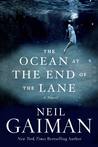
BOOK REVIEW: The Ocean at the End of the Lane by Neil Gaiman

The Ocean at the End of the LaneThe Ocean at the End of the Lane by Neil Gaiman

My rating: 4 of 5 stars

Amazon page

As the title suggests, The Ocean at the End of the Lane takes place in a world in which the supernatural and spectacular lay camouflaged amid the most mundane of settings. The story is about a boy’s interaction with a tri-generational household of women who I’ll—controversially—call “good witches.” The characters explicitly gainsay the title of “witch,” but for lack of any better term with which to describe these ladies other than “a trio of females with supernatural abilities and benevolent purpose,” I’ll call them good witches.

In particular the boy befriends the youngest good witch, a girl who physically appears not much older than he, but whom he comes to realize seems much older. It’s the girl who refers to the pond on her family homestead as the “Ocean.” The girl introduces the unnamed boyish male lead to a supernatural parallel universe, but—in doing so—unwittingly gets the boy tangled up in peril. The boy tracks a portal into his world through which a malevolent creature can slip through. The shape-shifting creature becomes his nanny. However, he is the only one in his family who can recognize the creature’s true nature, and it will do anything to keep the boy from ruining its new gig.

The good witches become the boy’s protectors, and powerful protectors they are. But they aren’t omnipotent, and the forces arrayed against them are formidable as well. Among the morals of the story are that the more powerful enemy of one’s enemy is not only not necessarily one’s friend, but may spell one’s doom. The book also speaks to the rashness of youth running headlong into trouble, and the value of wisdom and experience to find solutions.

This book is short and highly readable. It’s appropriate for young adult readers, but can be enjoyed by adult readers as well. The ending is slightly too deus ex machina for my taste, but overall it’s an intriguing book.

View all my reviews

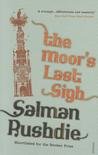
BOOK REVIEW: The Moor’s Last Sigh by Salman Rushdie

The Moor's Last SighThe Moor’s Last Sigh by Salman Rushdie

My rating: 5 of 5 stars

Amazon page

The Moor’s Last Sigh tells the tale of three generations of an Indian family that built its fortune in the spice trade. This isn’t the type of book that would usually float to the top of my stack. I read it because I was traveling to Kochi (Cochin), and it came recommended because much of the first part of the book is set there. (The same recommendation might be received by someone traveling to Mumbai because the latter half of the book is set in that city; granted, there are a lot more stories set in Mumbai [Bombay] than Kochi.) Ultimately, I was pleasantly surprised by this book, despite its soap opera like tone.

The book does read like a soap opera, at least until it gets into the narrating character’s story. There are strong women characters in this male-dominated environment of an Indian family business, though they tend to fall into the categories of “petty bitch” or “prima donna” or both. In the first generation there is a matriarchal character who dominates the family by manipulation and cruelty. In the second generation, the female lead—a strong-spirited, independent artist—falls in love with a Jewish employee of the family. Those familiar with marriage as practiced by the Indian elite will recognize how this inter-sect wedding with an underling might result in no small grief. The resulting marriage produces two female children and a boy. The latter would be nothing but a source of bliss, but for a birth defect that results in a malformed arm. While his mother smothers him with love and attempts to display a progressive spirit that’s beyond biases against such infirmities, under the surface there is the need to come to grips with the fact that handicapped children aren’t supposed to happen in high-caste families. The man with the infirmity is the narrator and overall protagonist of the book. He—as seems inevitable—will eventually fall for a woman of which his mother does not approve.

Beyond the soap opera pettiness, there are genuine intrigues that unfold in the latter half of the book. However, the pettiness of narcissistic people is the root of the protagonist’s ultimate trial.

While Rushdie builds characters in the manner we expect of literary fiction, he doesn’t abandon story. There is a narrative arc that unfolds over the course of the novel. Surprises are revealed and twists unfold.

This is the first Rushdie novel I’ve read. I’ve always intended to read The Satanic Verses to see what all the hullaballoo was about, and the readability of this work makes me even more interested in following through. You know a writer has to be good to inspire a country to take out a hit on him.

I’d recommend this for more than just people visiting Kochi or Mumbai—though it will be particularly interesting for those who are. If you’re interested in the lifestyles of the rich and famous in India more generally, you’ll find this work enlightening. In general, it will appeal to those who like their literary fiction with a bit of a storyline—and if you like the low drama of bitchiness, all the more so.

View all my reviews

BOOK REVIEW: The Simpsons and Their Mathematical Secrets by Simon Singh

The Simpsons and Their Mathematical SecretsThe Simpsons and Their Mathematical Secrets by Simon Singh

My rating: 4 of 5 stars

Amazon page

It will come as no surprise that television comedy writers are disproportionately Ivy League educated individuals. What may come as a surprise is that a number of comedies—particularly animated series—have a large number of technically and mathematically educated individuals on their writing staffs. Mathematicians, computer scientists, engineers, and physicists regularly work in hidden humor that only a math geek could love—or get—into episodes of The Simpsons and Futurama. Singh’s book explores the subtle mathematical references and humor that swoosh over the heads of most viewers.

While the title doesn’t mention Futurama, it should be noted that there are four chapters devoted to that series. (This in contrast to the 14 chapters dedicated to the much older show, The Simpsons.)

Let’s assume that nerds can be categorized into three sets: nerds, super-nerds, and mega-nerds. This book takes as its core demographic the largest of these groups, run-of-the-mill nerds. How does one define these three apparently arbitrary designations? A mega-nerd would see the humor in the equation scrawled on a blackboard in the background as he (or she) watched an episode of The Simpsons. (All Hail, King of the Nerds!) A super-nerd wouldn’t get many of these jokes as he (or she) watched, but he would freeze-frame the scene, and would have enough mathematical skill to decipher the cryptic jokes. A regular nerd misses the joke altogether, but is interested enough to take the time to read an explanation of these obscure references. (These categories are contrasted with the typical TV viewer, who doesn’t get the joke, but is blissful in his ignorance.)

While much of the book is devoted to these series’ mathematical gags—which range from the elementary to the arcane—Singh offers interesting insight into the writing process on shows with a team that mixes traditional writers (English and Literature majors) with mathematical types. One of the most interesting behind-the-scenes questions is why mathematical writers work so well for the The Simpsons? Futurama, being a science fiction series–and thus aimed at the geek/nerd nexus, isn’t so much a surprise, but Homer and his family don’t have any motive to be particularly mathematical—with the possible exception of the occasional reference by brainy Lisa. The chapters are arranged by various mathematical themes, such as prime numbers, pi, statistics, topology, etc.

There are some ancillary sections that deserve mention. First, there are a series of “quizzes” that consist of jokes with the set ups written as the question and the punchline serving as the answer. These jokes get progressively more complicated—starting with crude elementary school jokes (e.g. “Why did 5 eat 6?”) and ranging to the truly obscure (e.g. “What’s big, grey, and proves the uncountability of the decimal numbers?” The answer, if you’re wondering, is “Cantor’s Diagonal Elephant.”) Second, there are five appendices that are used to go into more mathematical depth on some of the topics under discussion. This is written as a book for the masses, and so attempts are made to minimize and simplify equations. There are equations and graphic representations, but they’re kept at a relatively elementary level of mathematics.

I enjoyed reading this book and would recommend it for anyone who—like me–kind of likes mathematics, but finds it more palatable with a spoonful of sugar. In this case, the sugar is the discussion of the humorous scenes of these two comedies.

View all my reviews

BOOK REVIEW: Batman: Year One by Frank Miller, et. al.

Batman: Year OneBatman: Year One by Frank Miller

My rating: 3 of 5 stars

Amazon page

Amazon recently had a sale on classic Batman collections in celebration of the Caped Crusader’s 75th anniversary. I bought a few titles, including this one.

Batman: Year One is Frank Miller’s vision of the hero’s first year of crime fighting. Unlike the first movie in the Nolan trilogy, Batman Begins, there’s no backstory about Bruce Wayne’s training. The comic begins with Bruce Wayne beginning to go on the equivalent of self-sanctioned “neighborhood watch” rounds in Gotham’s seedy underbelly. He’s in his planning and research phase, and only quasi-reluctantly gets into brawls with street thugs. His goal is, ostensibly, intelligence gathering.

Miller’s work isn’t aimed at a boyish market. From the intimation of underage prostitution to themes of marital infidelity to the unsubtle homage to Edward Hopper’s famous painting Nighthawks, this book is directed at a more mature reader. It’s grittier, but Batman hasn’t yet become so sophisticated as to abandon wearing his underwear outside his pants.

The four chapters that make up this graphic novel parallel and twist together the stories of Jim Gordon and Bruce Wayne as they each begin their Gotham crime fighting careers. In many versions of the Batman mythology, Gordon is a young cop who helps boyhood Bruce Wayne on the night his parents are killed. This is one of the ways in which the Miller version differs. In Batman: Year One Gordon is a detective who moves to Gotham from Chicago at about the same time Bruce Wayne is sticking his toe in the waters of Gotham crime. This comes in handy for Miller later in works like Batman: The Dark Knight Returns in which he is able to have a geriatric Bruce Wayne and Jim Gordon coexisting.

The interests of Gordon and Batman only align at the very end of the last chapter. Until then, Gordon is trying to find and apprehend Batman like all the other cops. In fact, Gordon is leading the crusade against the Dark Knight when his bosses still have little interest in it—until Batman crashes their ball.

There are no supervillains yet—only corrupt cops and organized crime. Bruce Wayne, who adopts the guise of Batman only after a bat flies through his window (never heard of that happening), gets off to a rough start. He isn’t yet the phantom nightmare that he will later become, and is still learning his lessons. In his early encounters with criminals, he prevails mostly by being able to take a punch.

Besides Bruce Wayne’s inner monologue being a bit ham-handed, I enjoyed this work. The ham-handed inner monologue is—no doubt–intended to convey that Wayne is a man of thought as well as a man of action, but it’s hard to believe that someone who could transform himself into the Batman would be that riddled with doubt. That said, the dialogue is better written than the typical comic. There’s not a lot of the “As-you-know-Bob” dialogue that often plagues this genre.

If you’re a fan of the Dark Knight, this is worth reading.

View all my reviews

BOOK REVIEW: The Good Soldier Ŝvejk by Jaroslav Haŝek

The Good Soldier ŠvejkThe Good Soldier Švejk by Jaroslav Hašek

My rating: 4 of 5 stars

Amazon page

Haŝek’s novel is a satire of war and the absurdities that arise therein. It’s a novel in the vein of Heller’s Catch-22 and Vonnegut’s Slaughterhouse Five. It predates those novels, and is set around World War I–rather than those other novels’ World War II bases.

The novel begins at the outset of the First World War, and revolves around the title character, Ŝvejk (also spelled Schweik). Ŝvejk is an enigma. Believing that no man can be so stupid, authority figures are constantly suspecting him of being a saboteur or a goldbrick. It’s never made clear whether Ŝvejk is a brilliant con artist or the complete dolt he appears to be.

The story follows Ŝvejk from some ill-considered statements about the Archduke Franz Ferdinand that get him in trouble through to his unit’s advance on the front lines of the war. He leaves behind his job selling mangy dogs with forged pedigrees when he’s drawn back into the military (he’d previously served and been released as feeble-minded.) Along the way, he spends time as a chaplain’s assistant and a batman (a military officer’s servant, not the superhero)—that is, after he gets released from a lunatic asylum.

Ŝvejk is, at once, the best and worst of soldiers. He is honest to a fault, except when lying in the service of others—at which point his lies are inevitably humorously transparent. He isn’t a free-thinker and will follow orders—as best he can remember or understand them—to their, often absurd, bitter end. Of course, the flip side of this is that he doesn’t know how or when to speak, and while he’s not a free-thinker, nor is he much of a thinker–period.

The following quote sums up why Ŝvejk is the best and worst of soldiers: “Beg to report, sir. I don’t think because soldiers ain’t allowed to. Years and years ago, when I was in the Ninety-first Regiment, the captain always used to tell us: ‘Soldiers must’nt think. Their superior officers do all their thinking for them. As soon as a soldier begins to think, he’s no longer a soldier, but a lousy civilian.’” This is the mantra Ŝvejk lives by, and it serves no one well in the volatile and mercurial world of war.

Ŝvejk isn’t the only comedic character in the book. There’s a drunkard Catholic priest of Jewish ancestry for whom Ŝvejk serves as an assistant until the priest lost him in a card game. There’s another batman who’s constantly hungry, and eats anything he can get his hands on–even if it’s the private stock of the officer for whom he works. There’s a reserve officer, Lieutenant Dub, who is always trying to show how tough he is but is constantly foiled by Ŝvejk’s frankness and naiveté.

There’re also straight men such as Lieutenant Lukas—the man who wins Ŝvejk’s services from the chaplain, and who comes to rue the day he did. Lukas is a competent military officer with a good head on his shoulders. But Ŝvejk’s bumbling antics are constantly getting the Lieutenant in hot water, and he finds Ŝvejk to be the proverbial bad penny. A prime example of Lukas’s regret comes when Ŝvejk gets the Lieutenant a dog that he knows is stolen, but that turns out to be rightfully owned by a Colonel.

Another straight man is the Quartermaster who knows enough to ignore the first order to draw rations because the military never moves as quickly as the officers think it will. (Incidentally, the best piece of advice I ever got when working with bureaucratic organizations was to always ignore new directives that seemed asinine because eventually most will die on the vine.)

This book is humorous, if not hilarious. One of the funniest episodes is when Ŝvejk is cast in with the malingerers and has no idea what they are talking about as they discuss their strategies for staying out of the war. Another is when the officers devise a code based on an obscure book only to discover that it’s a two volume set and they’ve dispatched the wrong volume as the key.

Much of the humor comes in the form of Ŝvejk’s dialogue. He’s a gregarious chap who rambles on at the most inopportune times. Some classic Ŝvejk quotes include:
-“I’m feeble-minded, fair and square.” (when accused of being a cunning malingerer)
-“I’ve been cross-examined once and they chucked me out. And what I’m afraid of is that these other gentlemen who are here along with me are going to have a grudge against me because I’ve been called for cross-examination twice running and they’ve not been there at all yet this evening.” (upon being called back for a second round of interrogation)
-“Pigs might fly if they had wings.” (when accused of being a spy, and asked whether he’d have taken pictures if he’d had a camera)
-“I used to serve under a Colonel Flieder von Boomerang, or something like that, and he was just about half your height. He had a long beard, and it made him look like a monkey, and when he got ratty he used to jump so high that we called him India-rubber Daddy. Well, one day—“ (upon being accused of having no respect for his superiors)

One of the weaknesses of this novel is its rather abrupt ending. This is because Haŝek was only two-thirds of the way through with the novel when he died of tuberculosis. It’s not that there is no ending, but it reads like just another turn of events that Ŝvejk would eventually bumble his way out of. Of course, that’s likely because that’s what the author intended it to be.

As with Heller and Vonnegut, Haŝek’s novel benefits from his personal experience. He was drafted into the military and spent five years as a prisoner of war in the hands of the Russians. (A situation that somewhat mirrors the experience of his protagonist.)

If you like war satire, you should pick up The Good Soldier Ŝvejk.

View all my reviews

BOOK REVIEW: The Naive and the Sentimental Novelist by Orhan Pamuk

The Naive and the Sentimental NovelistThe Naive and the Sentimental Novelist by Orhan Pamuk

My rating: 5 of 5 stars

Amazon page

The Naïve and the Sentimental Novelist is Orhan Pamuk’s theory of the novel, and is based on a series of lectures given by the Turkish Nobel Laureate in 2009. It’s a brief work, consisting of less than 200 pages written across six chapters plus an epilogue. Pamuk explores just a handful of concepts, but he elaborates on each with examples from literature. Having said that, Pamuk has the novelist’s gift for strategic ambiguity, and there are some ideas–such as the “secret center of the novel”–for which the author leaves much for the reader to interpret.

In the first chapter, Pamuk explores what occurs in the mind of a reader as they consume a novel. He proposes nine mental activities that one engages in over the course of reading a novel. These activities range from the essence of reading, such as observing scene and narrative arc, to less essential acts such as self-congratulatory narcissism. A central theme is the novel as a visual medium in that the mind converts words into images and those images are what are experienced in reading. The final action is search for the novel’s “secret center,” an important element of Pamuk’s theory and the topic of the book’s final chapter.

The title subjects are also introduced in the first chapter, i.e. naïve and sentimental novelists. Pamuk borrows this concept from Schiller, who used it to describe poets. The naïve novelist writes spontaneously and with confidence that he or she is capturing reality in the work. The sentimental novelist is much more uneasy about the degree that his work will convey something true. While an oversimplification, this idea corresponds somewhat to the much more commonly known division of writers into outliners and non-outliners, i.e. some writers can’t get started until they’ve done extensive research and outlining, but others begin with—at most—a vague outline in their heads and let the words stream from deep within.

The second chapter discusses the reader’s inability to accept that the novel is complete fiction—and, conversely, what truths a novelist reveals in the process of writing a purely fictitious work. (It should be noted that while Pamuk refers throughout to the “novel,” he’s really referring to the “literary novel.” Much of what he has to say isn’t relevant for either commercial or genre fiction.) Pamuk points out that it’s not just gullible yokels who believe that what he’s writing is autobiographical. Sophisticated readers who work in the publishing industry have been known to think he is living the life of one of his characters. On the other hand, when an avid reader suggested that they knew Pamuk so well because they had read all his books, he found himself being embarrassed. This embarrassment wasn’t because he felt they had learned any details of his life, but that they had developed a psychological insight.

The next chapter is on character, plot, and time. As one would expect, character is the most important and substantially addressed topic. I say that not because it’s listed first, but because we are talking about literary fiction—a medium in which character is of the utmost importance and plotting is loose to optional. However, the portion of the chapter that I found most interesting was the question of time in novel. Time stretches, compresses, and can bounce non-linearly in a novel. The protagonist’s time is on display in the novel, and that can be done artfully or not.

The fourth chapter is the one that most deeply delves into the topic of novel as a visual media, one which is more closely related to painting that to the media to which the novel is more frequently compared. Here he divides novelists not into the naïve and the sentimental, but into visual versus verbal writers. Pamuk suggests that the novel is a series of frozen moments as opposed to a continuous running of time—and thus its connection to paintings. Of course, Pamuk was a painter before being a novelist, and thus may be more prone to see that connection than most

The penultimate chapter is a comparison of novels to museums. No two things might seem farther apart at first blush, but a museum is a themed collection of artifacts that hopefully serve to tell a story—story here being used not as fiction but as a narrative that could contain fact, fiction, or mythology. This discussion really continues on the theme of the visual aspect of the novel. It suggests that those artifacts that are seen or manipulated in a novel convey a great deal of what the author wants to get across and help to create a more real fictional world. Pamuk elaborates on the connection by using three points to connect museums and novels that are all related by pride.

The final chapter elucidates the “center” of the novel. This is a concept that Pamuk has written around since the beginning of the book without providing a clear conceptualization. The first line of the last chapter defines the center as: “…a profound opinion or insight about life, a deeply embedded point of mystery, whether real or imagined.” The idea of a center, we are told, separates literary fiction from genre / commercial fiction. Readers and authors of genre fiction may find themselves becoming miffed with Pamuk for saying that such works either don’t have a center or have one that’s painfully easily found. He does make explicit exceptions for works by Philip K. Dick and Stanislaw Lem, and one would expect that works of speculative fiction by the likes of Vonnegut, Murakami, and LeGuin would meet his approval as well. However, the presence of a tight story arc—one of the factors that makes work salable—is part of the reason genre fiction tends to have a readily discovered center. For Pamuk, the name of the game is writing a work that has a center that isn’t easily discovered, but neither is so deeply hidden as to remain forever beyond the grasp of most readers. He suggests the novel should be a puzzle, which is solved to reveal the center.

The epilogue includes some autobiographical insight and elaboration on what Pamuk was attempting to convey in this work.

I’d recommend this book for writers as well as serious readers of novels. Obviously, it’s well-written, but beyond that it offers insights that make the reader do some of the work—just what Pamuk proposes a novelist should do.

View all my reviews