BOOK REVIEW: Jabu and the Lion ed. by Tanya Munshi

Jabu and the lion (Folktales)Jabu and the lion by Tanya Munshi
My rating: 4 of 5 stars

Amazon page


This is a simple children’s book about the virtues of keeping one’s word and the nature of karmic justice.

Jabu is a boy, a cowherd in Africa. One day he’s taking his cattle to the river to drink when he comes across a lion in a trap. The lion implores Jabu to let him go. While the boy doesn’t trust the lion at first, he ultimately agrees. The lion decides to renege, but Jabu reasons with the big cat that it would be wrong to go back on the promise not to make a meal of the young boy. Jabu, recognizing he’s not an unbiased party, asks two animals—a donkey and a jackal—to give their view. The sly jackal helps Jabu.

This is book for young children. It has colorful graphics, and the entire book is less than 30 pages. It has a simple story that conveys a moral.

If you’re teaching kids about being true to one’s word, this simple tale will help illustrate the point.
This folktale also nicely conveys something of life in Africa, which may be of value to students living elsewhere.

View all my reviews

BOOK REVIEW: How to Read a Poem by Edward Hirsch

How to Read a Poem: And Fall in Love with Poetry (Harvest Book)How to Read a Poem: And Fall in Love with Poetry by Edward Hirsch
My rating: 5 of 5 stars

Amazon page


If one were to judge solely by the mundane title, one might expect this to be a different book—i.e. more along the lines of “Poetry for Dummies.” That’s not what Hirsch is offering with his book. There’s plenty of opportunity to learn to differentiate pentameter from tetrameter or a lyric from an epic poem, but the book isn’t arranged according to such fundamentals. It might even take one a few pages (or chapters) to realize there is an organizing structure. But you’ll get there because of the author’s contagious passion for poetry and his presentation, and an analysis, of many beautiful poems by masters such as Keats, Yeats, Whitman, Dickinson, Frost, Neruda, and many others–more ancient or modern and equally or less well-known. In the end, you’ll think of poetry in a new light.

The book is arranged into 12 chapters, each of which looks at poetry from a different dimension. Chapter 1 considers the poem in two ways. First, it emphasizes the importance of the reader, i.e. the poem is presented as an interaction rather than an act of transmission. Second, the author considers how various poets have defined poetry, and what we can learn from said definitions—besides that poetry is defiant in the face of definition. (Like a wet bar of soap, the tighter one tries to grasp it, the less one succeeds.) Chapter 2 continues to investigate the nature of a poem using the framework of the word’s etymology, coming from the ancient Greek word meaning “to make”–thus the chapter title: “A Made Thing.”

Chapter three delves into the making of connections (or lack thereof) as a theme in poetry. As with most of the book’s chapters, it’s built around a small number of poems that elucidate the author’s point. In this case, poems by Keats, James Wright, and Baudelaire are used to describe cases in which a human connection is sought, in which it momentarily exists, and in which it is shunned. As is true of other chapters, this doesn’t mean that these three poems are all that are mentioned. It’s just that they are given in-depth analysis, while other poems and fragments are referenced to help illustrate points.

Chapter four is entitled “Three Initiations” and it introduces three types of poetry through quintessential examples. The three types of poems are: 1.) poetry of trance; 2.) poetry of praise; and 3.) poetry of grief. The latter two may be more easily grasped than the first, which are poems that convey an altered state of consciousness.

Chapter five examines the subject of authenticity and vividness in poetry and how poets convey such genuineness—even by way of surrealism. The classic example is Shakespeare’s sonnets that mock Petrarchan sonnets in suggesting a less hyperbolic form of love letter (i.e. Sonnet 130, “My mistress’ eyes are nothing like the sun”)

Chapter six is entitled, “5 Acts,” and, as such, it covers five different subjects through the motif of a play. This first act is about opening poems or introductory soliloquy. The second act is about drama and its role in verse, and is heavily influence by a quote from Robert Frost (i.e. “Everything written is as good as it is dramatic.”) Act three is about what might be called “character” in the scheme of a play, but is really about the personhood of a poem. Act four delves into the topic of dialogue as a poetic tool. The last act is about concluding poems / death poems—as exemplified by Bashō’s deathbed poem and the postcard poems written by Miklós Radnóti on a Holocaust death march.

Chapter seven considers desolation as a theme in poetry. The next chapter places poetry in the context of history, using Polish poetry of war and Holocaust to convey the emotion and numbness of tragic events. Chapter nine proposes a nexus between art and justice, and looks at how this is displayed through jeremiads and political poems. The two core examples of this chapter are a work song by Sterling Brown and an ode by Pablo Neruda.

Along with chapter four’s “poetry of trance,” I found chapter ten’s discussion of poems that transport the reader to a moment of epiphany–or ecstatic / transcendental experience–to be particularly fascinating. There are a couple modern pieces that Hirsch presents herein, but some work by Dickinson introduces the topic and truly shows how it’s done. Chapter eleven presents the soul as a poetic theme. The poem gives substance to that which is inherently insubstantial, but which is somehow essential and beyond refute. Walt Whitman’s references to the soul offer particularly vivid insight on this question.

The last chapter is a brief echo of the first, reiterating the role of the reader and the need for poetic definitions for poetry because any definition that tries to capture the medium in precise prose loses it as it’s reinvented countless times over. If one prefers a simple and direct definition of poetry—e.g. writing that displays meter and rhyme–this is may not be your go-to book. (You might prefer a book such as Fry’s “The Ode Less Traveled” that is more dogmatic about prosody as the sine qua non of poetry.)

As for ancillary material, there is a huge glossary. It’s huge not by virtue of containing a vast number of words, but rather because it goes into considerable detail on most of the entries. There is also an extensive and thoroughly organized “recommended reading” section. The book also offers discussion questions for those who want to review or used the book for a book club or whatnot. There’s not much by way of graphics, except for one or two displays of visually oriented forms of poetry, but there’s no need of more than that.

I found this book to be insightful and I welcomed the unique way in which the author divvied up and evaluated the topic of poetry. If you enjoy poetry, or if you write it, there is much to be garnered from reading this book.

View all my reviews

BOOK REVIEW: One Flew Over the Cuckoo’s Nest by Ken Kesey

One Flew Over the Cuckoo's NestOne Flew Over the Cuckoo’s Nest by Ken Kesey
My rating: 5 of 5 stars

Amazon page

Get Speechify to make any book an audiobook 

When a sane man, Randle McMurphy, enters an insane asylum to get out of prison, he turns life in the ward upside-down. The book’s fictional narrator is the patient who sleeps next to McMurphy. He’s an American Indian of giant stature, named Chief Bromden, who’s become convinced that he’s shrunk. Besides childhood problems stemming from his father’s emasculation—i.e. having to take his white mother’s name (hence, Bromden) instead of the more usual family name of the father—Chief is haunted by war. Our narrator has the hospital staff convinced that he’s a deaf-mute (and probably mentally deficient, as well) and thus has a unique view of the ward, the staff speaking freely before him.

McMurphy is everything the other patients are not. He’s gregarious, confident, and risk-loving. He’s also a con-man extraordinaire—hence, his ability to trick the authorities into shifting him out of hard labor and into the mental hospital. But he’s not completely lacking in morality, and displays a kind of hard-nosed compassion. While the patients are occasionally distressed by McMurphy’s behavior, they find his willingness to stand up for them (at least when it’s in his best interest, though later a sense of justice or camaraderie guides him) worth the price of his wheeling and dealing.

McMurphy’s real opposition is Nurse Ratched, a former Army nurse who runs a tight ward. Nurse Ratched is used to controlling the patients through a combination of soft power (maternally convincing them that she acts in their best interest), bullying, and fear of the treatments she can get the doctors to rubber stamp (namely electro-shock and—in extreme cases—lobotomy.) However, she’s met her match with McMurphy. He can play patients and doctors as well as she. He, too, is capable of being cool and cunning at the same time. He’s able to provide a counterbalance to the authoritarian democracy in which she asks the patients for votes after telling them what to think. The reader doesn’t know how, but knows this conflict between McMurphy and Ratched must come to a head to be resolved once and for all, and it is (but I’ll leave the how to the reader.) At times McMurphy seems to be ahead, and at other times Ratched has the lead.

The book was influenced by Kesey’s discussions with patients at Menlo Park Veterans’ Hospital, where he worked as a night aide. Interestingly, Kesey volunteered for a study of hallucinogens during the same period (funded by the CIA as part of MKUltra), and, thus, for some of the conversations he was baked on LSD. At any rate, the experience had profound impact on him, and he became convinced that not all the patients were insane. Many, he believed, just didn’t fit well in society or families, and were pushed into institutions. The themes of the book are that differentiating sanity from insanity isn’t always easy and that mental healthcare professionals had too much power–and often wielded it unwisely.

The story is well crafted with an intense ending. The characters are developed, and this isn’t easy for the mentally insane—though Kesey’s experience with LSD may have helped on that end. Though we only really experience the insanity of Chief, because the perspective is his and he’s one of the few patients that legitimately seems to have trouble differentiating reality from illusion (at least through much of the book.) But we don’t really know how much of Chief’s problem is from his medication, and how much is the illness. There’s a beautiful descriptive scene in which Chief comes off his meds and is looking out the window watching a dog and the world go by. It’s vivid.

I’d highly recommend this book. It’s an evocative story with insights into mental health, some of which—sadly—are as valid today as they were then.

View all my reviews

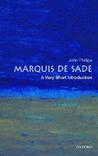
BOOK REVIEW: Marquis de Sade: A Very Short Introduction by John Phillips

The Marquis de Sade: A Very Short IntroductionThe Marquis de Sade: A Very Short Introduction by John Phillips
My rating: 4 of 5 stars

Amazon page


History has—fairly or not—relegated the Marquis de Sade to status as the author of four violently sexual novels and the eponyms (i.e. sadism and sadist) that arose from those works. He produced many more conventional works than libertine / sadomasochistic ones (including plays, stories, essays, and correspondence), and has been credited among the leading developers of the modern short story. While his philosophy tended to be both extremist and inconsistent, it was also in the vanguard of rationalist thinking that eschewed superstition, put mankind squarely in the realm of nature, and advocated cherishing the body (if tending toward a hedonistic approach, but contrasting with religious thinking in which the body was a mere empty vessel—a burden to be gratefully cast off at death.) The man also lived through fascinating times astride the French Revolution, while spending much of his adult life in prison.

Phillips emphasizes the unfair oversimplification of Sade’s work, ideas, and place in history. That said, he does give special attention to the four libertine novels (i.e. “Justine,” “Juliette,” “120 Days of Sodom,” and “Philosophy of the Bedroom.”) This attention is spread across the book’s seven chapters as Phillips deemed relevant. While the author wants us to recognize Sade was more complicated than we might think, he also suggests that the libertine novels tell us the most about the man’s philosophy and his personal psychology. If it sounds like Phillips is a mere champion of Sade, he does mix in strong criticism with his defensive positions.

The first chapter is a biographical sketch of the life of the Marquis de Sade. Sade’s life story has been the subject of more than one book, so this is that biography greatly condensed. The chapter is designed, as its heading suggests, to separate the man from the myth. In this more objective telling of Sade’s life, one learns some interesting facts. For example, Sade held a judicial position in which he could have passed sentence on his ex-in-laws for whom he had no love. However, the ultra-violent sadist set them free because he didn’t believe in the death sentence, and knew they would be doomed to it if he did otherwise. This is representative of the contradiction of Sade, but it’s also not. Sade distrusted violence in the hands of groups and government even while he swore it was the way of nature between individuals. There is a seed of truth in his apparently irrational stance, and that is that we humans are inescapably of nature.

Chapter two is entitled “Man of Letters” and it looks at Sade as an author and scholar. Here we learn about the breadth and depth of Sade’s work which included comedies, tragedies, and satires, and in which plays out in several media. Chapter three is about Sade’s stance as an atheist, which could have gotten him killed before or after the Revolution, and it was a much more lethal stance than his life as a pornographer. (Note: I use “pornographer” as the authorities might. Phillip makes a point [upon which I agree] that most of Sade’s libertine writings are too disgusting and/or violent to achieve eroticism. Some would classify them in the horror genre rather than that of erotica.)

The fourth chapter describes Sade’s life around the French Revolution. He was in prison at times before and after, but—as mentioned–at one point was given a judgeship. Phillips points out that at one point Sade’s prison cell overlooked a yard in which Robespierre’s guillotine operated as the revolutionary’s “Terror” was in progress. (As has been true on numerous other occasions, revolutionaries can more than match the brutality of those they overthrew.) It seems likely that witnessing executions had a profound influence on Sade’s psyche and philosophy.

Chapter five is about Sade’s theatricality. Besides being a playwright, Sade was known to act and also to use theatrical elements in his other written works. Phillips specifically notes this tendency with respect to “120 Days of Sodom” in which much of the action revolves around four libertines listening to stories of old prostitutes, which the libertines then try to reenact or outdo in person.

Chapter six delves into an area of great controversy: Sade’s views on women. Sade has often been dismissed as a she-hating misogynist. This reputation isn’t without reason, despite the fact that Sade’s libertine characters are brutal to males over which they have power in similar fashion. However, one sees in both “Philosophy of the Boudoir” and “Juliette” a more nuanced view. The former is a girl’s coming of age story (coming to age as a lady libertine, though), and the latter is a counterpoint to “Justine” in which tragedy after tragedy befalls a virtuous female lead (in “Juliette,” Justine’s separated sister–who took to vice in accord with the ways of nature as Sade saw them–experiences prosperity beyond all expectations.) The take-away is that Sade may have been a hater of goody-two-shoes women, but his views on Jezebels seems to border on affectionate.

The final chapter considers Sade’s perspective on liberty. Like his positions on femininity and philosophy, it’s a mixed bag of muddled views, but it doesn’t lack for boldness. As mentioned, Sade saw both the before and after of Revolution and was inherently distrustful of any party in power. He’d been an aristocrat (if a scandalized one) and he’d been freed from the royal dungeons–thus currying temporary favor among revolutionaries. And, of course, he’d watched many a head roll wondering if his day wasn’t soon to come. He saw mankind in the Hobbesian state of nature, and couldn’t help but have it reinforce his established views.

The book has numerous graphics. One should note that many of these are line drawings of a sexual and / or sadomasochistic nature. There are also “further reading” and “references” section, that are a little longer than average for books in this series.

I’ve reviewed a number of books in this “A Very Short Introduction” series put out by Oxford University Press. They are designed to give one the core information on a subject in a compact package. This one is slightly longer than average for the ones I’ve previously reviewed (i.e. usually 100pp, this one is about 140pp), but not severely so–particularly given it being in the humanities.

I’d recommend this book to anyone who wants to separate the Marquis de Sade from his myth. It’s not straight biography, and–if that’ s specifically what you’re looking for–it may not be your primary choice, but I’d still recommend it for some of the information on specific subtopics addressed.

View all my reviews

BOOK REVIEW: Maya Angelou: The Complete Poetry by Maya Angelou

Maya Angelou: The Complete PoetryMaya Angelou: The Complete Poetry by Maya Angelou
My rating: 5 of 5 stars

Amazon page


This posthumous collection gathers together 180 poems of Maya Angelou. A collection of collections, it amasses six of Angelou’s collections as well as four stand-alone poems, and is said to represent the entirety of Angelou’s published and publicly released poetry. (Actually, it’s said be all of her poetry, but I suspect even a poetic genius like Angelou had notebooks of fragments and pieces with which she never made peace.) Her famed collections: “Just Give Me a Cool Drink of Water ‘Fore I Diiie,” “Oh Pray My Wings Are Gonna Fit Me Well,” “And Still I Rise,” “Shaker, Why Don’t You Sing,” and “I Shall Not Be Moved” are presented as released.

Angelou’s poetry tends toward the playful and melodious even when its topics are angry or distressing. She favors short pieces that have rhyme and rhythm that please the ear—at least in those early collections for which she is most recognized. Reading the poetry chronologically, I noticed a shift toward a little bit longer free verse poetry—though always with attention to the issue of sound (if not to creating song-like sound.) As this was my first reading of this collection, some of this perception of shifting length and style may be an illusion created by the fact that the freestanding pieces are toward the end, and they tend to have been released for special occasions that called for longer run times. But maybe she felt that poems of dissent and social commentary ultimately called for a more discordant quality. Delivering a jeremiad with pop tune catchiness can feel as though it undermines the message—though it also makes a commentary about the nature of being underdog.

I don’t want to suggest that Angelou’s work doesn’t capture the happy and hopeful as well as the daunting, because it is. But poets deal in emotion, and that means confronting dark topics such as slavery, racism, domestic violence, etc. Her use of dialect language breathes authenticity into her poems and builds the emotional weight of them, which often supports the song-like quality. And there is plenty of precedent in music for delivering hard material in a melodious package.

I’d recommend this collection to poetry readers. It’s powerful and poignant, and makes a beautiful sound.

View all my reviews

BOOK REVIEW: TED Talks Storytelling by Akash Karia

TED Talks Storytelling: 23 Storytelling Techniques from the Best TED TalksTED Talks Storytelling: 23 Storytelling Techniques from the Best TED Talks by Akash Karia
My rating: 4 of 5 stars

Amazon page


This is a brief guide to storytelling and story building, particularly as it pertains to public speaking. Its emphasis on TED Talks is just to capitalize on the popularity of that forum as well as to draw widely known examples. There are no novel insights offered in this book. It’s the same information one could find from many other sources. However, it’s concise, well-organized, and uses examples pulled from popular TED Talks, and so readers may get some synergies from familiarity with a given speaker’s delivery.

The book is organized into nine chapters. The first introduces the topic by explaining why stories are so much more effective than other approaches to public speaking. The second chapter is about hooks and conflict. The third chapter is about the twist or element that makes the story interesting—as opposed to a straightforward accounting of events. Chapters four through six are all related in that they deal with providing the sensory and other details necessary to make the story come alive for the audience member. Chapter seven is about the effectiveness of stories with a positive message. Chapter eight steps back and examines the overall flow of the story with key way-points of consideration. Chapter 9 is a summation of key points. It’s mostly a list of the 23 bullet points that were made throughout the book, each of which is also located at the end of its respective chapter.

I’d recommend this book for anyone preparing for a public speaking engagement. However, I should point out that the price seems to be higher at the moment than when I bought it. I wouldn’t recommend spending a lot on the book because the information is so widely available.

View all my reviews

BOOK REVIEW: Publish on Amazon Kindle with Kindle Direct Publishing

Publish on Amazon Kindle with Kindle Direct Publishing Publish on Amazon Kindle with Kindle Direct Publishing by Kindle Direct Publishing
My rating: 4 of 5 stars

KDP website


This is a short guide to self-publishing using Kindle Direct Publishing (KDP) that was put out by KDP. I’m not sure this particular e-book exists any more, though all the information in it will be on the KDP website. There are about a billion (exaggeration, maybe) Kindle books that have taken this information and made their own book, using similar names. I can’t comment on any of them. I’m sure some include helpful tips for increasing your sales and making your product more appealing, and some of those tips are likely much better than others.

This is a straight up guide to using KDP. It covers topics like how to set up an account, what formats are accepted (several) and which is best (HTML), royalty options (there are two, and the lesser royalty allows one greater freedom of pricing one’s book, i.e. if you want to sell it at cut-rate to get some sales volume or if you’re a narcissist who thinks their self-published masterwork is worth $200 USD per copy), and how / when payments are made (varies by EFT [electronic funds transfer] v paper check options.)

This guide provides all the information needed to get your book up on Amazon. However, if you want insight into other topics (how to market your book, covers, etc.) you’ll need to look elsewhere.

If you can find it, I’d recommend this handy guide. But it may be quicker to just go to the KDP website.

View all my reviews

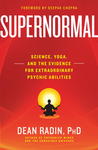
BOOK REVIEW: Supernormal by Dean Radin

Supernormal: Science, Yoga and the Evidence for Extraordinary Psychic AbilitiesSupernormal: Science, Yoga and the Evidence for Extraordinary Psychic Abilities by Dean Radin
My rating: 4 of 5 stars

Amazon page


With this controversial book, Dean Radin presents the scientific evidence for an array of psychic powers, but he frames the discussion in terms of yogic siddhis. “Siddhi” is a Sanskrit term for an ability that isn’t seen among the general population–at least not reliably so– and for the most part these “accomplishments” correspond to the categories discussed in parapsychology (i.e. telepathy, precognition, psychokinesis, and clairvoyance.) [Note: As mentioned, this is a controversial book. I will attempt to provide as unbiased a review as possible. I am generally skeptical, but don’t believe in poo-pooing the study of subjects because they offend my skeptical sensibilities. Furthermore, I try to keep an open mind because: 1.) there is no scientific consensus about what consciousness is or how it works, 2.) quantum biology is a subject in its infancy and we may yet learn there is more quantum “spookiness” going on in the brain than we think. 3.) for all I know we are in an simulation and then it’s all a matter of programming.]

The yogic emphasis doesn’t change the book much from the pop psych literature review of parapsychology studies it would otherwise be, except to necessitate background information on yoga and siddhis. However, this emphasis may or may not have opened up a huge additional readership. Outside of a fringe, siddhis aren’t much in vogue among yoga practitioners these days. Among modern day yogis and yoginis, there are some who believe in them and some who think they’re throwbacks to an era of superstition, malnutrition, and wishful thinking. However, even among the former, siddhis are generally considered a distraction. The advice of most of the great yogis has been to not get lost in the pursuit of such powers because chasing siddhis can derail one from one’s ultimate objective (e.g. liberation.) Still, if even a small fraction of yoga practitioners take an interest, that’s a fairly large readership.

So what exactly is the controversy? Obviously, there are many divergent demographics with differing views on the topic. For hardcore skeptics, parapsychology is right up there with alien abduction, bigfoot /yeti sightings, and the anatomy of the Loch Ness monster with respect to being a legitimate topic for scientific study. On the other hand, there are believers who are offended by the mere notion of studying such phenomena with science, and who say such investigations are an assault on their beliefs.

But that’s not a very interesting controversy—i.e. there are some people who won’t believe in such abilities no matter what the evidence, and others who will believe in them no matter what science has to say. So let’s chop off the hardcore skeptics and hardcore believers and ask what the controversy is as it pertains to those of us who consider evidence when drawing conclusions.

The root of the controversy can be stated rather quickly and clearly. Here it is: the effect size is small but statistically significant. What does that mean? Say this study asks a subject to determine which of five randomly selected shapes has been chosen using nothing but his / her mind. Using pure guessing, one would expect to be right 20% (i.e. 1/5th) of the time. If a person happened to get 32% right in a given trial, that means nothing because small samples don’t give one a convergence towards a mean value. (i.e. Intuitively, you know that if you flip a coin 10 times and get 7 heads, it doesn’t necessarily mean anything. If you repeat that 10-flip set 10,000 times, and still get 70% heads, then you probably have a trick coin or something else odd is going on.) So the issue is that even when experimenters repeat the experiment over and over again such that the average value should converge on 20%, it doesn’t. It stays at, say, 30% (exact effects vary but it’s on this order.)

At this point the reader might be thinking of all the factors that could result in this effect (i.e. cheating [insider or outsider], subconscious observation of facial expressions, random selection that is biased, etc.) Well, so have the scientists. In any study, one wants to account for alternative explanations to the utmost. Over the years, researchers like Radin have put all manner of protections in place from quantum random number generators to booths with extreme sound-proofing and Faraday cages (prevents radio signals from transiting.) Still they get this small positive effect that can’t be explained by alternative explanations.

There is also the issue of the filing drawer problem, which Radin devotes considerable space to discussing. It’s the idea that when drawing conclusions from many similar studies, one must accept that there may be many unpublished studies that sit in file drawers because they didn’t produced negative results. These filed / unpublished studies could negate the outcome of the body of studies of that nature. While this remains an open criticism, there is mathematics for determining how many negative studies would have to be turned up to make the results insignificant. Radin argues that the numbers calculated strain credulity.

So this “small but statistically significant effect” is generally agreed upon by all, excepting conspiracy theorists. Now we get to the controversy, which is how to explain this effect. Skeptics run the gamut from hot-blooded haters who claim that it’s all just a scam perpetrated by hoaxers with tenure, to more diplomatic challengers who provide thoughtful, plausible, and non-nefarious explanations for what they believe are false results. Said objections include file drawer problems, statistical “crud factor” (an observed effect in which large sample size studies can show a significant correlations between any two random variables—i.e. everything is correlated with everything else to some degree), and outlier effects.

The latter is a particularly revealing controversy. Say your study results in this 30% instead of 20% effect, and there’s one subject in the study who (over many trials) got the shape right 80% of the time. If you’re a skeptic, you call that an outlier and you want to cut it out of the study because it may be causing part, most, or all of the effect you see. Your assumption is that that this outlier could be anything from a data entry error to an outright cheater, but it’s obviously not a gifted psychic. If you’re a believer, not only do you want to keep that result, you want to find that person and study them to find out if the result was a one-time fluke, or if you have some rare, gifted person.

The book is arranged into three parts. The first part offers background on yoga and siddhis. The second part is the heart of the book and it presents an overview of results from studies of precognition, telepathy, psychokinesis (both of animate and inanimate objects), clairvoyance, and the effect of meditation on these abilities (which also shows a small positive effect, i.e. the general population outdoes probability by a little bit and experienced meditators outperform the general population by a little bit.) The last section is just a couple chapters about the future of parapsychology.

I found this book to be interesting and thought-provoking. Radin comes across as a reasonable investigator who is willing to accept that there is a lot of duplicity going on out in the world, but yet when one uses the methods of science one obtains results that would be generally accepted as successful across the social sciences. At times he does go on anti-skeptic rants. On the other hand, one can imagine his frustration in dealing with individuals unwilling to pin down how much higher the bar must be for parapsychology results over results in more mainstream topics. I think Radin’s greatest mistake was in discussing levitation. Besides at a quantum level, the effects of gravity are well-understood and non-negotiable. While our lack of understanding of consciousness leaves wiggle room to at least consider some unusual happenings, levitation seems a non-starter. Fortunately, as it hasn’t been studied, Radin just presents a couple historical anecdotes and moves on (while—to be fair–acknowledging the fundamental risk in relying on anecdotes.)

I’d recommend this book. I can’t say it swayed my belief on the topic, which tends skeptical, but it did inform my confusion. (It should be pointed out that not all these abilities are equally reviled by science. Precognition is the most fundamentally opposed because it seems to violate the fundamental cause and effect nature of the universe at our scale and larger [as opposed to the quantum level were all sorts of weird happenings transpire.]) I do agree with Radin that there shouldn’t be taboos in science in which scientists are afraid to study a subject of interest because the prevailing notion is that it probably doesn’t have merit. If there weren’t scientists with the cojones to study “crazy stuff” we’d no doubt be far behind our current understanding of the world.

View all my reviews

BOOK REVIEW: The Life of Milarepa ed. by Lobzang Jivaka

The Life of Milarepa: A New Translation from the TibetanThe Life of Milarepa: A New Translation from the Tibetan by Lobsang P. Lhalungpa
My rating: 5 of 5 stars

Amazon page


Superhero stories can be surprisingly hard to make interesting. The hero’s vast powers make it hard to build obstacles that seriously challenge him. Make no mistake; while this book may be the biography of a Tibetan Buddhist yogi who was born in the eleventh century, it’s a superhero story as well. At various points, the titular character can control the weather, fly, read minds, predict the future, and cover a distance that would take a mere mortal months in just days. Milarepa is basically the entire cast of the X-Men rolled into one monk. [Note: the introduction of 1962 Lobzang Jivaka edition features a series of rants against Westerners that put a bad taste in my mouth early in the reading–basically suggesting the reality of these magic powers should be taken as a given even though the deficient Western mind has trouble wrapping its head around difficult concepts. It made me think I’d probably not like the book, but I’d forgotten it by the time I got around to the end of the book.]

“The Life of Milarepa” is essentially a hero’s journey, which begins with his widowed mother, his sister, and he being taken advantage of by a mean Uncle and Aunt. Milarepa takes up Black Magic to influence the weather so that he can exact revenge. Doing so makes him feel great shame, and puts him on the path of a religious ascetic. After his initial training, he is put through a great series of trials by Marpa, the man who will eventually his guru. Were it not for the encouragement and support from Marpa’s wife, Milarepa would never have made it through the training, and at one point—in fact—he goes away to learn from one of Marpa’s most advanced students because it seems Marpa unwilling to teach him.

Eventually, Milarepa ends up returning to his home and, thereafter, meditating on his own. Here he runs into the aunt and uncle (now separated) who made his family’s life hell after his father died. These elders aren’t the only ones who think Milarepa is a ne’er-do-well. However, most people are too scared of his superpowers to create problems for him, at first. He eventually wanders off and becomes the poorest of ascetics—with not so much as covering for his naked body as he live off nettles.

There are oddities in the book. The Buddhist teachers he studies under both use him as weapon (i.e. his hailstorm magic) as a requirement to taking him on as a student, despite the fact that this will pile onto his Karmic debt (and ostensibly theirs), and it leaves him feeling horrible—as well, it seems, these black magic powers make Marpa hostile to the young man and not take him seriously as a student until the guru receives an omen.

So why does this story turn out to be so satisfying? For one thing, for all his powers, Milarepa is constantly confronting challenges that keep the story tight. (I should again emphasize that this is nominally a work of biography. It just doesn’t read like one because of all the magic and the classic story elements. Few people have such a novel-shaped life. A hagiography is a more apt descriptor but instead of only displaying Milarepa’s good side (boring), this book presumably dances around facts to make a more engrossing product.) While Milarepa could concoct all manner of magic, he mostly doesn’t with the exception of some ESP. After Marpa has taught him, Milarepa deals with people with calm and compassion. (His return home is a little like Alex’s from “A Clockwork Orange” in that people have ill feelings about him because of his past, but at first they are afraid of him. When they discover he can’t defend himself, they start to lay into him.) For another, we can see Milarepa’s growth and we come to respect his intense devotion tremendously as he becomes quite virtuous of the course of the book. While he is a superhero, he’s also an ascetic who denies himself with the utmost of discipline in pursuit of liberation.

I’d highly recommend this book for those who like biographies—especially if you like to learn about Buddhism in the process. In the latter half of the book there are some lessons transmitted through the text as Milarepa interacts with students and other people. Eventually, even his loathsome aunt becomes a student.

View all my reviews

BOOK REVIEW: Challenger Deep by Neal Shusterman

Challenger DeepChallenger Deep by Neal Shusterman
My rating: 5 of 5 stars

Amazon page


“Challenger Deep” is the story of a smart and artistically talented young man, Caden Bosch, who is afflicted with Schizophrenia. There are essentially two story lines being told in parallel. One is the real world, and in the chapters in this line we see Caden’s descent as it takes place. From references to past events, we gain insight into how Caden was before the disease. In the early part of the book, these chapters are set at school and at home, and then later at the mental hospital at which he’s admitted as a patient.

In the other story, Caden is on a sailing ship headed to the Challenger Deep—the deepest portion of the Marianas Trench at almost 7 miles down, and—symbolically—Caden’s rock-bottom . Shipboard life is Caden’s hallucinated experience of the mental hospital. Over time the reader begins to match up characters from the real world with those from the delusion—both patients and staff members. This is a mutinous vessel, and the tension reflects the pull between Caden’s desire to be well and the appeal of the world of delusion.

Over time the author shows key events in both lines and the reader can connect them up to interpret how delusional Caden experiences the world. The story isn’t strictly told in a chronological order, though the broad sweep of it is. The bits of disjoint create no confusion while helping to convey the nature of a fractured mind. This works, in part, because the book is told over 161 short chapters, and, because the chapters are so short, a diversion doesn’t take one far and it’s easy to show the match up of events. The book artfully conveys the bizarreness of a dreamlike world of delusion while remaining clear and readable. Any confusion in the early chapters becomes rectified as the author reveals how the delusional world and the real world zip together.

This book was imaginative, enjoyable to read, as well as allowing the reader insight into the nature of mental illness. Atypical of a work of fiction, there is a resources section that provides contact information for organizations that support mental health.

I’d highly recommend this book for fiction readers.

View all my reviews