BOOK REVIEW: “Becoming Ghost” by Cathy Linh Che

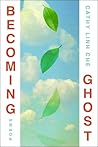
Becoming Ghost: PoetryBecoming Ghost: Poetry by Cathy Linh Che
My rating: 5 of 5 stars

Publisher Site – Simon & Schuster

This collection is built around the surreal emotionality of the author’s parents having both lived through the war in Vietnam and also having served as extras in the film, Apocalypse Now. [For those unfamiliar, Apocalypse Now was a Francis Ford Copp0la film based loosely (and partially) on Joseph Conrad’s novel,Heart of Darkness. The film follows a military officer sent upriver to assassinate a rogue Special Operations colonel during the Vietnam War, and shows the war from various perspectives as the would-be assassin travels through the country to complete his mission.]

At times, the poems read like a poem-shaped biography, but that’s not all there is to the book. There are points that imagery and language are used to shoot beyond a mere telling of events, in order to create emotional resonance with the core strangeness of living through a traumatic event only to portray a background individual (someone like one’s own past self) in a fictional retelling of events based on those through which one lived.

The poetic forms vary somewhat, though all within the modern, free verse style. Most notably, the author uses the golden shovel approach of Terrence Hayes extensively.

This collection grabbed me both with its clever language and its thought-provoking central premise. I’d highly recommend it for readers of poetry.

View all my reviews

PROMPT: Title

Daily writing prompt
If there was a biography about you, what would the title be?

The Bigger they Fall, The Harder They Are

BOOKS: “The Pass of the Persecuted” by Guram Odisharia

The Pass of the PersecutedThe Pass of the Persecuted by Guram Odisharia
My rating: 5 of 5 stars

Prospero’s Books

I picked up this book at Prospero’s Books in Tbilisi as part of my continuing effort to consume literature from every place I visit. It’s one of those books that’s small in page count (less than 100pp.) but massive in emotional impact. It tells of the author’s flight from Abkhazia (a contested region between Georgia and Russia on the Black Sea) on foot over a high mountain pass in the early 1990’s. It shines a harsh light on the refugee experience (though I don’t know that the term “refugee” is technically correct as Odisharia was both leaving from and going to a country to which he was a citizen.)

Besides being a visceral story of hardship, this thin book is weighty with powerful language, and it offers some vivid philosophical insights — e.g. “Miserable is the country where a bullet is valued more than a kind word, where hatred means more than love.” or “Mountains are like great love. Great love makes a kind man kinder, and a wicked man more wicked, a niggardly man more niggardly, a greedy man greedier, a cowardly man more cowardly, a naive man more naive…”

I found this book to be well worth reading.

View all my reviews

PROMPT: Unique

Which aspects do you think makes a person unique?

Genetic code and life story.

PROMPT: Biography

If there was a biography about you, what would the title be?

“Stumbling Through: A Life”

BOOKS: “The Banished Immortal” by Ha Jin

The Banished Immortal: A Life of Li Bai (Li Po)The Banished Immortal: A Life of Li Bai by Ha Jin
My rating: 5 of 5 stars

Amazon.in Page

Li Bai is considered to be one of China’s best poets of all time, writing during the Tang Dynasty (618-907 AD,) a time swole with poetic greats. However, it’s not just a prolific collection of extant masterpieces that make Li Bai worthy of a biography intended for a general audience. Li Bai was also a compelling character. He was, at once, a drunk and a genius; a swordsman of some skill and a card-carrying Daoist. It’s not just that he could edit drafts into brilliant poems, but he was said to be gifted at spontaneously spouting clever verse. He was constantly struggling to gain a post in government, but failed time and again. Even when his poetic renown became so great that he was given a post in the Imperial court, he was disappointed to find that it was largely ceremonial and that he would have no great impact on anything. He had a stunning fall from grace when he aligned with the wrong side during a civil war and was lucky to have been exiled rather than executed.

Ha Jin, a prominent present-day Chinese author best known for the novel Waiting, does an excellent job of exploring Li Bai’s life. What I particularly enjoyed is that Ha Jin (a poet himself) discusses how events in Li’s life spurred some of his great poems (which are often included in whole or in part.) Ha Jin is also careful to make clear when biographical accounts diverge, and there are many unknown or disputed details of Li’s life. In fact, there is a bit of a mythology around Li Bai, as one might guess from the title – which refers to a nickname bestowed upon the poet based on the belief that he was a Daoist immortal.

I’d highly recommend this book for readers of biography, those interested in Chinese history, or those who are intrigued by rebellious poetic souls.

View all my reviews

BOOKS: How to Talk Dirty and Influence People by Lenny Bruce

How to Talk Dirty and influence peopleHow to Talk Dirty and influence people by Lenny Bruce
My rating: 5 of 5 stars

Amazon.in Page

This is the autobiography of the comedic legend, Lenny Bruce. The first half (or so) of the book discusses Bruce’s life before standup comedy. This includes time as a sailor (US Navy) during the Second World War, as a sailor in the merchant marine, as a farmhand, and brief stint as a grifter. The second half takes place while Bruce is a working comedian but focuses heavily on his legal troubles including multiple Obscenity trials and one for Narcotics.

Being the work of a comedian, it’s no surprise that this book is funny — frequently of the laugh-out-loud variety. However, it may come as more of a surprise how interesting it is as the account of a man’s life. Besides some interesting stories, such as: how Bruce got discharged from the Navy, how he acquired priest’s uniforms to conduct a con, his experiences getting high with a Turkish sailor as a merchant marine, and the ins and outs of his marriage to a stripper, one gains some insight into Bruce’s philosophy and why he insisted on being maximally edgy, even at the cost of blackballed by clubs. The book holds up surprisingly well, considering it was first published in the early / mid-1960’s.

If you’re interested in outlandish people, standup comedy, or free speech, this book is well worth reading, and will not disappoint. (If you liked “The Marvelous Mrs. Maisel,” it’ll definitely be up your alley.)

View all my reviews

BOOK REVIEW: Wrath of the Dragon by John Little

Wrath of the Dragon: The Real Fights of Bruce LeeWrath of the Dragon: The Real Fights of Bruce Lee by John Little
My rating: 5 of 5 stars

Amazon.in Page

Release Date: September 5, 2023

There are many Bruce Lee biographies out there, from general bios (such as Matthew Polly’s Bruce Lee: A Life) to those that are much more narrowly focused (e.g. Rick Wing’s Showdown in Oakland about Lee’s fight with Wong Jack Man.) This book is somewhere in between in that it is theme-focused (Lee’s fights and matches,) but it does offer insights from Lee’s childhood through to his death as they pertain to these fights and sparring experiences. The book explores all of the known real-world scraps and matches, as well as some of the more telling sparring sessions. Fights range from Lee’s adolescent skirmishes as a punk kid through the challenge matches with extras on the set of Enter the Dragon as an astute (if still quick-tempered) master. When I say that the book includes sparring sessions, I’m not talking about every time Lee sparred, but rather those exchanges that offered particular insight into Lee’s prowess, such as his last ever sparring session with his old Wing Chun teacher, Wong Shun-Leung (a senior student of Ip Man’s) as well as those with athletes at the top of their respective combative sports.

The point of the book is to challenge a belief — widespread at times — that Lee was a blow-hard offering banal quasi-mystical Eastern philosophy and martial insights that were based only on a few Wing Chun lessons from Ip Man. In contrast, the book paints a picture of a broadly experienced fighter who was obsessive about his betterment as a martial artist. Lee was an innovator and trained with great endurance and intensity. The book portrays Lee as a martial artist of such speed and athleticism that even World Champion competitors were left in awe.

While reading, one does have to question how objectively the information is being presented. After all, Little is definitely a bit of a fanboy and he’s clearly taking a stance on Lee’s prowess. Furthermore, the fact that (at one point, I’m not sure about presently) Little was the only one with full access to Lee’s archived notes suggests his message was sufficiently on point for Lee’s family to feel comfortable with him. That said, I felt there was enough admission of Lee’s weaknesses and mistakes as well as a willingness to present competing statements when details were in question that I believe this is an honest attempt to get the details right (within the unavoidable constraints of memories of events being decades in the past and being seen from multiple perspectives — psychologically as well as geographically.)

I found this book to be fascinating from cover to cover, and well worth reading. In addition to the stories of the fights, the author discusses the lessons that Lee learned along the way. Even in winning, Lee was sometimes dissatisfied with his own performance, and this drove him to adapt and to develop new training methods. I’d highly recommend this book for those interested in the martial arts or who love a good biography.

View all my reviews

Pushkin Limerick

The poet Alexander Pushkin
 challenged twenty-one duels with no win.
 But just that one loss,
  put him under a cross.
 Perhaps, he'd have lived if his skin weren't so thin. 

Voltaire Clerihew

The Enlightenment thinker called Voltaire
 beat the lottery to become a millionaire.
   To the man, he did stick it,
    by buying every ticket.