PROMPT: Good Leader

Bloganuary writing prompt
What makes a good leader?

I don’t think I know, not really. But I don’t feel bad because I don’t think a lot of people who consider themselves experts do either. For example, one of the biggest cons in academia is that professors in business schools often get paid much more than their science and humanities counterparts on the presumption that they would go run businesses if they weren’t paid a higher salary than the others. Most of them would not. The idea that a thorough theoretical knowledge of the world of commerce and the operations of a corporation would translate into all the X-factors needed to head a company (e.g. charisma, risk-acceptance profile, creativity, and an internal emotional landscape that borders on [or is outright] psychopathic) seems laughable. If that’s the way the world worked a quartet of music professors would be outselling the Beatles and the ranks of Olympic gold medalists would be swollen with Kinesiology PhDs.

NOTE: I should explain the “psychopathy” crack. Many of us have quite enough angst from making decisions that seem to have the potential to ruin our own lives. Some can take a little more angst and are ok making decisions that might mess up not only their own lives, but also those of their children. It takes a special kind of reptilian-like nature (beneath the appearance of charm and polished interpersonal skills) to regularly make decisions that can screw up the lives of complete strangers by the hundreds or thousands.

BOOKS: “Rangikura” by Tayi Tibble

Rangikura: PoemsRangikura: Poems by Tayi Tibble
My rating: 4 of 5 stars

Amazon.in Page

Release Date: April 9, 2024

This collection by New Zealander, Tayi Tibble, consists of free verse and prose poetry of an autobiographical nature (or presented as such.) It is playful in its use of language, especially in its use of slang and Maori language words, as it deals in a broad emotional landscape.

It has bursts of creative brilliance and evocativeness, but also periods where it’s like reading a teenager’s diary.

All in all, I enjoyed the collection and would recommend it for poetry readers.

View all my reviews
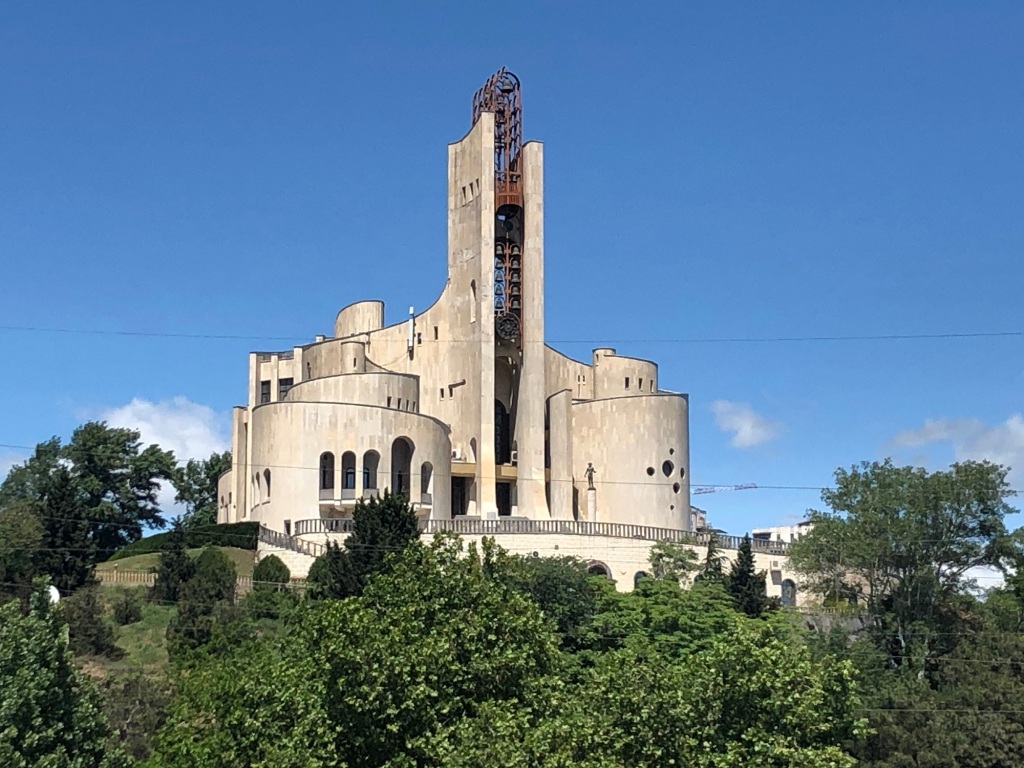
DAILY PHOTO: Tainan Wude Hall (台南武德殿)

Built as a dōjō, a martial arts training hall, during the period of Japanese rule, this historic building is now part of the Zhongyi Elementary School complex. It’s right beside the Confucian Temple.

Stalking Tiger [Free Verse]

A giant tiger stalks,
baring teeth, tensing claws,
closing the distance
in deep shadows that exist
entirely within the man's mind.

While others, from safe distances,
can see the fearsome beast clearly.

“A Noiseless Patient Spider” by Walt Whitman [w/ Audio]

A noiseless patient spider,
I mark'd where on a little promontory it stood isolated,
Mark'd how to explore the vacant vast surrounding,
It launch'd forth filament, filament, filament out of itself,
Ever unreeling them, ever tirelessly speeding them.

And you O my soul where you stand,
Surrounded, detached, in measureless oceans of space,
Ceaselessly musing, venturing, throwing, seeking the spheres to connect them,
Till the bridge you will need be form'd, till the ductile anchor hold,
Till the gossamer thread you fling catch somewhere, O my soul.

PROMPT: Un-invent

If you could un-invent something, what would it be?

Being acquainted with the Law of Unintended Consequences, there isn’t a thing I’d un-invent. You start arrogantly messing in the natural progression of things, and you never know what kind of monster you’ll birth.

Once upon a time, I might have said nuclear weapons (still a strong contender for ender of our species.) Then again, who knows what kind of horrific World War III we might have had, had we not been forced to sober up a little.

Future River [Haiku]

the river trickles.
but its broad shoulders tell
 of expectations. 

Urban Jungle [Kyōka]

in a city park,
muscular baobabs &
wiry strangler figs
provide residences
for the fierce squirrels.

DAILY PHOTO: Yehliu Geopark on a Dreary Winter Day

BOOKS: “Robert Frost: Sixteen Poems to Learn by Heart” ed. by Jay Parini

Robert Frost: Sixteen Poems to Learn by HeartRobert Frost: Sixteen Poems to Learn by Heart by Robert Frost
My rating: 5 of 5 stars

Amazon.in Page

Release Date: March 12, 2024

This book presents sixteen of Frost’s poems, each with a commentary on the poem, how events in Frost’s life influenced said poem, and assorted background details. It includes the “greatest hits” (e.g. “Mending Wall,” “The Road Not Taken,” “Fire and Ice,” and “Stopping by Woods on a Snowy Evening,”) a few of Frost’s more obscure works, and a number that are in-between in status.

I found the commentaries to be interesting and readable, which is important as Frost’s poems are now in the public domain, and so the value of this volume hinges on Parini’s work. Parini includes some stories that offer insight into Frost’s mindset, as with the story of the lady who approached him after a reading to ask the meaning of “Fire and Ice.” Reading Frost isn’t like reading, say, Allen Ginsberg, the latter being one who put it all out there – unabashedly, Frost’s poetry is more guarded and deals more in nuanced metaphor. This makes a volume like this useful if it can offer any insight into the poet’s mindset, which I think Parini does.

I considered reading this book to be an opportunity to learn more about the poems and poet, and – therefore – did not heavily weight the stated theme of presenting poems that should be rote memorized. I mention this because I suspect Parini had other criteria in mind as well. While the book does include poems that are easily memorized (e.g. “Fire and Ice” and “Stopping by Woods on a Snowy Evening”) as well as poems that have messages worth learning by heart (e.g. “Mending Wall” and “The Road Not Taken,”) it also includes poems that aren’t so memorable because they are long, not especially lyrical, or not particularly filled with stand-out ideas or vivid imagery (e.g. “Directive,” “The Wood Pile,” and “Birches.”) This also begs the question, why one wouldn’t include a poem like “Nothing Gold Can Stay,” which is short, lyrical, and has an easily grasped message (i.e. easily memorized.)

As for ancillary matter, there is an appendix that offers tips for memorizing poems as well as a short “recommended reading” bibliography.

That said, I enjoyed reading this book; I got a lot out of Parini’s commentary, and I would recommend the book for poetry readers.

View all my reviews