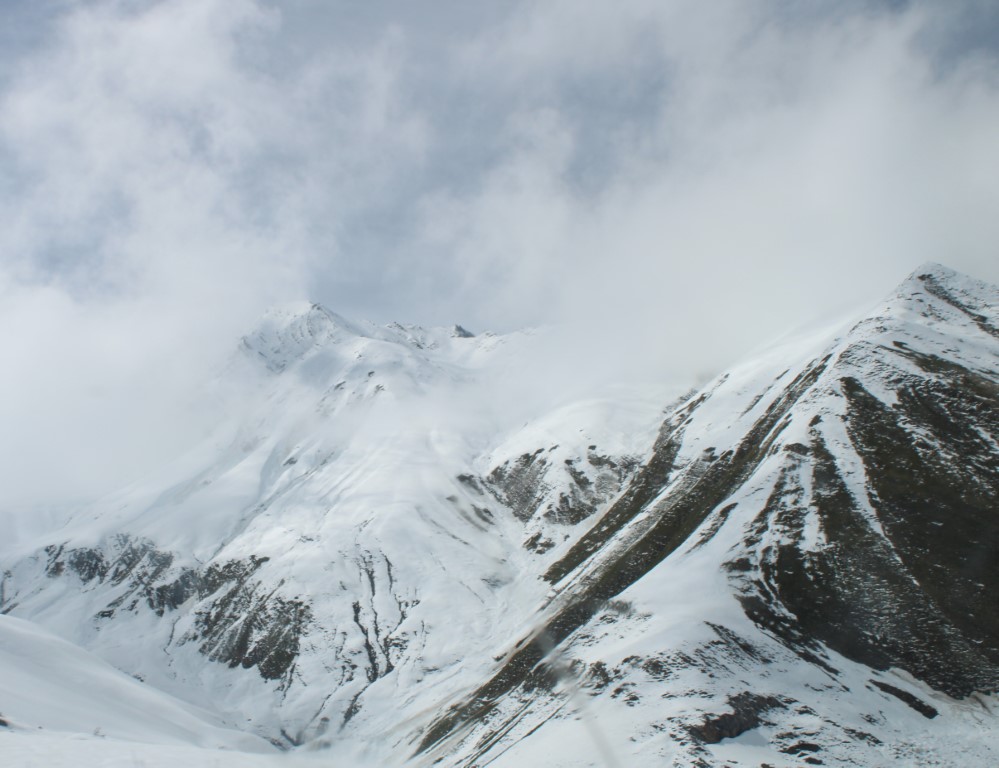
“Walking to Guanghua Temple by Moonlight” by Ouyang Xiu [w/ Audio]

Sound of water cascading over rock.
A silent mountain in the night.
Bright moonlight washes over the pines.
One thousand peaks, all in one color.

PROMPT: Weather

What is your favorite type of weather?

Depends on whether I’m outside or inside. If the former, I favor the partly cloudy to sunny range, depending on how brutal or gentle the sun is, respectively. If the latter, I’ve got nothing against a cleansing torrential downpour.

Lily Pad Heron [Haiku]

water lilies stand
confidently, while herons
step warily.

DAILY PHOTO: Patuxai, Vientiane

Image

BOOKS: “Inner Space Philosophy” by James Tartaglia

Inner Space Philosophy: Why the Next Stage of Human Development Should Be Philosophical, Explained Radically (Suitable for Wolves)Inner Space Philosophy: Why the Next Stage of Human Development Should Be Philosophical, Explained Radically by James Tartaglia
My rating: 5 of 5 stars

Amazon.in Page

Release Date: July 1, 2024

This is a strange book, and I suspect it will be mostly loved or loathed, with relatively few people in that usually broad spectrum of indifference. It’s not strange in its message (which is an argument for philosophical Idealism and a metaphysics consistent, therewith,) but rather it’s odd in its delivery. It mixes fact and fiction, often in an ill-defined way, and it’s loaded with fourth wall breaking self-introspection. I enjoyed reading the book, found it amusing at times, and received a lot of food-for-thought from it (but not without some frustration, particularly around not knowing which were true stories. I suspect this was intentional. Philosophical Idealism being a notion that what matters is our internal [i.e. mental / emotional] experience and that that experience may not have much to do with any external “reality” [and, to the degree it does, that we have limited capacity to know how.] Therefore, it makes sense that a book taking such a stance would eschew the importance of external world “truths” in favor of building mental models that have pedagogic value regardless of whether the reflect external world happenings. The book boldly puts its money where its mouth is in that regard.)

It should also be said that part of the reason for the book’s unusual approach was to make a hard break from the usual mode of philosophical writing, which is often pedantic, pretentious, and elitist. That’s because, beyond the metaphysics it’s prescribing, the book is also proposing a need for philosophy to be a broadly human endeavor – approachable by all, rather than the domain of an elite who communicate in their own special jargon-laden language and argue over minutiae irrelevant to everyday living. Like a number of books of recent years, it’s proposing that we need a philosophy of life that helps us live better lives, rather than a philosophy of semantics and elaborate logic that helps “professional philosophers” score points in a game of philosophy.

A few things I liked about this book, include: a.) it didn’t treat the Western Philosophical tradition as the sum total of philosophy (as many books have.) For example, it explored Akan and Buddhist philosophy alongside the ancient and modern philosophy of the West. b.) it gives special emphasis to Cynicism, a school of philosophy that is usually disregarded as the domain of a few madmen of ancient Greece. There is a chapter imagining Trinidad’s Gambo Lai Lai as a Cynic of the modern world. c.) I liked that it used the last chapter as a way to review in a way that was fun and echoed the approach of the Socratic dialogue. It pitted a scholar in favor of the ideas of the book against what might best be thought of as a mainstream academic philosopher (though he was also an opponent of the book.) This allowed the author to review the book’s ideas in a way that can only be experienced through a clash of ideas. (And it offered some levity, as well.)

I got a lot out of reading this book. If you can cope with your belief in the importance of factual happenings being challenged, you too will probably enjoy it.

View all my reviews

PROMPT: Teacher

Daily writing prompt
Who was your most influential teacher? Why?

By the measure of having taught still useful lessons about HOW to think (those who taught me WHAT to think are largely forgotten along with their lessons,) that would be a tie between my 11th grade Psychology teacher and an undergrad Religious Studies professor. The former, among other ideas, first exposed me to what I would come to believe is the most important lesson of human existence under his label of the “gestalt of expectations.” [I’ve never heard anyone else refer to it as such, but the lesson was sound and I would latter find it in philosophies from Buddhism to Stoicism.] The latter teacher, among other ideas, exposed me to two common opposing modes of fallacious thinking, what he called “the outhouse fallacy” and “the first-est is best-est fallacy” (he was a folksy, if erudite, professor.)

In terms of personal growth and development, generally speaking, there are numerous teachers of martial arts, yoga, and other mind-body practices that are incomparable and thus unrankable. Not to mention, a sound argument can made for the repugnantly unhumble statement that I am my most influential (and most important) teacher. (I state this claim not as though I am unique, but as one that could apply to anyone.)

“Retort” by Paul Laurence Dunbar [w/ Audio]

"Thou art a fool," said my head to my heart,
"Indeed, the greatest of fools thou art,
To be led astray by the trick of a tress,
By a smiling face or a ribbon smart;"
And my heart was in sore distress.
Then Phyllis came by, and her face was fair,
The light gleamed soft on her raven hair;
And her lips were blooming a rosy red.
Then my heart spoke out with a right bold air:
"Thou art worse than a fool, O head!"

Hornbill [Haiku]

perching hornbill:
a plodding half-ton bovine
doesn't merit attention.

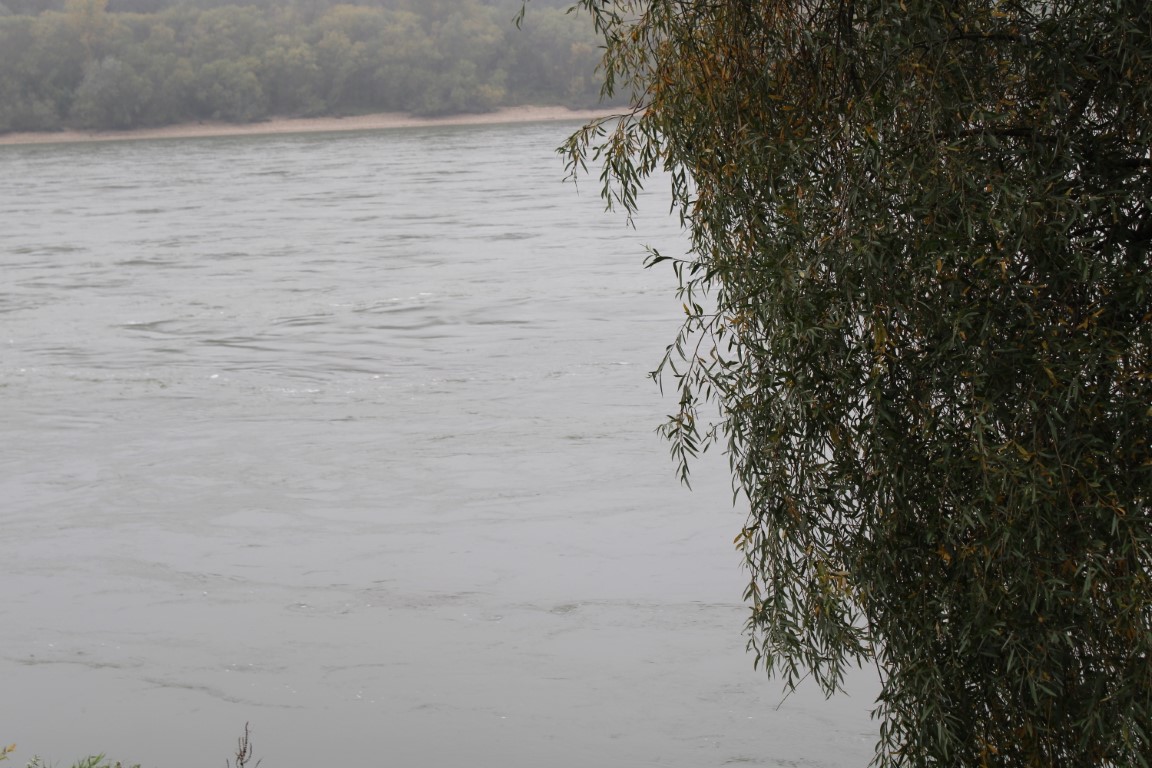
The Other Shore [Free Verse]

Standing on the bank, 
Looking at the other shore --

A hundred meters or a mile?
Does it matter,
In such a fast flow?

If I were to swim for it,
Launching myself into
Those cold, choppy waves,
Which would I reach first:
The other shore, or
The Falls, downstream?

DAILY PHOTO: Zebra Blocks Cape Buffalo Portrait

Image