BOOK REVIEW: Futureland by Walter Mosley

FuturelandFutureland by Walter Mosley

My rating: 4 of 5 stars

Amazon page

As suggested by the subtitle, this is a collection of nine short stories about a dystopian world. What makes it a particularly intriguing read is that the stories take place in one world, and the events all exist within a greater context that could qualify the book as a loosely plotted novel had the writer not defined it as a story collection.

Some characters recur in different stories. For the most part the recurring characters are cameo appearances (e.g. Folio Johnson, a detective and the lead in one story, commiserates at a bar in another). However, the character of Ptolemy “Popo” Bent is a critical character in both the first and penultimate chapters.

Race and politics aren’t subtle in this book. Given the [sad] proclivity of American readers to only read / enjoy politically charged works with which they agree (unless the book in question is making fun of the opposition), it’s safe to say that—on the whole–those at the left-end of the political spectrum will find this book more palatable and on-point and those to the right-end will find it unbelievable and overbearing in its message.

Having said that, I’m of the persuasion that finds Mosley’s dystopian vision strains credulity, and yet I thoroughly enjoyed this collection of stories. This book’s dystopia is characterized by global domination by a corporation and a religion called the “Infochurch,” both led by the same man. The corporate control of the world storyline is a little hard to swallow. A monopoly can’t enslave people (or even enforce its monopoly status) unless it has a monopoly on force, and it’s hard to imagine a path by which a private business gets the people to give them a monopoly on force. That being said, Mosley’s stories are engrossing, creative, and readable.

The nine stories are as follows:

1.) Whispers in the Dark (6 Chapters): A man makes the ultimate sacrifice to help nurture a brilliant child’s special gift.

2.) The Greatest (9 Chapters): A female boxer becomes the world champion while seeking to help her father, whose addition to a drug called Pulse has left him in dire health. (The father’s story, Voices, appears later in the collection.)

3.) Dr. Kismet (4 Chapters): The man who is, for all intents and purposes, Emperor of the World tries to co-opt the co-chair of the 6th Radical Congress—a leading member of his opposition.

4.) Angel’s Island (5 Chapters): A hacker, sent to prison for Antisocial Behavior, has a device called a snake-pack installed that can control him by administration of drugs and shocks. But the ultimate hacker might not be the most easily controlled using technology.

5.) Electric Eye (4 Chapters): Folio Johnson, a private eye with an electronic eye, is hired to find out why young International Socialists are dropping dead left and right. Johnson learns that any hardware, even his eye, can be hacked.

6.) Voices (8 Chapters): Professor Jones, father of the female boxer from The Greatest, undergoes a transplant of neural matter to repair damage from his Pulse addition. After having dreams and memories that are not his own, Jones discovers that his treatment is not all that it seemed.

7.) Little Brother (3 Chapters): Frendon Blythe is on trial before a computer that acts as both judge and prosecutor. He pleads his own case, and finds he was a pawn.

8.) En Masse (12 Chapters): A worker gets sent to a new division only to find that it’s nothing like his previous divisions. Instead of strict rules, GEE-PRO-9 has no rules. He wonders if it might be a test by the management. It turns out that it is a test–just not of the type he imagined.

9.) The Nig in Me (6 Chapters): After a plot to destroy certain races backfires, a surviving man finds himself missing those with whom he was closest.

There’re no stinkers among these stories. They are all intriguing and readable, but a few of them stood out as being particularly good. These were: Whispers in the Dark, Angel’s Island, Voices, and En Masse.

I’d recommend this for readers of soft science fiction.

View all my reviews

DAILY PHOTO: The Colors of Holi

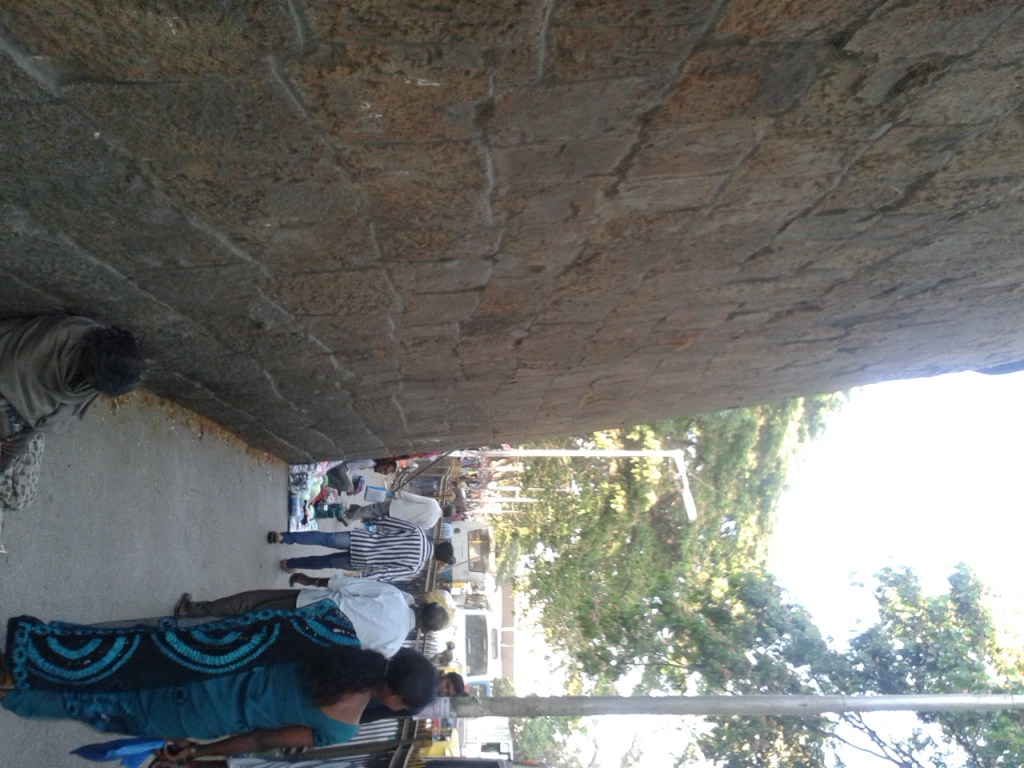
Taken in October of 2013 in KR (City) Market in Bangalore.

Taken in October of 2013 in KR (City) Market in Bangalore.

As I skipped posting Daily Photos over the weekend, I’m posting two today–in honor of a Western and an Indian holiday respectively.  Holi is the festival of colors, and today one can see plenty of people with faces and clothing powdered in vivid colors. In the markets one sees these conical piles of color defying gravity in a most stubborn fashion. FYI- Today isn’t the day to wear your finest, pristine white dress shirt.

DAILY PHOTO: Saint Patrick’s Church in Bangalore

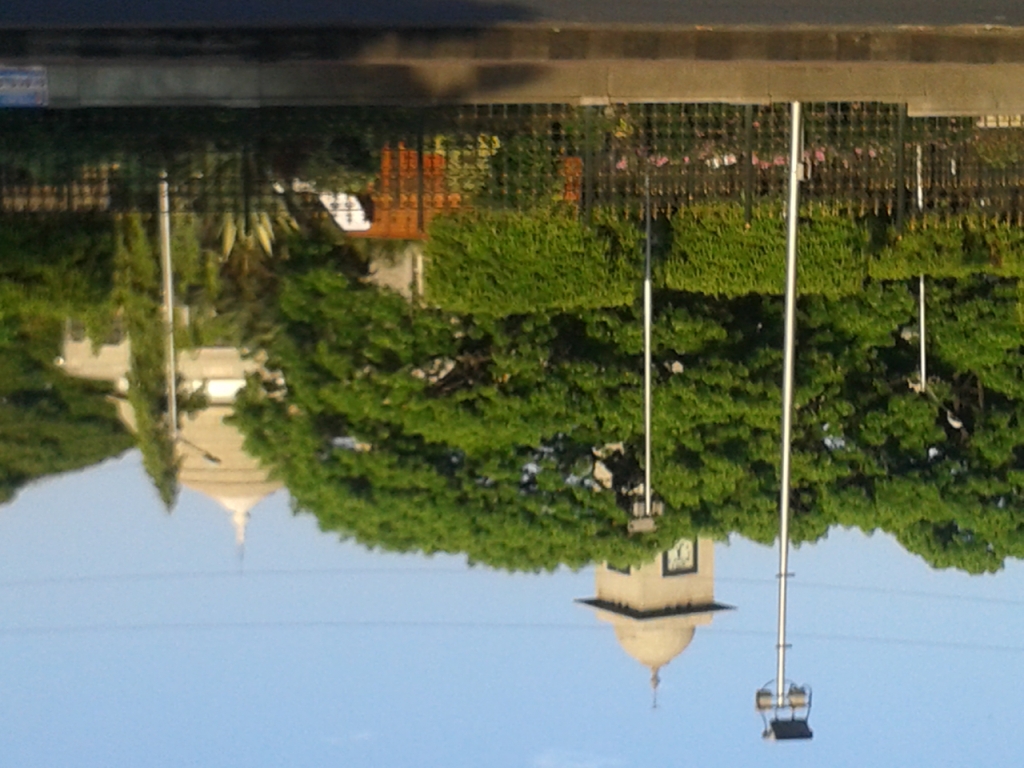
20140313_064206This is Saint Patrick’s Church in Bangalore in honor of St. Paddy’s Day.


Paleo-Stressing: Acute v. Chronic Stress

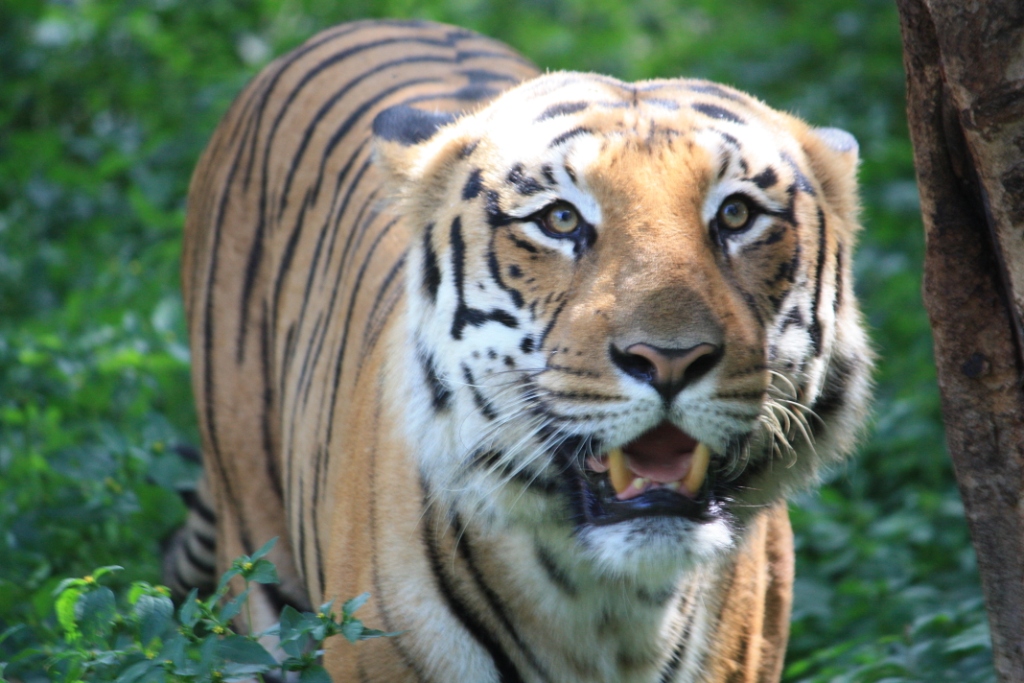
"What happened to the good ole days when I ate you people--not lived in your cages?"

“What happened to the good ole days when I ate you people–not lived in your cages?”

Paleolithic dieting is all the rage these days. I’m no expert on the paleo-diet, but–as I understand it–this refers to the practice of eating the foods consumed by our pre-agrarian ancestors. The idea is that if one consumes the foods that our species is evolutionarily-optimized to eating, one will be healthier.  Whether one believes in the merits of the paleo-diet or not on the whole, it’s hard to argue that one wouldn’t be better off eating less highly-processed and highly-refined foods and more things that look like food at a glance.


Our diet isn’t all that has changed since the days of our pre-agrarian ancestors. Modernity has brought with it an entirely new way of experiencing stress. Eliminating or reducing stress is a common topic of discussion, but not all stress is created equal. There’s a necessary form of stress, a stress that makes one better, stronger, faster, and smarter. We don’t want to willy-nilly eliminate stress; we want to reduce the wrong type of stress.


Our ancestors—like animals–experienced brief periods of intense stress (e.g. saber-tooth tiger attacks), followed by longer periods in which they were free of deadlines, carpools, and after-school activities. Now, no one likes to have a saber-tooth tiger stalking them. It’s unpleasant. Modern humanity has gone to great lengths to eliminate those short bursts of terror, but not without cost. (If you don’t believe me read Robert Sapolsky’s Why Zebras Don’t Get Ulcers.)


Whether or not you believe that eliminating acute instances of terrifying stress is bad for mankind, it’s hard to argue that modernity’s leveling process didn’t eliminate stress, but instead resulted in a chronic stress on a smaller scale. People today have impossibly long daily to-do lists, and they have to accept trade-offs between work, family, and personal development.


It’s true that you don’t get eaten by a giant cat when you drop the ball, but life is so packed diverse events that one may feel like one is dropping some ball constantly. If your boss thinks you’re a model employee, then your kids are probably going to need therapy. If you have a contented home life, your boss may have his or her eyes open for someone who can give the firm consistently 70+ hour work weeks. If you feel you’re doing alright on both the work and family front, your body and / or mind is probably a train wreck.


Chronic [mini] stress may feel better than acute [catastrophic] stress, but it takes its tolls in various ways. First, with our sympathetic nervous system (fight-or-flight reaction) constantly engaged our body’s power to heal itself is reduced. When the parasympathetic nervous system is engaged, the body devotes resources to long-term goals like getting healthier, but in stress mode activities not relevant to immediate survival shut down. This is a great system if you have periodic life and death stress, but is not so good if you’re under constant stress.


Second, chronic stress reduces sleep, and sleep is essential to one’s mental and physical well-being. There are a wide variety of symptoms associated with sleep deprivation such as forgetfulness, decreased concentration, decreased alertness, reduced reasoning ability, diminished problem-solving capacity, and depression—all of which can diminish our physical health through accidents, ailments, suicide attempts, and lack of energy for exercise.


Third, chronic stress can make one fat, with all the health issues that result. Some people use food as a coping mechanism. Other people eat too fast or choose their food poorly because of time constraints or because they are not mindful of eating as their monkey minds churn at a mile a minute. Then there is the more convoluted and complex issue of cortisol–a hormone released under stress that is linked to weight gain in at least some cases. Even if you don’t have a problem on the calorie intake side, the stressed individual may not do so well on the calorie burning side—either because of a lack of time to exercise or a lack of energy.


Modern humans are uniquely suited to chronic stress because we are the only species that achieves the same physiological stress response by remembering and obsessing about a stressful event as experiencing it. Abandoning the modern approach to living isn’t an option most are willing to entertain; but there are ways to combat chronic stress.


Move – Meditate – Mindfully Breath: The bad news is you’ve got to shoehorn these activities into your schedule daily (or at least several times a week.) The good news is that they don’t need to take up a lot of your day. There are a number of systems that address all three components in one handy package such as Qi Gong, Yoga, and some martial arts. I don’t think it matters so much which one chooses as how one goes about one’s practice.


Movement strengthens and strategically stresses the body, but it also increases one’s bodily awareness so that one becomes aware of how stress is manifesting itself in one’s body. Meditation teaches one how to live in the present moment, and it trains one to recognize the seeds of negative thought and emotion earlier so that one can counter-act them. Obviously, breathing is essential to life, but learning to be aware of one’s breathing patterns and to “manually override” the breath patterns associated with harmful emotional states is a beneficial skill.


Massage / Bodywork: Whether self-administered or other-administered (the latter allowing greater distressing–particularly if the masseuse is skilled) massage is an activity, like movement, that can help one become aware of where one is physically holding one’s stress. These physical manifestations of stress can exacerbate the whole experience of stress. One should take time periodically to have bodywork done. A day rarely goes by in which I don’t work on my own neck, shoulders, head, or face, and I occasionally get professional Thai Yoga Bodywork done.


The Places that Scare You: Force yourself to go someplace (not necessarily literally a “place”) that scares you once in a while. This needn’t be skydiving or hand-gliding—but it could be. It may be a martial arts class in which one has to put on the gloves occasionally and go at it. It may be joining Tostmasters and having to give a speech in front of a crowd. It may be traveling to some backwater where you don’t know the language, but you want to learn. This is a very personal issue. (i.e. A Type-A personality he-man may not find that skydiving is outside his comfort zone. If so, sorry, skydiving doesn’t count, he may need to learn ballroom dancing, or something else that truly takes him outside being comfortable.) KEY POINT: The problem with hiding from all stressors is that it doesn’t result in a stress-free life, what happens is that smaller and smaller stressors loom bigger and bigger in one’s mind. Which brings us to…


Perspective:  One must put life’s challenges in perspective. Each person’s problems are important to them, and I don’t want to diminish anyone’s problems, but—come on—you’re not going to be eaten by a freaking saber-tooth tiger.

DAILY PHOTO: Coracle Captain

Taken in November of 2013 at Hampi

Taken in November of 2013 at Hampi.

This 89 pound man rowed tourists (usually weighing much more than 89 pounds a piece–and sometimes including five or six per group) upstream, and then float them back downstream.  He was definitely putting his back into it.

First World Problems Are So Adorable


How deep is it? No one knows.

How deep is it? No one knows.

In the interest of enhancing global understanding and camaraderie, I’ve built a translator of common first world (FW) problems–putting them in terms of their Rest of the World (RoW) equivalents.

FW: This food needs salt.
RoW: This food needs food.

FW: My health insurance premiums went up $20 per month.
RoW: My right foot, which recently turned from purple to black, just fell off.

FW: My car is in the shop again.
RoW: My right foot, which recently turned from purple to black, just fell off.

FW: It’s raining again today.
RoW: My house was washed off its foundations and is currently floating down the Brahmaputra River.

FW: Looks like those devils from the other party got a majority in the legislature.
RoW: This coup was particularly bloody.

FW: Squirrels are getting into my bird feeder.
RoW: A tiger ate my family.

FW: A traffic jam made me late for Pilates class.
RoW: While limping through the Kyber Pass to get antibiotics for my right stump, I was socked in by an unanticipated blizzard.

FW: My GPS says this road cuts under the interstate, but now I’ve got to go around.
RoW: What’s GPS?

DAILY PHOTO: Peeking BBMP Building

Taken on March 12, 2014 in Bangalore

Taken on March 12, 2014 in Bangalore.

Taken from across Mysore Road near the front of Badami House (the Karnataka State Tourism office.)

DAILY PHOTO: Bangalore Fort: The Tiny Attraction You Probably Missed

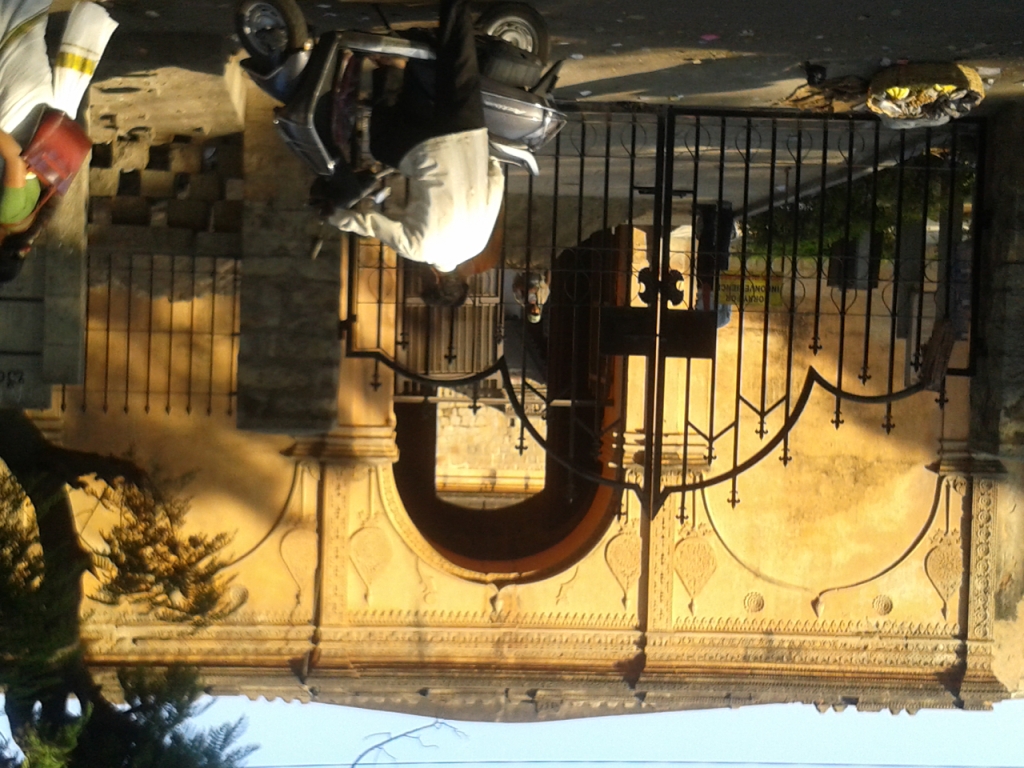
20140312_170923

20140312_171102

20140312_171018The inscription reads: “Through this breach the British assault was delivered March 21, 1791.” I guess that means that the 223rd anniversary of the British attack on Bangalore is right around the corner.

Bangalore Fort is a tiny piece of the 16th century Vijayanagar fortification that remains intact–it’s all that remains. It’s located between city market and Tipu Sultan’s Bangalore Palace. As it takes only about 10 minutes to walk through, a lot of people don’t even realize it’s there.


DAILY PHOTO: Say, “Hello Kitty,” and Eat Lead

Taken in January of 2014 at Phuket, Thailand

Taken in January of 2014 at Phuket, Thailand

These billboards are all over Phuket, which isn’t to say that it’s one identical billboard (or even just one shooting range), but billboards showing ALMOST the widest possible demographic enjoying their arms.  I say “almost” because for some reason they don’t include any old folks. I’m a little offended by that. Do they think that seeing crotchety elders holding guns will scare their potential customers, or are the old just not sexy enough for the advertising world?

I wonder if there was irony intended with the little girl with the Hello Kitty! shirt, bows in her hair, and gun bigger than her head in her hands?

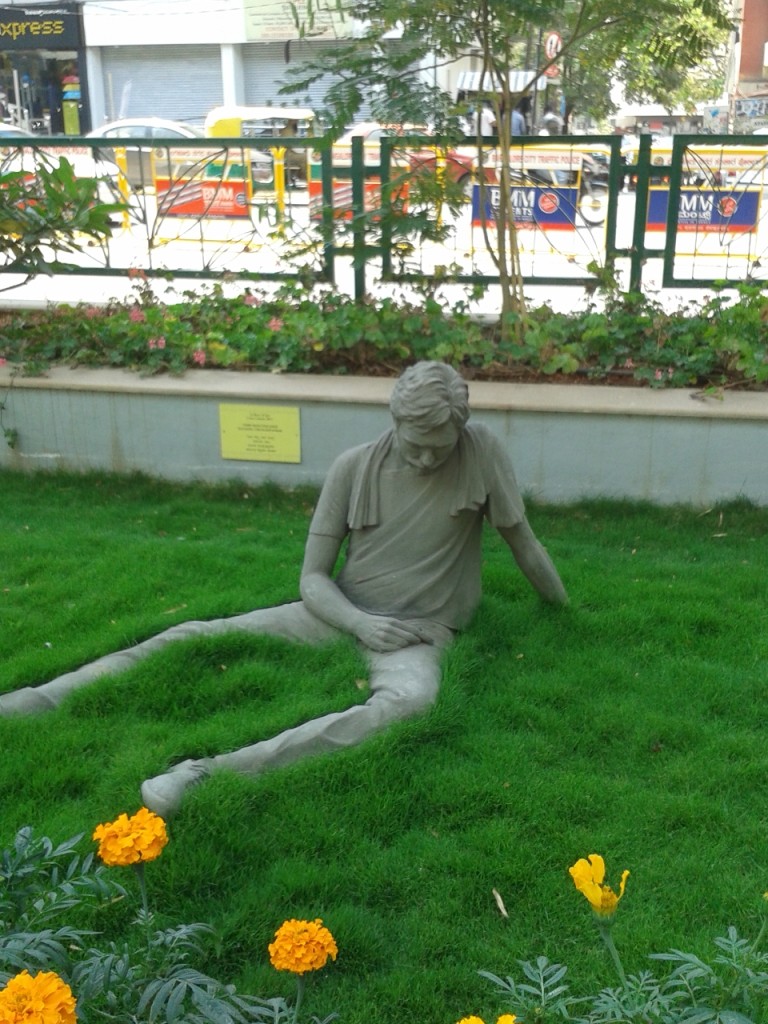
DAILY PHOTO: Sittin’ on the Grass: or, I Don’t Get Art

Taken on March 10, 2014 in Bangalore.

Taken on March 10, 2014 in Bangalore.

This sculpture is on the MG Road Art Station promenade. If it were an actual guy, he’d be hauled off to the drunk tank, but because he’s stone, it’s art.