momma langur
looks like she’s saying,
“lean into your hammy!”

momma langur
looks like she’s saying,
“lean into your hammy!”
unMind: A Graphic Guide to Self-Realization by Siddharth Tripathi
Yoga Anatomy by Leslie Kaminoffwith each breath and each step you feel yourself merge with the world pulling the outside in pressing into the planet each breath brings oxygen used by Buddha or Socrates grit granules that were part of mighty mountains press into your flesh or become your bones the world flows through you as you flow through the world
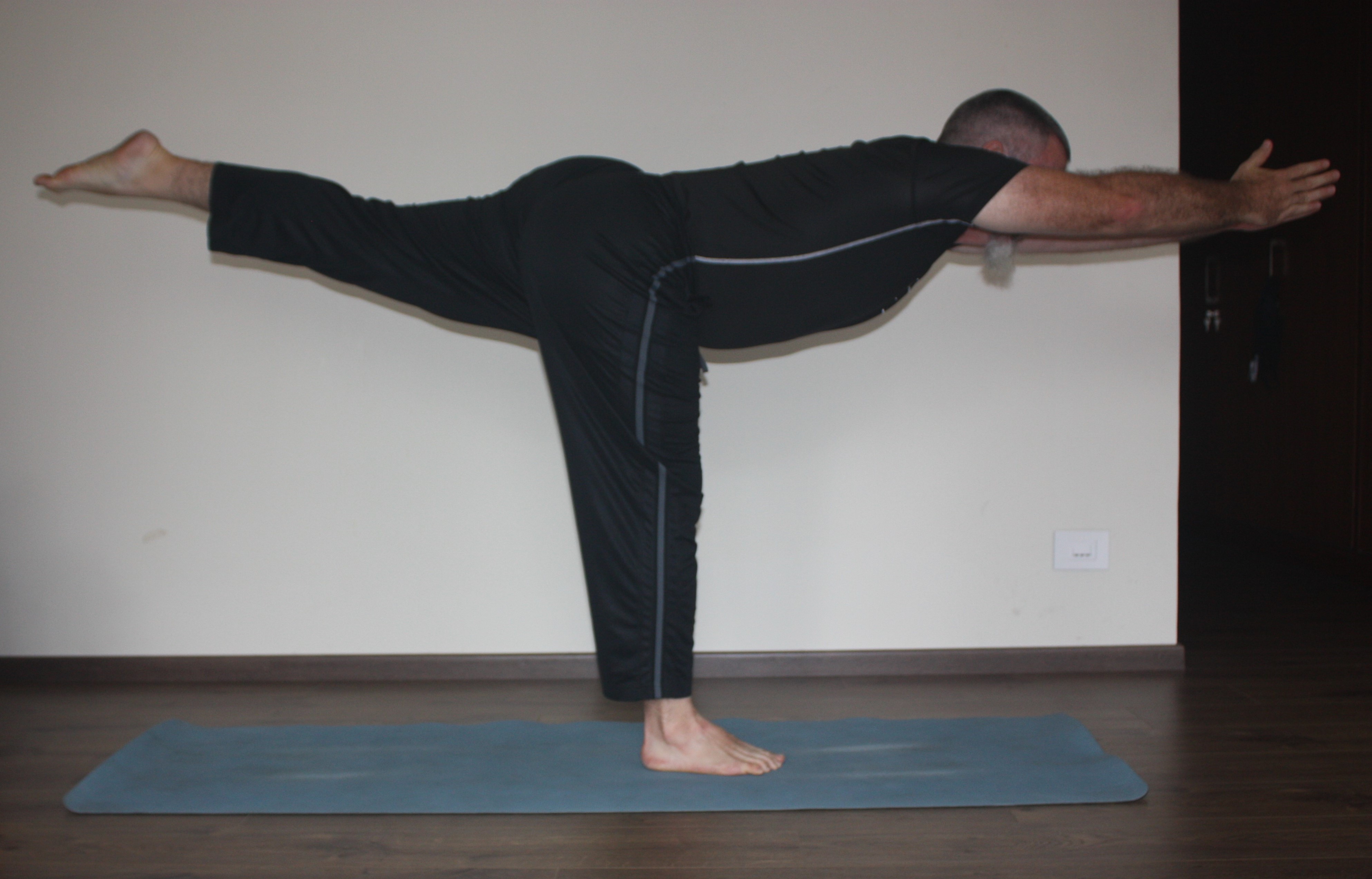
I saw something sad in the park this morning. A boy was trying to learn to ride a bicycle, but I could see that he never would — not with his present approach. Why? He had one training wheel, and the bike was leaning about 15-degrees off vertical as he struggled to use the bicycle as a tricycle. I could see that the metal arm that supported the training wheel was starting to bend from the strain — thus making the lean ever more pronounced. [Incidentally, with two training wheels, I think he might rapidly learn to ride because he’d experience tipping from one side to the other, through the balance point.]
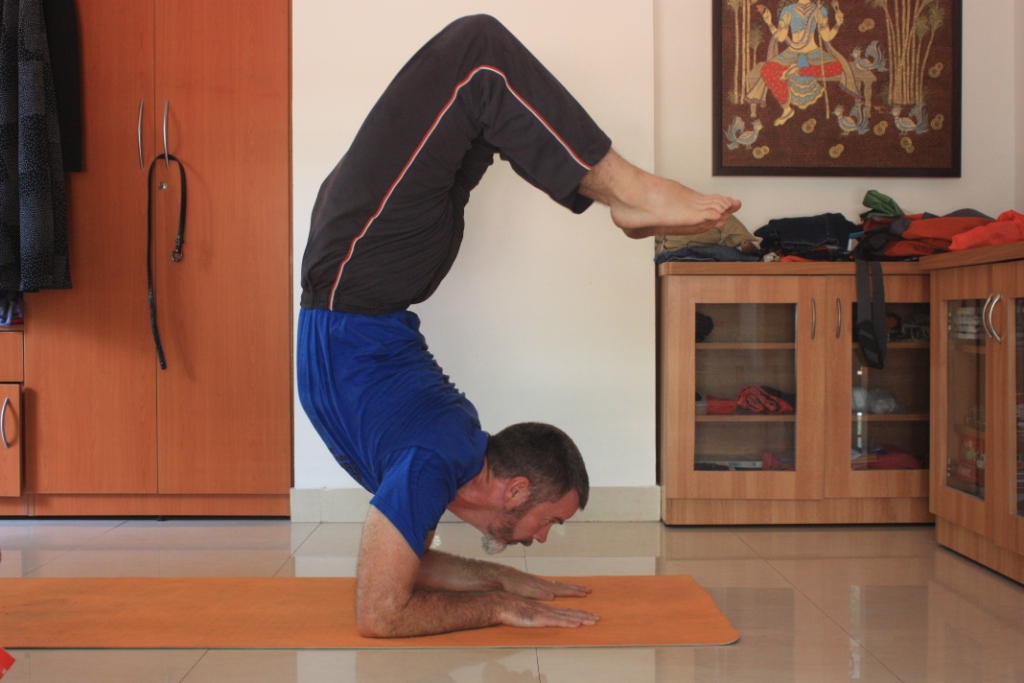
I’ve told yoga students before that there are three timelines for learning inversions (upside-down postures, which all require one’s body to learn to balance 180-degrees out of phase with the balance we all mastered as toddlers.) The first timeline is if you are willing to learn break-falls (i.e. how to safely land when — not if, it will happen — one loses balance.) If so, one can learn any inversion (that one is otherwise physically capable of performing) in an afternoon. Second, if one gets near (but not up against) a wall, and only uses the wall when one is falling towards over-rotation, then one can learn the inversion in a month — give or take. Finally, one can lean up against the wall for a million years and one will not spontaneously develop the capacity to independently do the posture. Why? Because one’s center of gravity is outside one’s body, which means one is in a perpetually unstable state, and one cannot stabilize into a balanced position from a state of falling (and leaning is just falling with a barrier in the way.)
Finding balance requires that the body be able to adjust toward any available direction to counteract the beginning of a fall in the opposite direction. I was fortunate to have studied a martial art that required learning break-falls from the outset, this made learning balances (not just inversions, but also arm balances, standing balances, etc.) much easier because there was no great concern about falling. I knew my body could fall without being injured.
Without falling there’s no learning balance, and if you only fall into the under-rotated position, you are still not learning to achieve stable balance. At some point, you will need to experience the dread fall towards over-rotation.
Time to ditch the training wheels.
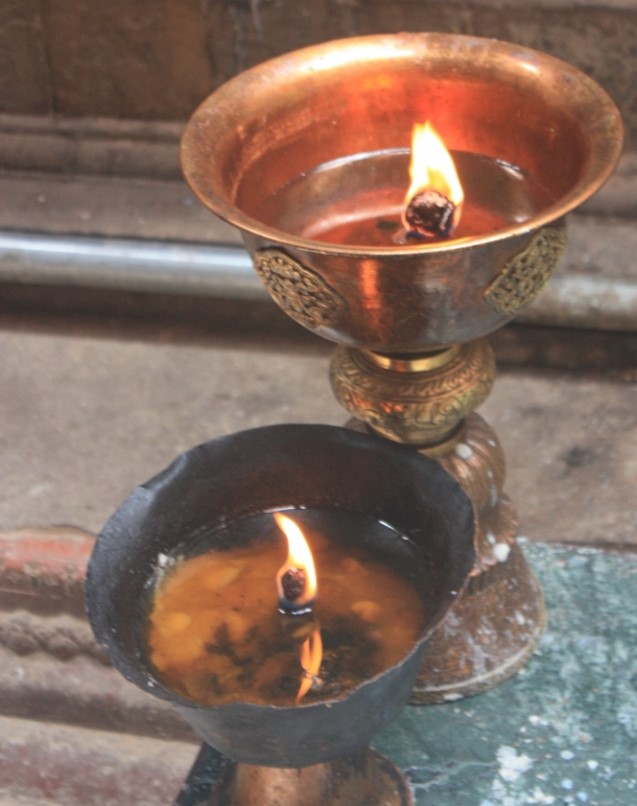
His eyes take in the dancing flame until his mind is flame. He anticipates its flutter, its flareups, just the same. There's nothing in his mind or eye that is not set ablaze. He knows not whether it's been like this for hours, weeks, or days. Others think it will devour him, leaving a pile of ash, taking him from this world at once, in one big, blinding flash.
Master Your Core: A Science-Based Guide to Achieve Peak Performance and Resilience to Injury by Bohdanna Zazulak
Indian Philosophy: A Very Short Introduction by Sue HamiltonSurely, I have misunderstood,
“Put my head where, you say?”
“But I have bones, don’t you know?”
“I wish I could obey.”
“Now, you say, my feet are too wide?”
“Really, what the heck!”
“You said put my head ‘tween my feet,
have you seen my frickin’ neck?”
“I wasn’t built to stand on my head!”
“What do you mean, ‘We’ll see?'”
“I’m not sure that you’re acquainted
with a thing called gravity.”
Breath Taking: What Our Lungs Teach Us about Our Origins, Ourselves, and Our Future by Michael J. Stephen
My rating: 5 of 5 stars
Out: January 19, 2021
This book explores the crucial role of breathing in human existence, discussing evidence of how breathing practices can contribute to healing of numerous illnesses, investigating the range of threats — from pollution to smoking to toxic dust — that can threaten our ability to breath, and examining a number of diseases that can disturb a person’s breathing. This book is primarily a popular science look at pulmonary medicine. Unlike other breath-related books that I’ve reviewed, this book is mostly about what can go wrong with our lungs and what medical science is doing to combat these threats. The story of how breathwork and changing breathing patterns can improve health and well-being is addressed, but that’s not the book’s central focus. The book uses plenty of stories (e.g. case studies) and what I call “fun facts” to keep the reading from becoming too dry or clinical for a neophyte reader.
The book consists of fifteen chapters. The first two chapters provide basic background information to help understand how the Earth happens to have the oxygen-laden air necessary for our type of life (Ch. 1) and how the lungs exploit that air in fueling our bodily activities (Ch. 2.) Chapter thee explores how breathing begins in newborn babies, explaining that the lungs are the only major organ that doesn’t start working until we are out in the world, and lung inflation doesn’t always go smoothly. The fourth chapter discusses how breathwork (including — but not limited to — yogic pranayama) has been shown to improve health for those experiencing a range of conditions, including: depression, addiction, PTSD, and pain, as well as how breath and meditational practices contribute to better health, generally.
Chapter five investigates the intersection of the respiratory and immune systems, explaining how autoimmune conditions, allergies, and asthma come to be. In chapter six, the author discusses one of the most common and widespread diseases in the world, tuberculosis (TB,) a disease which not only threatens the lives of many, but also sits dormant in a huge portion of the population.
Chapters seven through nine each deal with hazardous materials that are inhaled into the lungs. The first of these chapters is about smoking, and it focuses on the question of how nicotine acts in the body to create intense addictions – as well as what has and hasn’t worked to help people break said addiction. Chapter eight is about pollution. (As resident of a city of twelve million people, I found this to be a particularly disturbing chapter because air pollution is a hazard that is too easy to be blind to if one doesn’t suffer from respiratory problems.) Chapter nine investigates a range of breathable hazards including smoke, dust, and asbestos, and it does so through the lens of the rescue and cleanup at the World Trade Center after the dual collapse of the twin towers on 9-11, an event which released all sorts of toxic material into the air, hazards for which most responders were ill-equipped.
Chapter ten through twelve are about ailments that may or may not be linked to environmental causes like the ones mentioned in the paragraph above. The first of these is idiopathic pulmonary fibrosis, which, by definition, is a condition that arises from an unknown cause, an ailment which involves a stiffening and thickening of lung tissue (which must be thin and supple to allow gas exchange and the expansion and contraction of the breath cycle.) Chapter eleven focuses on lung cancer, which is often due to an inhaled hazard (most notably, smoking,) but not necessarily. While the other chapters of the book focus on breathing as a process by which we take in oxygen and expel carbon dioxide, chapter twelve turns to a different role played by breath, one that is crucial to the activities of our species, breath as a means to control the voice.
Chapter 13 describes the process and challenges of lung transplant. As mentioned in the discussion of pulmonary fibrosis, lung tissue is rather delicate material, and so it was no easy task to transplant it. Furthermore, because the lungs are a point at which the external world (air) contacts the body’s internal systems the challenges are even greater than for those organs that are hermetically sealed within bodily tissues.
The last two chapters focus on cystic fibrosis (CF.) Chapter fourteen explores the nature of the disease and the slow, but promising, path towards treating it. CF is a genetic condition in which the lack of a single amino acid wreaks havoc on the ability of cells to process minerals. The last chapter tells the story of two cases of CF. The first story – involving a ten-year-old whose family had to struggle against a policy that essentially locked their child out of the lung transplant list – is particularly engrossing.
As someone who practices breathwork, I found this book to be interesting and insightful. While it is heavily focused on pulmonary medicine, it does offer insights that will be beneficial to those who are not afflicted by respiratory ailments. If one wants to know more about medicine as it pertains to respiration, this is definitely an interesting and readable choice. However, even if one is infatuated with breath more generally, I believe you’ll find in this volume a great deal of beneficial food-for-thought.