5 Ways to Manage Your Email & Social Media Addiction

Addiction? That seems harsh. It feels like I’m equating a person who has his phone in hand several times every hour with a heroin junky or a nymphomaniac. But, the difference is in the word “Manage.” I wouldn’t write a post entitled “How to Manage your Heroin Addition.” I’d write one called, “Quit that Shit Before it Kills You.”  I’m not suggesting that one needs to do away with checking email and social media. These are great tools that allow us to be much more productive (potentially.)


Still, if we’re honest about it, most of us at some point get caught up in the compulsive checking of emails, social media, internet feeds, click-bait sites, sale pages for online retailers, and stats pages. There’s no denying it. A pile of evidence has accumulated about the extent to which people are dismayed by their own e-world activities. I just started reading Kotler and Wheal’s “Stealing Fire” (out February 21, 2017) and they site a study that found that about 2/3rds of those surveyed admitted checking their status page when they woke up in the middle of the night. It might seem off topic for book about altered states of consciousness to report on such matters, but its not because it’s all about the pursuit of a neurochemical bump. (Also, as I’ll discuss, a major problem of this addiction is in keeping one from slipping into the Flow with one’s work, family, or hobby activities.)


So, below are five methods I’ve found useful in my own on-going struggle with this addiction.


5.) Set a timer:  The problem with this addiction is that when one falls into habitually checking one’s status, one isn’t able to stay on task, and that means that one won’t achieve that elusive state of optimal performance called Flow. One needs time to immerse oneself in a task.


When I’m writing and editing, I set a timer, and until it beeps I do nothing off topic. I don’t make it some Herculean effort. I use 60 and 90 minute intervals. After the alarm rings, I can check email, do Tai Chi, get a cup of coffee, or work on my handstands. A longer time period may be more–or less–beneficial for you. (Isaac Asimov was said to only take a break after 5,000 words, but few writers have that in them.) The point is to make it long enough that one can get into a focused state of mind, but not so long that you become distracted and run down.


4.) Know your high energy period: This point relates to the last because it’s about blocking one’s productive time, and putting the more Flow-demanding activities when one is at one’s best. e.g. Are you a lark or an owl? (i.e. morning person or evening person.)


For example, I’m a morning person. This creates a potential problem. While I find it easy to get up with the sun, I’m at risk of saying, “Oh, I’ll just check emails, Facebook, my blog stats, a couple YouTube channels, and then I’ll get to work.” Then it’s noon, and the hours in which my mind was at its very best are gone. From 7pm until I go to sleep is when I should check these feeds because by that time my mind isn’t good for editing or writing tasks that require a high level of attention to detail.


3.) Go Cold Turkey [for a few days]: Sometimes it’s easier to make changes when one is forced by circumstance to quit. Then one can be more conscientious in resumption of the activity in question. (Moving to India helped me break a lot of bad habits.) If nothing else, this will help to give you confidence that the Earth won’t roll off it’s axis just because you aren’t checking on it twice an hour.


I can offer two examples from my own life. Every year my wife and I go on an extended trek in a place where there are no bars and saving batteries is essential. The past couple years, this has been in the Himalayas because we’ve been living in India, but anywhere remote will work. I also did the Vipassana Meditation Course last year. (If you’re interested in the latter, you can read my account of it here.)

img_1397


2.) Meditate: Why? Because when you start meditating regularly, you tend to do less and less out of mindless habit. You become conscious of what you’re doing, and that’s the first step to making changes. You also start to become attuned to those very subtle dopamine bumps, and in that way you  aren’t fighting it the impulse blindly. The high of the click is infinitesimally more subtle than taking mind altering substances, and so it’s easy for this all to take place below the waterline (analogizing the mind to an iceberg but instead of the majority of the mass of ice below the waterline, it’s the conscious mind above and the subconscious below.)

img_1556


1.) Substitute: In the immortal word of the rock band “The Who.” If your problem is so extensive that it does more than block your attempts to hit the Flow, you may need to find a healthier alternative to wean yourself away.


What does one look for in a substitute? If it’s going to fill the same space, it requires immediate feedback and a mix of “fails” mixed in with “successes.” These are the components that make the e-world so addictive. We know immediately whether we got something or not, and that keeps us clicking–not unlike the famous rats that would keep pressing a button for pleasure even to the point of forgetting to eat.


Some people may work on games that will help build their brain. (Warning: just don’t trade one unproductive addiction for another.) I’m an advocate of working on physical activities (e.g. trying to develop new capabilities in calisthenics or yoga), but these often involve a demoralizing amount of fails to reach the optimal level (the optimal being that one has enough fails to keep it from being boring but not so many that one is brutalized.)

BOOK REVIEW: Maps and Legends by Michael Chabon

Maps and Legends: Reading and Writing Along the BorderlandsMaps and Legends: Reading and Writing Along the Borderlands by Michael Chabon
My rating: 5 of 5 stars

Amazon page


This book consists of 17 essays about reading and writing. As the book’s title–also the title of the second essay–suggests, there’s an analogy drawn between story and a map, but—more importantly– Chabon proposes that the literary domain is a realm with frontiers and hinterlands. The central theme is that there is room for great discoveries if we stray from the center of the map were all is clear and well-defined. Literary fiction is the center. The hinterlands include a range of genres and approaches to story-telling that are often maligned as low-brow—e.g. fan fiction and comic books.


The book could be split into two parts, though the aforementioned theme cuts across all essays. The first 11 essays offer insight into maligned genres and their merits, but the next five shift gears into autobiographical telling of Chabon’s transformation into a writer. (The last essay, not present in some editions, could be seen as an epilogue to the entire work.) I’ll list the essays and give a hint about what each is about:


-“Trickster in a Suit of Lights”: This essay invites us to reconsider the connection between entertainment and literature, and in particular with respect to the modern short story.


-“Maps and Legends”: Here Chabon reflects upon the nature of a map and its analogy to the domain of fiction.


-“Fan Fictions: On Sherlock Holmes”: Fan fiction is maligned, and not entirely without reason. Even when it achieves great popularity, it’s often bad (e.g. “Fifty Shades…”) However, Chabon correctly suggests that we consider fan fiction too narrowly, including only that which reinforces our notions. He offers a great example of a character, Sherlock Holmes, who launched a thousand fan fictions, some of which are masterpieces in their own right.


-“Ragnarok Boy”: Mythology often seems tired and cliché, but there are reasons such stories survive across ages. Chabon explores what it is in Norse mythology that makes it an ongoing font of inspiration for writers.


-“On Daemons & Dust”: For a while, YA was the only genre with rising sales–much to the chagrin of those who felt this might herald the rise of a real world idiocracy. In this essay, Chabon describes what it is about Philip Pullman’s “His Dark Materials” series of fantasy books that pulls readers in—including the appeal of dark elements in stories.


-“Kids Stuff”: In this essay, Chabon considers the comic book and its evolution from kids’ stuff to a vast domain meant to appeal to a broad readership.


-“The Killer Hook”: This essay continues Chabon’s look at comic books, but through a specific example: “American Flagg!” a dystopian sci-fi comic book. Chabon proposes that “American Flagg!” spawned a new approach to comic book art and tone.


-“Dark Adventure”: This is about Cormac McCarthy’s “The Road.” Some topics are revisited, such as the appeal of dark and dystopian content. [For those unfamiliar, “The Road” is the story of a father and son wandering through a post-apocalyptic wasteland in search of some sort of stable community. McCarthy is the master of sparse prose, eschewing dialogue tags and maintaining a minimalist approach to his craft.


-“The Other James”: Here Chabon discusses the ghost story, using M.R. James’ story “Oh, Whistle, and I’ll Come to You, My Lad” as an exemplar.


-“The Landsman of the Lost”: Chabon discusses the comic strip work of Ben Katchor.


-“Thoughts on the Death of Will Eisner”: Eisner was a popular cartoonist, associated with such comic books as, “The Spirit.”


-“My Back Pages”: Here the book ventures into autobiographical territory as Chabon talks about his first dalliances with writing a novel.


-“Diving into the Wreck”: This continues Chabon’s telling of how he came to be a writer, and his early troubles in structuring a novel.


-“The Recipe for Life”: Here Chabon tells us about his introduction to Golems, a concept that would play an important role in one of his most influential works—an in the rest of the book. You’ll note the connection between fantastical devices and the telling of story that carries over from the first part.


-“Imaginary Homelands”: Chabon describes the role that is played by culture in forming a writer’s experience—both the culture one is living in and the cultural heritage that we each carry with us wherever we may roam.


-“Golems I Have Known”: This is one of the longer pieces and it presents the climax of Chabon’s tale of his transformation into a novelist. Golems as fictitious creatures built to facilitate certain truths are a central feature around which Chabon’s story is told.


-“Secret Skin”: [Note: This essay didn’t appear in the initial version of the book, and so your edition might not have it.] This essay invites the reader to reconsider the role that costumes and secret identities play for superheroes and how that need resonates with readers. In the process, this last essay sums up the reason why fantastical elements are so powerful in fiction.


There are only few graphics in the book, i.e. comic panels. Other than that there’s not much by way of ancillary matter, though there are recommended readings (oddly) interspersed within the index—rather than being a separate section.


I’d recommend this book for readers and writers. The essays are well-crafted and thought-provoking.

View all my reviews

2016: Our Year in Photos

New Year's Day sunrise over Bai Tu Long Bay, Vietnam

New Year’s Day sunrise over Bai Tu Long Bay, Vietnam

JANUARY:

-Travel: returned from our December 2015 visit to Vietnam

-Began RYT300 (Int / Adv) yoga teacher training at Amrutha Bindu Yoga

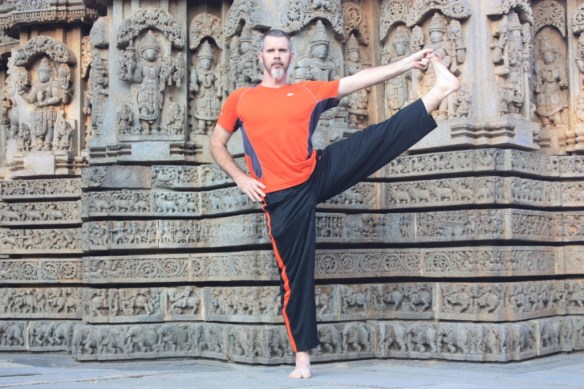
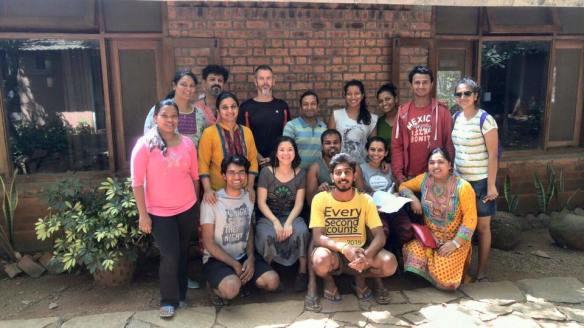
Taken at Kesava Temple in  Somanathapura

Taken at Kesava Temple in Somanathapura with the RYT300 class


FEBRUARY:

– RYT300 course continued

Teaching yoga at Socare

Teaching yoga at Socare

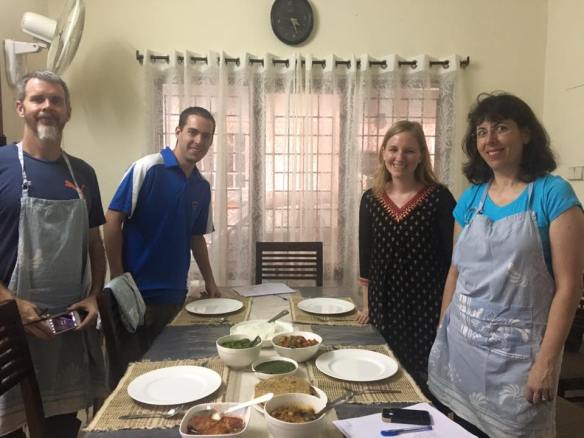
Learning to cook Indian food at Manju's

Learning to cook Indian food at Manju’s Cooking School


MARCH:

-Completed the RYT300 course to obtain my RYT500 certification

The RYT300 Class at Fireflies Ashram to learn Shatkarma

The RYT300 Class at Fireflies Ashram to learn Shatkarma


APRIL:

-Traveled to Varkala and Amritsar

-Taught a two-week Kids Camp at a1000 Yoga, Kormangala

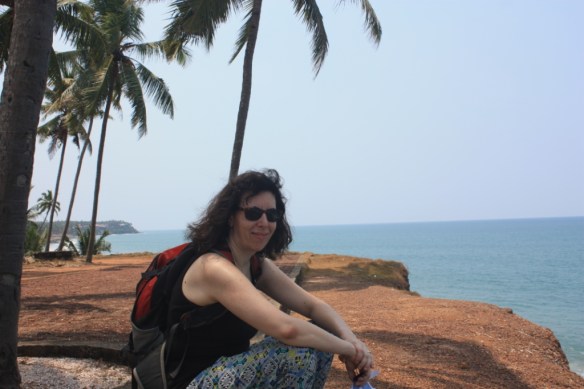
Varkala, Kerala in early April

Lilla in Varkala, Kerala in early April


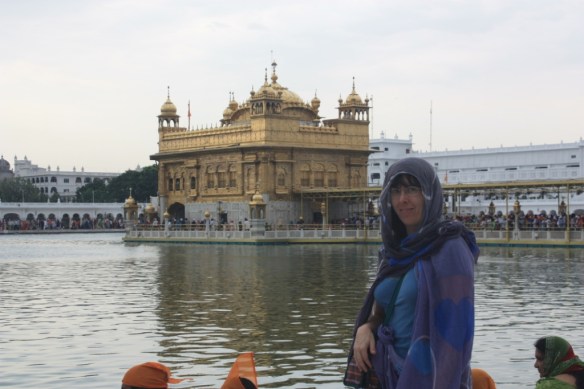
Golden Temple (Harmandir Sahib), Amritsar

Lilla at the Golden Temple (Harmandir Sahib), Amritsar


MAY: 

-Travel: Thailand, Zambia, and Dubai

-Completed the Muay Thai 2 (Int.) at The Muay Thai Institute in Rangsit, Thailand

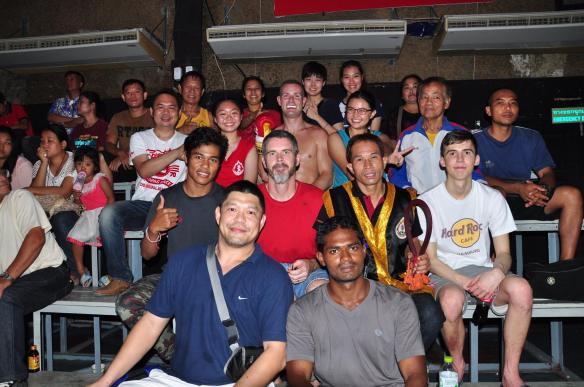
With MTI teachers and students after a successful fight by a German student

With MTI teachers and students after a successful fight by a German student (shirtless)


Zebra at the Chaminuka Game Reserve near Lusaka

Zebra at the Chaminuka Game Reserve near Lusaka


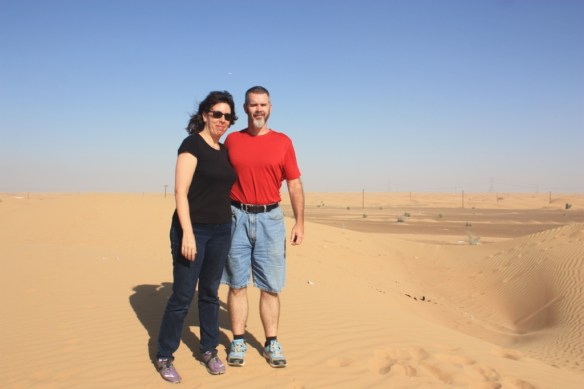
Lilla and I amid the dunes in the UAE near Dubai

Lilla and I amid the dunes in the UAE near Dubai


JUNE:

-Between travels and trainings, a quiet month in Bangalore

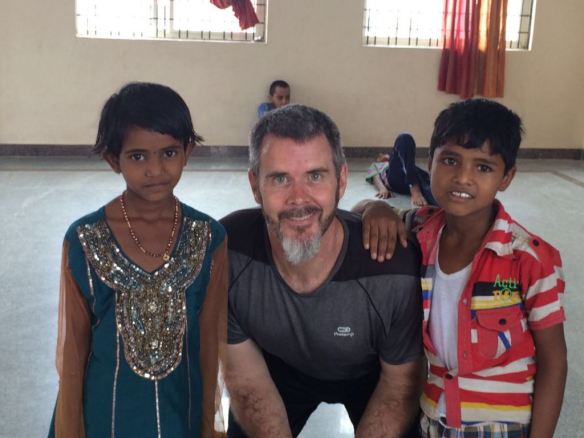
Back again with the kids at Socare

Back again with the kids at Socare


JULY:

-Travel: Kolkata and into Jammu & Kashmir for our August travels

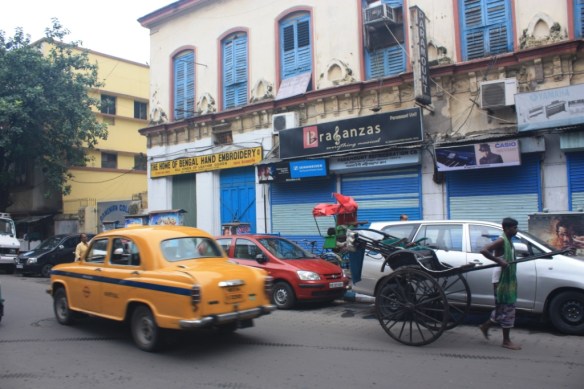
Quintessential Kolkata (Calcutta)

I’m afraid you can’t jam more Kolkata (Calcutta) into a photo than this


AUGUST:

-Travel: Jammu & Kashmir (Srinagar, Sonamarg, Great Lakes Trek, Leh, Nubra Valley, and Pangong Tso) and into Chennai for the beginning of my Vipassana Meditation course

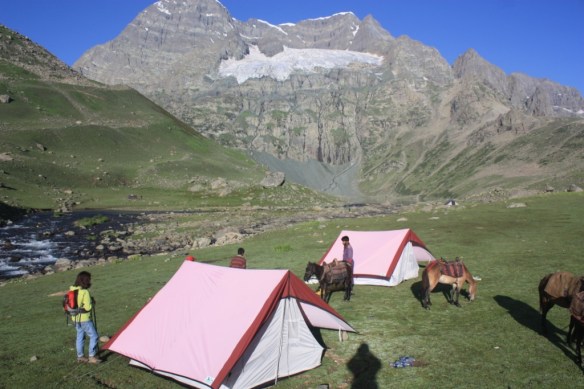
Lilla on our first night camp site on the Kashmiri Great Lakes trek

Lilla (green hoodie) on our first night camp site on the Kashmiri Great Lakes trek


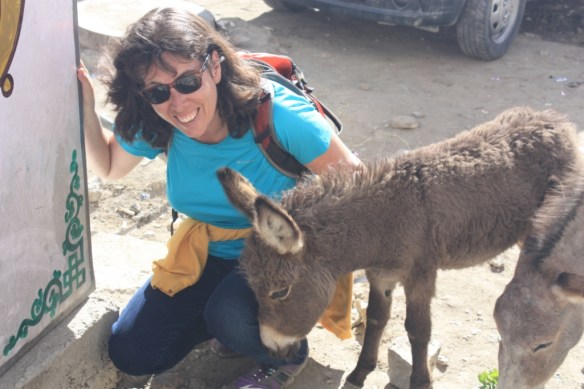
Lilla and Eeyore in Leh

Lilla and Eeyore in Leh


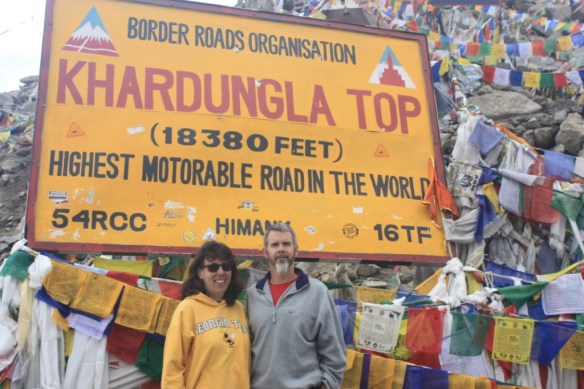
Lilla and I at the (reputed) highest motorable pass in the world

Lilla and I at the (reputed) highest motorable pass in the world


SEPTEMBER:

-Travel: 2 trips to Chennai; the first for my 10-day Vipassana Mediation Course, and the second for a wedding

Chennai (Madras)

Chennai (Madras)

Lilla henna'd and bangled for the wedding

Lilla henna’d and bangled for the wedding


OCTOBER:

-Travel: rainy season in Goa

-Anniversary month (22 yrs.)

-Took the 5th level test at Kalari Academy but promptly threw my back out–an injury from which I’m still recovering (although it’s down to a mild leg tingle) [I wouldn’t mention it but I think I’m obligated to by the rules of year-end / Christmas letters to mention any health issues.]

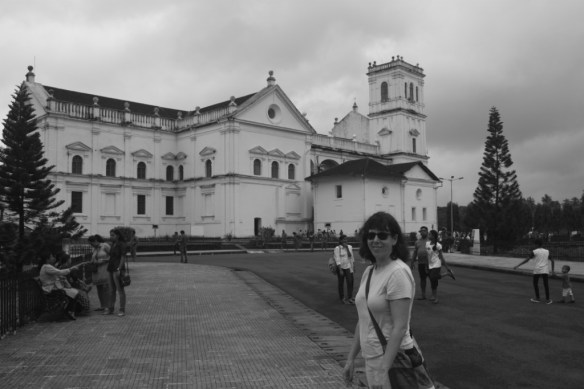
Lilla in front of the Se Cathedral in Old Goa (Velha Goa)

Lilla in front of the Se Cathedral in Old Goa (Velha Goa)


NOVEMBER:

-Travel: Singapore

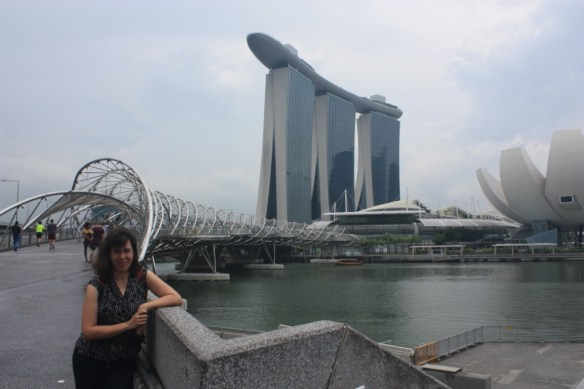
Lilla in front of the Marina Bay Sands

Lilla in front of the Marina Bay Sands


DECEMBER:

-Travel: We’ll be in Hungary (fingers crossed) in the latter half of the month

-Finished a draft of the novel. I don’t know what version this counts as, but it’s the only one so far even close to having an ending that I can tolerate.

-I’ll probably have read about 100 books by the end of the year.

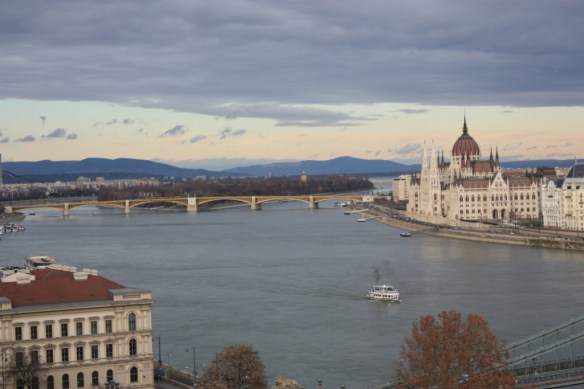
Here’s a pic from another winter trip to Budapest:

Budapest a few years back

Budapest a few years back

A more recent Budapest Winter pic; this was our most recent winter visit 2014

A more recent Budapest winter pic; this was our most recent winter visit-i.e. 2014

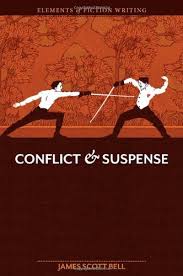
BOOK REVIEW: Conflict & Suspense by James Scott Bell

Conflict and Suspense (Elements of Fiction Writing_Conflict and Suspense (Elements of Fiction Writing_ by James Scott Bell
My rating: 4 of 5 stars

Amazon page


This is a book about the stuff that keeps readers reading. Without conflict there is no hindrance to a character achieving his or her goal, and thus no story. Suspense is a lack of clarity about what comes next that spurs the reader to keep exploring. Bell defines conflict and suspense, and then explores the various means by which these crucial features are conveyed in stories. I say in stories, but Bell is predominantly speaking to novelists with this book.

The book is divided into two unequal parts. The first, and larger, consists of fourteen chapters about conflict. The first few chapters describe conflict and how it is set up. Then Bell examines how the many dimensions of writing can be manipulated to fire up the tension, including: point of view, openings, subplots and flashbacks, dialogue, theme, style, and even editing. Chapter 14 suggests some tools that writers may employ to help them ratchet up the conflict.

The second, and shorter, part (8 chapters) delves into the topic of suspense. The organization follows a similar progression. First, Bell describes suspense through many potent examples. Second, he moves onto examine the various means by which suspense can be created. With respect to the latter, Bell suggests ways in which dialogue, setting, and style can be presented in order to create cliff-hangers. The last chapter pulls everything together to advise writers on the how to create stories that maximize conflict and suspense. This is in part a summary of the book, but it looks at the process more and the dimensions of writing less, and therefore offers something new as well.

Readers of Bell’s other guides may be familiar with the LOCK formulation that he uses in his “Plot & Structure” book. LOCK is an acronym for Lead (an intriguing opening), Objective (a goal of dire consequence), Confrontation (the battle for the objective), and Knock-out Ending (a conclusion that satisfies.) I mention this because one may find synergy in reading other books in the series. LOCK is not as central a concept here as in the “Plot & Structure” book, but it’s nice to have a common mechanism by which ideas are conveyed.

There’s not much by way of ancillary material. There are a few simple black and white graphics / diagrams. However, there is one nice feature in the form of an Appendix that analyzes conflict for two novels: “To Kill a Mockingbird” and “Silence of the Lambs.” These were good choices both because they represent literary as well as commercial fiction, and because they both have popular movie adaptations. The latter comment might seem like sacrilege to the “the book always beats the movie” crowd. However, using movies as examples—as Bell does here and there—offers the advantage that the average reader will have seen a higher percentage of good movies than they’ve read good books. This is even true for most us who read a ton because relatively few (if any) great movies come out each year and the history of cinema is much shorter.

I both enjoyed and learned from this book. Bell uses many excellent examples to support the ideas that he’s presenting, and this makes the book readable and easily digestible. I’d recommend it for writers of fiction who seek to put more zip into their creations.

View all my reviews

BOOK REVIEW: Characters, Emotion & Viewpoint by Nancy Kress

Characters, Emotion & Viewpoint: Techniques and Exercises for Crafting Dynamic Characters and Effective Viewpoints (Write Great Fiction)Characters, Emotion & Viewpoint: Techniques and Exercises for Crafting Dynamic Characters and Effective Viewpoints by Nancy Kress
My rating: 4 of 5 stars

Amazon page


This book is about how to write characters with sufficient depth that readers will follow them through to the end of a story. As the title suggests, there are three major components to the book: character building, emotional considerations, and point of view. A story requires a character who needs or wants something and faces barriers to that goal. The character has to be someone who the reader is interested in seeing through a process that involves inching toward a goal while being repeatedly beaten back. This doesn’t mean the character has to be likable, but if the character is unrealistic and uninteresting readers won’t get far. (In other words, they don’t have to like the character, but they do have to feel some sort of way about them.) Facing barriers to one’s goals creates emotional states that must feel authentic. If a character doesn’t respond emotionally to events, then the story is likely to feel flat (unless one has built a hilarious Sheldon Cooper-like character on purpose.) The perspective from which the reader learns of events is critical because it determines what information the reader is privy to, and—in particular—information about thoughts and emotions that are sometimes falsely portrayed.

Of the sixteen chapters that comprise the book, the first seven explore character development. Chapter 1 describes character in terms of general types. The book goes on to discuss the importance of how one introduces key characters. The next three chapters drill down into the challenge of building an authentic character: 1.) What is the character like deep down? 2.) Are the motives of the character clear-cut or complex? 3.) How can one show that the character has changed over the course of the story, and, if they don’t change, will the reader be satisfied? Chapters 6 and 7 investigate specialized types of characters (i.e. genre characters such as in romance, mystery, thriller, or sci-fi [Ch. 6] and in humor [Ch.7.])

Chapters 8 through 11 examine emotion and how it’s conveyed to the reader. The means by which writers communicate emotion include: dialogue (Ch. 8), metaphor, symbolism, and sensory experience (Ch.9.) Chapter 10 delves into special cases that are common in fiction but which require unique consideration (love, fighting, and dying.) Frustration has its own chapter (Ch.11,) and that may seem odd, but one must remember that a story is one barrier after another being erected in the way of the character’s pursuit of his or her objective.

The next four chapters present information to help the writer evaluate different approaches to viewpoint. Not only are there various pros, cons, and considerations one must take into account when deciding upon viewpoint, each approach has a several variations. The first of these chapters (Ch. 12) outlines the broad-based considerations. The next three chapters deal with first person (Ch. 13), third person (Ch. 14), and omniscient points of view (Ch. 15,) respectively. (The rarely used 2nd person point of view is also discussed briefly, but largely as a warning.) The last chapter explores how to make it all work by way of what Kress calls the “fourth persona.” Early in the book, one is told that the writer must simultaneously embody three personas (i.e. the writer, the character, and the reader.) Kress’s “fourth persona” is that of the critic, and it becomes necessary once one has drafted a story and character.

The book has a few extras. At the end of each chapters there are several (usually 4 to 6) exercises to help writers understand the concepts through practice. The chapters each have summaries, and at the end of the book there’s a summary in the form of a checklist. That is about it for ancillary features. There are a couple of graphics in the form of pictures of a “mini-bio” and an “emotional mini-bio.” These are single page fill-in-the blank summaries that help one build a character that has depth and an authentic feel.

I found this book to be interesting and educational. The writer uses examples from a number of popular commercial and literary fiction authors. There’s no real need to be familiar with any particular author, but being familiar with them might present one with additional insights. The book is readable.

I would recommend this book for writers of fiction.

View all my reviews

BOOK REVIEW: Wired for Story by Lisa Cron

Wired for Story: The Writer's Guide to Using Brain Science to Hook Readers from the Very First SentenceWired for Story: The Writer’s Guide to Using Brain Science to Hook Readers from the Very First Sentence by Lisa Cron

My rating: 5 of 5 stars

Amazon page

There are countless books offering advice to writers. Some are good. Some are not. Good, bad, or ugly, few of these books offer anything new beyond particularly artful (e.g. humorous or poetic) explanations or superior examples. In other words, if you’ve read five writer’s guides you’ve read five thousand. Cron’s book is the rare guide worth a read even if you’ve read a hundred other such books. It’s not that Wired for Story offers radical or novel advice on story building (its writer’s tips are orthodox.) It’s the way this book couches the arguments for what can admittedly be hackneyed advice. As the title suggests, Cron’s book is about how our brains are wired to love stories–as long as said stories contain certain attributes that the brain finds appealing. (Conversely, there’s a reason why books that go wildly off the reservation with “experimentalism” are doomed.)

While I’ve read many a book on writing, I picked up Wired for Story more out of an interest in the subject of the neuroscience of story. The book doesn’t delve deeply into the science, but it does cite leading thinkers in the field as well as providing a good layman’s overview of the neuroscientific principles that inform the book’s tips. Cron’s background is in publishing and her bona fides to write this book are as someone who came from a career reading and rejecting / accepting manuscripts. However, I believe she did a good job of laying out science.

The central idea is that humans love stories because the narrative structure allows people to simulate a nasty chain of problems without suffering the real world consequences. The brain loathes uncertainty and randomness, and loves whenever it can learn about how to face a problem or make sense of the world. This is why we love conflict, tension, and an unrelenting unfolding of worst case scenarios in our stories even though we tend to hate those characteristics in our own lives. This results in both the tried advice to keep putting the protagonist through the wringer, and the qualifications that a writer should do so in a way that is believable (our brain’s BS-detector is ever on) and which will eventually force the protagonist to change. Cron offers a definition of story that has the usual elements: “A story is how what happens affects someone who is trying to achieve what turns out to be a difficult goal, and how he or she changes as a result.” As with many guides, the definitions of plot, the protagonist’s issue / goal, theme, and tone are elaborated at length—as well as being differentiated because these topics tend to be confused by neophytes—often resulting in a failure to clarify one or more of them.

Stories also give us an opportunity to anticipate what others will do, and forecasting the behavior of others gives one a nice little dopamine dump. The ability to foresee what others will do has always been a powerful evolutionary advantage, and those who did it better passed on their genes more than their oblivious counterparts. Owing to this idea, there is a great deal of advice about what should be in the book (only what is relevant), and how it should be revealed (in a way that eschews attempts to play “gotcha” with your readers.)

One may wonder why I’m so pleased with a writer’s guide that gives common advice about writing–just because it explains said tips in terms of evolutionary biology. The answer is that it’s far easier to keep these lessons in mind when they’re held together by a logic rooted in what all readers have in common (e.g. conscious and unconscious minds, emotions, instinctual drives, etc.) For example, knowing why readers hate an overly simple resolution for a problem that’s presented as insoluble (i.e. robbing them of dopamine reward for figuring it out) helps one better recognize this pitfall in all its forms and to avoid it. Such an approach allows for a deductive approach and is far more useful than having memorized “avoid deus ex machina” as a disparate tip that’s attached to a specific example. In short, it’s both easier to remember and broadly implement these ideas when one understands the rationale from the ground up.

Beyond the reason in the last paragraph, I enjoyed this book for reasons that have little to do with its advice to writers. While I now know that there are other books on the evolutionary biology of story that deal with the subject more from a scientific perspective (while I haven’t read it yet, you might try this book), this was the first book that I stumbled across on that topic. And, it’s a topic that’s well worth understanding whether you’re a writer or not. No matter what one does, understanding the universal appeal of a story can be beneficial, whether it’s in the context of teaching, parenting, or business.

I’d recommend this book for writers—particularly those who think about the world in scientific terms. Beyond writers, if you have cause to construct or use stories in your life—or suspect you should—you can benefit from this book.

View all my reviews

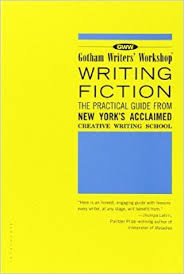
BOOK REVIEW: Gotham Writers’ Workshop: Writing Fiction by Various

Writing Fiction: The Practical Guide from New York's Acclaimed Creative Writing SchoolWriting Fiction: The Practical Guide from New York’s Acclaimed Creative Writing School by Alexander Steele

My rating: 4 of 5 stars

Amazon page

This workbook-style guide to writing fiction is put out by the well-known New York City creative writing school. With 11 chapters, it delivers lessons on all the elements of fiction including: character development, plotting, establishing point of view, honing description, building realistic dialogue, varying pacing, establishing voice, determining a work’s theme, and carrying out revisions. It also has a chapter that goes into the business of writing (as opposed to the craft of writing which is the bailiwick of the first ten chapters.)

There are a couple of features of this book that set it apart from the vast canon of writers’ guides. First, this isn’t a single author work, which means the reader has access to a much broader pool of experience than one would in a single author text. It also means that an author can be assigned a topic according to his or her strengths as a writer.

Second, across the chapters, they use Raymond Carver’s Cathedral as an example work, and they provide that story in an appendix for those who haven’t read it. It’s not that the authors exclusively use this short story for examples. But it’s useful to have a common story and to include it because there are so many great stories and novels available that no matter how well-read one’s readership, there will be works that some haven’t read. (e.g. Much as I should’ve, I haven’t yet read nor seen the movie Gone with the Wind–a common exemplary work because it’s a beloved book, a movie, and because pop culture references [e.g. The Simpsons] have made the gist of it available to even those slackers who’ve neither read the book nor seen the movie.) There’s a reason why writers’ book authors often use movies to describe story elements, because there are many fewer movies than books and vastly fewer good movies—thus a higher likelihood of a common experience. Yes, there are a few works common across most school curricula, but there’s no better way to ensure that a book doesn’t get read thoroughly than to assign it as required reading.

A third useful feature of this book–but not one that is in any way unique to it–is that it offers writing exercises throughout to help build one’s skills through practice. This is where the value of such a book truly lies. The advice such books offer are almost always the same—sometimes hackneyed but almost always valuable. (A lot of tired advice is tired because it bears repeating owing to the constant infusion of new writers who repeat the same errors.) A final useful element of the book—but also one that features in many similar guides—is a checklist in the appendices that allows one to rapidly consider the book’s key questions as they apply to one’s own writing project.

I’d recommend this book as one of the most useful writers’ guides that I’ve read.

View all my reviews

READING REPORT: April 3, 2015

I finished two books this week. The first was the Gotham Writers’ Workshop guide to writing fiction. This book offers advice on the key elements of fiction writing including character, point of view, setting, pacing, description, plot, revisions, and marketing one’s work. It includes exercise prompts throughout, and is set up as a workbook. It’s written by a number of contributing authors, and offers a broader experience than a single author book.

GWW_WritingFiction


The second book I finished was The Memorable Thoughts of Socrates. This is a book first published before 1850, and puts me more than half way through the 24 tasks of Book Riot’s Read Harder Challenge. (Yes, this may be a cheat as the translation was first published in 1889, but I’m sticking to my story.) I read about two-thirds of this book a while back, but just got around to finishing it off. I can’t say I enjoyed it as much as Plato’s Apology, Crito, and Phaedo, but it’s still full of thought-provoking ideas. (How bad could Socrates be?)

MemorableThoughtsofSocrates_Xenophon


Besides the books I completed, I finished off a couple of chapters [and part 2 (of 4)] of William J. Higginson’s The Haiku Handbook. This book’s subtitle, “How to write, share, and teach haiku,” says it all. If you think that the essential feature of haiku is that it occurs in three lines of 5 – 7- 5 syllables, then you could learn a lot from this book. It turns out that there’s much more to the traditional form (e.g. seasonal focus, nature observation without analysis, etc.) than syllable count. Furthermore, it’s argued that the 5 – 7 -5 isn’t the optimal way of emulating the Japanese form in English (because English syllables average longer than Japanese syllables.)

HaikuHandbook


I resumed reading another book for writers that I started back around the time I began the Gotham Writers’ Workshop book. This one is James Scott Bell’s Elements of Writing Fiction – Conflict and Suspense. I read another book on plotting and structure by Bell that was probably in the same series, and it wasn’t bad. I’m about half way through and found some worthwhile nuggets among a field of self-evident info.

Elements of fiction writing conflict & suspense


I purchased two books this week–both were on sale. The first was The Backpacker’s Handbook, 4th Ed. As I prepare to do some trekking in the Himalayas this summer, I’m hoping to glean some tips that will save me some pain. I’ve read a number of such books in the past, but it’s been a while and my memory degrades.

BackpackersHandbook


The other book was Robert Silverberg’s Kingdoms of the Wall. As Silverberg is an icon of science fiction, but I haven’t read any of his novels, I figured that it would be good to do so–especially on sale.

Kingdoms of the Wall


That’s it for this week.


READING REPORT: March 27, 2015

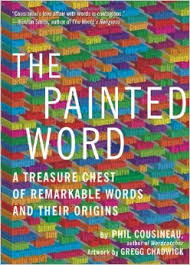
I finished The Painted Word this week. This book is a collection of words that the author finds noteworthy and intriguing as well as the definitions, origins, and interesting usages. There’s a loose theme of art (as the title might suggest), but it’s not particularly blatant and one might miss it if there weren’t quite a so many names of colors that probably didn’t appear in your Crayon box. There are also painting plates used as the books only graphics. Many of the words are one’s that will be well-known to the average reader, but others might be new additions to one’s vocabulary such as: bafflegab (misleading language), farteur (a professional and/or musical farter), and gymnophoria (the uneasy feeling that someone is undressing one with their eyes.)

Painted Word


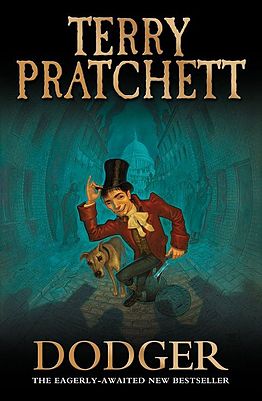
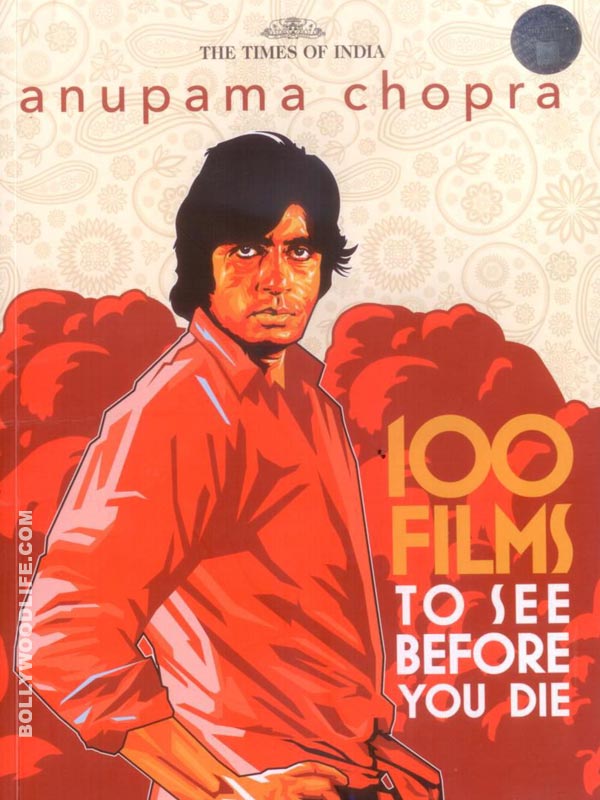
I purchase a few new books this week, including: The Stationary Ark (a book by Gerald Durrell about running a zoo), Submission (a Story of O-style tell-all / novel by another Parisian woman), Dodger by Terry Pratchett (Pratchett recently passed away. I’ve only read one of his books to date [the first disc world book], but enjoyed it more than any fantasy book I’ve ever read [not my favorite genre.] This one is apparently Dickensian.), and 100 Films to See before you Die (The nice thing about this one is that it’s written by Anupama Chopra for the Times of India, and–therefore–features not only Indian [Bollywood and other] and Hollywood films but also other global films. I suspect that if I got the same book by an American author it would be 98 to 100% Hollywood–i.e. with maybe a couple French films thrown in if it was a particularly pretentious American film critic.)

Terry_Pratchett_Dodger_cover Anupama-Chopra-2330913 StationaryArk Submission


The only book that I spent significant time on that I haven’t mentioned in past Reading Reports was Gotham Writers Workshop: Writing Fiction. I read about half of this book a while back, before I got distracted by other readings (in truth, I got burned out on writing books.) However, I’ll now try to plow through this to the end, as well as a few of the other writing books that I’m pretty far into. It’s really a good book on the elements of fiction writing.

GWW_WritingFiction


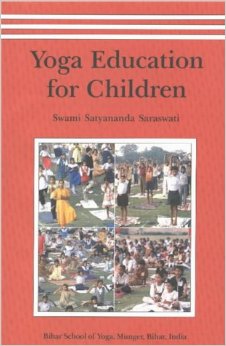
Besides those, I’ve been reading a book, Yoga Education for Children, Vol. 1, that I introduced last week. It’s the text for the yoga teacher training that I’m currently attending (RCYT). I’m about 2/3rds of the way through it.


YogaEdforChildren


My 2014: A Year in Review [w/ Photos]

2014 will be our first full year living in India. Having said that, I spent almost 50 days in Thailand, and Lilla and I will spend the last two weeks of the year in Hungary. So, in truth, I will have lived about ten months of 2014 in India.


The four months of 2013 that we lived in India largely involved acclimating and getting our feet under us, though we did see some important sights in India including the Taj Mahal, Delhi, Fatehpur Sikri, Hampi, Mysore, Belur, Halibidu, and Shravanabelagola.


2014 was an interesting and learning-intensive year, so I’ll review some of the year’s key happenings.


January:

From the 1st through the 18th, I was in Phuket, Thailand. Lilla and I spent the holidays there, and–upon her return to Bangalore–I stayed another couple of weeks training at Tiger Muaythai. Tiger is probably Phuket’s largest and most well-known Muaythai gym.  In addition to Muaythai classes, I took advantage of their broad class offerings to learn a little about Krabi Krabong, Muay Boran, Western Boxing, Mixed Martial Arts, Brazilian Jujutsu, as well as taking daily Yoga classes. I was particularly keen to learn about Muay Boran, MuayThai’s more combative ancestor art.

20140105_163231

While my training schedule (up to six hours / day, 6 days a week) didn’t allow for much sightseeing, I did get to see a little of Phuket Town and a couple of the beaches that Lilla and I skipped while we were traveling together. Phuket displays a lot of Chinese influence and there are many brightly colored Taoist, Confucian, and Chinese ancestral shrines and temples around Phuket Town. Rang Hill overlooks the island’s main “metropolis”, and I was able to take advantage of that vantage point. The beaches I visited were Karon and Kata which were middling between the two beaches Lilla and I visited together. That is, they weren’t as quiet and secluded as Naiharn, but neither were they as frenetic and overrun as Patong.

IMG_2015

February:

February was marked by two firsts. First, I began taking classes in Kalaripayattu two mornings a week. While this Indian martial art is far afield of the Japanese art I was raised on, I wanted to take advantage of living in India to learn something of the indigenous martial arts. One reason for my interest is the widespread belief that Indian martial arts—and Kalaripayattu specifically—are ancestors to many of the Asian martial arts–including the Chinese martial arts that are said to be predecessor to the Japanese arts I’ve studied. While I’m somewhat skeptical of that claim, I’m not in a position to altogether dismiss it. (I believe that in the face of combat, martial arts evolve rapidly to adapt to local conditions and needs. Also, I believe that ancestral arts continue to evolve as much as their off-shoots. Together this means that a martial art could look quite different from its ancestor in short order.)

20140220_085958


The reason I’ve kept training is that Kalaripayattu is an awesome workout. I see a two-fold strength in the art. For one thing, it builds bodily capacity. I mean one is able to leap higher, stretch farther, and endure more through the practice of this art. I’ve realized that the idea of a martial art solely as a means to ingrain movements that worked in the past is limited.  Another thing that the art does is help build a variety of fearlessness.  One has to throw one’s body around in a ways that can be intimidating, and one must build confidence that one will—like a cat—land on one’s feet. Further down the line, the metal weapons practice—choreographed as it may be—takes a special kind of inner calm. By “further down the line” I mean—as of this writing–I haven’t yet begun to learn weapons. I’ve passed through the first two levels and it’s been suggested that it might be time for the third test (though I’m far from skilled with some of the required jumps), but these levels are all unarmed.


The second activity I began in February was volunteering that the Don Bosco Mane Center, which is home and bridge school for young boys in central Bangalore. (A bridge school is a school used to prepare kids to go to regular public school, which is what they try to do a soon as possible, but some of the kids haven’t been to school and aren’t ready to leap in at the appropriate grade level.) BOSCO is one of the major charities working on children’s issues in Bangalore, and particularly in trying to intercept kids coming into the bus and train stations before the pimps and slavers get their hooks into them. They also run a help / reporting phone line.  If it’s possible, they try to get the kids back to their families, but if that’s unsafe or impossible the children live at one of the centers like Mane.


BOSCO also has a person trying to match kids to foster homes. Foster homes are a relatively new and undeveloped approach in India as compared to the West, but–as it’s a much better approach when it works—they’d like to see more of it. I volunteered here over the course of two months, before I started Yoga Teacher Training. Because I was only volunteering one day a week, and given the nature labor costs in India, they weren’t always sure what to do with me. Such a facility in the West would probably tend to be much more undermanned, but that didn’t seem to be so much the problem here as the challenge of funding and resources. At any rate, I have talked to the head priest about going back to teach martial arts and /or yoga. It was amazing to see how well-adjusted and respectful the kids were, given the hard life they’ve had.


March:

March wasn’t a big month for travel or new experiences. Lilla was in the middle of her busy season, and I continued learning Kalaripayattu and volunteering at BOSCO. Otherwise, I was writing or working out. I’ve been keeping my Gyokko-ryū koshijutsu and Kukishin-ryū jōjutsu training going as much as I can, and work on Muaythai as well.  As part of my yoga training, I started doing yoga with Lilla three mornings a week (this began in January or February), and—after going through yoga teacher training—this will become a regular class that I teach MWF from 7 to 8am. I attended about four studio sessions a week at a1000 Yoga in Indiranagar during March.

IMG_1278


We did take one long weekend trip at the end of the month. We went to Coorg and stayed a couple of nights at a coffee / tea plantation near Madikeri. We stopped along the way to visit the Namdroling Monastery, which is a Tibetan Buddhist monastery set up by exiled Tibetans in the early 1960’s. It’s one of the largest Tibetan communities in South India, and is the largest teaching center for the Nyingma sect of Tibetan Buddhism in the world. The monasterial campus was impressive.

IMG_1599


The serenity of the plantation provided a welcome respite from the horns and chaos of Bangalore. The Golden Mist Plantation is owned by a German who spends part of his year in Germany and part of the year in Coorg. Interestingly, they sell only organic products, which they largely export because organics are just beginning to catch on in India and not at the same scale as in Europe and other parts of Asia. The food was great, and—needless to say—the coffee and tea were fresh as can be.  We had a couple nice hikes in the Coorgi countryside, and I had authentic Coorgi pork—that’s a popular Indian dish from these parts.

IMG_1838


April:

April saw me begin my 200 hour yoga teacher training course (RYT-200) at a1000 Yoga. This course ran about 4 hours a day for five days a week through May 23rd.  The first hour and a half to two hours each day was yoga on the mat, and then we got into a broad range of subjects dubbed “theory” in the afternoon. These included yogic philosophy, Indian approaches to the body (chakras, nadis, granthis, kundalini, koshas, prantas, etc.), Western anatomy and physiology, and the historical development of yoga. The most unusual practice we learned was jala neti, in which one pours warm salt water in one nostril such that it drains out the other, cleansing the nasal passages. It wasn’t as bad as it sounds, and—given the dustiness of India—it’s a valuable skill to stave off sinusitis. Most of the course was about learning yoga, but the last week focused on learning about teaching.

IMG_1536


May:

The RYT-200 course occupied most of my time during this month as well. Even after the course ended on May 23rd, there were many requirements to be met and they all had to be documented. This included seva, which was charitable teaching requirement that we did at another of Bangalore’s (unfortunately) many orphanages.  This was a smaller shelter than the BOSCO center, and was run by an individual man rather than a large organization. Again, the kids were enthusiastic and well-behaved and made the process a happy one. I also had class observations to make as well as documenting my own teaching experiences from the guesthouse class and sadhana (my personal practice.)

IMG_1603


At the beginning of May, I completed a workshop in Tok Sen. Tok Sen is a Thai approach to massage that uses a mallet and a wooden chisel-shaped tool. While it sounds less than pleasant, it’s actually quite enjoyable. I had no idea what to expect besides that it was a Thai approach to body work that used wooden tools.

shoulder_work_on_me


Toward the end of the month there was a Kalaripayattu demonstration. This was the first time I’d seen the art practiced besides in Kalari sessions. Needless to say, it was much more acrobatic and stunning than day-to-day training. It featured many weapons, including the urumi, which is a four to six-foot flexible sword that old-time practitioners wore as a belt. Urumi demonstrations are about as edge-of-the-seat as one can imagine. While the demonstration is choreographed, the urumi is a severe injury waiting to happen. It requires the utmost attention on the part of both participants.

20140523_212734


June:

June was an intense month for my yoga practice. In addition to my own personal practice, which I was still documenting for my RYT-200 certification, I was attending 5 to 7 studio sessions per week. I was also able to do some refresher training with my Thai Yoga Bodywork teacher as he was running the Level I and II course in Bangalore, and I attended a few days.

IMG_0068


July:

In July I finally got my RYT-200 journal in and accepted, completing the requirements for a RYT-200 Yoga Teacher certification. Through the first half of the month, I was largely working on finishing up the last of the requirements and typing it all up into a 54 page account of my yoga life (not even double-spaced) since the courses beginning including my teaching, personal practice, observation of master teachers, etc.


We made our first trip to Kerala, another of the states in south India—bounding the Arabian Sea. We overnighted on a houseboat in the backwaters, got our first Ayurvedic massage, stayed at a resort in tea country, and toured the historic Malabar spice capital of Kochi (Cochin.) We were very fortunate with the weather in that we visited Kerala during the heart of rainy season, but stayed dry for the most part.
IMG_0178


Our houseboat stay was great. Our cook was skilled and the meals were outstanding. Chugging through the backwaters, I felt like a young Martin Sheen heading into the jungle to track down a rogue Army officer who became a cultist chieftain. Except that there was so much life and the ubiquitous Indian flare for color and sound. We got to see a snake boat crew in training, and saw so many colorful houses ornamenting the lush dikes—usually with verdant rice paddies as a backdrop.

IMG_0274

Ayurvedic massage was an unusual experience. It was the most oily I’ve ever been. Days later I felt a little like greased pig. It took place on a massive hardwood slab that had a channel carved through the middle to keep the oil from sluicing over onto the floor, an event that would cause the most skilled masseuse / masseur to slip fatally. The table looked a little like an autopsy table carved out of hardwood. It was a very impressive looking piece of furniture and not the least bit comfortable on one’s bony parts.


Munnar, amid the tea plantations, was green hill country and the low hanging clouds and vast expanses of tea bushes made it a scenic wonder. There were also some waterfalls in the area. It was misting part of the time we were here, which brought out the full jungle feel.

IMG_0565


Kochi is an enigma: ancient and modern, small but global. Its history is shrouded in the mists of time. It’s been an important center of commerce since who knows when. While trade with Arabs, Jews, and Chinese are all well-documented, it’s said that this port was familiar to the Greeks and Romans as well. When spice was king, Kochi ruled.

IMG_0977


August:

Lilla and I attended a yoganidra workshop this month. Yoganidra literally means “yoga sleep” and it’s a relaxation technique in which one maintains a state that is neuro-electrically like being on the edge of sleep. As you may know from visions that pop into your head right before sleep, those dreamlike random fragments that don’t make a lick of sense, this is a fertile state for the subconscious mind.


My second visit to Thailand took place in August and September. I left out on the August 20th and returned on September 17th.  From the 20th to September 3rd, I was training at the Muay Thai Institute (MTI) in Rangsit, Thailand. This involved training four hours a day—i.e. two 2-hour sessions. Unlike Tiger, which offered a wide range of classes, MTI specializes in Muaythai and all my training time was devoted Muay Thai. (At Tiger I generally trained one Muay Thai session per day and one other session in boxing, grappling, or muay boran.)  I was in the freestyle tract, and had a well-rounded experience of footwork drills, bagwork, pad drills, shadowboxing, and a bit of sparring.

IMG_4881


While I was training at MTI, I took one day trip with other trainees to play paintball, ride ATV’s, and go rafting. This also involved stops at a couple of temples at Ayutthaya, one of which I’d visited on my 2012 trip and another which was new to me. The one I’d visited before is Wat Mahathat, which famously appears in Jean-Claude Van Damme’s Kickboxer movie.  Wat Mahathat is particularly famous for a Buddha head that’s enveloped by Strangler Fig roots.

20140825_134351


I also took a boat trip around Koh Kret, which is an island in the middle of the Chao Phraya River—i.e. the river that runs through Bangkok. Koh Kret has a popular market and is known for certain unusual street foods like fried flower petals.  The only other place I visited during training was the J.J. Market, Bangkok’s sprawling weekend market where one can buy everything from pets to artworks to cheap tsotchkes to Louie Vattan (that’s how it’s spelled there) purses to street food. I’d been once before in 2012, but still got lost in its maze-like corridors packed with goods.

IMG_1360


September:

After I finished my second training week at MTI, I moved into Bangkok to a guesthouse in Chinatown.  This was a short walking commute to the Wat Po Thai Traditional Massage School where I completed the General Thai Massage course and the Foot Massage course. These courses were each 5 days long, and the first one is a prerequisite for just about everything at the Wat Po School.

IMG_2074


In the morning I would work out in one of two nearby parks frequented mostly by elderly fitness-buffs doing tai chi, chi gong, takraw, or Jianzi (the latter two being hacky-sack like games played with a woven ball [Thai] or a feathered weight [Chinese], respectively.)  On several occasions I went to the Thai Yoga (Russi Dutton) classes that were run inside the temple grounds. Then I would go to class for the day. The General Thai Massage sequence was gradually taught by parts defined by position (supine, side, prone, and seated), and it was not so different from the Chiang Mai style I’d learned in Bangalore. With the Foot Massage course, we began doing the entire sequence from the very outset, which meant one got to practice it about 10 times over the course of the five days.

GeneralThaiMassage2


I was glad to visit Wat Po this time, as it’s the most important Bangkok sight that we missed during our 2012 visit. I also made it across the river to Wat Arun. I also made a trip across the river to a popular seafood restaurant on the edge of town with a group of fellow students from my General Thai Massage Course. With the same of Thais and Germans, I had dinner at the top of the tallest building in Thailand, the Baiyoke Tower.

IMG_1634


After I returned to Bangalore, there were two small events of note. I attended a function for the children at the KAMMS put on by Lilla’s firm, Grant Thornton, which is the third youth shelter /orphanage I’ve visited. This was the largest group of kids I’ve seen, because, unlike the other shelters, it was both genders and a wide-ranging age group. Again, the kids were very pleasant to be around.

IMG_1668


I attended another Kalaripayattu demonstration. This one was out of town at the Kalari Gurukulam, which is the parent school to the Kalari Academy where I’ve been attending classes. This would not be noteworthy except that I was briefly interviewed by a Canadian film crew who were making a documentary about old martial arts in Asia. They’d previously interviewed the Master of Bokator in Phnom Penh, and were making their rounds through the rest of Asia. (I almost visited that same school in Phnom Penh in 2012, but our limited time didn’t allow it. There was a time when it looked like moving to Cambodia might be a possibility.)

IMG_2246


October:

The big event in the month was our 20th wedding anniversary.

IMG_4492


Our big trip this month was to Mysore for the Dasara festival. We took the train, our first Indian train ride. Mysore is a city that’s only about an hour and a half away from Bangalore.  While it’s much smaller than Bangalore, it’s also more popular with tourists and travelers than Bangalore because of its history as a long-standing capital of the Wodeyar Kingdom and as a global center for yoga. It’s a yoga mecca because it was the home of T Krishnamacharya, who was the guru to some of the most famous yogis of the modern era, including B.K.S. Iyengar, Indira Devi, Pattabhi K. Jois, and T.K.V. Desikachar. Pattabhi Jois, founder of the Ashtanga Vinyasa style of yoga, also lived in Mysore and ran a school there until he passed away in 2009.

IMG_1714


Anyway, Dasara is huge in Mysore. They celebrate all 10 days with various events around town. However, the processional and the torchlight parade on the last day are the major draws, and we had seats for both of those events. For the processional we were right up front at the start of the parade route. For the torchlight parade our seats were not as great, but close to the front. We revisited the Zoo, which this year was rated the best in India by a TripAdvisor survey. There was flower show in progress for the festival.

IMG_2111


I attended a 10-day Advanced Hatha Yoga workshop that focused on building the capacity to do challenging intermediate and advance yogasana (postures.)


November:

I did a couple of sessions of intern/assistant teaching of corporate yoga for a1000 yoga, and will do some more after the beginning of the New Year.


Lilla and I went to a talk on philosophy which introduced me to an organization near our home that we were completely unaware of called the New Acropolis. It’s a school of practical philosophy. This led me to sign up for their introductory course, which takes place every Tuesday night. The class covers a wide range of topics in the domain of practical philosophy. (By practical philosophy, I mean philosophy geared toward substantively improving oneself, as opposed to sitting around staring at one’s navel and bemoaning our inability to know whether anything is real or whether we are all heads floating in vats.)  As of this writing, I’ve attended three of the first four sessions (I was in Maharashtra for one of the classes) and have found it to be a fascinating experience.


As you may know from my recent posts, this month I traveled to the Indian state of Maharashtra. Lilla and I were going to Mumbai to visit a relative, and I decided to take advantage of the relative proximity to visit the Buddhist caves at Ajanta and Ellora. The caves are among the most important archeological sites in India, but are out in the boondocks, and so they aren’t as well-known as, say, the Taj Mahal. However, in their own way I would rate them—as I do Hampi—as far more impressive than the Taj. A city of about 1.2 million, called Aurangabad, was my base from which to visit the caves. Aurangabad has a few sights of its own, most notably a copy of the Taj Mahal that is from the same era. Aurangabad also has its own set of caves that are nowhere near as extensive as the ones at Ajanta and Ellora, but are worth a visit, and it has remnants of fortification from the days when it was Aurangzeb’s capital.

IMG_0310


December:

Because the last graduation date occurred while I was in Thailand, I attended the graduation to get my RYT-200 certificate.

IMG_1584


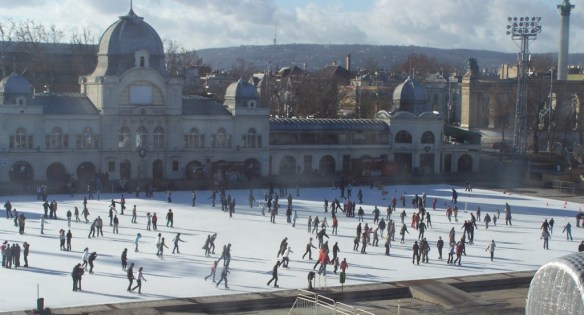
We have one more trip for the year. Lilla and I will be traveling to Hungary in the middle of the month and will be there through New Year’s Day. We last visited Budapest in the summer of 2011, and haven’t been there in the winter since 2008. We haven’t experienced seasons, in the conventional sense, for a year and half–so that’ll be interesting.  (Bangalore has two seasons, rainy and dry, and even those can be muddled, as they were this year.) While I’ve been to Hungary many times, I hope to see some new sights this time, including a possible trip to Pécs, which will be my first Hungary trip south of Balaton. There are also some quirky Budapest locations listed on Atlas Obscura that I’d like to check out.

Skating_rink


The Upcoming Year:

I hope to do some new and interesting things in the upcoming year as well. Probably the oddest activity for the year will be attending the Vipassana Meditation Course. It’s 10 days on the outskirts of Bangalore with no books, notebooks, or electronic devices of any kind, and during which my only interaction with other people will be daily meetings with a teacher. It’s meditation all day every day for 10 days straight. From accounts I’ve read it’s an amazing or insanity-inducing experience.


Writing: The past year hasn’t been as productive as I’d like on the novel front. As I mentioned, I’ve traveled quite a bit and had major time commitments on the Yoga Teacher Training front. A fragmented life disagrees with novel writing because novels are long and fictional, so if you get away from it for any length of time you have a lot of reacquainting to do when you come back to it. If you’ve ever put a book you’re reading down for a month and had trouble getting back into it, multiply that by 100 and you’ll know the challenge of doing the same for a book you’re writing—so many details for which continuity needs to be maintained.  I tossed my first to chapters out entirely and rewrote them from scratch, having to update the rest to accommodate the new beginning. I’ve hemmed and hawed for days over certain plot points and devices.


Having said all that, I’m converging on a product that I’ll be ready to submit sample chapters to agents from in 2015. Most of the points that have been giving me problems are worked out as well as I think they are likely to.


I’ll do some revamping of my website, part of which I’ve already begun.


Martial Arts:  I expected that the jumping-intensive level of Kalaripayattu would be the end of that martial art for me. I’m not built for leaping. However, having cut some weight and built my fitness, I’ve found that my old body has taken the acrobatic craziness surprisingly well. So I’ll continue taking classes at the Kalari Academy as long as my body holds up.

IMG_1226


I plan to check out another martial art as well. There are a number of Muaythai places in Bangalore, and I may see if any of those work for me.  I don’t have any plans to travel to Thailand in the upcoming year, but—if I do—I’ll make sure to squeeze in some Muaythai.  (Actually, wherever I go I’ll try to squeeze in some of the indigenous arts.) Alternatively, there are Krav Maga classes offered at the New Acropolis, and that would be convenient to check out.


Yoga: I’d originally planned to do the 300-hour course that would complete my RYT-500 certification, but it doesn’t look like it will work with my travel schedule. However, I do intend to continue my studies, and—in particular—may pursue specialty teacher training courses in Children’s Yoga and /or Prenatal Yoga. There are also some intriguing workshop opportunities in Ashtanga Vinyasa and Iyengar Yoga (props yoga.) I may even try out the yoga in Mysore.

Natarajasana_Hatha_side

I’ll continue to teach my MWF courses as long as there is interest and will maintain my own personal practice. Also, I’ll try to do some interning / teaching of corporate yoga classes.


Travel: We don’t have any specific trip planned past our December Hungary trip, but we’re sure to see some fascinating places in 2015.


It looks like I may have to make a trip to the US during the summer time-frame. However, if I don’t have to take care of business with the house, I’ll probably stay in Asia and visit some other country—possibly Burma. Lilla and I are planning to make a trip to the Himalayas sometime during the summer. This may involve a trip to Amritsar (location of the Sikh Golden Temple) in conjunction with visiting McLeod Ganj / Dharamsala (home of the Dalai Lama and the Tibetan government in exile) and Shimla or Ladakh or other Indian portions of the Himalayas. Alternatively, we may go to Nepal.


Among the Indian locations that remain on our list to see are Khajuraho, Varanasi, Pondicherry, Hyderibad, Chennai (with Kanakapura), Kolkata, and Darjeeling. That’s not to mention countries nearby that we’d like to visit while we’re here like Burma and Sri Lanka. It’s unlikely we’ll pack all that in to 2015, but hopefully we can make a dent in it.


Well there’s my 4,500 word narcissism-fest, but it has pictures.