Crouching Tiger [Free Verse]

In a square hut -
beside a craggy pass -
lived a Crouching Tiger,
a man of spontaneity
who danced to no music,
staggered when sober,
rested in times of urgency,
& labored when there seemed
to be nothing in need of doing.

He was courted by Emperors,
but shunned them.
The only way the Emperor
could get him to visit was
to order his exile.

The Anchor Book of Chinese Poetry ed. Tony Barnstone & Chou Ping

The Anchor Book of Chinese Poetry: From Ancient to Contemporary, The Full 3000-Year TraditionThe Anchor Book of Chinese Poetry: From Ancient to Contemporary, The Full 3000-Year Tradition by Tony Barnstone
My rating: 5 of 5 stars

Amazon.in Page

This poetry translation anthology presents examples from some of the earliest known Chinese poetry to authors who are still alive and composing. It’s arranged by dynastic period (up until the modern era,) and, within dynasties, by poet. Most of the poets merit only a poem or two, but some of the major poets are allotted many pages of poems. Of course, how much poetry per poet is included isn’t just a function of how prolific or popular the poet was, but also how much extant poetry remains — i.e. how much survived. Each dynastic section begins with an overview of the time and poetic trends, and there is bio blurb for each poet.

There is quite a bit of variation in the book beyond that of the changing nature of Chinese poetry. The translations are also by varied translators, including not only the book’s editors but also individuals from the past, such as Arthur Waley. I wouldn’t say there is any bad translation in the book, but some translators capture the feel, e.g. the relative sparseness, of Chinese better, and others show their English poetic educations more obviously.

All in all, I enjoyed this selection of poems immensely, and learned a lot about Chinese history as well as of the country’s changing poetic tradition. I gained new insight to some of my favorites (e.g. Li Bai, Han Shan, etc.) and gained new favorites I’d never heard of before. I’d highly recommend this book for readers of poetry in translation.

View all my reviews

Taoist Limerick

Once upon a time, there was a wise, old Taoist priest
 who got the least from the most & the most from the least.
    If he offered a snack,
    you'd be bursting your slacks,
 but expect empty plates when he'd call for a feast.

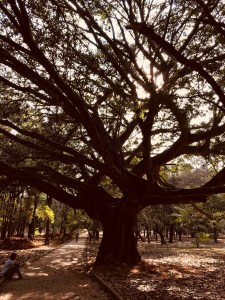
Tree Taiji [Haiku]

“turn left to go right”:
branches sweep around in arcs,
is the tree moving?

Note to Self: A Sonnet

Don't fill your vaults with glowing, shiny stones.
It's invitation to all cheats and thieves. 
Don't know by mind what you don't know by bone.
Make sure you've lost before you up and grieve.

Then when you grieve, take time to fully feel.
Don't let your mind write stories so untrue
that they turn melancholy like a wheel
that gathers and grows with each turn anew. 

Be kind and true, but not so kind and true
so as to kill with gifts or a mean tongue.
Don't do what would be best that you not do,
and only sing of those heroes unsung.

Oh, every piece of wisdom has its day,
so don't hitch so tight that you're led astray.

BOOK REVIEW: Dao De Jing: A Minimalist Translation by Lao Zi [Trans. Bruce R. Linnell]

Dao De Jing: A Minimalist TranslationDao De Jing: A Minimalist Translation by Lao Zi
My rating: 5 of 5 stars

Available Free on Project Gutenberg

The Dao De Jing presents the core philosophy of Taoism, a philosophy that values simplification, non-action, naturalness, spontaneity, and recognition of opposites in [and their influence on] each other. There are numerous editions (this is the Wang Bi / “standard” ed.) and English translations of this Daoist tract, and the translation matters because the Dao De Jing is at once simply stated and arcane. I liked what Linnell did with this translation, which – as the subtitle suggests – he aimed to make simple and straightforward.

One nice feature of this translation is that each of the 81 chapters has four segments: the original Chinese text, a readable English translation, a word-for-word literal translation, and notes. Having the Chinese, a literal translation, and notes can be helpful when one has trouble deciphering the more cryptic passages. Another nice feature is an appendix in which the author discusses another scholar’s hypothesis that the chapters of the Dao De Jing were composed in layers, and Linnell re-orders the chapters as suggested by this hypothesis. Finally, the book ends with a Jefferson Bible-esque excerpt collection that takes all the places where Lao Zi wrote “Thus the sage:” and builds a single composition describing a wise person.

If you’re interested in Taoist philosophy, you may want to read this translation, whether you’re new to the Dao De Jing or you’ve read other translations or editions in the past.


View all my reviews

Diamondless Diamonds [Free Verse]

Diamondless Diamonds?

Sounds like Daoist doublespeak
or 
a crazy Zen koan.

But, it's that which has
imaginary value,
but 
not real value.

Much of what human hands
reach for or produce
(& which human minds obsess upon)
are diamondless diamonds.

People stare at them 
with covetous eyes,

but when those eyes
saccade away
there's no reason to believe 
the diamondless diamond
still exists.

Eyes covet
what the mind knows
to have no particular worth.

Diamondless Diamonds
may change the world
for moments at a time,
but then are gone - 
and instantly forgotten.

BOOK REVIEW: Cold Mountain Poems Translated by Gary Snyder

Cold Mountain PoemsCold Mountain Poems by Gary Snyder
My rating: 5 of 5 stars

Amazon.in Page

This collection consists of twenty-four of the three-hundred-plus surviving poems by the Tang-era poet-hermit who went by the name “Cold Mountain” [i.e. Han-Shan.] This translation was produced by the Beat poet, Gary Snyder, and both the translation and the selection are informed by Snyder’s sensibilities and worldview. Snyder is known for nature-centric poetry infused with Buddhist and Native American sentiments, but, like other Beats (though far less than, say, Allen Ginsberg,) Snyder sometimes engages in social commentary. This makes Han-Shan’s body of work a fertile field because it, too, focuses heavily on the beauty and harshness of nature, is framed by Buddhist and Taoist perspectives, and occasionally interjects a societal rebuke. The poems are mostly octave (eight-line) poems which often follow the format of a “straight” sestet that sets up a “punchline” in the last couplet. [Not to suggest the poems are jokes, but they often present a clever twist or commentary at the end.]

Han-Shan’s poems focus heavily on his life as a hermit and the dichotomy of Cold Mountain (the locale) as both a harsh place to live and the only place for him. The Snyder selection focuses heavily on the appeal of nature and the living of a simple and natural life — as well as on the shunning of materialism.

Han-Shan is a mysterious figure, but what is known of him is intriguing. He is considered a mad saint by some, though most of what is known about the man comes from his surviving poems. (Some believe that the 313 known poems maybe only about half of what the hermit composed during the course of his life.)

Even if you’ve read one of the full collections (e.g. Red Pine’s,) you may find some unique insight and imagery in Snyder’s select translation. I’d highly recommend it.


View all my reviews

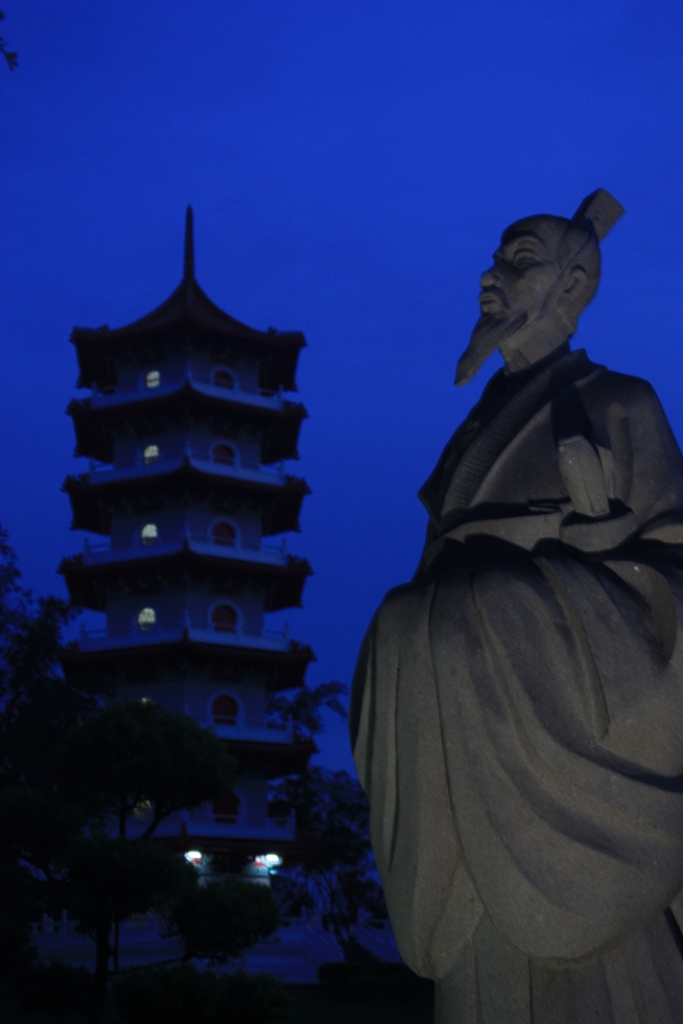
The Taoist [Free Verse]

In the pagoda garden,
the philosopher stares
into the inky darkness,

contemplating its slow
flow into the light,

reflecting upon the light
embedded in all darkness,

light that he sees in
a glint of moonlight 
on still waters.

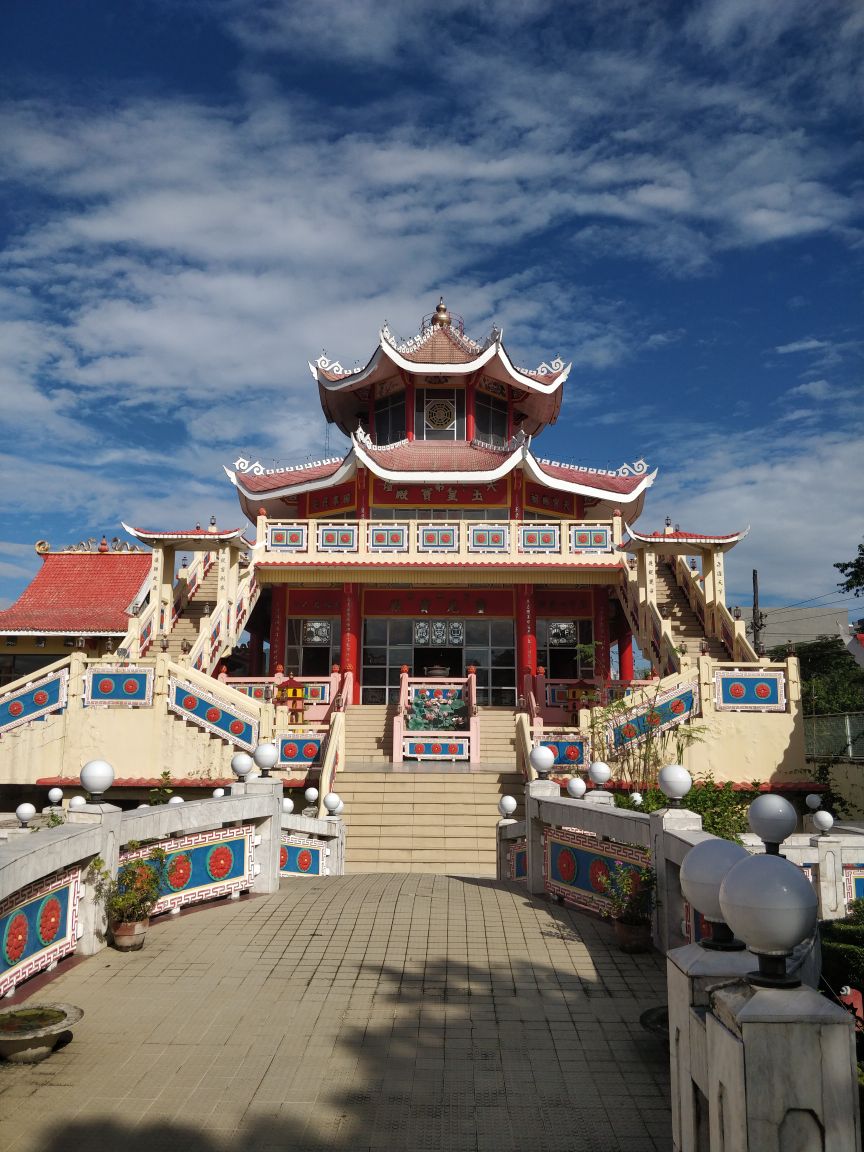
DAILY PHOTO: Taoist Temple Under Blue Skies

Philippine Chinese Spiritual Temple; Cebu City