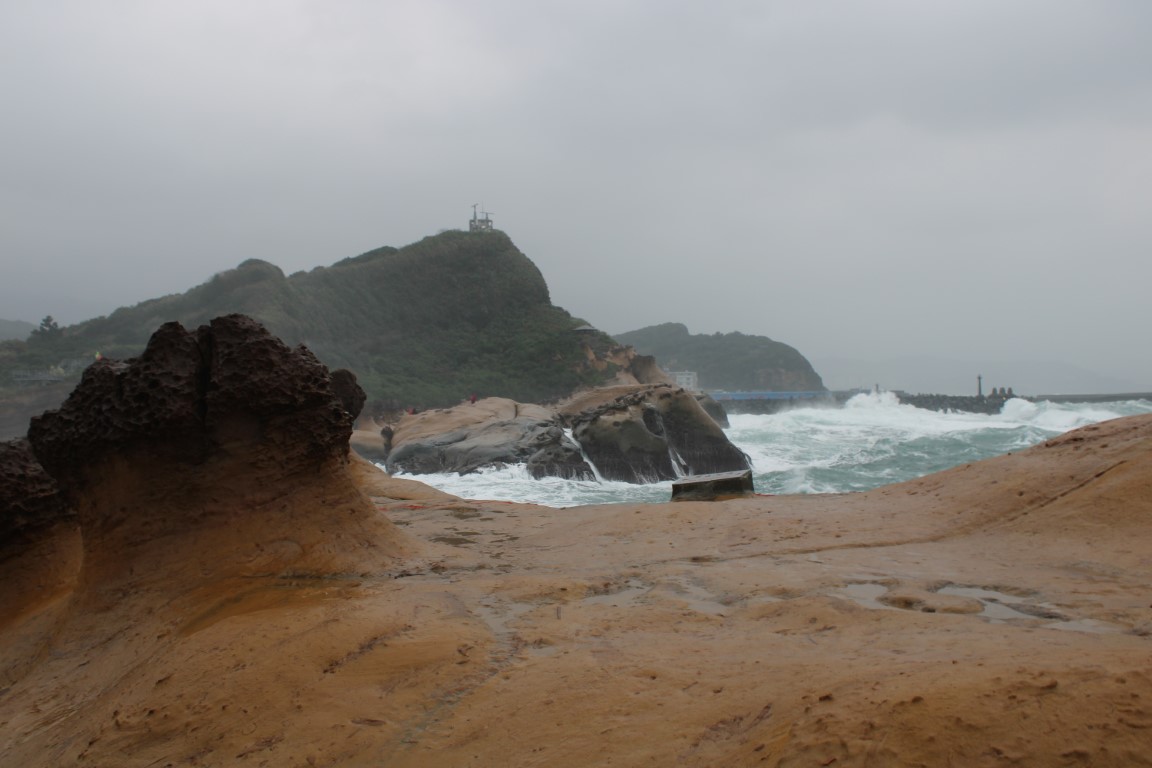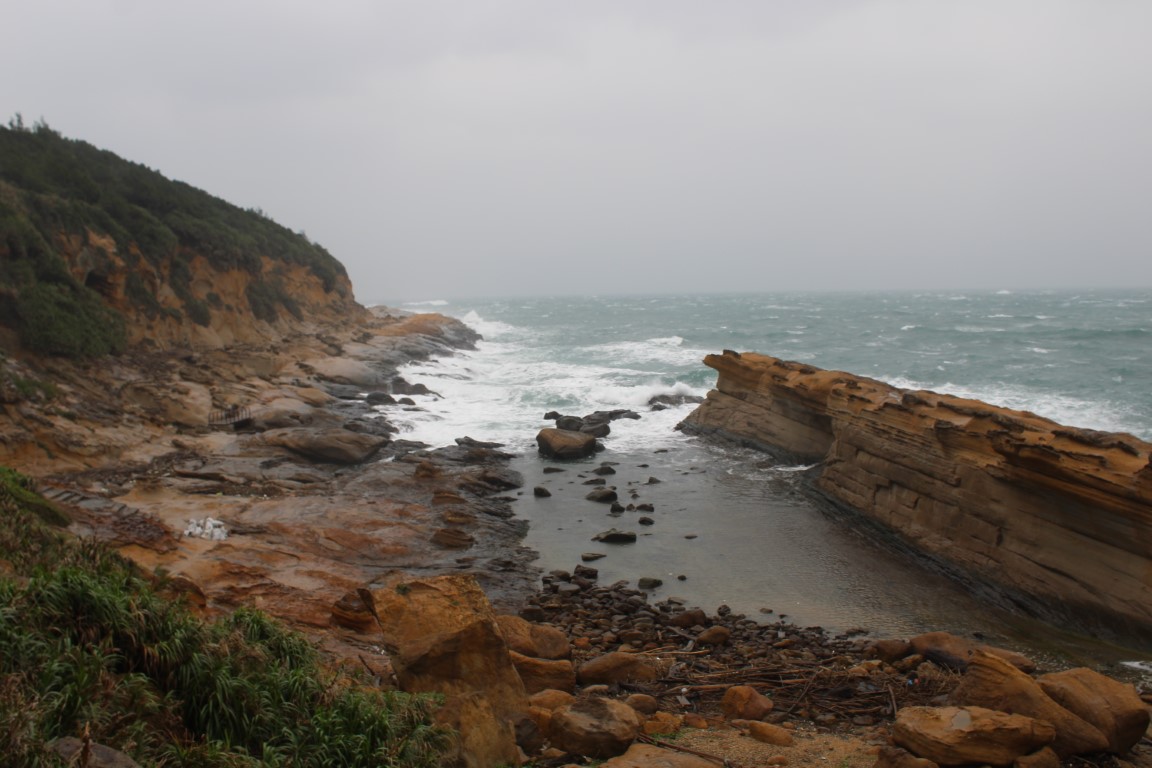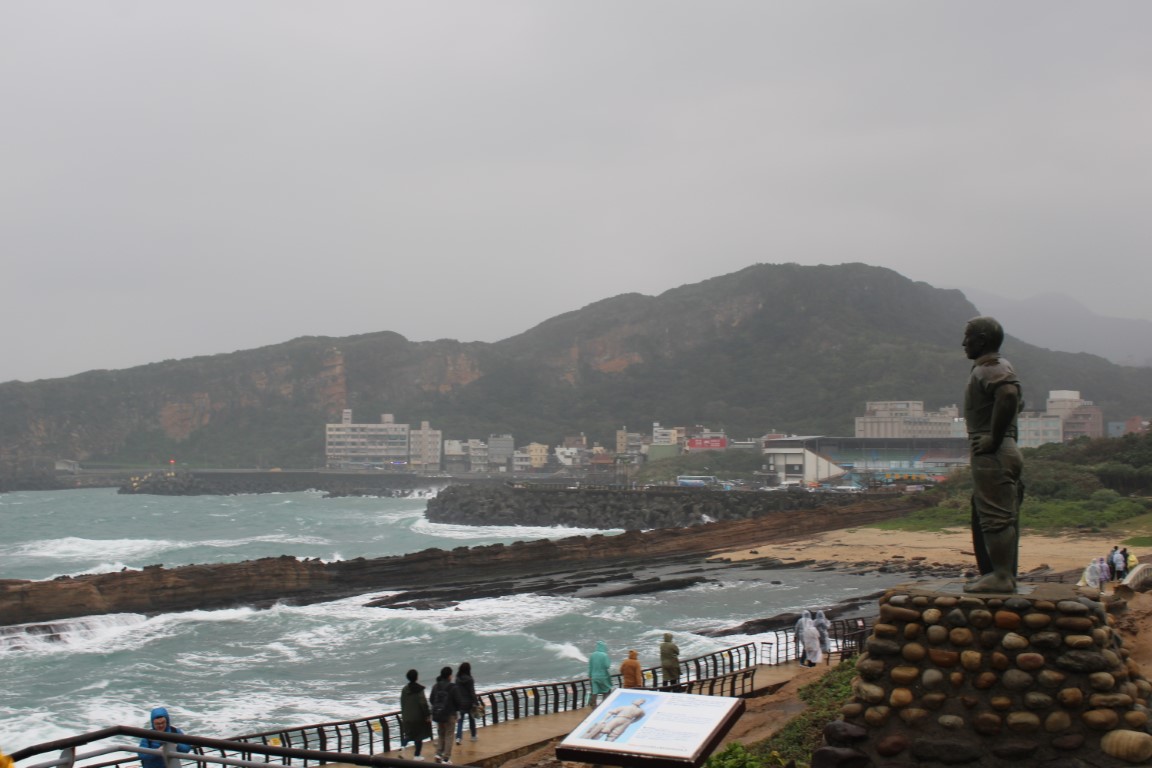
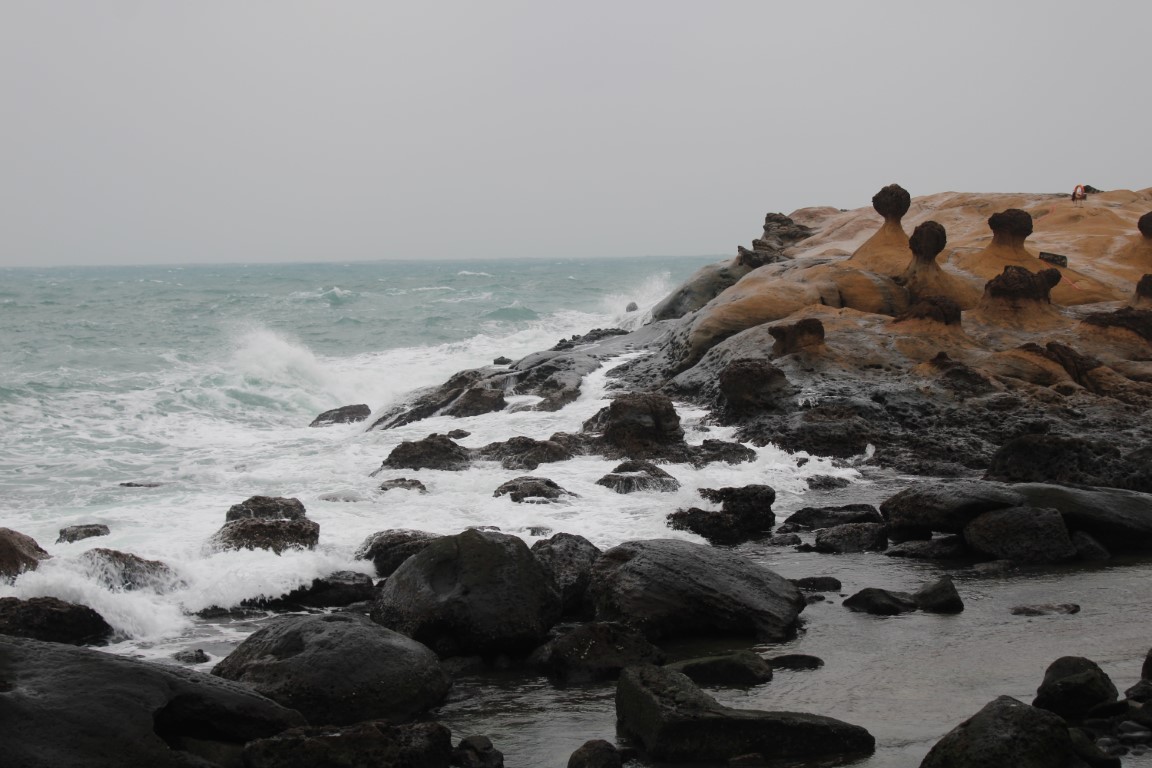

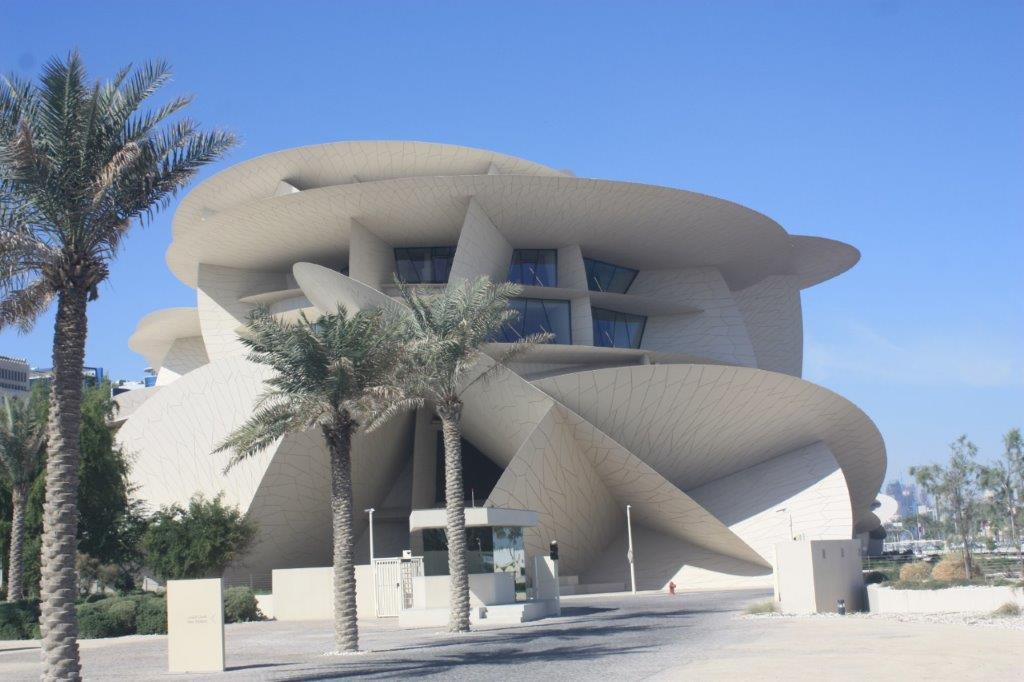
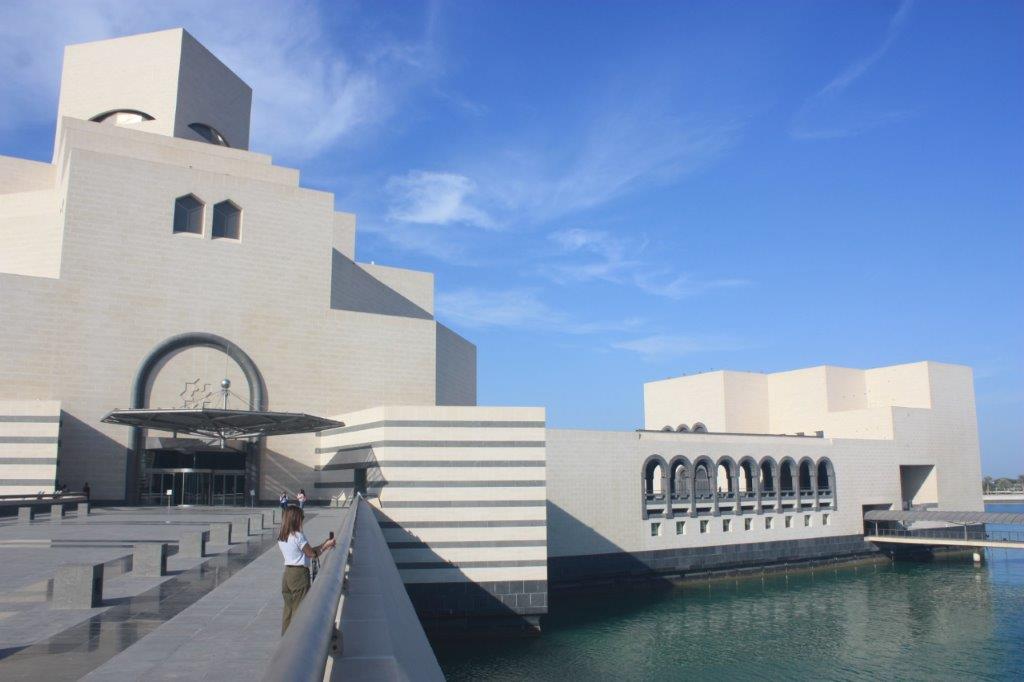
DAILY PHOTO: Yehliu Geopark on a Dreary Winter Day

BOOKS: “The Man with the Compound Eyes” by Wu Ming-Yi

The Man with the Compound EyesThe Man with the Compound Eyes by Wu Ming-Yi

My rating: 5 of 5 stars

Amazon.in Page

This book is at once a work of eco-fiction, literary fiction, and speculative fiction. The story revolves around a pair of characters whose worldlines become intertwined when the Pacific Trash Vortex is spun out, crashing into the Eastern shore of Taiwan. “Riding” the trash vortex is Atile’i, a member of a remote Pacific Island where second sons (of which he is one) are exiled to the sea to ensure the tiny island’s population doesn’t outstrip its resources. Atile’i is found by Alice, an academic who moved to a rural area of the Eastern shore and who is in an extended period of grieving the loss of her son and [common law] husband. Their union helps them each in the process of finding closure for their respective traumas.

There is a secondary story involving supporting characters, but at its heart, the book is about how an unlikely pair is brought together by environmental factors. That said, the secondary story does offer the reader insight into the indigenous population of Taiwan, a number of tribes whose relation to the island has been overshadowed by both the huge numbers of Chinese immigrants and the various agents of colonization (i.e. Europeans and the Japanese.)

I found this book to be highly readable. It manages to highlight environmental perils without being preachy in a way that detracts from the intensity of the story (and, thus, which reduces the effectiveness as a tool of persuasion.) [This being a line that some other eco-fiction writers have been unable to walk, such that they dissipate the power of story through a need to virtue signal, tribe signal, and finger-point.]

I’d highly recommend this book for readers of literature in translation, eco-fiction, literary fiction, or anyone who likes an interesting story.

View all my reviews

DAILY PHOTO: Yehliu Geologic Park Formations

When I Heard the Learn’d Astronomer by Walt Whitman [w/ Audio]

When I heard the learn'd astronomer,
When the proofs, the figures, were ranged in columns before me,
When I was shown the charts and diagrams, to add, divide, and measure them,
When I sitting heard the astronomer where he lectured with much applause in the lecture-room,
How soon unaccountable I became tired and sick,
Till rising and gliding out I wander'd off by myself,
In the mystical moist night-air, and from time to time,
Look'd up in perfect silence at the stars.
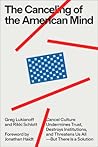
BOOKS: The Canceling of the American Mind by Greg Lukianoff & Rikki Schlott

The Canceling of the American Mind: Cancel Culture Undermines Trust and Threatens Us All―But There Is a SolutionThe Canceling of the American Mind: Cancel Culture Undermines Trust and Threatens Us All―But There Is a Solution by Greg Lukianoff
My rating: 5 of 5 stars

Amazon.in Page

This book presents an in-depth exploration of cancel culture in its many varied manifestations, from both the left and the right of the American political spectrum. The biggest part of the discussion is with respect to the educational system, and particularly higher education. Sadly, this is because the institutions that used to be among the most formidable bulwarks of free speech, expression, and academic freedom have increasingly become untenable to multiple points of view. (The authors point out that there have been more dismissals of faculty members for cancel culture speech and expression issues than there were during the McCarthy era for political stance.)

However, the book doesn’t restrict itself to education, but also investigates cancelations in journalism, publishing, the scientific community, standup comedy, and the medical and psychiatric communities. The authors also present cases of the effect that wokeness and other expression limiting activities are having in these areas. One of the most disturbing revelations to me was the role of wokeness in psychotherapy and the negative effect it may have on people getting the help they need.

The book presents a series of cases in detail to advance the discussion. It also has a couple chapters that examine the tactics that are used to apparently “win” debates by silencing / demoralizing the opposition while avoiding any actual contest of ideas. The authors go through tactics favored by the Right as well as those by the Left. (Though it’s clear that, in a race to the bottom, both sides adopt the approaches of the other side that seem to be effective. e.g. the Left is getting into book banning (historically a Conservative tactic) and the Right is getting into cancelling and shout-downs (usually Progressive tactics.)) I think it was smart to have two authors, one from the left and one from the right, in order to help ensure balance in the project. That said, as the Left has been in the cancel culture vanguard, they come up more often.

Some have called this a sequel to “The Coddling of the American Mind,” with which it shares a co-author, Greg Lukianoff. I don’t know that I’d think of it that way. While it does address some of the same issues as background, psychology and child development are not at the fore in this book (Jonathan Haidt – the other co-author of “Coddling” is a psychologist,) but rather are the legal, cultural, and political issues.  

This is probably the most important book I’ve read this year (and, being late November, it’s likely to retain that status) and I’d highly recommend it for all readers.

View all my reviews

BOOKS: The Second Law by Stephen Wolfram

The Second Law: Resolving the Mystery of the Second Law of ThermodynamicsThe Second Law: Resolving the Mystery of the Second Law of Thermodynamics by Stephen Wolfram
My rating: 4 of 5 stars

Amazon.in Page

This book has an intriguing premise but a bizarre organizational scheme. The book offers insight into the Second Law of Thermodynamics couched as the author’s personal journey of discovery. Put simply, the Second Law says that entropy increases, or the coffee cup next to me can fall and break into many pieces but it can’t / won’t reassemble itself, alternatively, I can mix milk into the coffee in the cup, but not unmix the milk out of it. Of course, this simplification is — in fact — a massive oversimplification and there are a number of definitions of entropy and different ideas on the conditions under which its increase holds and why. This is part of what the book investigates.

Let’s start with the book’s intriguing premise. It is that: a.) the Second Law and its implications are not as well (or fully) understood as the scientific consensus suggests, and b.) the key to understanding entropy’s increase may be found in the concept of computational irreducibility. This all ties to Wolfram’s work with cellular automata and the finding that apparent randomness can come about from a simple set of rules that are non-random. In other words, cellular automata could produce a pattern that can only be determined by re-running said simple set of rules — i.e. there would be no way to compute it. As (apparent) randomness plays an important role in the Second Law, Wolfram proposes a connection that has ramifications for critical issues like reversibility. (Remember we can’t unmix the milk out of the coffee [without expending more energy and within the confines of an open system] or so it’s believed.)

When I say the book’s organization is strange, I do so with the assumption that the intended readership includes those who are scientifically literate but not expert in thermodynamics or physics. The first part of this strangeness is that the body of the book concludes with an overview of the development of the Second Law (arguably this is information a non-expert reader might benefit from having up front.) The second element of strangeness is that much of the latter part of the book is just connective tissue between excerpts of other people’s writing on the subject. This increases the page count tremendously and doesn’t serve readability well.

The book does have a good deal of interesting and informative graphics. It also has copies of scholarly papers and relevant chapters from Wolfram’s previous book, “A New Kind of Science” for those who are capable of, and interested in, taking a deeper dive into the science and mathematics under consideration.

I found this book to be thought-provoking if a bit tedious to read in places. If you’re interested in the Second Law, it’s worth reading and may shed new light on the topic.

View all my reviews

PROMPT: Topics

Which topics would you like to be more informed about?

I’d love to know why the fundamental equations and constants that govern the universe appear to be tailor-made to generating life?

I’d love to know whether there is other intelligent life in the universe, and – if not – why not? (And, if so, have they visited, are they visiting, do they intend to visit, and – if none of the above – why not?)

I’d love to know whether there is meaning to life other than moving energy to higher states of entropy in a Sisyphean fashion (and any other meaning that one independently chooses for one’s self?)

But I’m doubtful any of that will be clarified in my lifetime, so I guess I’ll have to stick to more down to earth topics, such as: “Is ‘a good life’ a meaningful statement, and – if yes – how does one go about pursuing one.”

Symbiosis [Haiku]

chital eats grass.
 myna eats bugs off chital:
  everyone 's happy.

Melting Stone [Free Verse]

Upon the ocean shore,
   there is a rock:
   hard,
   black,
   porous,
   volcanic.

Gentle seas send ripples
   against its base.

Stormy seas send waves
   to relentlessly batter it,
   crashing over its top.

Both the lapping waves
   and the crashing waves
   cart away parts of the rock --
   one unit of grit at a time.

The lapping waves need patience;
  the crashing waves need energy,
    but they both insist a tax be paid
     for their labors.

Just looking at the rock,
 one can tell it was once different:
    bigger,
    its pores filled
        with other rock -- softer rock,
  rock that the sea long ago turned
    into sandy bottoms and beaches.

The rock is dissolving like an ice cube,
  except in geologic time. 

Burning Sensation [Free Verse]

What's this world?

It's energy playing a game,

  a game whose goal is to be rid
    of an intense burning sensation,

  a burning sensation caused by
     low-entropy energy sitting
     around with nothing else to do
     but burn brightly. 
  
  We, the wasters of energy, are 
     a soothing lotion to the universe,

     expediting the making high-entropy, 
          soothing, tepid energy from 
          all those stars -- 
          i.e. the universe's poison ivy.