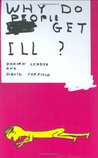
BOOK REVIEW: Why Do People Get Ill? by Darian Leader and David Corfield

Why Do People Get Ill?Why Do People Get Ill? by David Corfield

My rating: 4 of 5 stars

Amazon page

This book’s title might suggest that it’s about the germ theory of disease or genetic anomalies, but it’s actually about why some people exposed to germs or carcinogens don’t get ill, while other people become ill at the drop of the hat—even when they have no exposure to the immediate cause of illness. (e.g. A Japanese study found that hypersensitive subjects had skin reactions when exposed to a harmless leaf when they were told that it was from a lacquer tree [i.e. that it was mildly toxic.]) It’s well established that stress plays a role in one’s level of health. Of course, it’s not merely the presence of stress, but the nature of it and how it’s dealt with that matter. Our bodies are supremely skilled at conquering invaders and repairing damage as long as our parasympathetic nervous system is engaged sufficiently for our body to do the work of fighting infection and healing. Leader and Corfield’s core argument is that it’s how we worry rather than what we worry about (or even whether we worry) that influences proclivity to become ill. More specifically, the authors propose that the inability to communicate feelings can play a significant role in one’s propensity for illness.

The authors review many interesting studies from medical literature. For example, rhinovirus may be a necessary condition for a cold, but it’s not a sufficient condition. In other words, many exposed individuals never become symptomatic. The same has been shown for tuberculosis, malaria, and a host of other ailments. (It may be true for all ailments.) Another fascinating study found that sporadic bombing in London’s suburbs correlated with higher ulcer rates than the constant bombardment in the city. This suggested that the predictability of a stressor was important vis-a-vis its health effects—apparently more important than the presence or severity of the stressor. Also, there are the many studies about the correlation between certain times / events and disease onset (the most well-known of these is that the most frequent time of death from heart attack is between 8 and 9 in the morning on a Monday.)

Leader and Corfield make a compelling argument in support of their thesis that’s rooted in an extensive review of the scientific literature on the quirky complexities of illness. I’m not certain that I’m completely convinced that what they believe is most important is what is in reality most important. (To be fair, it’s not a matter of deficiency of approach so much as the complexity of disease onset and the difficulty of establishing a hierarchy of importance.) However, the beautiful part of the scientific approach is that even if one doesn’t buy the authors’ arguments hook-line-and-sinker, the book is still a valuable read because it presents a great deal of research–as well as some interesting food for thought on the present state of the medical establishment. I suspect the authors didn’t win many friends with medical doctors, given the strong critique they present. Leader and Corfield point out, what most of us have long suspected, that the money-makers in healthcare are expensive pharmaceuticals and surgery, and that this has created a dangerous incentive. Of course, the authors’ point is that this has undermined the value that psychological approaches might have, but the same could be said to be true for postural realignment therapies or other neglected approaches to treatment. The last chapter is a searing critique of the state of the medical profession that suggests that doctors are disproportionately ill-conditioned to listen to patients and to get to the root causes of their ailments.

The book’s organization is reasonable, but could have been improved. There’s a great chapter on the immune system, but it’s chapter 11 of 15 chapters. It would have been useful to move that text closer to the front of the book so that readers would have access to this primer as they considered why the solution might be found internally rather than in the medicines and surgeries that they are conditioned to believe are in virtually all cases necessary.

Of course, I understand that the authors’ thrust is on the psychological rather than the biological/physiological front, and this undoubtedly played into the organizational decisions. It may be true that the book isn’t about how a body can knock out ailments, but why it occasionally fails to; however, understanding how we defeat illness is an important part of the backstory.

There are important chapters on heart conditions and cancer. These are important not only because those diseases are major killers, but because these are the nasty diseases that many will be skeptical of the relevance of mind-body factors. In other words, many will accept that our attitude and approach to stress may be relevant in whether one breaks out in hives, catches the flu, or gets an ulcer—but may not except that a force as powerful as cancer can be swayed by one’s mindset and behaviors.

I’d recommend this book for anyone interested in how good health can be fostered.

View all my reviews

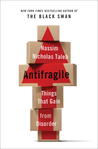
BOOK REVIEW: Antifragile by Nassim Nicholas Taleb

Antifragile: Things That Gain from DisorderAntifragile: Things That Gain from Disorder by Nassim Nicholas Taleb

My rating: 4 of 5 stars

Amazon page

Nassim Nicholas Taleb has a gift for uncovering simple and fascinating topics that have remained buried–not because they are unfathomable, but–because of the institutional blinders and group-think present in academia (at least within the social sciences.) I don’t mean to diminish what Dr. Taleb does by saying these are simple ideas, it takes a great intellect to not only recognize the ideas others have missed but to clarify them for a broad audience and to unravel the challenging ideas that must be made clear as one moves beyond the crux of the idea. Furthermore, it takes a bold writer to push these ideas out into the open against brute institutional antagonism. (If Taleb hadn’t written books that were highly readable and that presented the ideas in a manner readily digested by a broad audience, he’d likely still be being completely ignored by academicians.)

By “simple” I mean ideas that can be captured in a single sentence—often a pithy one at that. In his second book (his first work for popular audiences), Fooled by Randomness, the idea was that randomness is more pervasive than most people imagine and that false explanations are often built for chance occurrences. Black Swan told us that statistical forecasting fails catastrophically when one has “800 pound gorillas” in the data set (e.g. if one is comparing countries—a situation in which one will virtually always be in, as Taleb calls it, “Extremistan.”) The book in question, Antifragile, is built around the notion that some entities get stronger when subjected to stressors and disorder.

One can see many “antifragile” elements in one’s own body. A muscle subjected to exercise often gets tiny tears in fibers, but when the body does its repair work those fibers will be stronger than ever before. Wolff’s Law tells us that bones subjected to an increased load will increase their density. In fact, our bodies are testaments to the concept of antifragility on many levels. For this reason, Taleb uses many examples from the field of medicine—in addition to those from disciplines more closely related to his own, e.g. finance, economics, and risk. A lot of the medical discussion deals with the proclivity of Western medicine towards interventionism (in contrast to the “first, do no harm” motto often heard.) An example with which many people are familiar is that of the over prescription of antibiotics. While there are obviously cases for which antibiotics are necessary and beneficial, prescribing them willy-nilly robs the body of antifragility (i.e. if the body defeats the infection itself, it has inborn resistance.)

As with other of Dr. Taleb’s writings, I found Antifragile to be interesting as well as informative. The author does a good job of providing examples to elucidate and bolster his arguments and puts it all together in a readable package. He also does a great job of pulling examples and discussions from a number of different fields. This book doesn’t read like it’s about an Economics or Business subfield as much as it’s a book that can teach you something applicable to whatever your field might be. The book also covers a number of other critical but related ideas, such as the value of heuristics in decision-making, how antifragility can be increased (and fragility reduced), and the ethical issues involved.

My primary criticism is that the book overdoes the jabs at scholars and economists. I can understand where Taleb might have some pent-up rage against many academics. He has certainly had to weather a lot of equally petty assaults from the academics who loath him. The work of many a social scientist and economist looks pretty silly to those who grasp the concepts Taleb is presenting. Still, we got it. Halfway through the book, one wonders why Taleb is still so vigorously and maniacally whipping such a skeletal horse. While it’s hard to imagine anyone less strong-willed than Dr. Taleb could get these messages out in the face of the institutionalized opposition he faced, the flip side is that he will probably strike you as a pretentious jackass on occasion.

The book is organized into seven sections (each of multiple chapters.) It begins by describing antifragility and then proceeds through relevant concepts like optionality, nonlinearity, via negativa, and ethics. The book has handy appendices for those who prefer graphic or mathematical representations. (Like all popular science / social science works, there’s an attempt to keep the overly technical and visually intimidating material out of the body of the work.) There is also a works cited section.

I’d recommend this book for those interested in wonky type books.

View all my reviews

The Science of Wisdom & The Wisdom of Science

Shrine_nearRoppongi_statues

For the purposes of this post, wisdom is neither a collection of trite adages, nor is it an accumulation of arcane or esoteric scripture. Wisdom is:

1.) the ability to quiet the mind

2.) the ability to suppress inclinations to be petty in a healthy way

3.) the ability to override instinct with conscious thought when it’s beneficial to do so

4.) the ability to know when it’s beneficial to do so (see #3)

5.) mastery of (rather than being mastered by) one’s emotions

The objective of these activities is to increase happiness, reduce strife, and exercise better and healthier decision-making.


While these are secular objectives, the pursuit of this form of wisdom has to a large extent become entwined with certain breeds of religion or spiritualism. Mystical religious traditions are the style of spiritualism that are most commonly associated with these pursuits. (Here I use mysticism in its scholarly sense, i.e. traditions that believe in a god or gods and who believe that the space in they can interact with said god is to be found inwardly. This is as opposed to the ill-defined colloquial meaning of mysticism that has a negative connotation and is infused with judgement about hippy-dippiness.) One sees the pursuit of this form of wisdom in yogic philosophy, in most branches of Buddhism, in Taoism, etc.


I’m not sure why this connection should be so entrenched. Why should agnostics and atheists forfeit the pursuit of such forms of personal improvement? Maybe the scientifically-minded think that they are knowledgeable and knowledge is wisdom, and so they think they are already on the path. I can tell you that knowledge isn’t wisdom. I base this on the experience of knowing intellectually brilliant people who couldn’t get along with anyone, who perpetually said the wrong things, and whose personal lives were a wreck. Skeptics and geeks are as subject to strained relationships, stress, and unhappiness as their pious neighbors.


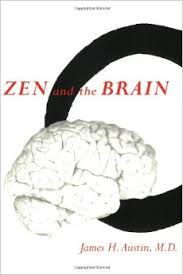
Another possible explanation is that many scientifically-minded people just don’t think that such goals are achievable because the routes to them have too often been couched in supernatural terms.   However, there’s a growing literature on how these objectives can be pursued that is rooted in neuroscience and neuroplasticity, and for which the presence or absence of a deity is irrelevant.  I’ve been reading a book called Zen and the Brain lately that offers an understanding of the effects of meditation that is firmly rooted in the science of the brain. I also recently purchased a book entitled Buddha’s Brain that takes a look at how neuroplasticity allows for a “rewiring” the brain to a healthier state. (Yes, I realize the irony of citing two books that have religious references in their titles in this post. I’d argue that this is how inexorably tangled these pursuits have become with religion. However, both of the scientist/authors of the aforementioned books, James H. Austin and Rick Hanson, have books with more secular titles if you’d prefer.)

BuddhaBrain Zen&Brain


I was once eating in a university cafeteria when I heard a religious man make the argument to a fellow he was trying to “educate” that went like this:  “If there’s not a God, why should I be nice to my wife–why shouldn’t I kick the hell out of my dog?” My first thought was that this man desperately needed therapy. If the only reason he wasn’t being a violent asshole is because he feared the wrath of an invisible, omnipotent entity who–by they way–would have to be showing a complete indifference to what people do to each other in real-time, then he’s an accident waiting to happen. If he either: a.) loses his fear of said deity, or b.) begins to think that the deity is telling him to go another way (since whatever the deity is “telling” him is almost certainly just his mind telling him), then his wife and dog are in great peril.


My second thought was, “this is the cafeteria in an institution for higher learning, how’d this guy get in without at least the rudimentary training in logic to imagine a basis of moral behavior that’s not rooted in the supernatural smiting ability of a deity [who–I might add–sees a helluva lot of smite-worthy activity on a daily basis.]”


If you’re considering an action that seems questionable, you don’t need to ask what Jesus would do? You can start by asking the question: Would my life (or those of my loved ones) be adversely impacted by living in a world in which everybody did what I’m about to do in the manner I intend to do it? (Implied is the idea that, if the action in question involves doing something to someone, you would be subject to being on the receiving end of same action sooner or later.)   If the answer is “yes,” don’t do it. If the answer is “no” there still may be reasons not to do the activity that have to do with what is good for you personally. (We’ll get into that a little further down.)


I realize that the above standard isn’t perfect, but it’s far less subject to user error than WWJD and it explains why the fellow from above shouldn’t beat his wife or his dog unless he likes rigorous and regular beatings himself. Some people might say that they don’t think they or their loved one’s would be adversely in the slightest if everyone went about walking around naked. Others might believe that they would be stressed out (or overstimulated) in such a world. However, the above approach has already gotten us to the fringe of questionable activity. Yes, some people might be traumatized if their neighbors walked around in the nude. But I suspect if everybody did it (as per the question) it would become not weird (definitely not harmful) in short order. There are those people who are so fragile that they can’t sleep knowing that a couple engaging in intercourse in privacy of a room three doors down are probably not using a missionary-approved posture. Said people need the kind of wisdom I’m talking about more than any because part of it is accepting that there may be more in heaven and earth than is dreamt of in their philosophy. Now that we know how to kill stray asteroids, if humanity ever dies out it will be at the hands of people who can’t bear anyone living by rules not those that they took for themselves.


At any rate, I think there are two reasons why the above approach is difficult for homo religiosis (religious human.) First, there are many activities that homo religiosis wants to see universally abolished because their religion considers forbidden, but which don’t adversely impact others. (e.g. Jains are pretty easy-come-easy-go, but imagine you were told you’d have to forgo onions because of that religion’s moral belief that no food should come from a plant that’s killed by harvesting. [FYI: Let me laugh now at the religious people who say “but there’s nothing crazy like that in my religion?” That just means you are so untraveled and uneducated that you can’t fathom how completely wacky some of your “moral” beliefs / practices are. e.g. How about eating salmon on Fridays as a sacrifice in lieu of eating a hamburger? That’s just nutty on all sorts of levels.])


Second, many believers really do believe that they have a special place in god’s heart and, therefore, aren’t subject to the same limitations as those poor, god unloved people. The idea that said person shouldn’t commit rape because they wouldn’t like it if someone else raped them or their sister or their mother is non-sense, because their god would never let someone else get away with shit like that with them. (Yes, there are people who’ve lived sheltered enough lives to believe that god punishes others but–at most–“tries” them.)


Most of us must accept that when it comes to being a person, we are the same as all the other people. While one may be stronger, faster, smarter, or in some dimension more talented than others, this doesn’t endow one with a different set of rights and responsibilities. On a genetic level there are no chosen people.


Earlier I mentioned that the “if everyone else did it” standard might leave one on the horns of a dilemma as to how to behave or what decision to make. Here’s where we’ve got to use our brains because the hard and fast rules go out the window. Evolution has programmed us with some guidelines that were beneficial given the constraints of the world our ancestors lived in. However, this programming of pleasure and pain may or may not be great advice given the ways in which humans have changed our own world.


Let me give some examples. Our nervous system suggests we eat foods that are sweet and fatty. We crave chocolate and bacon, and pleasure centers in the brain light up when we consume these foods. In our hunter / gatherer existence, this was excellent guidance because a.) these foods were relatively rare, b.) these foods had dense caloric content, c.) sweet foods are less likely to be poison, and d.) we worked our asses off in physical labor (i.e. high caloric demands.) However, today these high caloric foods are mass-produced, we require almost no caloric expenditure to obtain them (or to do most anything else in our cubicle-dwelling work lives), and in some cases people are literally (I don’t use “literally” lightly) killing themselves with such foods.  So part of the wisdom I’m talking about is developing the capacity to exercise conscious control over decisions about whether to eat such foods, how much of such foods to consume, and what activities to do to counter act the flood of empty calories. Our biology is a harsh mistress, and it can require intense efforts to keep such impulses under control.


We are also programmed with love, a trait which has served us well over all. I know some of you are cringing about the idea of “evolutionarily programmed love”–so unromantic. It’s simple. Those who could build connections with others disproportionately survived to pass their genes on. This further fed into our species’ rise because, while we think of ourselves as the planet’s dominant species, we produce the most vulnerable 1 year olds (or 8 year olds for that matter) of any species on the planet. A human three-year-old is good for two things–learning and food. It takes a lot of love to make sure its the former and not the latter. An extremely intense experience of love is essential to our species’ ability to not just wander off and let our pain-in-the-ass children get eaten. This gives us plenty of time to teach kids more than just how to elude a saber-tooth tiger. We have time to teach kids language, social niceties, and trigonometry.


We can, therefore, use our gigantic brains to noodle out whether a given action is best for us,  in addition to whether it does no harm to those around us. The complexity of our brains allows us to rewrite our rule book in unprecedented ways. Some of the religious “morality” that seems vacuous (e.g. don’t eat shellfish, but feel free to own as many people as you can afford) probably had a logic in that time (e.g. people were getting sick from eating shellfish because they didn’t yet know how to prepare it.) The problem is that one has to be ready to jettison obsolete advice, and that’s hard to do once it’s entrenched as dogma. This is where being Homo sapiens, the thinking human, comes into play.


READING REPORT: February 20, 2015

This week’s Reading Report will be short. I didn’t complete any books this week.


Most of my reading was divided between two books that I’ve mentioned in earlier reports. The first is Zen and the Brain by James H. Austin. This is probably the most expensive book that I’ve purchased since the ridiculously overpriced textbooks of college. While I’ve been known to pan decent books for being overpriced (e.g. most recently Zen Mind, Strong Body by Al Kavadlo), I will say that I’ve found this book to be worth it. There are vast numbers of books on the fascinating findings of neuroscience research. Also, there is a vast canon on Zen, meditation, and the quieting and mastering of the mind. However, there are only a small (though growing) number of books that deal with the intersection of these two subjects, and none covers the subject in as much depth as Austin’s work–as far as I’ve seen. The chapters I’ve been reading of late deal with emotions, visceral drives, and memories–all relevant issues for one who is seeking personal development in a scientifically-minded manner. The next chapter will deal with GABA. I’m looking forward to this because I know there is scientific evidence that yoga can reduce depression through its effect on GABA levels, and I look forward to having a better understanding of how this works.

Zen&Brain


The second book that’s consumed a lot of my time over the past week is The Pyjama Game. I’m about 2/3rd of the way through this book and will finish it in the upcoming week. It is in part a micro-history of judō and in part an account of what it’s like to be a practitioner of the martial art of judō. While the micro-history chapters are chronological, they’re interspersed with chapters that are more of a personal accounting of the author’s experience (and the experience of individuals with which he interacted with first-hand–i.e. other amateurs.)  The era that was covered in my reading of the past week was an interesting one. It chronicled judō’s shift from a time in which Japan completely dominated the sport to one in which Russians, Europeans, and Americans started to make headway and—in some ways–unique contributions to the art. This includes judō‘s rise to Olympic status, and how the sport has progressed since that time.

pyjamagame


There were another couple of books that I read substantial parts of as research for the novel I’m writing. The first of these is The Taiheikiwhich is–as was the style in medieval Japan–a mix of part history and part literature. It tells the story of Emperor Go-Daigo’s retention of power, largely through the efforts of valiant loyalist warriors–most notably the famous Kusunoki Masashige.

Taiheiki


The second research work is entitled Fighting Techniques of the Oriental World: AD 1200 – 1860As my novel takes place partly in 14th century Japan, China, and Southeast Asia, this reference comes in handy for learning about the activities of warriors across several nations.

FightingTechniquesOrientalWorld


I purchased three books this week. In a way, I was successfully (and happily) suckered. For those who haven’t realized, Amazon is very clever. If you look at a book once or twice, the price will often rise a little when you go back. This drives a few suckers to buy it at a higher price before it rises to some imagined peak price. I’ve noticed this on enough occasions to believe that it’s not just coincidence. Furthermore, as one trained as an economist, I know this is a sound pricing strategy. What I’d not yet experienced is that if one keeps periodically checking on the books–but not buying–the prices will creep back down to a new low, probably only a tiny bit under the first price you saw. I bought three books that I’ve been looking for both on Kindle and at my local bookstore, but which have stayed above my reservation price.


The first, and most expensive, was Buddha’s Brain, which is along similar lines to the aforementioned Zen and the Brain. The book is by a neuroscientist who specializes in neuroplasticity, and who examines how one can go about “rewiring” one’s brain to be happier and more well-adjusted.

BuddhaBrain


The second book is called The Relaxation Response. It was the cheapest book of the three and is much older than the book Buddha’s Brain. In it Dr. Benson (Harvard MD) describes the relaxation response as the body’s counterpoint to “fight or flight” mode. In this state of relaxation, the body–among other things–goes to work on repairing what ails it. There’s a lot of evidence that a human body can repair most of what can ail it if it gets enough rest–i.e. sufficient break from stress.

Relaxation Response


My final purchase was A Confederacy of Dunces. This book is considered to be one of the best comedic novels in American literature. It’s also a book that all depressed writers (which is to say all writers struggling to get things published) should read for the cautionary tale of the novel’s tragic back story. The author, John Kennedy Toole, committed suicide (at least in part) because he couldn’t get it published. His mother then took up the torch, shopping it around. It took her seven years, but she finally got it published after convincing the novelist Walker Percy to look at it, and having achieved his recommendation. In 1981 it won the Pulitzer Prize for fiction.

confederacy of dunces

BOOK REVIEW: How Pleasure Works by Paul Bloom

How Pleasure Works: The New Science of Why We Like What We LikeHow Pleasure Works: The New Science of Why We Like What We Like by Paul Bloom

My rating: 3 of 5 stars

Amazon page

Paul Bloom’s book is about why we take pleasure in peculiar actions, proclivities, and objects. These are the pleasures that aren’t readily or directly explained by our evolutionary hardwiring. Evolution has programmed us to experience pleasure with sex and eating to encourage procreation and nourishment. In other words, those who experienced pleasure with sex had sex more often, and passed on their genes more successfully. Those who had a healthy appetite, ate more, became stronger, survived, and passed on their genes.

However, just because the pleasure of sex is readily understood through biology, doesn’t give us insight into the panoply of activities that people find pleasurable in a sexual way that have no value for procreation whatsoever. Bloom uses the example of masochism, but there are all sorts of kinky fetishes out there that one might also consider. It’s the peculiar pleasures that Bloom tries to explain. This is not to suggest that Bloom’s book is entirely about food or sex. He addresses each of those subjects with a chapter of its own, but they aren’t the sum total of the book. Both he and I, no doubt, rely heavily on food and sex because they are such fundamental pleasures and ones whose domains have blossomed far beyond the dictates of biology.

So what does the book address besides food and sex? It examines why people collect things that were once owned by famous people? Bloom sites a study showing that Joshua Bell anonymously playing violin in the subway in street clothes can barely garner a collective $32 in an afternoon, even having been passed by people who will pay $200 each to hear him later that evening as he wears a tuxedo in a concert hall, though playing the same songs on the same $3.5million violin. Why do we sit around watching television and movies? If any of these pleasures seem self-evident, I would encourage you to ask yourself why they should be? It’s by no means clear that we should value something more highly because of who previously owned it, and it’s certainly not clear why we should get value by watching others play act lives that seem more interesting than our own.

The theory that Bloom presents is called essentialism. It’s the idea that each of these things that give us pleasure represents the essence of something or someone in our minds. So a person who pay’s 500 times the going rate for a used guitar solely based on the fact (x-factor) that it once belonged to John Lennon is, according to Bloom, imagining that there’s some sort of essence of Lennon that rubbed off onto the guitar. Yes, the guy buying the guitar could be buying it entirely based on economic considerations, but the only reason there’s an economic benefit (economic rents in economist terminology) to be made is that there are people out there (many of them) who desire to possess a famous artist’s instrument even though it costs them far more than an equivalent guitar not owned by a famous person. Things become even clearer when one looks at an item like JFK’s tape measure—i.e. a mundane item that is not tied to the man’s fame. (Said tape measure sold for an absurd amount.)

Bloom discusses art forgeries to elaborate this concept of “essence” versus the intrinsic value (i.e. the beauty of the art.) There are many cases of paintings being sold for millions because they were believed to be painted by a certain “artistic genius” and then they become trash when it’s discovered that they were painted by a nobody—a nobody who’s genius was clearly sufficient to convince all the experts that he was some other genius for a while, mind you. If what we cared about was the beauty of the painting, its value would have nothing to do with its origins. In this example, it might seem to be all about rarity (a dead artist paints no more, and, thus, has a limited stock of paintings), but there is reason to believe that’s not the whole story.

We can see the value of these essences ubiquitously. There have been a number of blind taste test experiments that show that oenophiles (wine lovers/experts) can’t tell nearly as much about a wine’s delicate intricacies when they don’t have its label on hand. Famously, there was the CEO of Perrier who couldn’t pick his own company’s water out of a blind line up of waters, though insisting it was a superior product. (It took him five tries out of seven waters.) Even after that event there were people willing to spend twice as much for Perrier because it gave them some pleasure that was completely delinked from its taste or nutritional characteristics.

Bloom’s thesis is interesting, and he presents a lot of fascinating examples in this book. What the book doesn’t really explain is how come certain essences act heavily on some people and not at all on others. It also seems like a theory that begs for another level of explanation. Why should such essences exist, i.e. what is their root cause? The latter may prove difficult given the degree to which individuals vary in their peculiar pleasures from one to the next.

I found this book to be intriguing, and would recommend if for people with interests in the oddities of human behavior.

View all my reviews

BOOK REVIEW: The Key Muscles of Hatha Yoga by Ray Long

The Key Muscles of Hatha YogaThe Key Muscles of Hatha Yoga by Ray Long

My rating: 4 of 5 stars

Amazon page

This is a handy anatomy reference for yoga teachers and practitioners. The bulk of the book describes major muscles, or—when relevant—muscle groups. For each of the key muscles it gives the insertion, origin, innervation, agonists, synergists, and depicts the muscle in color drawings. The book also shows typical yoga postures in which the muscle is engaged or stretched. This gives one some idea of how the muscle is affected by changes in attitude and state of contraction.

True to the title, this isn’t a general anatomy and physiology book for yoga. It specifically deals with the muscular system. That being said, it does have some opening matter on the skeletal system, the various types of joints, and other fundamentals that one must understand to grasp how muscles create movement and change bodily alignment. It also has a few brief chapters at the end that deal with important issues like breathing and bandhas. However, if you’re looking for a book with substantial coverage of the anatomy and physiology of breath or nervous system activity, you’ll likely need to look elsewhere. The book also addresses the concept of chakra, which seems out-of-place in an otherwise scientific book, but it will be appreciated by those who view the body in that way and is easily enough ignored for those who want a strictly scientific presentation of material.

While the book is limited in its focus, it does a good job of giving a lot of information in a concise fashion. The graphics are easily interpreted and one can readily distinguish the muscles in question. I found the book to be well-organized and easy to use.

I’d recommend this book for any serious yoga practitioners, particularly teachers and those who need to be concerned about the minutiae of movement and alignment.

View all my reviews

BOOK REVIEW: The Martian by Andy Weir

The MartianThe Martian by Andy Weir

My rating: 5 of 5 stars

Amazon page

If you like suspenseful science-fiction, humor, and are fascinated by science, you must read this book. I’m not kidding.

The premise is a simple cast-away story, except that it takes place on Mars—an environment in which a human can’t last for seconds without a lot of properly functioning technology. Astronaut Mark Watney is left for dead when a severe storm blows in, impaling him with a piece of metal, knocking out his vital statistics monitor, and blowing him into a drift. Having lost visual contact with Watney, showing no vital statistics, and facing the toppling of the crew’s escape vehicle by high winds, the mission commander decides that she can’t risk the lives of the entire crew to cart Watney’s body back home. The thing is; Watney isn’t dead.

The book is a rollercoaster ride of highs and lows associated with events that nearly kill Watney—either in an instant or by making his long-term survival impossible. The botanist / engineer must figure out how to survive for four years (until the next Mars mission is due—if it doesn’t get cancelled) with less than six months of supplies. (The mission was supposed to be one month but was aborted in the first week, but there were five other crew members whose rations were left behind.) If you think Tom Hanks had it bad in Cast Away, imagine having to produce food on Mars.

This book taps into the visceral feeling that works so well in the movie Gravity (but Weir does more homework on the science.) For tension, it’s hard to beat being adrift in space, utterly isolated from one’s species—or any species for that matter–and knowing you will die when your resources run out.

The main character, who is the only character for the first six chapters or so, is intensely likable. Mark Watney is funny, intelligent, self-deprecatingly humble, and can confidently problem solve in the midst of any crisis. If there’s a critique of the realism of this story (as sci-fi goes it is extremely realistic), it’s that Watney is preternaturally skilled at adapting to complete solitude. However, I don’t deduct for this, because if it showed him at the depths of despair that someone in his circumstance would inevitably go through, it wouldn’t be nearly as pleasing a book to read. If you’ve read a lot about sensory deprivation and / or what happens to prisoners over long stints in solitary confinement, I’d suspend the disbelief that might come from that knowledge and just accept that Watney is exceedingly good at saying, “Pity-party over. It’s time to make this work.” In short, humorous Watney is just a lot more fun to read than would be a despondent astronaut.

I think I’ve been clear that this is an outstanding book, and everyone should read it. I guess if you absolutely hate science (of any kind–because there’s botany, biology, physics, chemistry, engineering, etc. all rolled up into this book), you may find that it’s hard to stick with the glut of scientific / engineering discussions coming at you. Still, you shouldn’t hate science that much—what the hell is the matter with you. Weir writes in a readable style and the reader doesn’t get awash in minutiae. (For example, Watney even names the unit kilowatt-hour/sol [sol=a Mar’s day] the “Pirate-ninja” to make it more palatable and humorous.)

Read it. You’ll like it. Also, don’t wait because the movie is supposed to come out in the Fall.

View all my reviews

BOOK REVIEW: Sleep: A Very Short Introduction by Lockley & Forester

Sleep: A Very Short IntroductionSleep: A Very Short Introduction by Steven W. Lockley

My rating: 4 of 5 stars

Amazon page

This is one book in a large series of books put out by the Oxford University Press. All of these “Very Short Introduction” books are brief summaries of the state of research on a given topic in the arts, sciences, or humanities. Based on this book, I’d say the series is geared toward a readership of educated non-specialists. I say “educated” because the book did get into some technical areas, and while it doesn’t presume any particular knowledge of the science of sleep, it does use a scientific vocabulary with occasional academic sentences (i.e. packed with precise detail and lacking concern about readability.) That said, I’d say the readability is higher than the journal articles from which the information for the book was drawn. I suspect I’ll read more from this series. They are cheap on Kindle, provide a concise injection of the basics for a wide range of topics, and are pleasantly readable if you’re used to reading academic literature.

This particular book is about sleep. While, on average, sleep takes up one-third of a person’s life, it’s a subject that is often taken for granted. Like water, one doesn’t really think about it until one isn’t getting enough. However, as the book discusses in detail, all sorts of problems are associated with sleep deprivation, insomnia, and parasomnias (i.e. sleep events like sleepwalking, night terrors, nightmares, bedwetting, sleep-eating, and groaning.)

The book is written in nine chapters covering: the history of sleep, sleep generation and regulation, a brain on sleep, reasons we sleep, variation in sleep throughout one’s life-cycle, the nature of poor sleep, the connection between sleep and health, and the effect of our shift to a round-the-clock society.

There are a number of fascinating questions addressed by this book including:
1.)What does sleep do for us?
2.)Have people always tended to sleep eight hours per night?
3.)Why are some people morning people and others night owls?
4.)Why does one feel drowsy after lunch, but not necessarily when it’s time to hit the sack?
5.)How long can one go without sleep?
6.)Do all animals sleep?
7.)How do sleep and hibernation differ?
8.)Why do teenagers and the elderly have such odd (but different) sleep habits?
9.)Why do people sleepwalk, sleep-eat, groan in their sleep, or have night terrors?
10.)What is the effect of long-term insomnia on health?
11.) What happens to sleep if one has no rising and setting sun cues?
12.)What is jetlag and how can one fight it?

I learned some interesting facts, such as:
1.) On average, women report more insomnia, but, paradoxically, tend to sleep better than men.
2.) Pre-industrial people slept for about 10 hours a night on average, it’s believed.
3.) Many parasomnias occur mostly during REM (Rapid Eye Movement) sleep.
4.)The government can deprive prisoners of sleep for 7.5 days without it being considered torture (then they have to allow a full 8 hours sleep before another 7.5 day period started.)
5.) Long-term insomnia has been linked to heart-disease.
6.)Shift workers have a 50% greater incidence of breast and prostate cancer than day-workers.
7.)Visiting teams win 46% of the time if they are in their home time zone, 44% if they are traveling ‘with their body clock,’ and only 37% if they are traveling against their body clock.

I found this book interesting and informative. However, there are many books on the subjects of sleep and dreams that are more catered to a popular audience. Such books delve into intriguing cases and don’t dig as deeply into the minutiae of the science of the subject. I’d recommend this book, but not for readers who get bogged down or bored with scientific and technical discussions. If you’re looking for a book that’s loaded with pithy facts and fascinating stories, you can find a book closer to the mark by journalists who focus on science writing and who’ve got more flare for creative writing.

View all my reviews

Seeking Expert Answers About A Possible Bengaluru Ratzilla

This fake rat is kind of large, but if you asked me   how it differed from real Indian rats, I'd have to say the bling. Indian rats aren't ostentatious, and rarely wear jewelry.

This fake rat is kind of big, but if you asked me how it differed from real Indian rats, I’d have to say the bling. Real Bengaluru rats aren’t ostentatious, and rarely wear jewelry.

Occasionally, I will see a rat–usually the carcass thereof–that makes me exclaim… Duh-uh-AAAaaammmmm! They often look like beavers, sans the distinctive paddle-tail, but with a whip-like, hairless rat tail in its place.


These sightings have raised some intriguing questions:


The first question is for any biologists or geneticists who–quite improbably–might read this post. Is it possible for the offspring of an English Bulldog and a Norwegian Rat to survive? If so, I’m pretty sure that I’ve seen one. If I find out where it lives, will they name it after me? Can I pay them not to?


The second question is for statisticians–particularly bio-statisticians. Let’s say that 95 percent of rats successfully live their lives underground, in walls, and out of sight. Let’s further say that I’ve seen a rat that was 1.5 feet long and 0.75 feet wide. Is it possible to calculate how large the biggest statistically likely rat would be. I’m thinking, lurking somewhere in the sewers, there is a three-foot long and foot-and-a-half wide ratzilla–probably chomping on a cigar and belching occasionally.


The third question is for an ecologist.  I know that cats and other predators will attack–often successfully–prey that are larger than they are. However, given the freakish disparity in sizes that we are seeing, will the existing ecological order be overturned, and to what effect? Bangalorean cats are about the same size as American cats, but Bangalorean rats are about the size of American pigs–not the cute little pot-bellied variety but rather the kind that take a blue ribbon at a 4H County Fair. I know humans were once primarily prey, and only quite recently became dominant predators. This worries me because I know that humanity’s prey-like predilection to be scared of everything, combined with its unprecedented predatory weapon set, has fucked up the world but good. I can only image what a rat would do with a hydrogen bomb.


The fourth question for a rat neurologist. Are rats really that much smarter than turtles? I know the Teenage Mutant Ninja Turtles follow their Rat Sensei unquestioningly. I googled it. Rats live about 1 year and turtles can live to be about 40. So Splinter must have learned much faster in addition to being much smarter.


OK, the last one was not a serious question (but it’s a serious plot-hole for TMNT), but I do have one last question for the general public.


Which do you find more disturbing: a.) when you see a single mammoth rat? or b.) when you see an elaborate Vietcong-style series of tunnel openings and you know there is a billion rat army wriggling all over each other just centimeters below your feet?


Please don’t think I’m anti-rat. I know that, while we fear the plague-infested rats, it was really the fleas that gave us the Black Plague. I also know there are places like Karni Mata Temple in Rajasthan where rats are treated deferentially. There are an estimate 20,000 rats living on the temple grounds.

Source: Wikipedia entry on Karni Mata Temple in Rajasthan.

Source: Wikipedia entry on Karni Mata Temple in Rajasthan.

I guess this raises one more question for a rat nutritionist. How come these rats, which are fed and cared for, don’t get huge like the one’s lurking in the back alleys of Bengaluru.


Robot Karateka Threat Underwhelming

Worried that Terminator-like robots may kick humanity out its pole position among sentient beings? You can sleep well tonight. A news report today suggests that the Karate Kid’s kicking dominance is not yet under threat by Robo-karateka.  In other words, Ralph Macchio can still out kick the state of the art karate robot. The Cobra Kai’s plans to achieve world dominance via a fleet of Karate androids have been thwarted for the time being.