BOOK REVIEW: Know Your Mind by Sri Sri Ravi Shankar

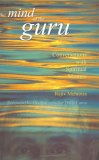
Know Your MindKnow Your Mind by Sri Sri Ravi Shankar

My rating: 4 of 5 stars

Sri Sri Ravi Shankar is an Indian guru headquartered in Bangalore, India. In addition to his work as a spiritual leader, he heads up an organization called the “The Art of Living,” which has both a philanthropic mission and a role in spreading knowledge of yoga. Among his most important accomplishments is the development of a breathing technique for helping to attain greater emotional well-being. However, he may be most broadly known for occasional appearances on television programs such as those of CNN International.

The slim volume K(no)w Your Mind contains a series of short chapters, many of which are partly in Q&A form–coming from talks he has given internationally. The common theme of these discourses are how one can understand one’s mind and learn to live in a way that maximizes happiness.

Sri Sri’s approach is quite mainstream when compared to more controversial gurus such as the late Bhagwan Shree Rajneesh (i.e. Osho.) There is little that would raise hackles of most people. It proposes nothing magical–though Shankar supports belief in some, broadly defined and mystical, deity. His approach doesn’t rely on said deity. The book is essentially just about training the mind to look at the world in a different way.

One example that the author uses in various permutations is that people dwell on the negative. As he says, “When you are healthy, you never ask the question, ‘Why am I healthy?’When you are sick you say, ‘Oh, why am I sick?'” Similarly he mentions that, if someone tells us they like us we don’t question it, but if they tell us they hate us, then we do.

When asked how to avoid stress, he states flatly that one shouldn’t avoid it, but rather learn hope to cope with it more effectively.

On the positive side, the book conveys a lot of good information in a highly readable format. Shankar explains the mind with humor and occasionally with a parable or narrative to help make the lessons more memorable.

However, if one is looking for a systematic approach, one won’t so much find that here. It’s clear that this is a series of snippets from talks combined together. If that’s what you’re expecting, then it shouldn’t be a problem. However, if one is expecting a step-by-step guide, this book may not suit one. Occasionally it’s helpful if on has some yoga terminology in one’s head like samadhi or pranayama, but context should make the meaning clear.

I’d recommend it for someone looking for food-for-thought on bite-sized pieces on issues like memory, emotion, and mindfulness.

View all my reviews

BOOK REVIEW: Pocket Guide to Hatha Yoga by Michele Picozzi

Pocket Guide to Hatha Yoga (The Crossing Press Pocket Series) (The Crossing Press Pocket Series)Pocket Guide to Hatha Yoga (The Crossing Press Pocket Series) by Michele Picozzi

My rating: 4 of 5 stars

Amazon page

Having moved to India, I’ve been wanting to take advantage of the wealth of expertise in yoga. However, part of the problem is that there is such a wealth of knowledge. There are many different schools, each with different approaches and focal points, and each of those with separate branches. So I began, as I often do, among the shelves of one of my local bookstores. (Yes, here in India, we still have local bookstores [plural emphasis intended.])

That is where I picked up Michele Picozzi’s Pocket Guide to Hatha Yoga. A slight book of only about 100 pages, this guide serves as a sort of “Yoga for Dummies.” (I’m aware that there is a book by that title, but it’s probably not as concise.) Despite a mild bias against learning about yoga from Westerners (what’s the point of being in India–yes, I realize it’s irrational), I picked up this thin guide because it was only 70 rupees (less than $1 US), and I like the way it was organized.

It begins with a quick overview of the many schools of yoga. Next, it does the same for the many branches of Hatha yoga–which by all accounts seems to be the most popular school. I found this very helpful. The book doesn’t get bogged down in the minutiae, but rather presents a short paragraph hitting the highlights that differentiate one sect from another.

Then the book gets to the meat of the subject (my apologies to vegetarians for that analogy.) It gives helpful tips for one who has never been in a yoga studio before. Then it has chapters on postures (asana), breathing exercises (pranayama), and meditation (dhyana.)We learn that these are but three of yoga’s 8-fold path (not to be confused with Buddhism’s 8-fold path.) For the neophyte, it may be news to learn that there is more to yoga than just bendy poses.

The last chapter deals with basics of a yogic/ayurvedic diet. Here I learned that the Dalai Lama isn’t a vegetarian, among many more important advice about how and what yogis and yoginis should eat.

There are appendices containing line drawings of about 45 of the most fundamental asanas (all of the graphics in the book are line drawings), a glossary, and a list of references.

If you are brand new to yoga, I would recommend this book. You can get it through Amazon for only a little more that 70 Rupees.

View all my reviews

BOOK REVIEW: Man of Steel by Greg Cox

Man of Steel: The Official Movie NovelizationMan of Steel: The Official Movie Novelization by Greg Cox

My rating: 3 of 5 stars

Amazon page

This is the first novelization of a movie I’ve reviewed. In fact, I haven’t even seen the movie yet. However, from the trailers I can see a little of how the book describes the events of the movie. In the afterword the author, Greg Cox, indicated that he hadn’t yet seen the completed movie. (Not surprisingly, considering the desire to get the book out in time.) He presumably worked mostly from the screenplay, and perhaps some unedited scenes from the movie. At any rate, unlike a movie adaptation of a novel, one expects a novelization to be spot on with the movie’s story.

As I’ve said in other posts, it’s hard to do Superman really well. Stories are all about tension, and it’s hard to build tension if your hero is indestructible and has god-like powers. [The sequel is supposedly Batman v. Superman, and one has to wonder how this can be done well. Batman is formidable, but the Joker sometimes gets the best of him, and the Joker is no Superman.] At any rate, I think this rendition does a better job than most, and vastly better than the epicly-awful 2006 Superman Returns.

The story begins on a dying planet Krypton as a coup led by General Zod takes place. Both Jor-El (Superman’s father) and Zod believe the planet is dying, and that urgent steps need to be taken to save the Kryptonian race. However, they differ vastly on how to go about saving the race. Zod believes in saving certain blood lines, and Jor-El believes in a much more balanced and progressive approach.

When we are introduced to Clark Kent/Kal-El/Superman, he is a young man who is living a secret life. He engages in episodes of heroic derring-do, but has not yet donned the costume and is forced to move nomadically from one dead-end job to the next as his powers are revealed. There are also many flashbacks to cue us in to his troubles and dilemmas as a child.

Shortly after Kent realizes who he is and gets some Kryptonian backstory, Zod and his band of zealots shows up–newly escaped from the phantom zone. The climax and resolution of the movie involve Superman’s battles with Zod and the General’s fierce underlings–with a love interest subplot between Lois Lane and Superman.

What this story does right is to introduce a strong foe for Superman to battle. Not only does Zod have a numerical advantage, he is a life-long warrior and is thus more experienced. Zod’s second-in-command, Faora Hu-ul, is a worthy adversary in her own right. This is not Superman versus a green, glowing rock.

The challenge of this type of story (as with movies like The Avengers) is that, having set up an “immovable object meets irresistible force” scenario, it’s extremely hard to resolve the tension in a manner that is both logically and emotionally satisfying. While I have criticized movies for this, if the visuals are impressive enough it seems to work with viewers. It works because it creates enough emotional satisfaction for one to suspend concern about whether the resolution makes any sense based upon what is known from earlier in the story. It’s harder to reliably do this in writing. Therefore, you may find the ending a bit flat after an intriguing build up.

I doubt it’s worth reading the novelization and seeing the movie, except if one is interested in how one’s internal view of it matches with the movie (in which case one should avoid the trailers and read the novelization first.)

View all my reviews

For those who do want to view the trailer.

BOOK REVIEW: Wise Blood by Flannery O’Connor

Wise BloodWise Blood by Flannery O’Connor

My rating: 5 of 5 stars

Amazon page

Wise Blood is a character-driven novel about a young veteran, Hazel Motes, who becomes a devout atheist. If that sounds like an oxymoron, let me explain. After becoming enamored with a preacher (and having the blood of a preacher man in his veins), Motes begins to preach the tenets of his newly formed Church Without Christ. In essence, Motes believes in religion without believing in God (the opposite condition of that which some of us find ourselves.)

This was Flannery O’Connor’s first novel, and it’s the first of her novels that I’ve read. I have, however, read some of her stories, and Wise Blood displays a dark humor similar to that found in O’Connor’s best know story “A Good Man is Hard to Find.”

Throughout the book, Motes struggles to convey the depths of his disbelief. He attacks false prophets. He follows through on an act of self-mutilation that he had earlier discovered the preacher, Asa Hawks, could not. Thus proving his lack of faith to be stronger than the preacher’s faith. Motes is wooed by both by the nymphomanical daughter of Hawks, Sabbath Lily, and later by his landlady, Ms. Flood. While Motes doesn’t necessarily remain chaste, he does maintain a kind of priestly detachment from the pleasures of the flesh.

An interesting part of the story details Motes’s interaction with a con-man named Hoover Shoats who co-opts Motes’ preaching sessions and starts his own Holy Church of Christ Without Christ–which passers-by find to be a source of amusement–as a bastardization of Motes’ message. Motes rejects Hoover, but sees his mission being usurped anyway. Motes shows deadly seriousness in his desire to be taken seriously in the word that he preaches.

This novel was apparently built from a series of stories, and a little bit of discontinuity can be sensed early on. However, that’s just part of the charm of a book that is sometimes thought-provoking, sometimes humorous, and sometimes both.

I would recommend book for anybody, excepting those hard-core pious who grow red-faced with rage in the face of atheism or other beliefs.

View all my reviews

BOOK REVIEW: Mostly Harmless by Douglas Adams

Mostly Harmless (Hitchhiker's Guide, #5)Mostly Harmless by Douglas Adams

My rating: 3 of 5 stars

Amazon page

[NOTE: If you would like to read my reviews of the first four books, you can do so by following the hyperlinked title: 1.) The Hitchhiker’s Guide to the Galaxy 2.) The Restaurant at the End of the Universe  3.) Life, the Universe, and Everything 4.) So Long, and Thanks for All the Fish]

This is the fifth and final installment in The Hitchhiker’s Guide to the Galaxy series (not including Eoin Colfer’s And Another Thing, which I don’t.) Fans of the series will recognize “Mostly Harmless” as the sum total of the Earth’s entry in The Hitchhiker’s Guide to the Galaxy.

The story focuses on a trio of characters from the original book’s cast: Arthur Dent (of course), Tricia McMillan (a.k.a. Trillian), and Ford Prefect–with the Random addition a new fourth feature character. As the series had already begun trending, this story is more human-centric than the earliest installments. The central story could be divorced from the sci-fi genre with relatively minor modifications. However, as Restaurant at the End of the Universe uses time travel as a sci-fi plot device, this book uses the concept of a parallel universe.

The story begins with our main characters separated from one another. Arthur Dent is making sandwiches of Perfectly Normal Beast (an Orwellian turn-of-phrase as one might expect) on the planet where he crash landed. Trillian, or one of them, is reduced to doing an interview with an astrologer. Ford Prefect is breaking into his place of employment to avoid the accountants in his usual manner of hijinks.

Adams throws each of these characters a monkey wrench. Dent finds out he has a daughter, Random Dent, and that her mother–Trillian–is dropping her on his doorstep. Ford discovers that the Guide is under new and nefarious management, and that they have created an edition with dire ramifications. Trillian, or one of them, gets her big break being picked up by a Grebulon ship only to discover they want her to advise them on astrology.

The notion that no one escapes the feeling of being without a home is a central theme in the book.

This isn’t Adams’ best work. The story has grown stale. It lacks the creative brilliance derived from plot devices like the Infinite Improbability Drive, and–while there may be something to be said for a story with more humanity– it leaves one missing idiosyncratic characters like Zaphod and Marvin. That being said, even at his worst Adams is amusing and thought-provoking. If you enjoyed his earlier books, you could certainly do worse than to finish the series. In the unlikely event that Adams isn’t your cup of tea, this final installment probably won’t revise your assessment.

View all my reviews

MOVIE REVIEW: The Wolverine

I don’t normally do movie reviews because, for one reason, I don’t watch that many movies–at least not in the timely fashion necessary to be relevant. However, I figured I’d do one for The Wolverine because I did a book review of Clairmont & Miller’s Wolverine.

The Wolverine shares superficial common ground with the Clairmont & Miller book.  The setting for each is largely Japan. The movie and the book share almost the same slate of major characters. However, the characters don’t necessarily have the same relationships to each other or the same personalities as in the book.

If you’ve seen the trailers, my synopsis will be largely spoiler/surprise free. The movie opens with Logan saving a young Japanese officer. It then flashes forward to Logan living in the wilderness of the Pacific Northeast. The primary reference to the earlier films is that he is tormented by killing Jean Grey in X-men: The Last Stand (a.k.a. X-Men 3.) Yukio (a female warrior who the movie makes friendly to Logan from the get go) tracks Logan down to take him to see her employer, the same individual he saved during the war. That individual offers him mortality. After their meeting, Logan’s principal goal shifts from living by a vow to not kill to one of keeping Mariko safe. Mariko is the granddaughter of the officer Logan saved and she becomes his love interest. As in the book, Mariko is tangled in intrigues of family and company (i.e. kairetsu), but the nature of these intrigues is somewhat updated in the movie. In the book, Mariko is a helpless damsel-in-distress, but in the movie we see her strength.

The biggest strength of this movie is that Wolverine becomes mortal in the film–at least for a time. This creates stakes for Logan where none usually exist. The problem with Wolverine’s combination of rapid healing and indestructible skeleton is that there’s no nail-biting over his fate. You know no matter how much he gets tossed around, he’s going to get up and within a minute he’ll be right as rain.

In my opinion, the biggest flaw of the movie is the creation of a twist ending that fails to surprise but yet requires distorting a character. I realize it’s hard to write a good twist ending. If one foreshadows too much, one gives away the surprise. If one fails to foreshadow, then one annoys the audience with a “gotcha” type ending. In this case, one of the characters behaves in a manner that is out of character with the first act portrayal. This is a “gotcha,” but one that one couldn’t help but thinking was a possibility. There are a number of little forgivable sins that I won’t discuss, and which may be inevitable in film.

The film also contributes to the general continuity muddle of X-men films. Because this film attempts to be a standalone film, it may not seem fair to critique this point. However, by using the aforementioned piece of the X-Men 3 timeline, I think they open themselves up to this criticism. As an example, while in the X-Men Origins: Wolverine film we are told that Wolverine can’t grow back his memories, he apparently grows back his memories of what happened in WWII just fine. There’s a post-credit scene which happens three years after The Wolverine timeline that is a set up for X-Men: Days of Future Past and Professor X appears in it, but they hint that there may be an explanation for this (Xavier died in the same X-Men 3 that this film references through about half a dozen dream sequences.) This is not so much an example of  discontinuity, also because the upcoming film features time travel prominently, but may or may not be example of the general X-Men muddle.

I’d recommend seeing this movie, but only if one goes in thinking of X-Men Origins: Wolverine. If one does that one will find it an enjoyable step up. However, if one goes in expecting a movie of The Dark Knight caliber, one will be sorely disappointed.

BOOK REVIEW: Ip-Man Portrait of a Kung Fu Master by Ip Ching, et. al.

IP Man: Portrait of a Kung Fu MasterIP Man: Portrait of a Kung Fu Master by Ip Ching

My rating: 3 of 5 stars

Amazon page

Ip Man led an interesting life. The master of Wing Chun Kung Fu lived through tumultuous times that included the Boxer Rebellion, the Sino-Japanese War, and China’s Communist revolution. After the Japanese occupation he served for a time as a police chief. Coming from a wealthy family, he experienced a riches to rags fall when the Communists took over. He had to move from his home in Foshan to Hong Kong. His use of kung fu was not restricted to the training hall, but, rather, included a few real world altercations. A couple of films have been made(loosely) about his life.

All that being said, this book doesn’t do a great job of capturing the life of this intriguing man. To be fair, the book isn’t really a biography proper–though the title might lead one to believe it was. However, it’s not entirely clear what the book is. Its fifteen chapters are each built around a principle and use vignettes from Ip Man’s life to illustrate how the Grandmaster lived virtuously. This makes the book seem more like treatise on martial arts philosophy and/or strategy. However, some chapters do a better job of making clear what the actual principle is and how the events of Ip Man’s life exemplify them than do others. In some parts it does a great job but in others it’s only lackluster.

There are some fascinating stories about the man’s life in the book, but they are generally told in a lifeless manner. In part this may be done on purpose as we are told that Ip Man eschewed embellishment and favored humility, but it makes the reading experience less than gripping. It’s also probably that some of the details were lost when Ip Man died in 1972. This lack of detail leaves one at times wondering. Throughout most of the book we get a picture of Ip Man as a virtuous warrior. However, there is one vignette in which we read about the Grandmaster picking a fight with a man by taunting him with humiliating insults about the man’s appearance. Ip Man does this to teach his student a lesson in courage. His lesson notwithstanding, this behavior paints Ip Man as anything but virtuous–rather than a humble martial arts master he becomes a pathetic bully. The author, Ip Man’s son Ip Ching, suggests that this might have been a setup for the student’s benefit, but with the prior assent of the bullied man. At any rate, there was no fight because the bullied man backed down–whether because it was staged or out of genuine fear remains unknown.

For some readers the most surprising omission will involve a lack of any mention of the man who was far and away Ip Man’s most famous student, namely Bruce Lee. There may be a number of reasons for this omission, including a desire to prevent the teacher’s story from being overshadowed by his student’s fame. However, most readers would probably like some inkling of how the ill-fated superstar came to train with Ip Man and what he learned from him. In fact, the only reference to the entertainment aspect of kung fu is a picture caption that shows Shek Kin, the villain “Mr. Han” from Enter the Dragon, at Ip Man’s funeral.

I would recommend this book only for those that have a particular interest in martial arts. It does offer tidbits of interesting events from Ip Man’s life as well as a few great life lessons. It benefits from being a concise book, and thus is not a major time investment to read. However, I don’t know that–short as it is–it would hold the interest of the general reader. Hopefully, someone will take on a more extensive English-language biography of this fascinating man’s life while there are some key people still alive to be interviewed about his life story.

View all my reviews

BOOK REVIEW: A Search in Secret India by Paul Brunton

A Search in Secret IndiaA Search in Secret India by Paul Brunton

My rating: 4 of 5 stars

Amazon page

A Search in Secret India is a travelogue by Paul Brunton as he wondered through India in search of sages. In the process, he found a number of masters of body, mind, and both. However, he finds these individuals as rare nuggets in a sea of frauds.

Brunton states up front that he won’t waste time with any of the blatant frauds or suspected frauds, but he does devote space to a number of the more impressive ones. Impressive either by way of a large following or artfulness of technique. He also finds individuals he doesn’t know what to make of. These individuals appear to have impressive otherworldly skills, but skills that he can neither reconcile with known scientific understanding nor uncover as hoaxes despite his best skeptical inquiry. Given Occam’s Razor, he seems to be left suspecting that these are masters of illusion, but he maintains skepticism of his skepticism. A prime example of this is a Yogi who seems to be able to conjure any scent upon request.

Brunton also runs across individuals who are able to do amazing things that are inconsistent with his knowledge of the world, but which his exhaustive investigations leave little room to dispute. For example, there is one yogi who can completely cease his respiration for a seemingly impossible length of time, and who resumed breathing not with a gasp but with a slow, calm series of breaths.

As suggested above, this book is really an attempt to analyze India’s spirituality through the lens of Western logical and scientific approaches. The author is a Brit and the book was first published in the 1930’s. His worldview is consistent with that status. While Brunton would like to master his own mind, he is unwilling to let himself be duped.

There is another side to this juxtaposition of East and West. The yogis and gurus with which Brunton comes into contact often have trouble grasping the Western mindset (there is one notable exception.) What these wise-men have difficulty understanding is why a people, like the British, devote so much time to mastering the external world (and with a great measure of success it must be added), but put so little effort into mastering or understanding the self. Most of the gurus appreciate that a Brit is taking an interest in the spiritual and yogic ways of India, but with their own skepticism. They find Westerners materially rich, but bankrupt of the mind. They find the Brits strong, but lacking the supple power that yoga introduces.

After completing his travels, it seems the book is set to draw to an end. However, Brunton realizes that while there were a number of skilled individuals that he came across in his travels,there is one that stands out as someone he should not miss an opportunity to learn more from. Therefore, instead of getting on a steamer back to England, he returns to South India to a man called the Maharishee in order to find out if the guru will take him as a student. The last couple chapters describe his time under the Maharishee’s tutelage as well as under one of the guru’s most advanced students. The Maharishee is a sage the likes of which Brunton has not seen in all his travels. The guru has the humility to say that he cannot teach Brunton anything, but instead can only show him some things that he learned on his own journey.

If there is a lesson for those who would like to follow in Brunton’s footsteps, it seems to be that there is an inverse relationship between how easy a guru is to find(/how eager a guru is to talk to one) and the level of skill of that teacher. In almost all cases, Brunton had to take great initiative and steer off the beaten path to find the true masters. On the other hand, most of the individuals who were easily found, and eager to talk, were just con men.

I recommend this book for those interested in development of the mind and body.

View all my reviews

BOOK REVIEW: Everyday Life in Imperial Japan by Charles Dunn

EverydayLifeImperialJapanEveryday Life In Imperial Japan by Charles J. Dunn

My rating: 4 of 5 stars

Amazon page

This interesting little book is invaluable for anyone researching what life was like for people in Japan before the Meiji Restoration. While it’s an essential volume for a writer of historical fiction, those interested in Japan more generally will find it readable and packed with interesting tidbits of information. For example, I would recommend it for those who study traditional Japanese martial arts (i.e. kobudō)to get a better insight into the art they study through knowing the society from which it sprang.

This type of work is relatively rare, but is a writer’s dream come true. It’s not a history book, but–as the title implies–tells one how people of various classes and occupations lived day in and day out. That is, its approach is more anthropological than historical.

The range of occupations in Japan’s pre-modern period were far fewer than in society as we know it, and so the book takes broad job classes as its primary unit of organization. It begins with the group that undoubtedly draws the most interest, the samurai. It proceeds to the occupation which is most numerous in any pre-modern society, the farmers. Beyond that, it covers the lives of skilled craftsmen, merchants, courtiers, priests, doctors, intellectuals, actors and outcasts. The concluding chapter looks specifically at life in the city, and–in particular–life in Edo. Edo is the city that would become known as Tokyō, and which became the capital of the Shogunate in 1603 and eventually the nation’s capital.

Japan’s relative isolation throughout its early history has made for many intriguing national peculiarities. It’s true that Japan’s literary, religious, and philosophical systems were greatly influenced by China, but–in all cases–these cultural elements were forged into a uniquely Japanese form. This uniqueness provides many “ah-ha” moments while reading.

One learns why warriors were required to wear extra long hakama (a very billowy form of pleated pants that look like a long skirt–though having individual pant legs.)One learns about how one got around on the early highway system in a time when infrastructure (e.g. bridges) were minimal, and who was allowed to use the roads–such as the famous Tōkaidō road. The book tells how police went about arresting armed samurai. The roles played by women in society are discussed. While this was obviously a patriarchal society, women weren’t locked entirely outside the domain of power.

This was a feudal society with the samurai owning the land and the farmers toiling in hopes of having a little left over to support their families. While farmers made silk, they were, by law, not allowed to wear it. Farmers sometimes resorted to selling daughters to brothels to make ends meet.

There were many types of craftsmen from saké brewers to carpenters to makers of lacquer-wares. Japan has a long history of appreciation for master craftsmanship as is most apparent in sword-making. The Japanese sword was the cutting weapon perfected. Its folded steel design offered a flexible spine with a hard edge that could be honed to razor sharpness.

Merchants were a class that was both looked down upon and increasingly powerful during this period. Samurai were often barely making a living then, but merchants were beginning to flourish. Japan’s first indigenous money wasn’t introduced until 1636. Prior to that Chinese coins were used, much in the same way that some present-day countries use US dollars for currency–thus avoiding inflation that would be inevitable if they had their own currency and governance. There is an extensive discussion of the early sea trade.

Some of the most interesting careers were those more peripheral. Doctors practiced something akin to Traditional Chinese Medicine. There were wandering street performers and holy men of a wide variety.

I’d recommend this book for anyone interested in Japan’s history, and would call it indispensable for a writer addressing pre-Meiji Restoration Japan.

View all my reviews